Many people trust their meat thermometer to keep food safe and delicious. But is your thermometer really showing the right temperature? If you cook often, you know even a small error can mean undercooked meat or wasted food. Calibrating your meat thermometer is not just a best practice—it’s a way to protect your health and improve your cooking results. But how often should you calibrate it? The answer depends on how you use your thermometer, the type you have, and a few other factors. Let’s explore the details so you can cook with confidence every time.
Why Calibration Matters
A meat thermometer is a simple tool, but its accuracy is critical. A difference of just 2°F can turn a juicy steak into a dry one or leave chicken unsafe. The United States Department of Agriculture (USDA) says that unsafe food causes about 48 million illnesses every year in the US. Many of these are from undercooked meat. If your thermometer is wrong, you may think your food is safe when it’s not.
Over time, thermometers can lose accuracy because of:
- Drops or bumps
- Extreme temperature changes
- Age and wear
- Manufacturing differences
Calibration makes sure your thermometer shows the correct temperature. For professionals, calibration is routine. At home, it’s often forgotten—but it shouldn’t be.
How Often Should You Calibrate A Meat Thermometer?
The right calibration schedule depends on the thermometer type, how often you use it, and how it’s handled.
| Thermometer Type | Recommended Calibration Frequency | Typical Accuracy Drift |
|---|---|---|
| Dial (Analog) | Monthly or after heavy use | ±2°F per month |
| Digital (Probe) | Quarterly or after impact | ±1°F per quarter |
| Infrared | Biannually or as needed | ±2°F per 6 months |
General Rules
- Before first use: Always calibrate new thermometers.
- After dropping: Calibrate immediately if you drop it or notice damage.
- Regular use: For home cooks, once a month for analog, every 3-6 months for digital.
- High volume: If you cook daily or for many people (like in a restaurant), calibrate weekly.
- After big temperature swings: Moving from hot to cold environments can affect accuracy.
- If readings seem off: If your thermometer shows odd temperatures, check it right away.
Most home cooks ignore calibration until there’s a problem. But regular checks save time and prevent mistakes.

Credit: smokeyrebel.com
Signs Your Meat Thermometer Needs Calibration
Even if you follow a schedule, sometimes you need to calibrate sooner. Watch for these signs:
- Strange readings: Food seems overdone or undercooked, even when you follow recipes.
- Visible damage: Cracked dial, bent probe, or loose parts.
- Long response time: Takes too long to show a stable temperature.
- Erratic numbers: Digital display jumps around or doesn’t settle.
- Rust or corrosion: On probe or casing.
A thermometer doesn’t have to be broken to be inaccurate. Even small bumps or shifts can change its reading.
How To Calibrate A Meat Thermometer
Calibration is simple and can be done at home without special tools. The two most common methods are the ice water method and the boiling water method.
Ice Water Method
This method checks if your thermometer reads 32°F (0°C).
- Fill a glass with crushed ice and add cold water.
- Stir and let sit for 2 minutes.
- Insert the thermometer probe without touching the sides or bottom.
- Wait 30 seconds. The thermometer should read 32°F.
- If not, adjust (if your thermometer allows) or note the difference.
Boiling Water Method
This method checks for 212°F (100°C). Remember, boiling point changes with altitude.
- Boil a pot of water.
- Insert the thermometer probe for 30 seconds.
- The thermometer should read 212°F.
- Adjust as needed.
If your thermometer can’t be adjusted, write down the error and remember to add or subtract it during cooking.
| Method | Expected Reading | Adjustment Needed? | Notes |
|---|---|---|---|
| Ice Water | 32°F (0°C) | Yes, if not accurate | Good for most home thermometers |
| Boiling Water | 212°F (100°C) | Yes, if not accurate | Check altitude for precise reading |
Practical Tips
- Always calibrate at room temperature.
- Use clean water and equipment.
- Avoid testing after heavy cooking—let the thermometer cool first.
- For digital thermometers, check battery life before calibration.
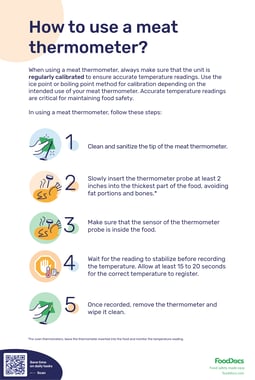
Credit: www.fooddocs.com
What Affects Calibration Frequency?
A few key factors change how often you need to calibrate:
- Type of thermometer: Analog thermometers lose accuracy faster.
- Usage: Daily use means more frequent calibration.
- Environment: Humid, dusty, or extreme environments can affect accuracy.
- Storage: Keeping your thermometer in a drawer with other tools can cause damage.
- Cooking methods: Grilling or deep frying exposes thermometers to more stress.
If you use your thermometer for different foods (like candy, oil, or meat), check calibration more often.
Professional Standards Vs. Home Use
Restaurants and food services follow strict rules. The FDA Food Code says thermometers should be calibrated daily or before each shift. Home cooks don’t need to be so strict, but following professional standards can improve safety and results.
| Usage Type | Calibration Frequency | Reason |
|---|---|---|
| Restaurant | Daily | Food safety regulations |
| Home | Monthly/Quarterly | Less frequent use, fewer risks |
| Catering | Before each event | Multiple locations, heavy use |
Common Calibration Mistakes
Even experienced cooks make errors when calibrating thermometers. Here are a few to avoid:
- Not waiting long enough: Rushing can give inaccurate results.
- Touching the sides or bottom: Changes the reading, especially in water tests.
- Ignoring altitude: Boiling point changes, so check your local altitude.
- Using dirty water: Can affect the calibration process.
- Forgetting to record errors: If your thermometer can’t be adjusted, write down the error.
Beginners often think calibration is a one-time task. In reality, it’s ongoing.
Benefits Of Regular Calibration
You may wonder, “Is it really worth it?” Regular calibration brings real value:
- Safer food: Reduces risk of foodborne illness.
- Better taste: Meat cooked at the right temperature stays juicy and tender.
- Save money: Less wasted food from overcooking.
- Reliable results: Recipes turn out as expected.
- Peace of mind: You can trust your thermometer.
Regular calibration also extends the life of your thermometer. Small maintenance means fewer replacements.
Non-obvious Insights
- Altitude changes the boiling point: In Denver (5,280 feet), water boils at about 203°F, not 212°F. Always check your local boiling point for accurate calibration.
- Digital thermometers drift less, but batteries matter: Weak batteries can cause inaccurate readings, even if the device is new.
- Some thermometers can’t be adjusted: If yours is “fixed,” keep a record of the error and adjust recipes.
When To Replace Your Meat Thermometer
Calibration can fix many issues, but not all. Replace your thermometer if:
- It won’t hold a steady reading after calibration.
- The probe is damaged or rusty.
- Digital displays are unreadable or flickering.
- It’s more than 5 years old and inaccurate.
A quality thermometer is an investment. If yours is unreliable, don’t risk your health—get a new one.
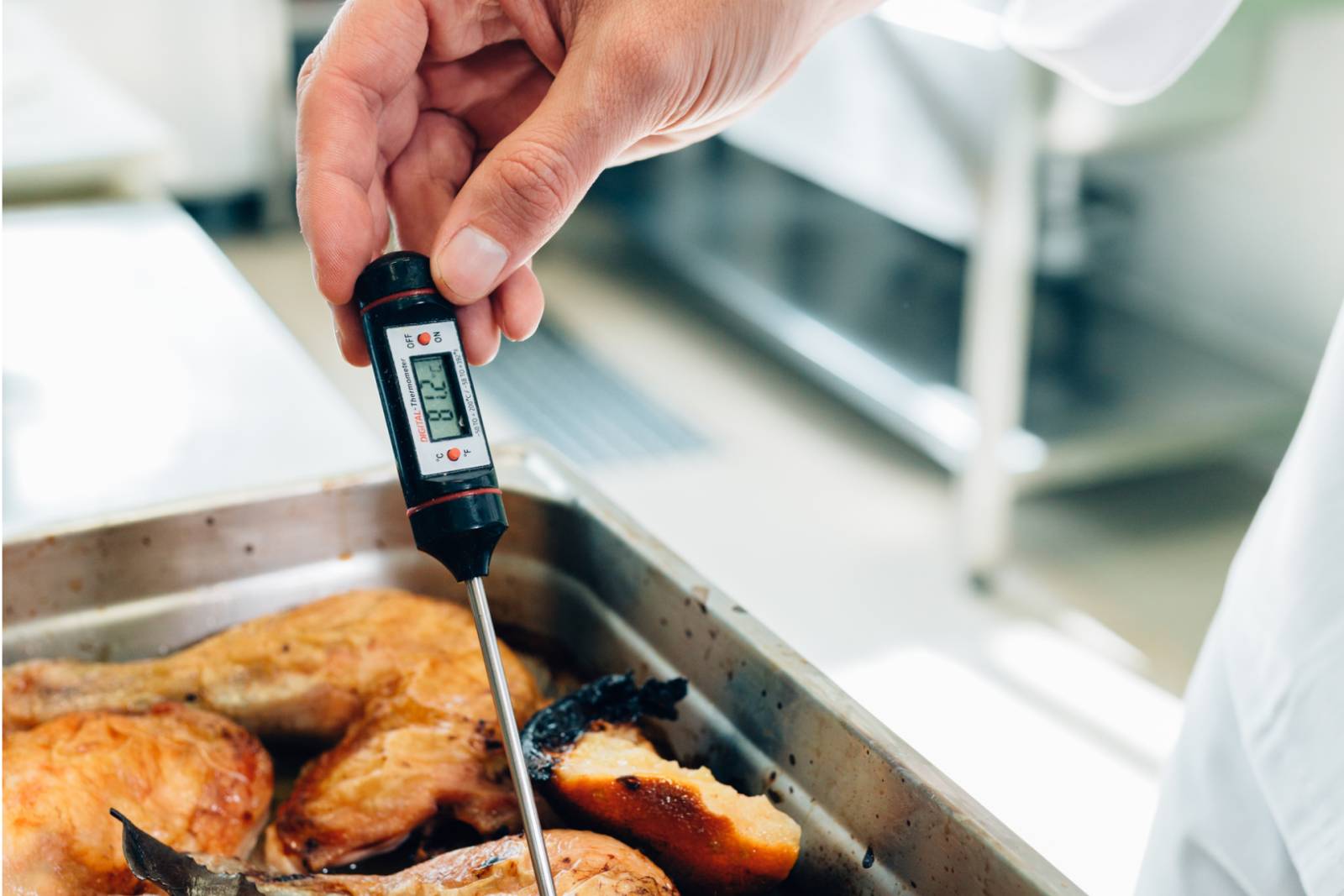
Credit: trust20.co
Frequently Asked Questions
How Do I Know If My Meat Thermometer Is Accurate?
Test it using the ice water or boiling water method. If the reading matches the expected value (32°F or 212°F), it’s accurate. If not, adjust or record the error.
Can I Calibrate All Types Of Meat Thermometers?
Most analog and some digital thermometers can be adjusted. If your thermometer has no adjustment feature, record any error and apply it when cooking.
How Does Altitude Affect Calibration?
Higher altitudes lower the boiling point of water. For example, at 7,000 feet, water boils around 198°F. Check your local boiling point before calibrating.
Is Calibration Necessary For New Thermometers?
Yes. Even new thermometers can be slightly off due to manufacturing differences. Always calibrate before first use.
Where Can I Find Official Guidelines For Thermometer Calibration?
The USDA and FDA offer food safety guidelines. You can find more at USDA Food Safety.
Regular calibration of your meat thermometer takes only a few minutes but offers big benefits. You’ll cook safer, tastier meals and trust your results every time. Don’t wait for a problem—make calibration part of your cooking routine and enjoy peace of mind at every meal.