Skip to content
Keeping your floors clean is more than just a matter of appearance. It impacts your health, comfort, and even the life of your flooring. Many people wonder: how often should you mop your floors? The answer is not always simple, as it depends on several factors. In this article, you’ll learn how to decide the right mopping schedule for your home or business, based on floor type, usage, and practical tips.
You’ll also see data comparisons, examples, and answers to the most common questions. Let’s make your cleaning routine smarter and easier.
Why Regular Mopping Matters
Dirty floors can carry dust, bacteria, allergens, and even viruses. When you walk on them, these particles can spread throughout your home. Regular mopping removes more than visible dirt—it helps keep your environment healthy. According to the CDC, frequent cleaning can reduce the risk of respiratory illness by up to 23% in homes with children.
If you skip mopping, dirt can build up and damage your floors. For example, grit can scratch hardwood or dull tiles. Over time, neglected floors may need expensive repairs or replacement.
Factors That Affect Mopping Frequency
There is no one-size-fits-all answer. The ideal mopping schedule depends on several things:
- Floor Type: Some materials need more care. Tile and vinyl can handle frequent mopping, while hardwood needs less moisture.
- Foot Traffic: Busy areas collect dirt faster. Kitchens, hallways, and entryways often need more attention.
- Household Size: More people means more dirt. Pets and children also increase cleaning needs.
- Outdoor Environment: Dusty climates or rainy seasons can affect how quickly floors get dirty.
- Allergies and Health: If someone in your home has allergies, more frequent mopping can help.
Let’s look at some practical examples.
Mopping Schedules By Floor Type
Different floors need different care. Here’s a detailed comparison:
| Floor Type | Recommended Frequency | Notes |
|---|---|---|
| Tile | 1-2 times per week | Resistant to water; easy to clean. |
| Vinyl | 1-2 times per week | Similar to tile; avoid harsh chemicals. |
| Hardwood | 1-2 times per month | Use damp mop; excess water can damage. |
| Laminate | 2-4 times per month | Don’t use wet mop; moisture can cause swelling. |
| Stone | Once a week | Needs special cleaner; avoid acidic products. |
| Carpet | N/A | Vacuum regularly; deep clean every 3-6 months. |
Key insight: Many beginners mop hardwood too often, causing water damage. Always check the manufacturer’s advice.
Mopping Frequency By Room Usage
Each room has its own needs. Busy spaces gather more dirt, while bedrooms stay cleaner.
| Room | Typical Traffic | Recommended Mopping |
|---|---|---|
| Kitchen | High | 2-3 times per week |
| Bathroom | Medium | 1-2 times per week |
| Living Room | High | Once a week |
| Bedroom | Low | 2-4 times per month |
| Entryway | Very High | 2-3 times per week |
Non-obvious tip: Entryways are often missed. Dirt from shoes spreads quickly. Mop here more often, even if it looks clean.
Signs Your Floor Needs Mopping
Sometimes, schedules are not enough. Look for these signs:
- Sticky feeling: If the floor feels sticky, it’s time to mop.
- Visible stains or spills: Clean immediately to prevent permanent marks.
- Dust build-up: Especially in corners or edges.
- Odor: Unpleasant smells can mean bacteria is present.
- Allergy symptoms: More sneezing or coughing may mean it’s time to clean.
If you notice any of these, don’t wait for your next scheduled mop.
How To Mop Properly
Mopping is simple, but there are ways to do it better. Here’s a step-by-step guide:
- Sweep or vacuum first: Remove loose dirt so the mop can clean more effectively.
- Choose the right mop: Microfiber mops are best for most floors; string mops work for tile.
- Use appropriate cleaner: Avoid bleach or harsh chemicals unless needed.
- Rinse mop regularly: Dirty mop water spreads dirt instead of cleaning.
- Dry floor quickly: Especially for wood or laminate, use a fan or open windows.
- Don’t over-wet: Too much water can damage floors.
Common mistake: Many people mop with dirty water. Change the water once it looks cloudy.
:max_bytes(150000):strip_icc()/how-often-mop-floors-GettyImages-761856731-df9265fdc08e4f8f91fc7f275051dc01.jpg)
Credit: www.realsimple.com
How Often Should You Mop With Pets Or Kids?
Homes with pets or children need more frequent cleaning. Pet hair, mud, and food spills increase mopping needs.
- Pets: Mop high-traffic areas 2-3 times a week. Clean up accidents immediately.
- Kids: Kitchens and playrooms may need mopping every other day.
- Carpeted areas: Consider steam cleaning every few months.
One non-obvious insight: Pet paws track in bacteria and pollen, not just dirt. This can affect allergies.
Commercial And Office Spaces
Workplaces and public areas see much more traffic. Here, mopping is often part of a daily routine.
| Area | Mopping Frequency | Reason |
|---|---|---|
| Retail Stores | Daily | High customer traffic; health standards. |
| Office Hallways | 2-3 times per week | Medium traffic; less dirt than retail. |
| Restaurants | Daily | Food spills, hygiene regulations. |
| Hospitals | Multiple times per day | Prevent infection; strict standards. |
For businesses, following official cleaning guidelines is important. The EPA recommends frequent cleaning for high-touch surfaces.
How Seasons Affect Mopping Needs
Seasons change how much dirt enters your home.
- Winter: Snow, salt, and mud mean more frequent mopping—often daily in entryways.
- Spring: Pollen and rain can make floors sticky or muddy.
- Summer: Dust builds up with open windows.
- Fall: Leaves and moisture can be tracked inside.
Adjust your routine as the weather changes.
Mopping Tools And Solutions
Choosing the right tools makes mopping easier and safer for your floors.
Popular mops:
- Microfiber mop: Good for all surfaces; holds dust well.
- Sponge mop: Best for tile and vinyl.
- Steam mop: Sanitizes, but not suitable for wood.
Cleaners:
- PH-neutral cleaner: Safe for most floors.
- Vinegar solution: Good for tile, but avoid on stone.
- Specialized wood cleaner: Protects hardwood.
Data point: Microfiber mops can remove 99% of bacteria using just water, according to a study by the American Cleaning Institute.
You might find this helpful: Best Mop for Wood Floors
Mistakes To Avoid When Mopping
Even with the right schedule, mistakes can ruin your floors.
- Over-wetting: Causes warping or mold.
- Wrong cleaner: Can discolor or damage surfaces.
- Using dirty mop: Spreads germs instead of cleaning.
- Skipping sweeping: Leaves grit behind, scratching floors.
- Ignoring corners: Dirt builds up in hard-to-reach areas.
Experienced tip: Always check the mop head for wear. A worn mop cleans less effectively and can scratch surfaces.
When To Deep Clean Floors
Regular mopping keeps floors tidy, but deep cleaning is needed from time to time.
- Tile and vinyl: Every 3-6 months, use a steam cleaner or scrub grout.
- Hardwood: Yearly, apply a professional cleaner or finish.
- Stone: Annual sealing and deep cleaning.
Deep cleaning removes stubborn dirt and keeps floors looking new.
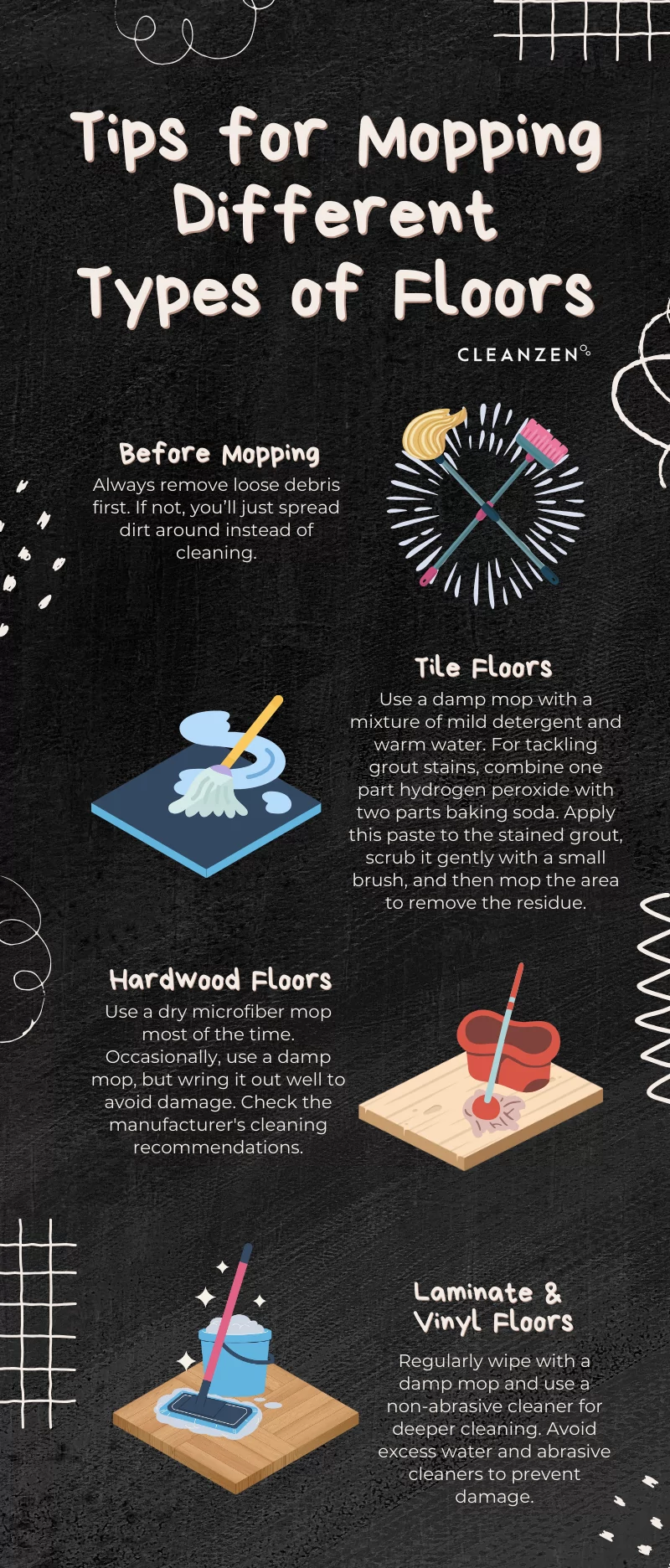
Credit: cleanzen.com
Health Benefits Of Clean Floors
Clean floors aren’t just about looks. They protect your health.
- Reduced allergens: Dust mites and pollen decrease with regular mopping.
- Lower infection risk: Bacteria and viruses are removed from high-touch surfaces.
- Better indoor air quality: Less dust means easier breathing.
A well-kept home is safer and more comfortable for everyone. You can read more about health impacts of cleaning at the CDC Healthy Homes website.
Frequently Asked Questions
How Often Should You Mop If Someone Has Allergies?
If allergies are a concern, mop high-traffic areas at least twice a week. Bedrooms and living rooms should be cleaned weekly. Use a microfiber mop and avoid scented cleaners.
Can I Mop Hardwood Floors Every Week?
It’s better to mop hardwood floors once or twice a month. Use a damp mop, not a wet one. Excess water can damage the wood. For regular cleaning, sweep or vacuum weekly.
What Is The Best Mop For Tile Floors?
Microfiber mops are most effective for tile. They pick up dust and grime without scratching. For deep cleaning, use a steam mop occasionally, but check your tile manufacturer’s guidelines.
Is It Okay To Use Vinegar For All Floors?
Vinegar is safe for tile and vinyl but can harm stone and hardwood. Always dilute vinegar with water. For wood, use a specialized cleaner.
Should I Mop After Vacuuming?
Yes, always vacuum or sweep before mopping. This removes loose dirt and prevents scratching. Mopping afterward gives a deeper clean and removes sticky residue.
Keeping your floors clean is a simple habit that pays off in health, comfort, and long-lasting beauty. By adjusting your mopping schedule to your home’s needs, you’ll save time and protect your floors. Remember, the right tools and methods make all the difference.
With these tips and insights, you’re ready to create a routine that works for you.