Skip to content
Carrying a lunch box to school, work, or on a hike is a daily routine for many. But juggling a lunch box along with a backpack can quickly become uncomfortable. You might feel unbalanced, worry about spills, or simply run out of hands when you need to hold your phone or a coffee.
Thankfully, attaching your lunch box securely to your backpack is not only possible—it’s easy with the right approach. This guide will walk you through practical methods, tips, and common mistakes, so you can keep your lunch safe and your hands free.
Why Attach Your Lunch Box To Your Backpack?
Before jumping into the how-to, it’s useful to consider the real benefits of attaching a lunch box to your backpack. First, it keeps your hands free, making travel safer and more comfortable. Second, it helps prevent your lunch from getting squashed inside your bag, which is especially important for fragile items like fruit or sandwiches. Lastly, it saves space inside your backpack, so you have more room for books, laptops, or gym gear.
Common Types Of Lunch Boxes And Backpacks
To pick the best attachment method, you should know the types of lunch boxes and backpacks you’re working with. Not all combinations work the same way.
| Lunch Box Type | Typical Features | Attachment Difficulty |
|---|---|---|
| Soft-sided (insulated) | Handles, zipper, flexible shape | Easy |
| Hard-shell (plastic/metal) | Stiff, often no handle, keeps shape | Medium |
| Bento box | Compact, usually no handle | Medium |
| Thermal bag | Flexible, often with a shoulder strap | Easy |
Backpacks also vary:
- Classic backpack: One main compartment, front pocket, simple straps.
- Laptop backpack: Extra padding, more pockets, sometimes external loops.
- Hiking backpack: Multiple attachment points, side pockets, chest/waist straps.
- Drawstring bag: Lightweight, usually no attachment points.
Knowing your gear helps you pick the safest, most secure method.

Credit: songhomebag.com
Methods To Attach A Lunch Box To A Backpack
There’s no single best way—your choice depends on what you carry. Here are the most reliable ways, with real-life pros and cons.
1. Using Built-in Straps Or Loops
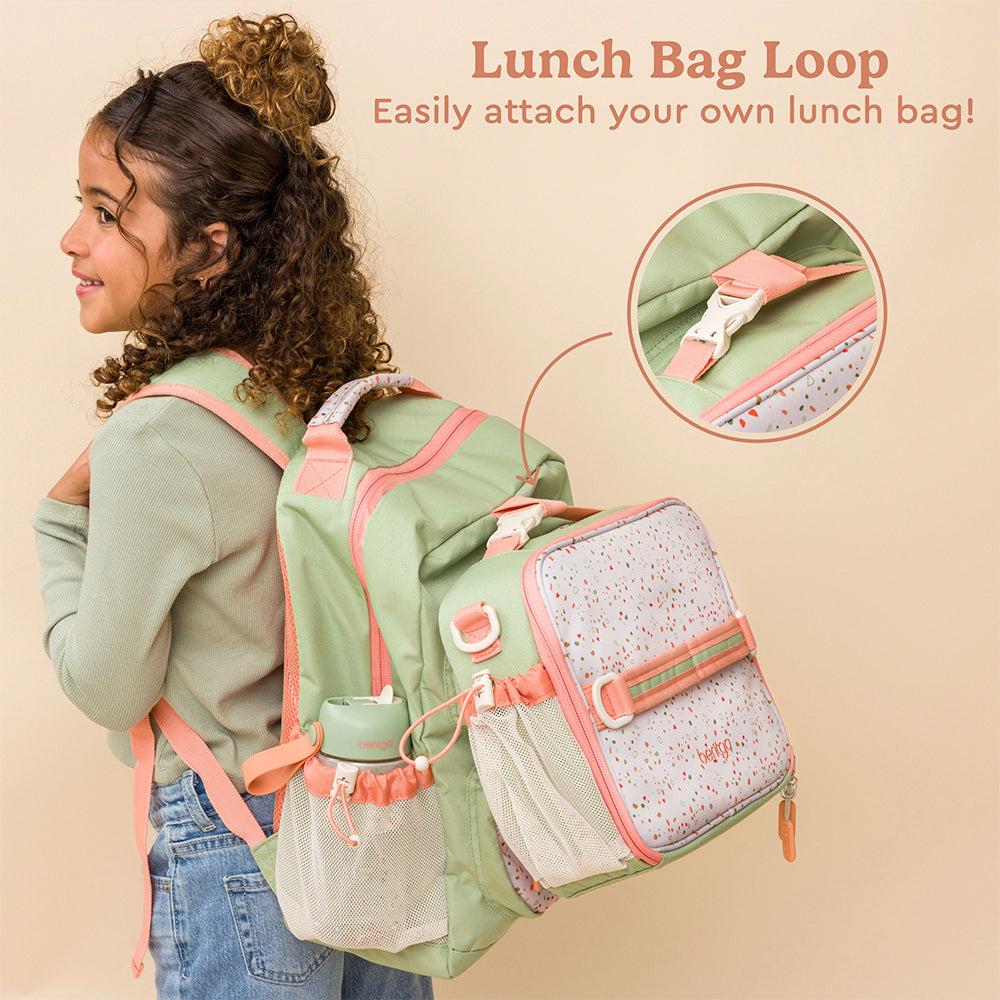
Many lunch boxes and backpacks now include D-rings, loops, or extra straps. If both your lunch box and backpack have these, you’re in luck.
- Thread the strap or loop from your lunch box through a loop on your backpack.
- Secure with a plastic buckle or carabiner.
- Make sure the lunch box hangs evenly and doesn’t swing too much.
Pro tip: Not all built-in straps are strong. Check the stitching before trusting them with a heavy lunch.
2. Carabiner Clip Method
Carabiners—the metal clips used in climbing—are perfect for this job. Choose a sturdy one rated for at least 10 lbs (4.5 kg).
- Clip one end to the lunch box handle or loop.
- Clip the other end to a backpack loop, D-ring, or shoulder strap.
This method is quick and keeps your lunch easy to grab. Avoid using cheap plastic carabiners—they can break without warning.
3. External Mesh Pocket
Some backpacks have a mesh pocket on the side (often for water bottles). If your lunch box is not too large, you can slide it in.
- Place the lunch box vertically to avoid spills.
- Make sure it fits snugly so it doesn’t fall out.
This method works best for soft-sided or small lunch boxes.
4. Using Bungee Cords Or Elastic Straps
If your backpack has horizontal straps on the outside (common on hiking bags), you can secure a lunch box underneath.
- Stretch the bungee cord or elastic strap over the lunch box.
- Fasten tightly but don’t crush your food.
- Test by shaking the bag gently—if it moves too much, tighten the strap.
This is a favorite for hikers because it’s fast and allows air to circulate, keeping your lunch cool.
5. Velcro Or Hook-and-loop Straps
You can buy Velcro straps (often sold for cable management) and use them to attach your lunch box.
- Wrap one strap around the lunch box handle.
- Attach the other end to a backpack strap or loop.
- Double-wrap for extra security.
Velcro is strong but can wear out over time, so check it regularly.
6. Diy Attachment Solutions
If your lunch box or backpack has no loops or handles, get creative.
- Sew a small loop onto your lunch box.
- Use zip ties (cut them off at the end of the day).
- Use a short piece of rope in a pinch.
Important: Never use weak or thin string—if it breaks, your lunch could fall and spill.
Comparison: Which Method Is Best?
Here’s a direct look at which method suits different needs.
| Method | Best For | Security Level | Ease of Use |
|---|---|---|---|
| Built-in straps/loops | Modern backpacks/lunch boxes | High | Easy |
| Carabiner | Handles or loops present | Medium-High | Very easy |
| Mesh pocket | Small, soft-sided lunch boxes | Medium | Very easy |
| Bungee cords | Outdoor/hiking backpacks | High | Medium |
| Velcro straps | Cable management, no loops | Medium | Easy |
| DIY solutions | Unusual shapes, no handles | Low-Medium | Hard |
For daily use, carabiners and built-in loops are most popular. For travel or hiking, bungee cords offer extra safety.
Step-by-step: Attaching Your Lunch Box Safely
Let’s look at a practical example using a carabiner, the most universal method.
- Choose a strong carabiner (metal, climbing-rated if possible).
- Locate the handle or loop on your lunch box.
- Find a secure point on your backpack—a strap, D-ring, or handle.
- Attach the carabiner through both loops.
- Test the connection by gently pulling. The lunch box should not swing wildly or feel loose.
- Adjust as needed for comfort. If it bumps your legs or back, try a different spot.
Tip: When attaching a lunch box with food that might leak, always keep it upright. Use a plastic bag inside as a backup.
Mistakes To Avoid
Even with the best intentions, it’s easy to make small mistakes that lead to big messes. Watch out for these:
- Using weak clips: Cheap plastic carabiners often break. Invest in metal ones.
- Overloading: If your lunch is heavy, use two attachment points to balance the weight.
- Ignoring balance: Hanging a lunch box low can throw off your backpack’s balance. Attach it near the top or center for comfort.
- Forgetting waterproofing: If you attach your lunch box outside, protect it from rain with a plastic bag or waterproof cover.
- Not checking before travel: Give your setup a shake before leaving. Make sure nothing will fall off during your commute.

Credit: www.reddit.com
Real-life Examples
- Student commute: Mary, a college student, uses a soft insulated lunch box with a handle. She attaches it to her backpack’s top loop with a metal carabiner. She keeps both hands free for her bike and never worries about spills.
- Office worker: Jason has a hard-shell lunch box with no handle. He uses two Velcro straps to secure it to the side of his laptop backpack, keeping it upright and safe from bumps.
- Hiker: Anna, who hikes every weekend, uses a hiking backpack with bungee cords. She slips her thermal lunch bag under the cord and tightens it, so nothing moves during long climbs.
You might find this helpful: Best Lunch Boxes for Adults
Insider Tips Most People Miss
Most beginners overlook a few tricks that can make a big difference:
- Check weight distribution: Attaching a heavy lunch box too far from your back can cause shoulder pain. Try to keep it close to the center of your backpack.
- Quick access matters: If you’re only stopping briefly for lunch, attach your box where you can remove it without taking your backpack off.
- Double-bag for spills: Even the best attachment won’t save you from a leaky lunch. Always put liquids in a zip-top bag inside your lunch box.
- Color coding: Use a bright carabiner or strap so you can find and detach your lunch box quickly, especially in crowded places.
- Upgrade your gear: If you carry lunch daily, consider a lunch box or backpack designed for attachment, with built-in loops or clips.
Credit: bentgo.com
Caring For Your Gear
Both lunch boxes and backpacks last longer with proper care.
- Clean clips and straps regularly—food spills can attract dirt and weaken materials.
- Inspect attachment points each week. Look for signs of wear or loose stitching.
- Store carabiners and cords in an easy-to-remember pocket, so you don’t lose them.
When To Put Your Lunch Box Inside Instead
Sometimes, attaching your lunch box outside isn’t the best choice. Consider putting it inside your backpack when:
- Weather is bad: Rain can ruin your meal.
- You’re in crowded areas: It’s easier for attached items to get bumped or stolen.
- You have valuable electronics: If your lunch leaks, you want to keep it separate.
Plan based on your day—flexibility is key.
Safety And Security Concerns
Attaching items outside your backpack can draw attention or make it easier for thieves to snatch them. Always:
- Use secure clips that can’t be opened easily by strangers.
- Keep your backpack close when in busy places.
- Choose bright, unique straps so you can spot your lunch box quickly.
Recommended Gear For Easy Attachment
If you want an even smoother experience, some gear is made for this purpose:
- Lunch boxes with built-in carabiners or clips.
- Backpacks with MOLLE webbing (rows of loops for attachments).
- All-in-one lunch and backpack combos.
You can find these at outdoor retailers or online. For a deeper look at gear choices, check out this Outdoor Gear Lab review.
Frequently Asked Questions
Can I Attach Any Lunch Box To Any Backpack?
Most lunch boxes can be attached to most backpacks if you use the right method (carabiner, Velcro, bungee, etc. ). However, very heavy, very large, or oddly-shaped lunch boxes might not fit securely. Always test before heading out.
What’s The Safest Way To Attach A Lunch Box For Kids?
For children, use a short carabiner or a strong Velcro strap so the lunch box doesn’t swing or get lost. Make sure the attachment is easy to open in case of emergency.
Will Attaching My Lunch Box Damage My Backpack?
If you use strong, smooth clips (not sharp metal), and avoid overloading, your backpack should not be damaged. Check for loose stitching or stress marks over time.
How Do I Keep My Lunch Box From Getting Wet?
Use a waterproof cover or put your lunch box inside a plastic bag before attaching it outside. Some lunch boxes have waterproof shells. Always check the weather before heading out.
Are There Backpacks Designed For Lunch Boxes?
Yes, some backpacks include built-in lunch box compartments or external straps specifically for this purpose. These are popular among students and hikers. Look for features like D-rings, mesh pockets, or MOLLE webbing.
Carrying your lunch box doesn’t need to be a daily struggle. With a few simple tools and the right method, you can keep your food safe, your hands free, and your journey smooth—no matter where you’re headed.