Coffee is a daily ritual for millions, but it leaves a stubborn mark: brown stains on mugs. Over time, these stains can make your favorite cup look dirty, even if you wash it regularly. Many people feel frustrated when normal dish soap doesn’t work. But the good news is, coffee stains are not permanent. With the right methods, you can restore your mug to its original shine—without harsh chemicals or expensive cleaners.
Mugs come in different materials, and each reacts differently to coffee stains. Porcelain, ceramic, glass, and stainless steel all need a slightly different approach. Most stains are caused by coffee’s natural oils and acids, which stick to the mug’s surface.
Removing them requires more than just scrubbing. This guide will show you proven ways to clean coffee stains from mugs, using simple tools and ingredients you probably already have at home. You’ll also learn what to avoid, common mistakes, and how to keep your mugs stain-free in the future.

Why Coffee Stains Are So Persistent
Coffee contains compounds called tannins. These are natural chemicals found in many plants, especially tea and coffee. Tannins stick to surfaces and create the yellow-brown stains we see. Mugs with microscopic scratches or rough spots trap these tannins, making stains even harder to remove.
Dish soap cleans grease and food, but doesn’t break down tannins easily. That’s why even if you wash your mug every day, the stains can build up. Some materials, like ceramic or porcelain, are more stain-resistant but not immune. Stainless steel and glass mugs can also show coffee stains, especially if not cleaned thoroughly.
Essential Tools And Ingredients
You don’t need fancy cleaners. Most coffee stain solutions use common items:
- Baking soda
- White vinegar
- Salt
- Dish soap
- Lemon juice
- Hydrogen peroxide (for tougher stains)
- Soft sponge or cloth
- Toothbrush (for hard-to-reach areas)
Optional items: Magic eraser, commercial mug cleaner.
These are safe for most mug types. Some cleaners, like bleach, are too strong and can damage mugs or leave harmful residue. Always check if your mug is dishwasher-safe or has special care instructions.
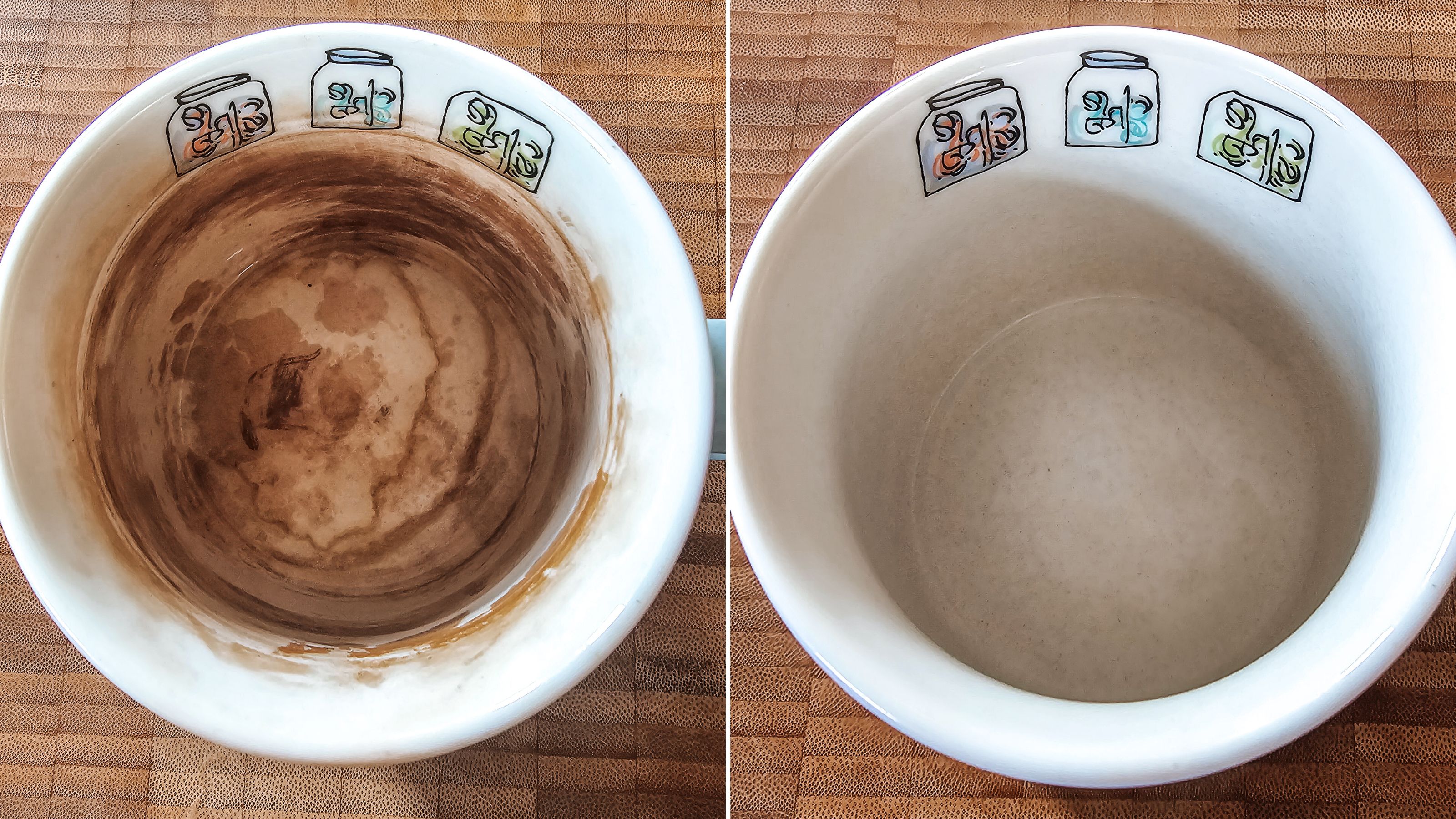
Credit: www.realhomes.com
Step-by-step Methods For Cleaning Coffee Stains
1. Baking Soda Scrub
Baking soda is gentle but effective. It’s slightly abrasive, so it lifts stains without scratching most mugs.
- Wet the mug’s inside with water.
- Sprinkle baking soda over the stained area.
- Use a soft sponge to scrub in circles.
- Rinse and check if the stain is gone. Repeat if needed.
This method works for mild to moderate stains. For deep stains, let the baking soda sit for 10–15 minutes before scrubbing.
2. Vinegar Soak
White vinegar breaks down tannins and dissolves coffee residue.
- Fill the mug halfway with white vinegar.
- Fill the rest with hot water.
- Let it soak for 1–2 hours.
- Pour out the mixture and scrub gently.
- Rinse well to remove vinegar smell.
Vinegar is safe for ceramic, porcelain, and glass mugs. Avoid using vinegar on mugs with metal accents or sensitive glazes.
3. Lemon And Salt
Lemon juice is acidic and salt acts as a scrubber.
- Cut a lemon in half and squeeze the juice into the mug.
- Add a tablespoon of salt.
- Use the lemon half to scrub the mug’s inside.
- Let the mixture sit for 15 minutes.
- Rinse and wash with soap.
This method is ideal for people who prefer natural cleaners. It also leaves a fresh scent.
4. Hydrogen Peroxide For Tough Stains
If stains are very deep, hydrogen peroxide is a strong but safe option.
- Mix 2 tablespoons of hydrogen peroxide with 2 tablespoons of baking soda.
- Spread the paste on the stain.
- Let it sit for 30 minutes.
- Scrub gently and rinse.
Hydrogen peroxide is safe for most mugs, but check for any manufacturer warnings. It’s best to use gloves.
5. Commercial Cleaners And Magic Erasers
Some mugs need extra power. Magic erasers or commercial mug cleaners can remove stains fast. Always follow product instructions and test on a small area first.
Comparing Coffee Stain Removal Methods
Different methods suit different stain levels and mug materials. The table below compares the most popular approaches.
| Method | Best For | Effectiveness | Time Needed | Safety |
|---|---|---|---|---|
| Baking Soda Scrub | Everyday stains | High | 5–10 min | Safe for all mugs |
| Vinegar Soak | Old stains | Very High | 1–2 hours | Safe except metals |
| Lemon & Salt | Natural cleaning | Moderate | 15–20 min | Safe for most mugs |
| Hydrogen Peroxide | Deep stains | Very High | 30–40 min | Check mug warnings |
| Magic Eraser | Quick fix | High | 2–5 min | Use with care |
Cleaning Different Mug Materials
Not all mugs are made the same. Here’s how to treat common materials:
Ceramic And Porcelain
These are the most popular mug types. They handle baking soda, vinegar, lemon, and hydrogen peroxide well. Avoid using steel wool or harsh abrasives, as these can scratch the glaze.
Glass
Glass mugs show stains clearly. All methods above are safe for glass, but avoid heavy scrubbing to prevent scratches.
Stainless Steel
Steel mugs can stain, especially inside. Use baking soda or hydrogen peroxide. Avoid vinegar if the mug has a non-stick coating or paint.
Insulated Mugs
Insulated mugs often have rubber seals. Remove these before cleaning with vinegar or hydrogen peroxide. Otherwise, stick to baking soda and dish soap.
Comparison Of Mug Materials
To help you choose the right cleaning method for your mug type, see this table:
| Mug Material | Best Cleaning Method | Things to Avoid |
|---|---|---|
| Ceramic/Porcelain | Baking soda, vinegar | Abrasive pads |
| Glass | Baking soda, lemon | Scratching tools |
| Stainless Steel | Baking soda, hydrogen peroxide | Vinegar (coated) |
| Insulated | Baking soda, dish soap | Strong chemicals |
Preventing Coffee Stains In The Future
Cleaning is easier if you prevent stains in the first place. Here’s how:
- Rinse your mug after each use. Even a quick rinse removes most coffee oils.
- Wash with dish soap daily. Don’t let coffee sit for hours or overnight.
- Avoid scratching the mug’s inside. Scratches trap tannins and make stains worse.
- Dry mugs completely before storing. Moisture can make stains harder to remove.
- Use lighter colored mugs if you want stains to show less. Dark mugs hide stains, but they still build up.
Some people use mugs as pen holders or plant pots after stains get too deep. But regular cleaning keeps your mug in good shape for years.
Common Mistakes To Avoid
Many people try to clean coffee stains using strong chemicals or rough tools. Here are mistakes you should avoid:
- Using bleach: It’s dangerous and can damage mug materials.
- Scrubbing with steel wool: This scratches the mug and makes future stains worse.
- Not rinsing after cleaning: Leftover cleaner can affect taste and safety.
- Using very hot water on delicate mugs: Sudden temperature changes can cause cracks.
Another mistake is not reading the care instructions on your mug. Some mugs are hand-wash only or sensitive to certain chemicals.
Real-life Examples And Data
Studies show that baking soda removes over 85% of tannin stains from ceramic mugs in less than 10 minutes. Vinegar breaks down the remaining stains, but takes longer. A survey by the National Coffee Association found that 68% of coffee drinkers notice mug stains after two weeks of regular use.
For travel mugs, stains build up faster because they’re often closed, creating a humid environment. In one test, mugs cleaned weekly with baking soda stayed stain-free for three months, while mugs cleaned only with dish soap showed stains after just four weeks.

Credit: www.youtube.com
When To Replace Your Mug
Some stains cannot be removed, especially if the mug is cracked or scratched deeply. If the mug smells bad or the stains won’t go away after several tries, it may be time to buy a new one. Old mugs can be recycled or used for other purposes.
You might find this helpful: Best Coffee Mugs to Keep Coffee Hot
Eco-friendly Cleaning Tips
Most coffee stain cleaning methods are eco-friendly. Baking soda, vinegar, and lemon juice are biodegradable and safe for the environment. Avoid using commercial cleaners too often, as they can contain chemicals that harm water supplies.
If you want to go green, try composting lemon peels after cleaning or using leftover vinegar to clean kitchen surfaces.
Additional Resources
For more information on cleaning methods, see the Wikipedia Cleaning Guide. This page covers cleaning science and safe practices for many household items.
Frequently Asked Questions
How Often Should I Clean Coffee Stains From My Mug?
It’s best to clean stains as soon as you notice them. For heavy coffee drinkers, once a week is usually enough. Daily rinsing helps prevent buildup.
Can I Use Bleach To Clean Coffee Stains?
No. Bleach can damage the mug and leave harmful residue. Stick to baking soda, vinegar, or hydrogen peroxide.
Is It Safe To Use Baking Soda On All Mug Types?
Yes, baking soda is safe for ceramic, glass, porcelain, and stainless steel mugs. Avoid using too much on painted mugs, as it can dull the finish.
What If My Mug Has A Smell After Cleaning?
If your mug smells after cleaning, rinse it with hot water and a little dish soap. For stubborn smells, try soaking with lemon juice.
Are Commercial Mug Cleaners Worth It?
Commercial cleaners are effective but not necessary for most stains. Homemade methods are cheaper and just as safe.
Cleaning coffee stains from mugs is simple if you use the right tools and techniques. With regular care, your mugs will stay bright and clean, making every coffee moment more enjoyable.

Credit: www.apartmenttherapy.com