Cooking a turkey in a roasting pan is a classic method that delivers a juicy, flavorful bird with a crisp skin. Whether you’re preparing a holiday feast or simply want to master a new skill, learning to roast turkey properly can make your meal memorable.
Many people worry about getting the turkey just right—moist inside, golden outside, and cooked through. This guide will walk you step-by-step through the process, from picking the right bird to carving and serving. Along the way, you’ll find practical tips, common mistakes to avoid, and advice that goes beyond the basics.
By the end, you’ll have the confidence to roast a turkey that impresses both family and guests.
Choosing Your Turkey
The first step is picking the right turkey. You’ll find options such as fresh, frozen, organic, or heritage breeds. For most home cooks, a fresh or frozen turkey between 12–16 pounds is ideal. It’s big enough for a group but not too large for most ovens or roasting pans.
If you choose a frozen turkey, you need to plan ahead. Frozen turkeys require thawing, which takes time:
| Turkey Weight | Fridge Thawing Time | Cold Water Thawing Time |
|---|---|---|
| 8–12 lbs | 2–3 days | 4–6 hours |
| 12–16 lbs | 3–4 days | 6–8 hours |
| 16–20 lbs | 4–5 days | 8–10 hours |
Tip: Thaw your turkey in the fridge. It’s safer and prevents bacteria growth.
Preparing The Turkey
Once your turkey is thawed, it’s time to prepare it for roasting. This step affects both flavor and texture.
- Remove giblets and neck from the cavity. These are often packed inside and can be used for gravy.
- Pat the turkey dry with paper towels. Dry skin helps it crisp up in the oven.
- Season generously. Use salt, pepper, and herbs. You can season inside the cavity and under the skin.
- Optional brining: Soaking the turkey in a saltwater solution for 12–24 hours adds moisture and flavor. For a simple brine, mix 1 cup salt with 1 gallon water, and submerge the turkey.
Why Brine?
Brining helps the turkey stay moist even if slightly overcooked. It’s a pro technique many beginners skip but it makes a big difference.
Stuffing: To Stuff Or Not?
You can roast the turkey with or without stuffing. Cooking stuffing inside the bird requires careful temperature control. For safety, stuffing must reach 165°F. Most experts recommend cooking stuffing separately for even results.
Ingredients And Tools
To roast a turkey in a pan, you need some simple ingredients and tools:
Ingredients
- 1 whole turkey (12–16 lbs)
- 2–3 tablespoons olive oil or melted butter
- Salt and pepper
- Fresh herbs (rosemary, thyme, sage)
- 1 onion, quartered
- 1 lemon, halved
- 4 garlic cloves
- 2 cups chicken or turkey broth
Tools
- Roasting pan with rack (allows heat to circulate)
- Meat thermometer
- Aluminum foil
- Basting brush
- Carving knife
Insight: Using a roasting rack keeps the turkey from sitting in its juices, which helps the skin crisp and the meat cook evenly.
Setting Up The Roasting Pan
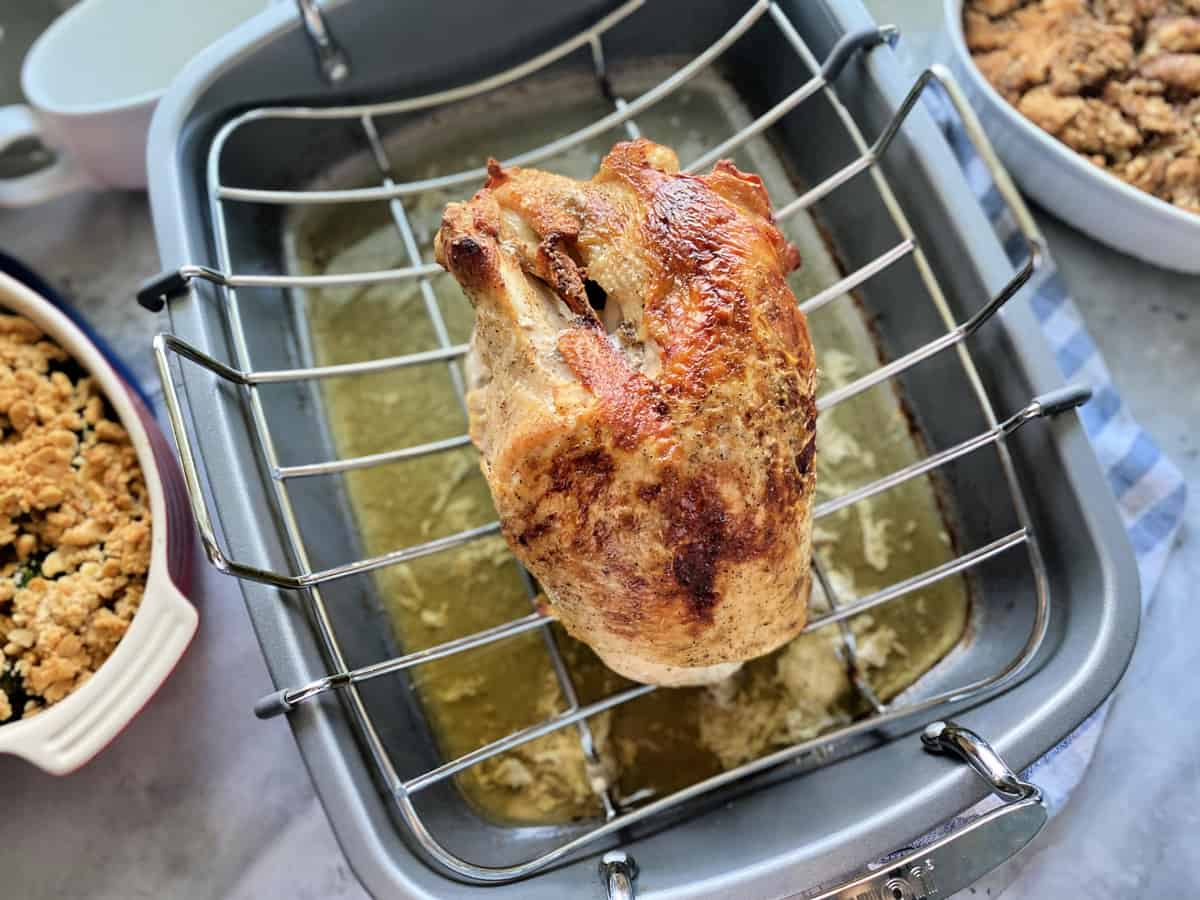
A good roasting pan is heavy, large, and has handles for easy lifting. The rack is important. It lifts the turkey, allowing hot air to circulate.
- Place the rack in the pan.
- Pour broth or water in the bottom. This keeps drippings from burning and adds moisture.
- Arrange onion, lemon, and garlic in the pan for extra flavor. They’ll scent the drippings and make your gravy better.
| Feature | Why It Matters |
|---|---|
| Rack | Keeps turkey elevated, ensures even cooking |
| Handles | Easy and safe to move pan |
| Heavy base | Prevents warping, distributes heat |
Roasting Step-by-step
Roasting a turkey is simple but requires attention. Here’s a clear step-by-step process:
- Preheat your oven to 325°F (163°C). This temperature cooks the bird evenly.
- Rub turkey with oil or butter. This helps the skin brown and keeps it moist.
- Season the turkey inside and out. Place herbs under the skin and inside the cavity.
- Position turkey breast-side up on the rack in the pan.
- Roast uncovered for best skin. If it browns too quickly, tent loosely with foil.
- Baste occasionally (every 45–60 minutes). Use a brush or spoon to drizzle juices over the bird. This adds flavor and moisture but don’t overdo it—opening the oven too often drops the temperature.
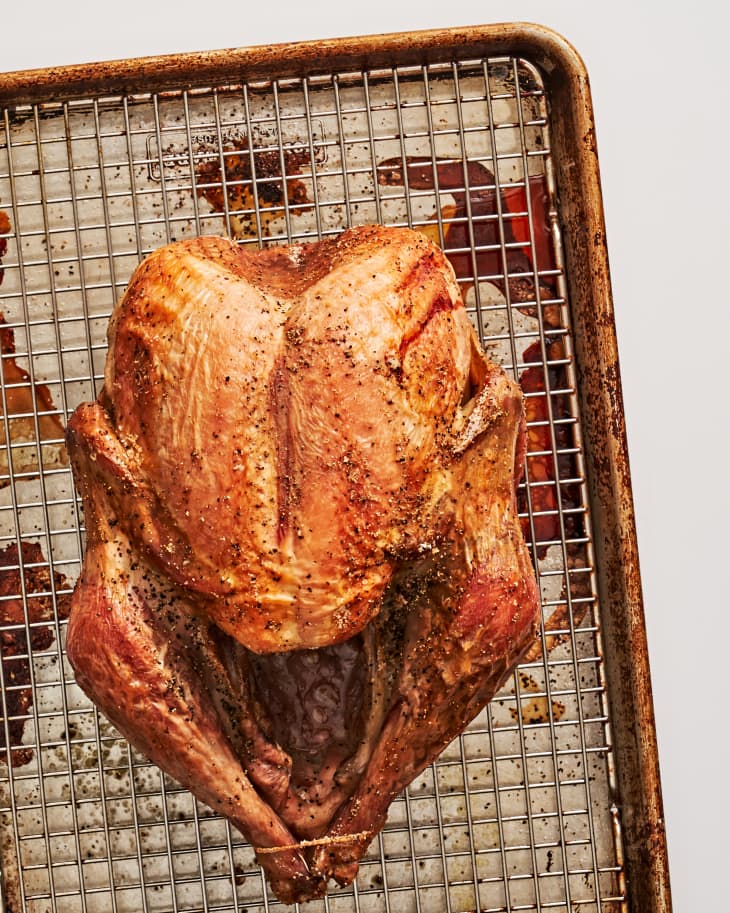
- Check temperature. Insert thermometer into the thickest part of the thigh (not touching bone). When it reads 165°F (74°C), the turkey is done.
- Rest the turkey for 20–30 minutes before carving. This lets juices redistribute, keeping meat moist.
Key insight: Many beginners carve immediately after cooking. Resting is essential for juicy meat.
Cooking Times By Weight
Knowing how long to roast is crucial. Here’s a quick reference:
| Turkey Weight | Roasting Time (Unstuffed) | Roasting Time (Stuffed) |
|---|---|---|
| 8–12 lbs | 2.5–3 hours | 3–3.5 hours |
| 12–16 lbs | 3–4 hours | 3.5–4.5 hours |
| 16–20 lbs | 4–5 hours | 4.5–5.5 hours |
Example: A 14-pound turkey usually takes about 3.5 hours unstuffed, 4 hours stuffed.
Credit: www.thekitchn.com
Carving And Serving
Once your turkey is rested, it’s time to carve. Use a sharp carving knife and fork.
- Remove legs and thighs by cutting through the joint.
- Slice breast meat parallel to the breastbone.
- Serve with pan drippings or gravy.
Tip: Warm your serving platter. This keeps the meat hot and appetizing.
Making Gravy From Pan Drippings
Pan drippings are full of flavor. Don’t waste them! Here’s how to make gravy:
- Pour drippings into a saucepan. Skim off excess fat.
- Add 2 tablespoons flour and stir to form a roux.
- Slowly whisk in 2 cups broth until smooth.
- Simmer and season with salt, pepper, and herbs.
This gravy pairs perfectly with turkey and mashed potatoes.
Common Mistakes And How To Avoid Them
Even experienced cooks make mistakes. Here are some to watch out for:
- Not thawing completely: A frozen center leads to uneven cooking.
- Overcooking: Use a thermometer, not guesswork.
- Skipping the resting period: Carving too soon causes dry meat.
- Using too much stuffing: Overstuffed birds cook unevenly and may stay raw inside.
- Ignoring the rack: Direct contact with the pan leads to soggy skin.
Insight: Overbasting can actually soften the skin. Baste sparingly for crispness.
Practical Tips For Best Results
- Start with room temperature turkey. This helps even cooking.
- Tie the legs together with kitchen twine. It keeps the shape and cooks more evenly.
- Rotate the pan halfway through roasting if your oven has hot spots.
- Save the bones for soup or stock. They’re rich in flavor and nutrients.
Credit: www.katiescucina.com
Nutritional Facts
Turkey is a healthy choice for most diets. It’s lean, high in protein, and low in fat compared to red meat.
A 3-ounce serving of roasted turkey breast (without skin) contains:
- 135 calories
- 24 grams protein
- 2 grams fat
Dark meat has more fat but also more flavor. Both are good options.
Variations: Flavor Boosts
You can add extra flavor with simple changes:
- Citrus: Place orange slices inside the cavity.
- Spices: Use paprika, garlic powder, or chili flakes.
- Butter rub: Mix butter with minced herbs for a richer taste.
Trying new seasonings is a fun way to personalize your turkey.
Roasting Pan Vs. Other Methods
Roasting in a pan is traditional, but other methods exist:
| Method | Pros | Cons |
|---|---|---|
| Roasting Pan | Even heat, crisp skin, easy drippings collection | Requires oven space, pan storage |
| Deep Frying | Very fast, crispy skin | Requires special equipment, safety risk |
| Slow Cooker | Easy, moist meat | No crisp skin, limited size |
Roasting pan is best for most people. It’s safe, simple, and delivers classic flavor.
Food Safety And Storage
Handling turkey safely prevents illness.
- Always wash hands, utensils, and surfaces after touching raw turkey.
- Cook to 165°F minimum.
- Refrigerate leftovers within 2 hours.
Leftover turkey keeps for 3–4 days in the fridge. Freeze for up to 3 months.
For official guidelines, check the USDA Turkey Safety.
:max_bytes(150000):strip_icc()/ALR-56348-a-simply-perfect-roast-turkey-VAT-4x3-step-06-6fc1ca1ac9c043a8be434e8bf39a6044.jpg)
Credit: www.aspireyouthandfamily.com
Frequently Asked Questions
How Do I Keep Turkey Breast From Drying Out?
Covering the breast with foil for part of the roasting time helps. You can also baste with broth or melted butter. Brining before cooking makes breast meat juicier.
Can I Cook A Turkey Without A Rack?
Yes, but the skin may not crisp as well. Try placing celery stalks or carrots under the turkey as a natural rack.
What If My Turkey Is Done Early?
Cover it with foil and a towel to keep warm. Resting longer is fine as long as it stays above 140°F.
How Much Turkey Do I Need Per Person?
Plan for 1 to 1.5 pounds of turkey per guest. This allows for leftovers and accounts for bones.
Can I Use The Drippings If The Turkey Is Brined?
Yes, but taste before seasoning gravy. Brined turkey drippings can be salty, so adjust seasonings carefully.
Roasting a turkey in a pan is a skill anyone can learn with practice. From picking the right bird to making rich gravy, each step adds flavor and confidence. With these tips, tables, and expert advice, you’re ready to cook a turkey that’s moist, tasty, and safe.
Enjoy your meal and share your success with friends and family—there’s nothing like homemade roast turkey to bring people together.