Most people have seen a roasting pan in someone’s kitchen or at the store, but many aren’t sure what it really looks like or how it differs from other cookware. If you want to roast a turkey, bake vegetables, or make a juicy roast beef, the roasting pan is your tool. But before you buy one, or start cooking, it helps to know exactly what a roasting pan looks like, what features matter, and how to spot a good one. This guide will help you understand all the details, from classic shapes to modern designs, with practical examples and tips for beginners.
Basic Shape And Structure
A roasting pan is easy to spot if you know what to look for. It is a large, rectangular or oval pan with high sides and sturdy handles. The sides are usually at least 2 to 4 inches tall, which helps keep juices and fat inside the pan. Most roasting pans are made of metal—often stainless steel, aluminum, or sometimes enameled steel. The metal is thick and heavy, so it can handle high oven temperatures and distribute heat evenly.
The pan is typically much larger than a baking dish. For example, a standard roasting pan might be 16 x 12 inches, big enough to fit a whole chicken or turkey. Oval pans are common for poultry, while rectangular pans are preferred for beef or pork roasts. Almost every roasting pan has two handles—one on each side—so you can lift it easily, even when it’s full and hot.
Key Features Of A Roasting Pan
Understanding the main features helps you recognize a roasting pan instantly.
- High Sides: These prevent splattering and keep juices inside, making them perfect for roasting meats.
- Sturdy Handles: Handles are usually riveted or welded, so they don’t come loose. Good handles make it safer to move the pan in and out of the oven.
- Heavy Material: Most roasting pans weigh at least 3 to 7 pounds empty. Thicker material means better heat distribution and less warping.
- Rack Included: Many roasting pans come with a removable rack. The rack lifts food above the pan bottom, allowing air to circulate and fat to drip away.
- Flat Bottom: The bottom is flat and smooth, so juices spread evenly and browning is consistent.
Here’s a quick comparison of roasting pan shapes:
| Shape | Typical Size | Best For |
|---|---|---|
| Rectangular | 16 x 12 inches | Beef, pork, large roasts |
| Oval | 15 x 11 inches | Chicken, turkey, poultry |
Materials And Appearance
Roasting pans come in several materials, each with a different look and cooking performance:
- Stainless Steel: Shiny, silver, and durable. Does not rust or stain easily. Often has a polished finish.
- Aluminum: Lightweight, dull silver, heats quickly. Some are coated with nonstick surfaces.
- Enameled Steel: Colorful, glossy, resistant to sticking. Often seen in blue or white.
- Copper: Rare, but has a bright orange color and excellent heat conductivity.
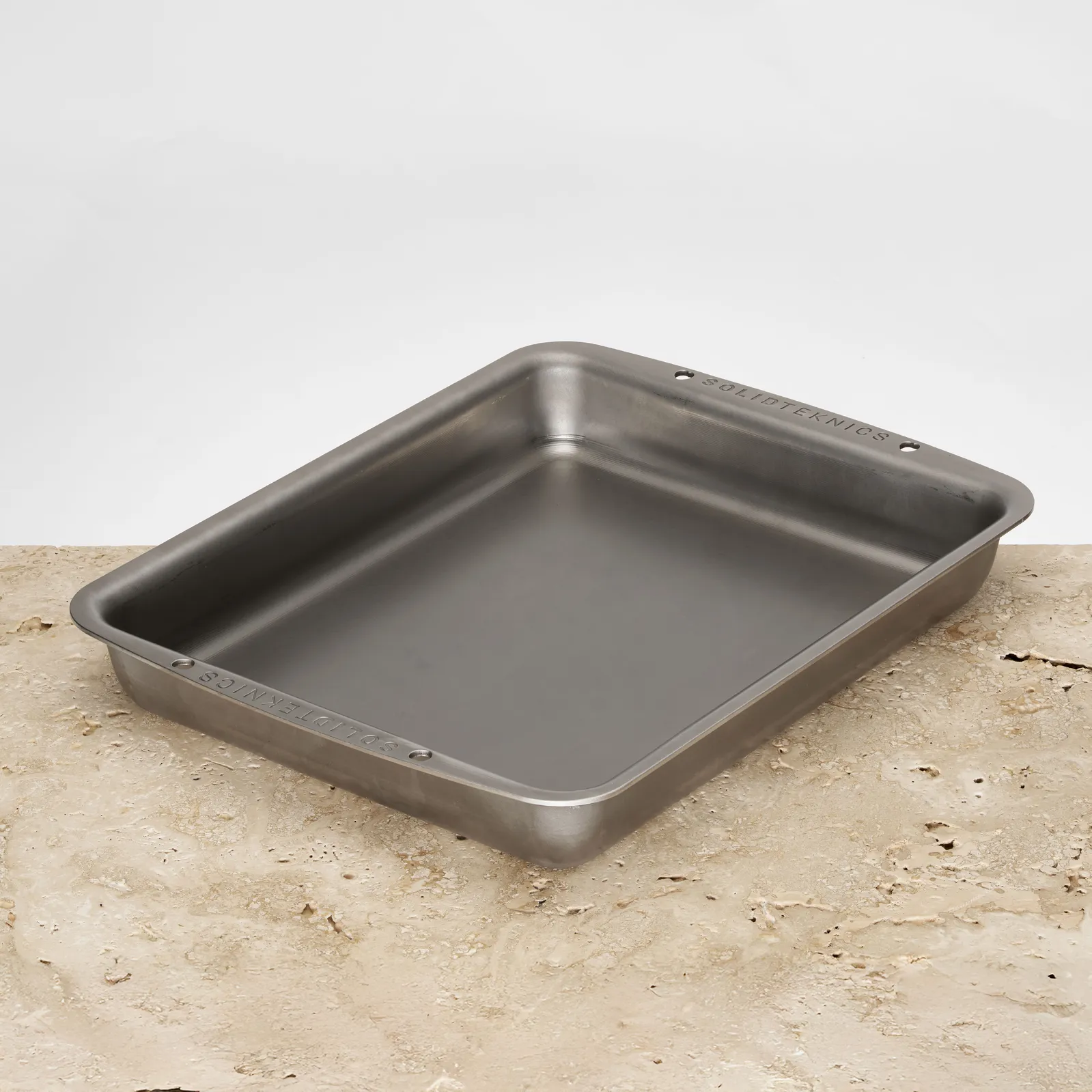
A roasting pan made of stainless steel will look clean and professional, with a mirror-like shine and sometimes a brushed finish. Aluminum pans are lighter and may have a nonstick black or gray coating. Enameled pans are heavier, with smooth, bright surfaces.
All of them have high sides and strong handles.
Roasting Pan Vs. Other Cookware
It’s easy to confuse a roasting pan with other pans, especially for beginners. Here’s how a roasting pan compares to common kitchen items:
| Cookware | Main Differences | Typical Use |
|---|---|---|
| Roasting Pan | High sides, large size, rack | Roasting meats, vegetables |
| Baking Dish | Low sides, smaller, no rack | Cakes, casseroles |
| Sheet Pan | Flat, shallow, no handles | Cookies, pizza, flatbreads |
| Dutch Oven | Round, deep, lid, heavy | Stews, braising |
If you see a pan with high sides, big handles, and a rack, it’s probably a roasting pan. If the pan is shallow or has a lid, it’s something else.
:max_bytes(150000):strip_icc()/sea-primary-roasting-pan-rkilgore-00dda7eea5a747438e40213f7509f1cf.jpeg)
Credit: www.seriouseats.com
Types Of Roasting Pans
Roasting pans aren’t all the same. Here are the main types:
Standard Roasting Pan
This is the classic style—large, rectangular, made of stainless steel or aluminum. It usually comes with a rack and can hold a whole turkey. Great for holidays and family meals.
Disposable Roasting Pan
Made of thin aluminum, these pans are lightweight and meant for one-time use. They are popular for big parties or when you don’t want to clean up. They look shiny but are flimsy, and the sides can bend easily.
Enameled Roasting Pan
These pans are colorful and heavy, with a smooth, shiny finish. They are often oval and may have a matching lid. Enameled pans are good for roasting and baking, and they add style to your kitchen.
Multi-purpose Roasting Pan
Some pans are designed to work on the stovetop and in the oven. They might have thicker bottoms for browning meat before roasting. These look more like a deep skillet but with roasting pan features.
Roasting Pan Sizes And Capacity
Size matters when choosing a roasting pan. The best size depends on what you want to cook. Most roasting pans range from 14 to 18 inches in length and 9 to 12 inches in width. The depth is usually 2 to 4 inches.
If you plan to roast a turkey, you need a large pan, around 16 x 12 inches. For chickens or small roasts, a 14 x 9 inch pan is enough. Here’s a quick guide:
| Pan Size | Food Capacity | Best Use |
|---|---|---|
| 14 x 9 inches | Up to 8 lbs | Chicken, small roasts |
| 16 x 12 inches | Up to 20 lbs | Turkey, large beef roast |
| 18 x 12 inches | Up to 25 lbs | Extra-large meals |
Most home cooks use a 16 x 12 inch pan because it fits most ovens and holds big meals. Always check your oven’s size before buying.
:max_bytes(150000):strip_icc()/what-to-use-if-you-dont-have-a-roasting-pan-1388018_FINAL-3b3d5819d5024ed8b89ca7d27bf96ac2.png)
Credit: www.thespruceeats.com
Common Roasting Pan Accessories
Roasting pans often include accessories that help with cooking:
- Rack: The rack is the most important accessory. It lifts food above the pan bottom, so hot air can circulate and fat drips away. Racks can be flat or V-shaped.
- Lid: Some enameled pans come with a lid. The lid traps steam and moisture, making meats more tender.
- Thermometer: Some pans include a slot for a meat thermometer, so you can check the temperature without opening the oven.
A rack is almost always included with a quality roasting pan. Flat racks are best for vegetables; V-shaped racks hold poultry or roasts more securely.
How To Spot A Roasting Pan In Stores
If you’re shopping for a roasting pan, look for these signs:
- High sides: At least 2 inches, often 3–4 inches.
- Strong handles: Riveted or welded, easy to grip.
- Heavy weight: Pick it up; it should feel solid.
- Rack: Check if a rack is included or fits inside.
- Material: Stainless steel, aluminum, or enameled steel are best.
Most pans are labeled as “roasting pan” on the box, but it’s better to check the features yourself.
Non-obvious Insights For Beginners
Many beginners miss these important details:
- Handles make a big difference: Thin or loose handles can make lifting a hot, heavy pan dangerous. Always test the handles for comfort and strength.
- The rack improves roasting: Food cooked directly on the pan bottom can get soggy. A rack helps air circulate, making meats crispier and less greasy.
- Depth affects cooking: Deeper pans catch more juices, but too deep can block heat. Choose a depth that matches your cooking style.
Another tip: Don’t use a roasting pan for baking cakes or casseroles. The high sides can prevent even browning.
Cleaning And Maintenance
Roasting pans need regular cleaning, especially after cooking fatty meats. Stainless steel pans are dishwasher safe but last longer if washed by hand. Aluminum pans can stain or warp if cleaned with rough scrubbing. Enameled pans are easy to clean but can chip if dropped.
For tough stains, soak the pan in hot water with dish soap. Use a soft sponge to avoid scratching. Racks should be washed separately, as grease can collect in the corners.
If you want deep cleaning tips, check reliable sources like Bon Appétit.
Credit: www.solidteknics.com
Popular Brands And Modern Trends
Some brands are known for quality roasting pans, such as All-Clad, Cuisinart, and Le Creuset. Modern pans often include nonstick coatings or are made to fit convection ovens. In recent years, sales of stainless steel roasting pans have increased by 15% in the US, as more people cook at home.
Some pans now have digital thermometers built in, and racks are adjustable for different foods. Colorful enameled pans are also becoming popular for their style and easy cleaning.
When Not To Use A Roasting Pan
A roasting pan is perfect for roasting meats and vegetables, but not always for baking or stewing. Avoid using a roasting pan for soups, sauces, or delicate desserts. The high sides and large surface can cause uneven cooking.
If you need to cook something with lots of liquid, a Dutch oven or baking dish is better. Roasting pans are not made for stovetop simmering unless labeled “multi-purpose. ”
Frequently Asked Questions
What Is The Difference Between A Roasting Pan And A Baking Dish?
A roasting pan has high sides and sturdy handles, designed for roasting meat and vegetables. A baking dish is smaller, with low sides, used for cakes, casseroles, or lasagna. Roasting pans often include a rack; baking dishes do not.
Can I Use A Roasting Pan Without A Rack?
Yes, you can use a roasting pan without a rack, but the food will sit in its own juices and may not brown as evenly. Using a rack helps air circulate and fat drain away, leading to crispier results.
How Do I Clean A Roasting Pan After Cooking?
Let the pan cool, then soak it in hot, soapy water. Use a soft sponge or brush to scrub away grease and burnt bits. Avoid steel wool on aluminum or enameled pans. Stainless steel pans can go in the dishwasher.
What Size Roasting Pan Do I Need For A Turkey?
For a medium turkey (about 12–15 lbs), a 16 x 12 inch pan is best. For larger turkeys, choose an 18 x 12 inch pan. Make sure the pan fits your oven and has a strong rack.
Are Disposable Roasting Pans Safe?
Disposable roasting pans are safe for oven use, but they are flimsy and can bend easily. Never lift a full disposable pan without support—it can spill hot juices. They are best for single use and large gatherings.
Roasting pans are essential for making delicious meals at home. By knowing what they look like and how to choose the right one, you can cook with confidence and enjoy tasty, crispy roasts every time. Whether you need a classic stainless steel pan or a colorful enameled version, look for high sides, sturdy handles, and a good rack.
With these tips, you’ll never mistake a roasting pan for anything else in your kitchen.