Skip to content
Maggots in your trash can are unpleasant and can make your whole kitchen or yard smell terrible. They appear suddenly, wriggling and multiplying fast. Many people panic and simply throw out the whole trash can or use harsh chemicals. But there are smarter, safer ways to get rid of maggots and prevent them from coming back.
If you follow the right steps, you can keep your trash clean and your home free from flies. This guide will show you how to remove maggots, why they show up, and how to stop them for good. You’ll also learn about common mistakes people make and which methods work best.
With a bit of knowledge and routine, you can handle maggots confidently—no need for panic or expensive solutions.
What Are Maggots And Why Do They Appear?
Maggots are the larvae of flies—mainly the common housefly. When flies find food waste or rotting material in your trash, they lay eggs. These eggs hatch in 24 to 48 hours. Maggots feed on the decaying matter and grow quickly.
It’s easy to miss the early signs, as fly eggs are tiny and white, often stuck to food scraps or the bin’s corners. Because houseflies are attracted to the smell of decaying organic material, even a small missed piece of meat or fruit can become a breeding ground.
Once hatched, maggots wriggle to where food is most available, spreading quickly through the trash.
Why Your Trash Can Attracts Maggots
Trash cans are ideal for maggots because:
- Warm, moist environment: Perfect for eggs to hatch.
- Food waste: Like meat, fruits, and dairy attract flies.
- Bad sealing: Loose lids let flies inside.
- Missed trash days: Overflowing bins give maggots more to eat.
Many people don’t realize that even small spills or crumbs can attract flies. Cleaning your trash can regularly is key.
Another overlooked factor is humidity. In damp climates, your trash can may stay moist longer, making it even more attractive to flies. If you keep your bin in direct sunlight, it can get warmer inside, speeding up the maggot life cycle.
That’s why people who live in apartments or homes without air conditioning notice maggots more often in summer. Even a half-empty soda can or a bit of milk left in a carton can create the perfect spot for flies to lay eggs.
Step-by-step Guide To Remove Maggots
Getting rid of maggots is not difficult if you follow these simple steps:
- Wear gloves: Protect your hands from germs.
- Empty the trash can: Remove all bags and waste.
- Pour boiling water: This kills maggots instantly.
- Scrub with soap: Use a brush and hot, soapy water to clean all surfaces.
- Rinse and dry: Make sure the can is completely dry before using it again.
For stubborn infestations, you can use white vinegar, bleach, or baking soda. Avoid mixing bleach with other cleaners.
A tip many miss is to check the bin’s seams, lid, and handles—maggots often hide in these small spaces. Use an old toothbrush to scrub these areas. If you have a removable lid, soak it in hot water separately for a few minutes.
This helps kill eggs and larvae hiding in crevices.
Example: Fast Maggot Removal
Let’s say you find maggots in your kitchen bin. You boil a kettle, pour water over the maggots, scrub with dish soap, and rinse. Within 10 minutes, the maggots are gone and your trash can is clean.
For an extra measure, after cleaning, sprinkle a little baking soda in the bottom of the dry bin. This helps keep odors away and absorbs moisture—making the can less attractive to flies in the future.

Credit: www.ecodisposer.com
Maggot Removal Methods Compared
Different maggot removal methods have pros and cons. Here’s a comparison:
| Method | Effectiveness | Safety | Cost |
|---|---|---|---|
| Boiling Water | High | Safe (with caution) | Low |
| Bleach Solution | High | Needs ventilation | Low |
| Vinegar | Medium | Very safe | Low |
| Insecticide Spray | High | Can be toxic | Medium |
| Salt | Medium | Safe | Low |
Boiling water is fast and cheap, but you must be careful not to splash yourself. Bleach works well, especially for heavy infestations, but always use gloves and keep the area ventilated. Vinegar is safer for homes with kids or pets.
One detail most people miss: Bleach can leave a strong smell. If you use bleach, rinse the bin well with water after cleaning. For people sensitive to smells, vinegar or baking soda may be better. Insecticides should be a last resort, not the first line of defense.
How To Prevent Maggots In Your Trash Can
Prevention is always better than cure. These steps will help keep maggots away:
- Use trash bags: Always line your can with strong bags.
- Seal bags tightly: Tie bags before placing in the bin.
- Clean spills immediately: Don’t let food waste touch the can.
- Keep the lid closed: Prevent flies from getting in.
- Empty trash regularly: Don’t let waste pile up.
- Clean the can weekly: Wash with soap and water.
- Store trash outside: Keep bins away from doors and windows.
It’s also smart to double-bag especially smelly items, like seafood or diapers, to keep odors in. If you notice your trash bag leaks, switch to a thicker brand. Some people put a few drops of essential oil (like lemon or eucalyptus) on a cotton ball and leave it at the bottom of the bin—flies dislike these scents.
Data: How Often Should You Clean?
Research shows that cleaning your trash can once a week can reduce fly eggs and maggots by up to 90% compared to monthly cleaning.
If you cook a lot or have a large family, you may need to clean more often. In warm months, even every 3–4 days can make a big difference. The time investment is small, but the results pay off with a fresher, cleaner kitchen or yard.

Credit: www.wikihow.com
Common Mistakes When Dealing With Maggots
Many people unknowingly make errors that help maggots return. Here are the most frequent mistakes:
- Using only cold water: Cold water doesn’t kill maggots.
- Ignoring the lid: Flies enter through cracks or gaps.
- Leaving trash bags open: Loose bags attract flies.
- Waiting too long to act: Maggots multiply fast, so don’t delay.
- Using harsh chemicals without ventilation: Bleach and insecticides can harm your health.
A non-obvious mistake is assuming maggots only appear in summer. Flies can lay eggs in warm, indoor bins even during winter.
Another mistake is spraying insecticide on top of trash, hoping it kills everything. This often doesn’t reach maggots at the bottom or in sticky liquids. Always remove all trash before cleaning. Also, don’t forget to clean the wheels and handles of outdoor bins, as maggots can hide there.
Natural Maggot Removal Solutions
If you prefer eco-friendly methods, try these:
- Salt: Sprinkle salt over maggots; it dries them out.
- Diatomaceous earth: Safe powder that kills maggots by dehydration.
- Vinegar: Pour vinegar on maggots and let it sit for 15 minutes.
- Essential oils: Peppermint and eucalyptus oils repel flies.
Natural methods are best for light infestations or when you want to avoid chemicals.
For example, after removing trash, sprinkle a generous amount of salt or diatomaceous earth on the maggots, wait 30 minutes, then rinse with hot water. You can also mix a few drops of essential oil with water and spray the inside of the bin to deter flies from returning.
Comparison: Chemical Vs Natural Methods
| Aspect | Chemical Methods | Natural Methods |
|---|---|---|
| Speed | Fast | Medium |
| Safety | Needs caution | Very safe |
| Cost | Low | Low |
| Eco-friendly | No | Yes |
If you have children or pets, natural methods are often safer.
Some people combine methods for extra effect, such as using boiling water first, then sprinkling diatomaceous earth once the bin dries. This double action kills existing maggots and prevents new eggs from hatching.
Dealing With Maggots Outside Vs Inside
The location of your trash can affects how you should handle maggots.
| Location | Recommended Actions | Extra Precautions |
|---|---|---|
| Indoor Trash Can | Boiling water, soap, quick cleaning | Ventilation, avoid harsh chemicals |
| Outdoor Trash Bin | Bleach, insecticides, hose down | Protect surrounding plants |
For indoor bins, avoid strong insecticides. For outdoor bins, you can use bleach or hose the bin down more thoroughly.
If you wash your outdoor bin, let it dry in the sun. Sunlight helps kill bacteria and keeps flies away. For indoor bins, let them dry completely before putting in a new bag—moisture encourages maggots.
You may also like: How to Remove Odor from Outdoor Trash Can
Extra Tips For Lasting Maggot Control
- Freeze food scraps: If trash pickup is delayed, freeze smelly waste and add it to the bin just before collection.
- Install fly traps: Place traps near bins to catch adult flies.
- Use baking soda: Sprinkle on spills to absorb moisture.
- Educate family members: Remind everyone to seal bags and clean up.
One insight beginners often miss is that maggots can survive in tiny cracks. Scrub the rim and lid, not just the bottom.
Another tip is to keep the area around your trash can clean. Food residue on the floor or wall can attract flies, even if your bin is clean. Set a regular reminder on your phone to check and clean your trash can and surrounding area.
When To Call A Professional
If your maggot infestation is severe (hundreds or thousands), or if they keep coming back despite cleaning, call a pest control expert. Professionals have tools and chemicals that are safe and effective. They can also check for fly breeding spots nearby.
Persistent maggot problems sometimes mean there’s a hidden food source—like spilled garbage under the bin, or a dead animal nearby. Professionals know where to look and can solve the root problem, not just the symptoms.
Maggot Facts You Should Know
- Maggots grow fast: They reach full size in 3–5 days.
- Flies lay about 500 eggs at once.
- Maggots don’t bite, but they spread germs.
- Some maggots help clean wounds in medicine, but trash maggots are not safe.
If you spot maggots, act quickly. The longer you wait, the harder it is to clean your bin.
Another interesting fact: Maggots breathe through small holes in their bodies. This means even a small amount of liquid in the bin helps them survive. Keeping your trash can as dry as possible makes it less inviting for them.
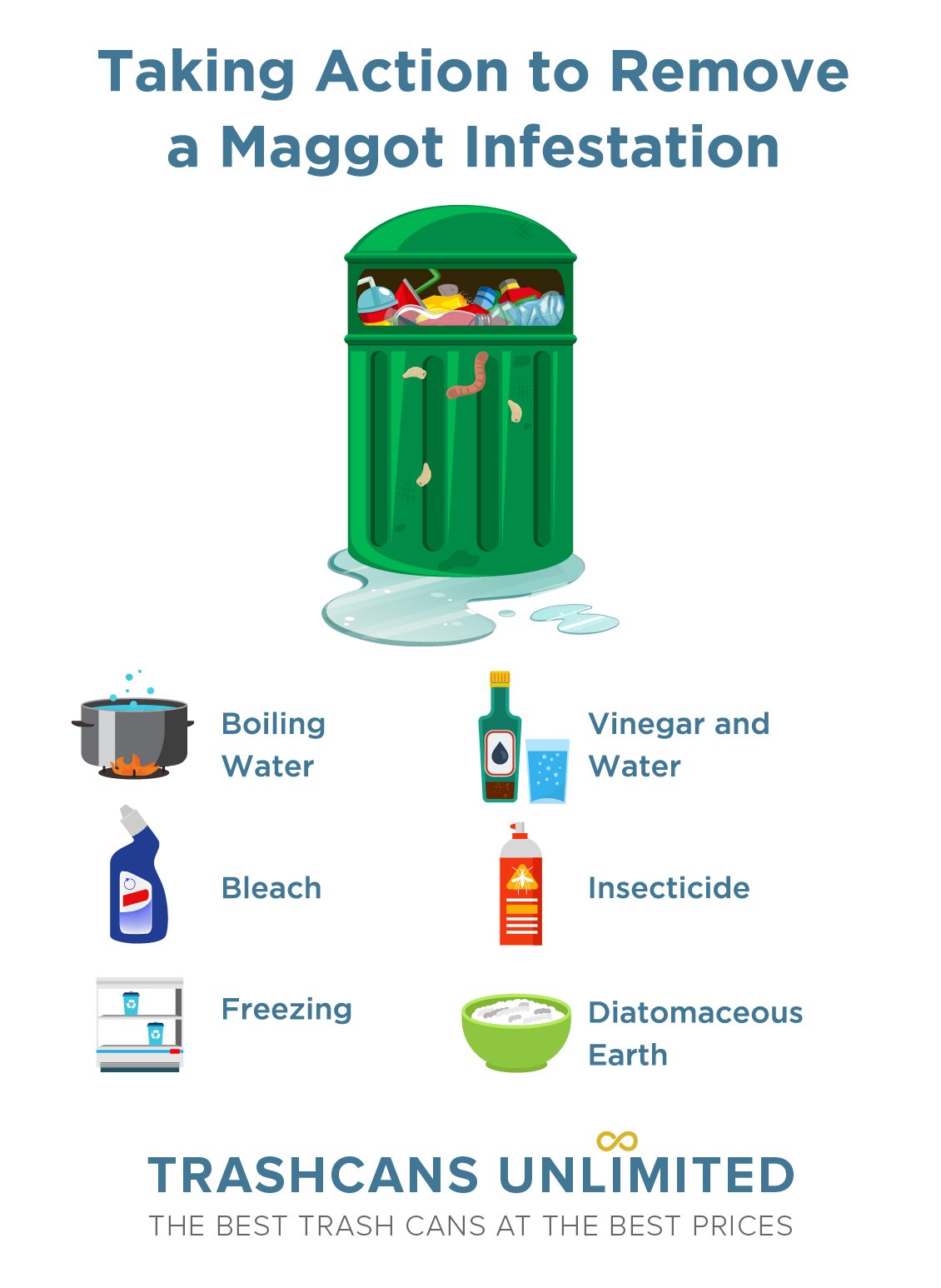
Credit: trashcansunlimited.com
Frequently Asked Questions
What Kills Maggots Instantly In A Trash Can?
Boiling water is the fastest and safest way. Pour it directly on maggots to kill them instantly. Bleach and insecticide sprays also work, but boiling water is usually enough.
For large outdoor bins, you may need several kettles of water. Always pour slowly and aim for the seams and corners.
Can Maggots Spread Diseases?
Yes, maggots carry bacteria and germs from rotting food. If they touch surfaces, wash them with soap and water. Always wear gloves when cleaning.
Keep in mind, if you have maggots in your kitchen, wipe surrounding areas with disinfectant after cleaning the bin to prevent cross-contamination.
How Do I Keep Flies Out Of My Trash Can?
Use a tight-fitting lid, seal bags well, clean spills, and empty trash regularly. Placing a fly trap near the bin helps catch adult flies before they lay eggs.
You can also try natural repellents like citrus peels or cloves in the bin to keep flies away.
Are Maggots Dangerous To Pets Or Children?
Maggots themselves are not poisonous, but they can spread germs. Keep pets and kids away from the trash can during cleaning. Avoid using harsh chemicals in areas where children play.
If your pet eats a maggot, monitor for stomach upset, but most pets are fine with small exposure. Call your vet if you have concerns.
Should I Use Insecticide For Maggot Problems?
Insecticide works, but it is not always necessary. Try boiling water and soap first. If maggots return often, check for nearby fly breeding spots. Insecticide is best for outdoor bins or severe infestations.
Always read the label and choose products marked safe for home use.
If you follow these steps, your trash can will stay maggot-free and your home will smell fresher. Remember, prevention is easier than cure. Don’t wait until you see maggots—clean your bin regularly and keep waste sealed. For more tips on pest control, visit the EPA Safe Pest Control site. With a few simple habits, you can keep maggots out for good.