If you love Asian food, you’ve probably enjoyed shrimp fried rice at a restaurant. But making shrimp fried rice in a wok at home gives you a fresh, hot, and deeply flavorful meal. You control the ingredients, the oil, and the amount of shrimp. Plus, wok cooking brings a special “wok hei”—that smoky aroma you can’t get from a regular pan. Even if you’re new to wok cooking, you can master this dish with the right steps and a few insider tips.
Shrimp fried rice is fast—most of the work is prepping ahead. In under 30 minutes, you can have a full meal ready. The secret is knowing how to handle your ingredients, when to add each part, and how to use the wok’s high heat.
Let’s break down what you need, the process, and how to avoid common mistakes that make homemade fried rice soggy or bland.
What Makes A Good Shrimp Fried Rice?
Great shrimp fried rice is about balance: fluffy rice, plump shrimp, crisp veggies, and just the right amount of savory sauce. Here’s what sets the best apart:
- Wok hei: That distinct smoky flavor from high heat.
- Separate grains: No sticky, mushy clumps.
- Fresh, not greasy: Enough oil for frying, but not swimming in it.
- Evenly cooked shrimp: Juicy, not rubbery.
Most beginners miss the importance of cold rice and the right pan heat. Don’t worry—this article covers those details.
Ingredients And Quantities
Before you start, gather everything. For two generous servings (or three moderate ones):
- 1 pound (450g) raw shrimp (medium size, peeled, deveined)
- 3 cups cold cooked rice (preferably day-old, long-grain like jasmine)
- 2 large eggs
- 1 cup mixed vegetables (carrots, peas, corn, bell pepper; diced small)
- 2-3 green onions (sliced)
- 3 tablespoons soy sauce (regular or low-sodium)
- 1 tablespoon oyster sauce (optional, adds depth)
- 2 teaspoons sesame oil
- 3 tablespoons cooking oil (neutral, like canola or peanut)
- 2-3 garlic cloves (minced)
- 1 teaspoon fresh ginger (minced, optional)
- 1/2 teaspoon white pepper (or black pepper)
- Salt to taste
Non-obvious insight: Cold, leftover rice is essential. Fresh rice will clump and get mushy in the wok. If you forgot to make rice ahead, spread hot rice on a tray and chill in the freezer for 20 minutes.
Choosing And Preparing Your Shrimp
Not all shrimp are equal for stir-frying. Medium (31/40 count per pound) or large (21/25 count) shrimp are ideal—they cook quickly and stay juicy.
- Peel and devein the shrimp. Remove tails for easy eating.
- Pat dry with paper towels. Dry shrimp sear better and don’t steam.
- If you like, toss them with a pinch of salt and white pepper.
Tip: Overcrowding the wok with wet shrimp will make them boil, not fry.
How To Prep Your Vegetables
Classic fried rice uses peas and carrots, but you can add corn, diced bell pepper, or even small broccoli pieces. Cut all vegetables about the same size for even cooking.
- Frozen peas or corn: No need to thaw; add straight to the wok.
- Carrots or firmer veggies: Dice small so they cook quickly.
Expert tip: Avoid watery vegetables like tomatoes or zucchini. They make rice soggy.
Rice Selection And Preparation
The best fried rice uses long-grain rice like jasmine or basmati. These types stay fluffy and don’t clump easily.
Rice comparison at a glance:
| Rice Type | Texture | Best For Fried Rice? |
|---|---|---|
| Jasmine | Fluffy, separate | Yes |
| Basmati | Long, dry | Yes |
| Short-grain (sushi) | Sticky | No |
| Brown rice | Chewy | Yes (if cold and dry) |
Important: Spread fresh rice on a tray to cool quickly if you don’t have leftovers.
Setting Up Your Wok And Cooking Tools
A carbon steel wok is best. It heats fast and gives you that true wok flavor. If you don’t own one, a large nonstick skillet works, but you won’t get “wok hei.”
You’ll also need:
- A wok spatula (or a flat wooden spoon)
- Small bowls for prepped ingredients
- High-heat oil (avoid olive oil; it burns)
Non-obvious insight: Pre-measure all sauces and ingredients. Wok cooking is fast—if you stop to measure, food can burn.
Step-by-step: How To Make Shrimp Fried Rice In A Wok
1. Get Everything Ready
- Place all ingredients by your stove.
- Make sure rice is cold and broken into clumps.
- Beat eggs in a bowl.
- Mix soy sauce, oyster sauce, and sesame oil in another small bowl.
2. Heat The Wok
- Place wok over high heat until just smoking.
- Add 1 tablespoon of oil and swirl to coat sides.
3. Cook The Shrimp
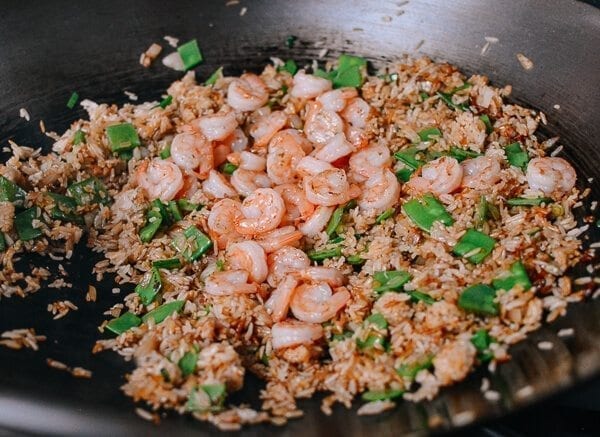
- Add dried shrimp in a single layer.
- Sear for 30 seconds per side until pink and just cooked through.
- Remove shrimp to a plate. Don’t overcook—they’ll cook more later.
4. Scramble The Eggs
- Add a bit more oil if needed.
- Pour in beaten eggs. Let sit for a few seconds, then gently scramble.
- When just set, remove eggs to a bowl.
5. Stir-fry Veggies
- Add 1 tablespoon oil, then garlic (and ginger, if using).
- Stir quickly for 10 seconds until fragrant—don’t burn!
- Add carrots and other firm veggies. Stir-fry 1 minute.
- Add peas and corn, fry another 30 seconds.
6. Fry The Rice
- Add another tablespoon oil if the wok looks dry.
- Add cold rice, breaking up any clumps.
- Use spatula to press rice into the wok surface.
- Let rice sit untouched for 30 seconds, then toss.
- Repeat until rice is hot and slightly crisp.
7. Combine Everything
- Return shrimp and eggs to the wok.
- Pour in sauce mixture.
- Toss everything quickly to coat rice evenly.
- Add green onions last, plus pepper and salt to taste.
8. Serve Hot
- Scoop into bowls and eat immediately for the best flavor and texture.
Shrimp Fried Rice: Typical Nutrition Profile
Here’s a rough breakdown per serving (1/3 of the recipe):
| Nutrient | Amount | Percent Daily Value* |
|---|---|---|
| Calories | 410 | 20% |
| Protein | 25g | 50% |
| Carbohydrates | 47g | 16% |
| Fat | 14g | 22% |
| Sodium | 980mg | 41% |
*Values are approximate and based on a 2,000 calorie diet. Add or subtract based on sauce and oil choices.
Credit: thewoksoflife.com
Mastering Wok Technique
The key to great fried rice is high heat and constant movement. The wok should be hot enough to sizzle but not burn. If you see ingredients steaming instead of frying, your wok isn’t hot enough, or you’ve added too much at once.
Pro Tip: If your stove is weak, fry in small batches—especially the shrimp and rice—then combine at the end.
Common Mistakes And How To Avoid Them
Even experienced cooks can make fried rice that’s soggy, bland, or gluey. Here’s how to avoid the most common errors:
- Using hot, fresh rice: Always use cold rice. It fries, not steams.
- Overcrowding the wok: Too many ingredients = steaming, not frying. Work in batches if needed.
- Not enough heat: Wok should be smoking hot before anything goes in.
- Overcooked shrimp: Shrimp cook fast! Remove them early, add them back at the end.
- Pouring sauce directly on shrimp/veggies: Always add sauce to the rice so it spreads evenly and doesn’t make shrimp rubbery.
- Forgetting the sesame oil: Adds aroma and depth at the end—don’t cook it at high heat.
You may also like: How to Clean Carbon Steel Wok
Variations To Try
Once you master the basics, try these tweaks:
- Pineapple shrimp fried rice: Add small pineapple chunks for sweet-tangy flavor.
- Spicy fried rice: Stir in chili garlic sauce or diced fresh chilies.
- Low-sodium: Use low-salt soy sauce and skip oyster sauce.
- Extra protein: Toss in diced cooked chicken or tofu with the shrimp.
Serving And Storage Tips
Serve shrimp fried rice right away—wok-cooked food loses its crispness as it sits.
Storing leftovers:
- Cool quickly, store in an airtight container in the fridge.
- Eat within two days for best texture.
- Reheat in a hot wok or skillet, not the microwave, for best results.
Shrimp Fried Rice Compared To Restaurant Takeout
Why make it at home? Here’s how homemade fried rice compares:
| Homemade | Restaurant Takeout |
|---|---|
| Control over oil, sodium, shrimp amount | Often high in oil and salt |
| Can use fresh, quality shrimp | Sometimes uses frozen or less shrimp |
| Customize veggies and seasoning | Standardized recipe, less customization |
| Serve hot off the wok | May arrive soggy after delivery |
Where To Learn More About Wok Cooking
If you want to go deeper into wok cooking and classic Asian stir-fries, check out this resource: Wok – Wikipedia.
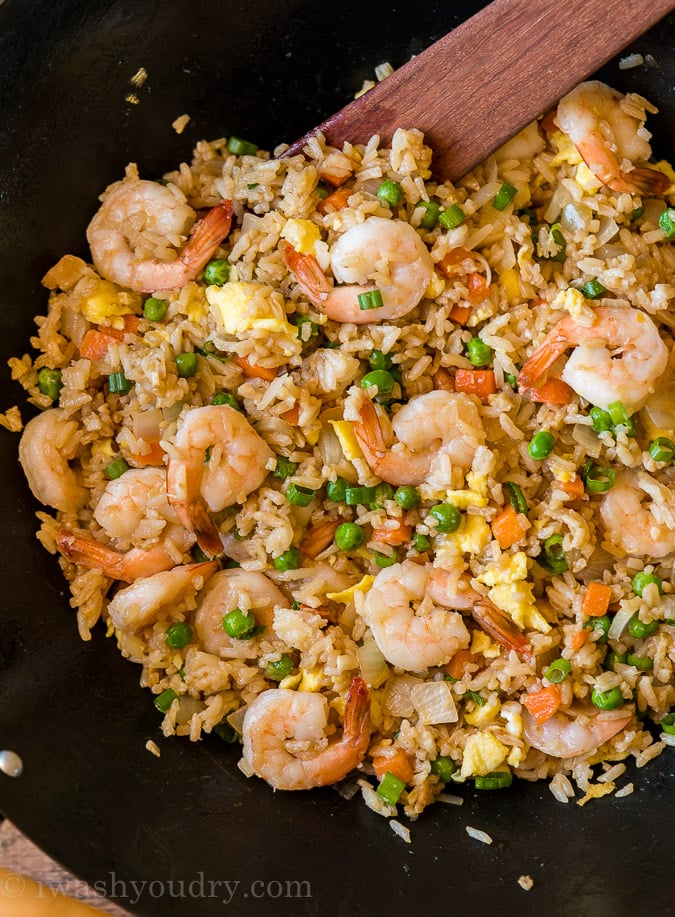
Credit: iwashyoudry.com
Frequently Asked Questions
How Do I Keep Fried Rice From Sticking To The Wok?
Make sure your wok is properly seasoned and very hot before adding rice. Also, use enough oil to coat the grains. Cold, dry rice sticks less than fresh, moist rice.
Can I Use Frozen Shrimp?
Yes, but thaw completely and dry with paper towels before cooking. Wet shrimp will not brown and can make the rice soggy.
What If I Don’t Have Oyster Sauce?
You can skip it or use a little more soy sauce. Oyster sauce adds depth, but the dish will still taste great without it.
Is It Safe To Use Leftover Rice?
Yes, as long as the rice was cooled quickly and stored in the refrigerator. Leftover rice is actually preferred for fried rice because it’s drier.
Can I Use Other Proteins Instead Of Shrimp?
Absolutely. Try chicken, pork, beef, or tofu. Adjust the cooking time as needed so your protein is fully cooked but not overdone.
Shrimp fried rice in a wok is a dish that rewards a little preparation and attention to detail. With the right rice, a hot wok, and fresh shrimp, you’ll create better-than-takeout fried rice in your own kitchen. Practice these steps, and soon you’ll find making shrimp fried rice is not just easy—it’s fun, fast, and endlessly customizable.
Enjoy your wok-cooked meal!