Making yogurt at home feels like magic—especially when you use a slow cooker. You don’t need fancy equipment or special skills. With just milk, a bit of starter, and your trusty slow cooker, you can create creamy, tangy yogurt that tastes even better than store-bought.
Many people think homemade yogurt is tricky, but the slow cooker makes the process simple and hands-off. This guide will show you each step, explain why they matter, and share tips that beginners usually miss. You’ll also learn how to adjust your yogurt for texture and flavor.
Whether you want to save money, avoid additives, or just enjoy the satisfaction of homemade food, you’ll soon see why slow cooker yogurt is worth trying.
Why Make Yogurt In A Slow Cooker?
Slow cookers are popular for soups and stews, but they’re also perfect for yogurt. They keep a steady temperature, which is essential for culturing yogurt. When you make yogurt at home, you control the ingredients—no preservatives, thickeners, or artificial flavors. Homemade yogurt often costs much less than store-bought, especially if you eat yogurt often. You can also adjust the thickness, sweetness, and tartness to suit your taste.
A slow cooker is safer and easier than stovetop methods. You don’t need to monitor the temperature constantly, which is one of the main challenges in yogurt making. The process is low-stress: just heat, cool, mix, and wait. It’s a great project for beginners, families, and anyone wanting to eat healthier.
Ingredients And Equipment Needed
You only need a few things to make yogurt in a slow cooker. Each ingredient and tool matters, so here’s what you need:
Main Ingredients
- Milk: Use any kind—whole, 2%, or skim. Whole milk makes the creamiest yogurt. For best results, use fresh, pasteurized milk. Avoid ultra-pasteurized milk, as it sometimes gives thinner yogurt.
- Yogurt Starter: This is just plain yogurt with live active cultures. Greek yogurt or regular yogurt both work. Check the label for “live cultures” or “active cultures.” You need about 2–3 tablespoons per batch.
Optional Ingredients
- Powdered milk: Adds extra protein and thickness. Use 1/4 cup per batch if you want thicker yogurt.
- Sweeteners: Add honey, sugar, or vanilla after culturing, not before.
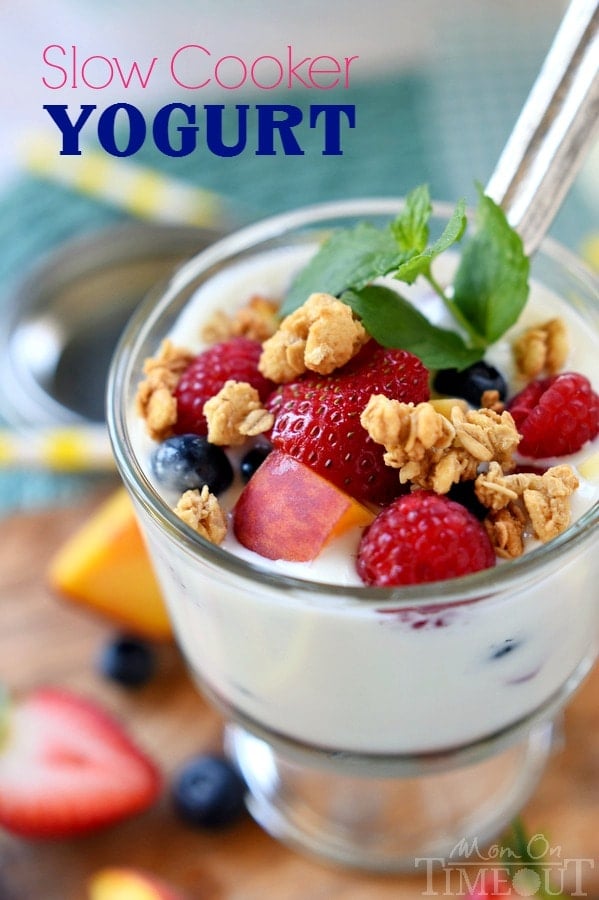
- Flavorings: Fruit, nuts, or extracts can be mixed in later.
Equipment
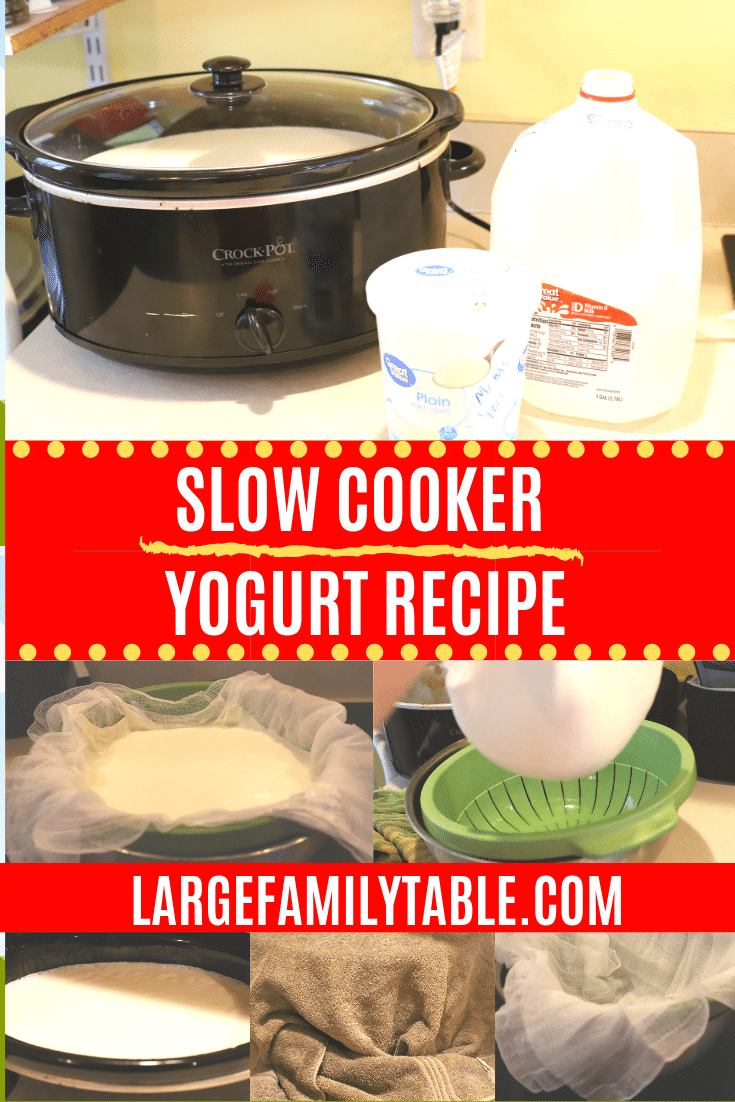
- Slow cooker: Any size works, but 4–6 quarts is ideal for most families.
- Thermometer: Digital or instant-read helps check temperatures.
- Whisk or spoon: For mixing starter into milk.
- Towel or blanket: For wrapping the slow cooker during culturing.
- Strainer and cheesecloth: If you want thick, Greek-style yogurt.
Most people already have these tools at home. If you don’t have a thermometer, you can still make yogurt—just follow the timing carefully.
Step-by-step Instructions
Making yogurt in a slow cooker is easy, but each step matters. Here’s how to do it:
1. Heat The Milk
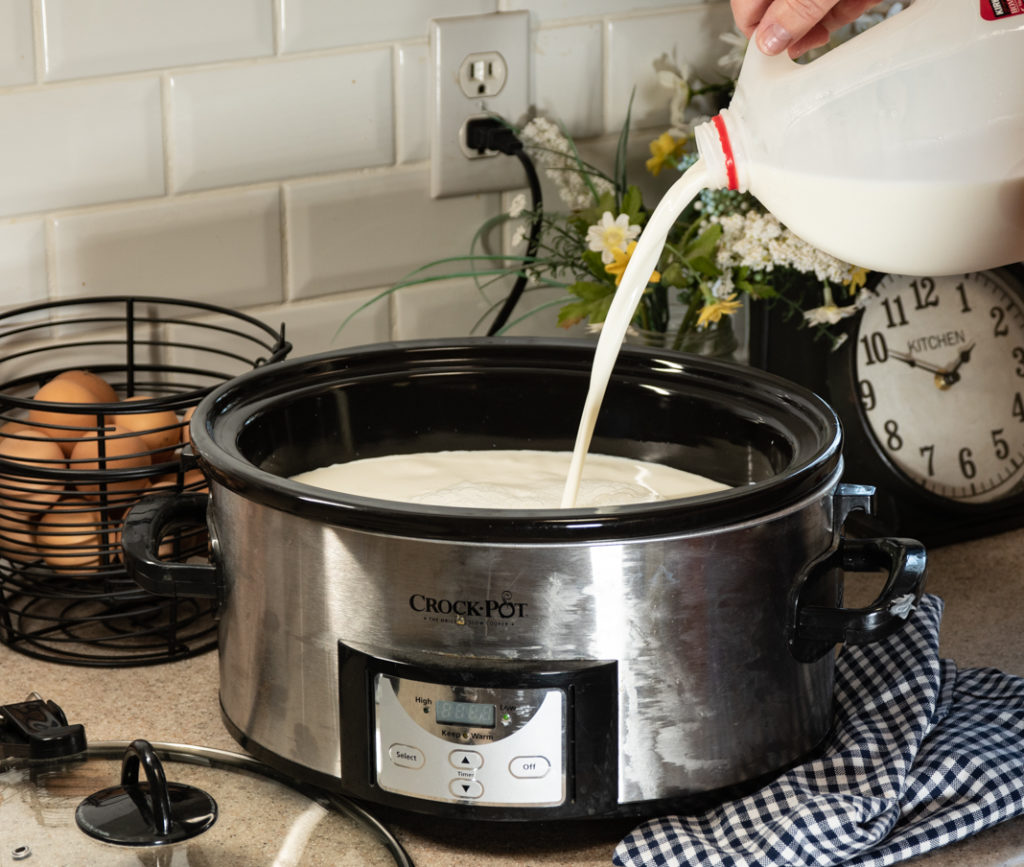
Pour your milk into the slow cooker. For a typical batch, use 8 cups (half a gallon). Turn the slow cooker to “low” and heat the milk for 2–3 hours. The goal is to reach about 180°F (82°C). This kills unwanted bacteria and changes the proteins so your yogurt sets nicely.
If you don’t have a thermometer, you’ll know the milk is hot enough when it starts to steam and tiny bubbles appear around the edges. Don’t let it boil.
2. Cool The Milk
Turn off the slow cooker and let the milk cool. Remove the lid to speed up cooling. You want the milk to reach 110°F–115°F (43°C–46°C). This usually takes 1 hour. If you’re in a hurry, stir the milk or transfer it to another container.
Why is cooling important? If you add the starter when the milk is too hot, you’ll kill the good bacteria. Too cold, and the yogurt won’t ferment properly.
3. Mix In The Yogurt Starter
Scoop out 1 cup of the cooled milk and mix it with 2–3 tablespoons of plain yogurt (your starter). Whisk until smooth. Then pour this mixture back into the slow cooker and stir gently.
Using fresh starter with live cultures is key. If you reuse homemade yogurt as a starter, do it only a few times. After that, the cultures may weaken.
4. Culture The Yogurt
Put the lid back on the slow cooker. Wrap it with a thick towel or blanket to keep the heat inside. Let the yogurt sit undisturbed for 8–12 hours. The longer it cultures, the thicker and tangier it becomes.
Some people leave yogurt overnight. If your kitchen is cool, 10–12 hours is best. If you want mild flavor, check after 8 hours.
5. Check And Chill
When culturing is done, open the slow cooker. The yogurt should look thick and creamy. It may have some watery liquid (whey) on top. That’s normal—just stir it in or drain it off.
Transfer the yogurt to containers and refrigerate for at least 4 hours. This helps the texture set and the flavor improve.
6. Optional: Strain For Greek Yogurt
If you want thicker, Greek-style yogurt, strain it. Line a strainer with cheesecloth or coffee filters. Pour the yogurt in and let it drain in the fridge for 2–4 hours. The longer you strain, the thicker it gets.
Straining removes whey and concentrates the yogurt. Save the whey for smoothies or baking—it’s rich in protein.
Tips For Better Yogurt
Many beginners miss some tricks that make homemade yogurt easier and tastier. Here are practical tips:
- Pre-warm the slow cooker: Start with a warm (but empty) slow cooker before adding milk. This helps reach the right temperature faster.
- Use fresh starter: Old yogurt or starters stored for weeks may not work well. Always use starter that’s been refrigerated no longer than 1 week.
- Avoid stirring during culturing: Disturbing the yogurt breaks the gel and makes it runny.
- Add flavor after chilling: Mixing fruit or sweeteners before culturing can change the texture or make yogurt watery.
- Don’t rush cooling: If you cool milk too quickly with ice or in the freezer, it can cause uneven texture.
Common Mistakes And How To Fix Them
Homemade yogurt is forgiving, but some mistakes are common. Here’s how to avoid and fix them:
- Yogurt is too runny: This happens if milk wasn’t heated enough, starter is weak, or culturing time is too short. Try straining, or use more starter next time.
- Yogurt is too sour: Cultured too long or at too high temperature. Next time, check after 8 hours.
- Yogurt doesn’t set: Starter was dead, milk cooled too much, or culturing temperature dropped. Use a fresh starter and keep the slow cooker well-wrapped.
- Grainy texture: Often caused by overheating milk or using ultra-pasteurized milk. Heat gently and use regular pasteurized milk.
- Off flavors: Old milk or starter, or contamination. Always use clean tools and fresh ingredients.
Adjusting Yogurt Texture And Taste
Homemade yogurt can be customized. Here’s how to change texture and flavor:
- Thicker yogurt: Use whole milk, add powdered milk, or strain after culturing.
- Sweeter yogurt: Add honey, maple syrup, or sugar after chilling.
- Milder yogurt: Culture for less time (8 hours), use a mild starter, or mix in cream.
- Tangier yogurt: Culture longer (12 hours), use more starter, or pick a tangy starter like Greek yogurt.
Experiment until you find your favorite style.
Credit: largefamilytable.com
Comparing Homemade Vs Store-bought Yogurt
Homemade and store-bought yogurt are different in cost, nutrition, and taste. Here’s a comparison:
| Factor | Homemade Yogurt | Store-Bought Yogurt |
|---|---|---|
| Cost per cup | $0.50–$0.70 | $1.00–$2.00 |
| Live cultures | Always present (fresh starter) | Varies (sometimes less active) |
| Ingredients | Milk, starter (optional: powdered milk) | Milk, starter, thickeners, preservatives |
| Customization | Easy (thickness, flavor, sweetness) | Limited (fixed recipe) |
| Additives | None (unless added) | Often present |
Homemade yogurt is usually cheaper and fresher. You can change the recipe to suit your needs. Store-bought yogurt is convenient, but often contains extra ingredients.
Slow Cooker Yogurt Recipe: Standard Batch
Here’s a simple recipe for classic slow cooker yogurt.
Ingredients
- 8 cups (half a gallon) whole milk
- 2–3 tablespoons plain yogurt (with live cultures)
- Optional: 1/4 cup powdered milk (for thicker yogurt)
Instructions
- Pour milk into slow cooker. Add powdered milk if using.
- Heat on “low” for 2–3 hours, until milk reaches 180°F.
- Turn off slow cooker. Let milk cool to 110°F–115°F (about 1 hour).
- Mix 1 cup cooled milk with yogurt starter. Whisk until smooth.
- Return mixture to slow cooker. Stir gently.
- Wrap slow cooker with a towel or blanket. Let sit 8–12 hours.
- Check texture. Refrigerate for at least 4 hours.
- For Greek yogurt, strain in fridge for 2–4 hours.
This recipe makes about 8 cups of yogurt. It stays fresh in the fridge for up to 2 weeks.
Credit: www.momontimeout.com
Nutritional Benefits Of Homemade Yogurt
Yogurt is rich in protein, calcium, and probiotics. Homemade yogurt often has more active cultures than commercial brands. Here’s a look at the nutritional values:
| Nutrient | Per Cup (Homemade) | Per Cup (Store-Bought) |
|---|---|---|
| Protein | 8–10g | 7–9g |
| Calcium | 300mg | 250–300mg |
| Probiotics | High | Moderate–High |
| Sugar | Natural only | Often added sugar |
| Fat | Depends on milk | Depends on type |
Homemade yogurt is a healthy snack or breakfast. It helps with digestion, strengthens bones, and supports the immune system.
Flavor And Texture Variations
You can make many kinds of yogurt with simple tweaks:
- Greek yogurt: Strain for thick, creamy texture.
- Vanilla yogurt: Mix in vanilla extract and sweetener after chilling.
- Fruit yogurt: Blend in pureed fruit or jam.
- Non-dairy yogurt: Use soy or almond milk, but add extra starter and thickeners.
If you want to make yogurt for kids, add honey or maple syrup after refrigeration. For savory yogurt, mix in salt, herbs, or spices.
Storing And Using Homemade Yogurt
Homemade yogurt lasts 10–14 days in the refrigerator. Keep it in clean, airtight containers. If you see separation, just stir.
Use homemade yogurt in smoothies, baking, salad dressings, or as a topping. It replaces sour cream or mayonnaise in many recipes. You can also use a few tablespoons as starter for your next batch—just don’t reuse too many times, as cultures weaken.
Troubleshooting: Quick Reference Table
Here’s a handy table for common slow cooker yogurt problems and solutions:
| Problem | Possible Cause | Solution |
|---|---|---|
| Runny yogurt | Low temp, weak starter, short culturing | Strain, use more starter, increase time |
| Sour taste | Over-cultured, high temp | Culture less time, check temp |
| No set | Dead starter, too cool | Use fresh starter, warm better |
| Grainy | Overheated milk, ultra-pasteurized | Heat gently, use regular pasteurized milk |
| Off flavor | Old milk/starter, contamination | Use fresh, clean tools |
This table makes it easier to identify and solve yogurt-making issues.
Credit: omadarling.com
Cleaning And Maintaining Your Slow Cooker
Cleanliness is crucial for yogurt making. Always wash your slow cooker, utensils, and containers with hot, soapy water. Rinse well and dry. Even tiny bits of old food can spoil your yogurt or create off flavors.
If your slow cooker has a removable ceramic insert, take it out and clean separately. Check the gasket and lid for milk residue. For deep cleaning, use a solution of baking soda and water.
Regular maintenance keeps your slow cooker in good shape for yogurt and other recipes. Don’t forget to check the cord and plug for damage. A well-maintained slow cooker lasts for years.
Yogurt Making For Beginners: What Usually Gets Missed
Many first-time yogurt makers don’t realize how much temperature matters. If you don’t keep milk in the right range, your yogurt won’t set or will taste strange. Using a towel or blanket to wrap the slow cooker is a simple trick that helps maintain warmth during culturing. Another insight: fresh starter is better than using homemade yogurt over and over. The bacteria lose strength after several batches, which makes yogurt thinner and less tangy.
Beginners also forget that homemade yogurt is naturally less sweet. If you want store-bought flavor, add sweeteners after chilling. And don’t worry about a little whey on top—it’s normal, not a sign of failure. Straining gives you thick yogurt, but skipping it gives you classic, creamy texture.
Health And Safety Considerations
Yogurt is safe to make at home if you follow basic hygiene. Always use fresh milk and starter. Clean all equipment before starting. If your yogurt smells bad, has mold, or tastes strange, throw it away.
For those with lactose intolerance, homemade yogurt often has less lactose because bacteria break it down. But some people may still react. Use lactose-free milk if needed. For vegans, plant-based milk can be used, but results vary and extra thickeners are needed.
If you want to read more about yogurt’s health benefits, check resources like National Institutes of Health.
Frequently Asked Questions
How Long Does Homemade Yogurt Last In The Fridge?
Homemade yogurt stays fresh for 10–14 days in the refrigerator. Keep it in airtight containers. If you see mold or a bad smell, throw it out.
Can I Use Homemade Yogurt As A Starter For The Next Batch?
Yes, but only for 2–3 cycles. After that, bacteria weaken and yogurt may not set well. Always use fresh, store-bought starter every few batches.
Why Is My Yogurt Watery Or Thin?
This is common. It usually means milk wasn’t heated enough or starter was weak. Try straining the yogurt for a thicker texture, or use more starter next time.
Is It Safe To Make Yogurt In A Slow Cooker?
Yes, if you keep everything clean and follow temperature guidelines. Always heat milk to 180°F and cool to 110°F before adding starter. Don’t use milk or starter past their best-by date.
What Milk Works Best For Slow Cooker Yogurt?
Whole milk makes the creamiest yogurt. You can use 2% or skim, but yogurt will be thinner. Avoid ultra-pasteurized milk, as it sometimes makes grainy yogurt.
Making yogurt in a slow cooker is simple, rewarding, and flexible. You control the ingredients, flavor, and texture. With a bit of practice, you’ll enjoy homemade yogurt that’s fresher, healthier, and tastier than store-bought. Try different variations and share your results—homemade yogurt is a kitchen skill worth mastering.