Skip to content
Melting chocolate seems easy, but it often causes frustration for home cooks and bakers. Chocolate is delicate. It can seize, burn, or become lumpy if you’re not careful. Using a saucepan is a classic and reliable way to melt chocolate, but you need to understand the right technique and some clever tips.
Whether you want to drizzle chocolate on fruit, make a ganache, or dip cookies, knowing how to melt chocolate in a saucepan is a basic kitchen skill you’ll use again and again.
Let’s walk through how to melt chocolate using a saucepan, what mistakes to avoid, and how to get smooth, glossy results every time. You’ll also learn about the best types of chocolate for melting, how to troubleshoot problems, and answers to the most common questions.
Why Melt Chocolate In A Saucepan?
Melting chocolate in a saucepan gives you control over the process. Some people use the microwave, but a saucepan allows for even heating and better results. You can watch the chocolate, stir constantly, and react if something goes wrong. If you’re working with a larger amount of chocolate, a saucepan is usually more practical.
Chocolate also melts best when it is heated gently. Direct, high heat can ruin chocolate’s smooth texture. By using a saucepan, especially with a double boiler method, you reduce the risk of burning or seizing.
Choosing The Right Chocolate
Not all chocolate melts the same way. The type and quality of chocolate you choose will affect the results.
Types Of Chocolate
- Dark chocolate: Melts smoothly and is less likely to seize because it contains less sugar and no milk solids.
- Milk chocolate: Sweeter, but can burn faster due to the milk content.
- White chocolate: Tricky to melt, as it’s mostly cocoa butter and sugar. It burns and seizes more easily.
For best results, use chocolate bars or wafers made for baking, not regular candy bars. Baking chocolate is formulated for melting and has a consistent texture.
Comparing Chocolate Types For Melting
Here’s how common chocolates compare for saucepan melting:
| Type | Melting Point (°F) | Risk of Seizing | Best For |
|---|---|---|---|
| Dark | 115–120 | Low | Ganache, Glaze |
| Milk | 104–113 | Moderate | Coating, Dipping |
| White | 100–110 | High | Decoration, Drizzling |
Non-obvious tip: Avoid chocolate chips if you want a smooth melt. Most chips contain stabilizers that help them hold their shape, making them harder to melt evenly.
:max_bytes(150000):strip_icc()/fileTRQfvw-a705e96b92b6477ea628f49557667a6f.jpg)
Credit: www.allrecipes.com
Tools And Equipment You Need
You don’t need expensive gadgets to melt chocolate in a saucepan, but a few basic tools make a big difference:
- Medium saucepan: Heavy-bottomed is best for even heat.
- Heatproof bowl: Glass or stainless steel, for the double boiler method.
- Silicone spatula or wooden spoon: For gentle stirring.
- Chopping board and sharp knife: To cut chocolate into small, even pieces.
- Kitchen scale: Optional, for precise measuring.
Practical insight: Always make sure your bowl and utensils are completely dry. Even a few drops of water can make chocolate seize and turn grainy.
Methods: Direct Heat Vs. Double Boiler
There are two main ways to melt chocolate in a saucepan. Each has advantages and risks.
Direct Heat Method
This is the simplest method, but also the riskiest.
- Place chopped chocolate directly into a saucepan.
- Set the pan over the lowest possible heat.
- Stir constantly as the chocolate melts.
- Remove from heat just before fully melted. Stir until smooth.
Why it works: Direct heat is fast but can cause scorching. This method is best for small amounts (2–4 oz) and when you’re paying close attention.
Double Boiler Method
This is the classic, safest way and is recommended for beginners.
- Fill a medium saucepan with 1–2 inches of water.
- Bring the water to a simmer, not a boil.
- Place a heatproof bowl on top (the bowl should not touch the water).
- Add chopped chocolate to the bowl.
- Stir gently but constantly as the chocolate melts.
- Remove the bowl from the heat when most of the chocolate is melted. Stir until smooth.
Pro tip: The steam gently heats the bowl, melting the chocolate without direct contact with water or high heat.
Comparison Of Methods
To help you choose, here’s a quick comparison:
| Method | Speed | Difficulty | Risk of Burning | Best Use |
|---|---|---|---|---|
| Direct Heat | Fast | Moderate | High | Small amounts |
| Double Boiler | Slower | Easy | Low | Large batches |
Non-obvious tip: If you don’t own a double boiler, use a metal mixing bowl set over a regular saucepan. Just make sure the bowl fits snugly and doesn’t touch the water.
:max_bytes(150000):strip_icc()/Southern-Living_SEOBatch46_Chocolate-lava-cake_Step1_4065-469fc4e50e28484ead16afe04282374a.jpg)
Credit: www.southernliving.com
Step-by-step: How To Melt Chocolate In A Saucepan
Let’s walk through the double boiler method, as it’s the most foolproof.
- Chop the chocolate into small, even pieces. This helps it melt evenly. For 8 ounces of chocolate, aim for pieces about the size of small buttons.
- Fill your saucepan with 1–2 inches of water. Bring it to a gentle simmer over medium-low heat.
- Place a dry, heatproof bowl on top of the saucepan, making sure it doesn’t touch the water.
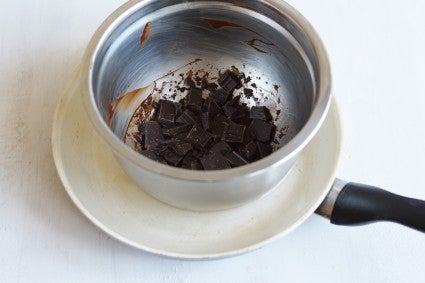
- Add the chocolate to the bowl. Stir gently and constantly with a silicone spatula as it melts.
- Watch carefully. When about 80–90% of the chocolate has melted, remove the bowl from the saucepan. The residual heat will finish the melting process.
- Continue stirring until the chocolate is completely smooth and glossy.
Key insight: Removing from heat before fully melted prevents overheating and keeps the chocolate shiny.
How Much Chocolate To Melt
Here’s a quick guide for common baking tasks:
| Usage | Amount Needed | Time to Melt (approx.) |
|---|---|---|
| Drizzling over cookies | 2–3 oz | 3–4 min |
| Dipping strawberries | 6–8 oz | 7–10 min |
| Making ganache | 8–12 oz | 10–15 min |
Always melt a little more than you think you need. It’s easier to melt extra than to stop and start over.
Common Mistakes And How To Avoid Them
Even experienced cooks can run into problems when melting chocolate. Here’s how to avoid common pitfalls:
- Overheating: Chocolate burns at low temperatures. Never let the water boil vigorously. Keep the heat low and remove the bowl early.
- Water contact: Even a drop of water can cause chocolate to seize. Make sure all equipment is dry. Cover the saucepan loosely to prevent condensation from dripping in.
- Stirring too aggressively: Stir gently. Vigorous stirring can introduce air bubbles and change the texture.
- Using wet utensils: Always use a dry spatula or spoon.
Practical insight: If your chocolate seizes (turns thick and grainy), add 1 teaspoon of neutral oil or melted butter and stir gently. Sometimes this brings it back to life.
Tips For Perfect, Glossy Melted Chocolate
- Chop chocolate evenly: Small, equal pieces melt faster and smoother.
- Use a thermometer: For best results, keep chocolate below 120°F (dark) or 110°F (milk/white).
- Add fats if needed: A little bit of cocoa butter or coconut oil can make melted chocolate glossier and easier to pour.
- Don’t rush: Patience is the secret ingredient. Low and slow always wins.
Experience-based tip: If you’re melting chocolate for coating, let it cool slightly before dipping. Hot chocolate can slide off or coat too thinly.
How To Use Melted Chocolate
Once you have smooth, melted chocolate, the possibilities are endless:
- Dip fruit like strawberries, bananas, or apple slices.
- Drizzle over cookies, cakes, or muffins.
- Mix into batters for brownies or chocolate cake.
- Make a ganache by adding cream.
- Create chocolate decorations using piping bags.
Melted chocolate also makes a great base for homemade chocolate bars or bark. Mix in nuts, dried fruits, or seeds before the chocolate sets.
Storing And Reusing Melted Chocolate
If you have leftover melted chocolate, don’t waste it! Let it cool to room temperature, then cover tightly and store at room temperature for up to two days, or in the fridge for up to a week. To remelt, use the double boiler method and stir gently.
Non-obvious insight: Each time you reheat chocolate, it can lose shine and smoothness. Try to use melted chocolate soon after making it for the best results.
When To Temper Chocolate
Tempering is a special process used for making chocolate coatings that snap and shine. For most home uses—like ganache, drizzling, or batter—you don’t need to temper. But if you want professional-looking candies or dipped treats, look into tempering. Learn more about tempering from Wikipedia.
Credit: www.kingarthurbaking.com
Frequently Asked Questions
Why Did My Chocolate Turn Grainy And Thick?
This is called seizing. It happens when water gets into the chocolate or it’s overheated. Even steam can cause this. Use only dry tools and low heat. If it happens, try stirring in a bit of neutral oil.
Can I Melt Chocolate With Milk Or Cream In The Saucepan?
You can, but add the milk or cream from the start, not after the chocolate is melted. Adding cold liquid to melted chocolate often causes it to seize. For a smooth ganache, heat the cream first, then pour over chopped chocolate.
What’s The Best Way To Keep Melted Chocolate Smooth While Using It?
Keep the bowl over warm (not hot) water, or set it on a heating pad. Stir occasionally. Don’t let the temperature go above 120°F for dark chocolate or 110°F for milk/white.
How Do I Melt Chocolate Without A Double Boiler?
Set a heatproof bowl over a regular saucepan filled with simmering water, making sure the bowl doesn’t touch the water. Or, use a heavy saucepan and the lowest possible heat, stirring constantly and removing from heat early.
What’s The Difference Between Melting And Tempering Chocolate?
Melting just means turning chocolate from solid to liquid for baking or dessert making. Tempering is a process for making chocolate set with a glossy finish and snap, used for coating candies. Most home recipes only need melted, not tempered, chocolate.
Melting chocolate in a saucepan is simple when you know the right steps. With a little patience, the right chocolate, and careful attention to temperature, you’ll get perfect, smooth melted chocolate every time. Happy baking!