Skip to content
If you love cooking, you know the joy of using fresh garlic. But after chopping, your cutting board often holds onto that strong garlic smell. Even after washing, the scent can linger and affect other foods. Many people struggle to remove garlic odor completely, especially from wooden boards. You might worry about hygiene, taste transfer, or simply dislike the smell. The good news? There are proven ways to clean your board and banish garlic aroma for good.
This article will explain why garlic odor sticks so stubbornly and show you the best methods to remove it. You’ll learn about household items that work, step-by-step instructions, and which cleaning mistakes to avoid. With the right approach, your cutting board can smell fresh again—no matter how much garlic you use.
Why Garlic Smell Sticks To Cutting Boards
Garlic’s smell is powerful because of its sulfur compounds. When you cut garlic, these compounds release and seep into surfaces. Cutting boards, especially wood, are porous. Tiny holes and fibers trap the odor molecules.
Plastic boards are less absorbent, but the smell still clings to scratches and grooves. Even glass boards can hold a faint scent. The more you use garlic, the deeper the smell goes. Ordinary soap often isn’t enough to break down garlic’s oils.
A study from the National Sanitation Foundation found that wood boards, while safer for bacteria, absorb odors more than plastic. This means you need special cleaning strategies for each material.
Best Methods To Remove Garlic Smell
There are many ways to fight garlic odor. Some use basic kitchen items; others require extra care for certain board types. Below are the most effective solutions, grouped by board material.
For Wooden Cutting Boards
Wood is beautiful but needs gentle cleaning. Harsh chemicals can damage it, so stick to natural methods.
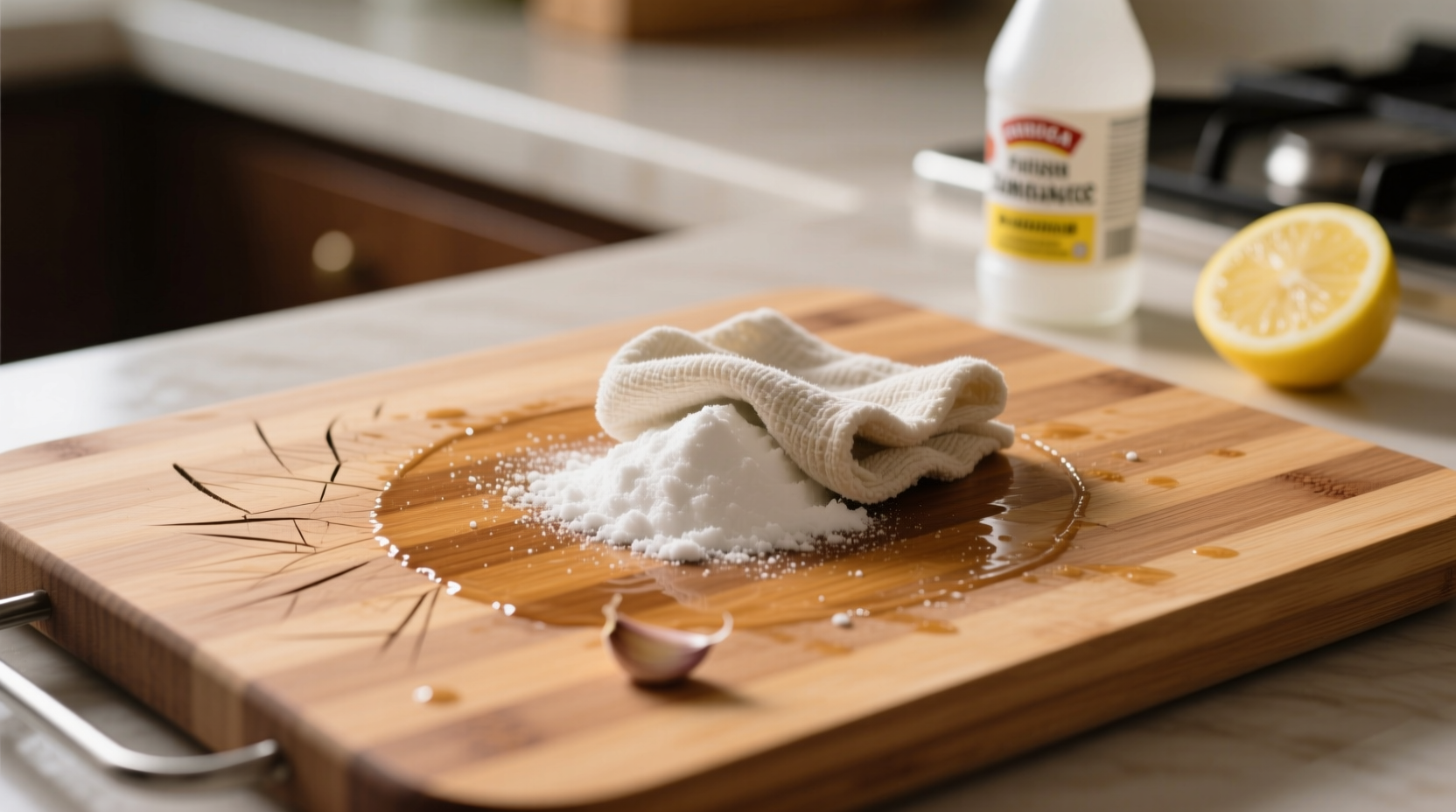
- Lemon and Salt Scrub
- Sprinkle coarse salt (like kosher salt) over the board.
- Slice a lemon in half and use it to scrub the salt into the wood.
- The salt lifts particles, and lemon’s acid breaks down garlic oils.
- Let it sit for 5 minutes, then rinse with warm water.
- Baking Soda Paste
- Mix 2 tablespoons baking soda with enough water to make a paste.
- Rub the paste over the board with a soft sponge.
- Baking soda neutralizes odors and cleans gently.
- Rinse thoroughly and dry.
- White Vinegar Spray
- Fill a spray bottle with white vinegar.
- Spray over the board’s surface, let sit for 3 minutes.
- Wipe with a damp cloth and dry.
- Vinegar is safe for wood and kills odor-causing bacteria.
- Sunlight Treatment
- Place your board in direct sunlight for 1–2 hours.
- Sun’s UV rays help break down smell molecules.
- This works best after cleaning with another method.
For Plastic Cutting Boards
Plastic boards can handle stronger cleaners, but avoid abrasive scrubs.
- Bleach Solution
- Mix 1 tablespoon bleach in 1 gallon of water.
- Soak the board for 5 minutes.
- Rinse well and let air dry.
- This removes both odor and stains.
- Dish Soap and Vinegar
- Wash with hot water and dish soap.
- Rinse, then wipe with vinegar.
- Vinegar cuts through oils and helps deodorize.
- Dishwasher Cycle
- Most plastic boards are dishwasher safe.
- Run a full cycle with hot water.
- The heat and detergent remove most smells.
For Glass Cutting Boards
Glass is non-porous but garlic oils can cling to the surface.
- Hot Soapy Water
- Wash with hot water and strong dish soap.
- Scrub thoroughly, rinse, and dry.
- Alcohol or Vinegar Wipe
- Wipe with rubbing alcohol or vinegar.
- These dissolve oils and disinfect.
Credit: lifetips.alibaba.com
Practical Steps: Cleaning Process
Knowing the right products is only part of the solution. Here’s how to clean your board effectively.
- Remove Food Debris
- Scrape off any leftover garlic pieces with a spatula.
- Choose Cleaning Method
- Use one method above, based on your board type.
- Scrub Thoroughly
- Apply your cleaning agent (salt, baking soda, etc. ).
- Use a soft brush or sponge. Don’t scrub too hard on wood.
- Let Sit
- Give the cleaning agent time to work—usually 3–5 minutes.
- Rinse Well
- Rinse with warm water. For plastic, use hot water.
- Dry Completely
- Stand the board upright to air dry. Moisture can cause smells and bacteria.
Extra Tip: Always Dry Your Board Fully. Wet Boards Grow Bacteria And Trap Odors.
Comparing Cleaning Methods
Different cleaning methods have strengths and weaknesses. Here’s a comparison to help you decide:
| Method | Effectiveness | Board Type | Time Needed | Risks |
|---|---|---|---|---|
| Lemon & Salt | High | Wood | 10 min | Mild surface wear |
| Baking Soda Paste | Medium | Wood/Plastic | 8 min | None |
| Bleach Solution | Very High | Plastic | 10 min | Discoloration |
| Dishwasher | High | Plastic | 60 min | Warping |
| Vinegar Spray | Medium | Wood/Glass | 5 min | None |
Common Mistakes To Avoid
Some cleaning habits make garlic smell worse or damage your board. Watch out for these mistakes:
- Using too much water: Especially on wood. Excess water soaks in and causes musty smells.
- Skipping drying: Boards left wet can grow mold and keep odors.
- Using harsh chemicals on wood: Bleach and ammonia break down wood fibers, shortening board life.
- Not scrubbing grooves: Garlic oils hide in cuts and scratches. Use a brush for deep cleaning.
- Mixing cleaning agents: Don’t mix bleach and vinegar—they release dangerous fumes.
- Ignoring regular maintenance: Cleaning only after odor appears lets smells build up.
You might find this helpful: Best Cutting Boards for Daily Use
Preventing Garlic Smell In The Future
Prevention is easier than deep cleaning. Here’s how to keep your board fresh:
- Use separate boards: Keep one board for garlic and onions, another for fruits and bread.
- Clean right after use: Don’t let garlic sit. Wash quickly to stop odor from spreading.
- Oil your wood board: Every few weeks, rub with food-safe mineral oil. This fills pores and blocks odor absorption.
- Sanitize monthly: For plastic, soak in vinegar or run through the dishwasher. For wood, use lemon/salt or baking soda.
- Store boards upright: Air circulation dries boards and prevents smell buildup.

Credit: blueandhazel.com
Data: Which Boards Hold Smell Most?
Research shows not all boards are equal. Here’s a look at odor retention:
| Board Material | Odor Absorption (1-5) | Ease of Cleaning | Recommended for Garlic? |
|---|---|---|---|
| Wood | 5 | Medium | No (unless dedicated) |
| Plastic | 3 | High | Yes |
| Glass | 1 | Very High | Yes |
| Bamboo | 4 | Medium | No |
This data confirms: glass and plastic boards are best if you often cook with garlic.
Additional Tips For Stubborn Smell
Sometimes, garlic odor is hard to remove. If standard cleaning doesn’t work, try these advanced tricks:
- Hydrogen peroxide soak: Mix equal parts peroxide and water. Soak plastic or glass boards for 5 minutes. Rinse well.
- Activated charcoal powder: Sprinkle on wood, let sit for 10 minutes, then wipe off. Charcoal absorbs strong smells.
- Coffee grounds rub: Rub used coffee grounds over the board, then rinse. Coffee’s aroma fights garlic.
These methods are safe but should be used occasionally. Always rinse boards well.
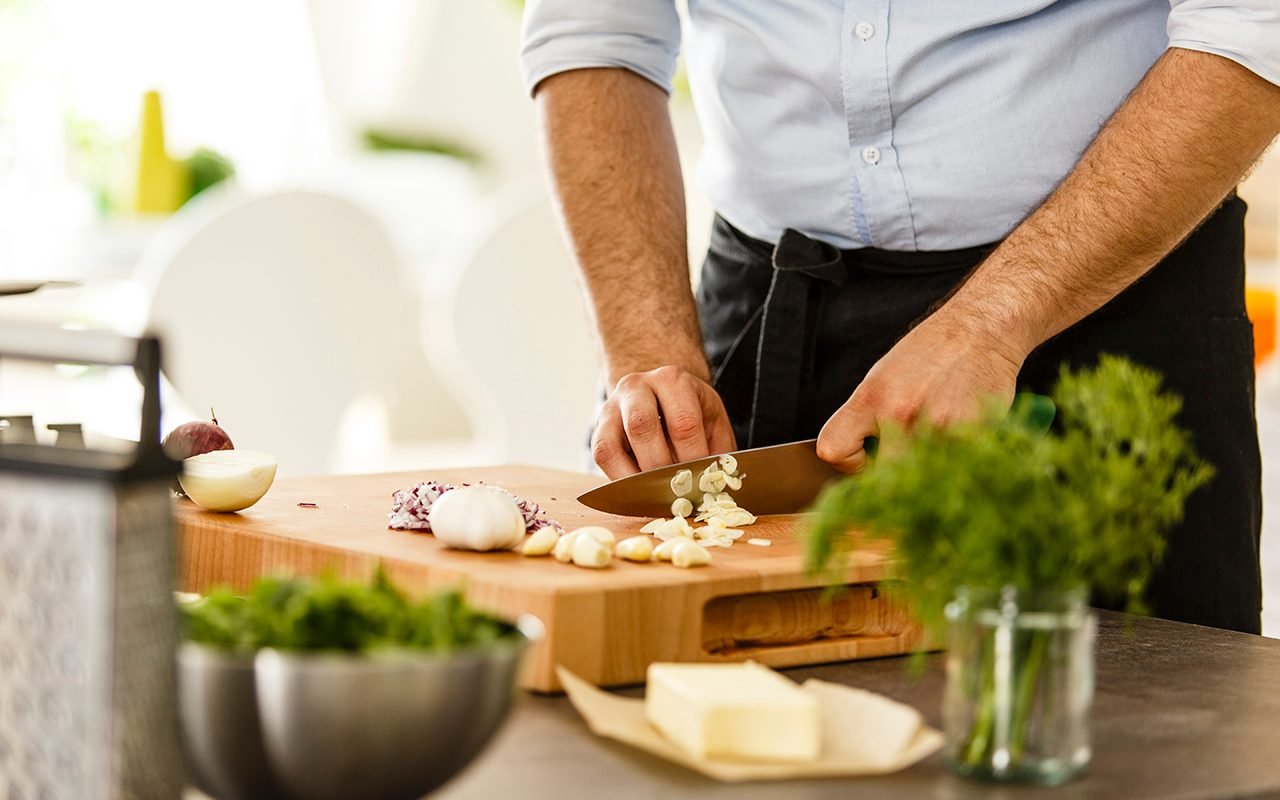
Credit: www.tasteofhome.com
How Often Should You Deodorize?
You don’t need to deep clean after every use. Here’s a simple schedule:
- Every use: Wash with soap and water.
- Weekly: Deodorize if you use garlic often.
- Monthly: Deep clean with lemon, salt, or bleach (depending on board type).
- Quarterly: Oil wood boards.
Following this routine keeps boards smelling fresh and lasting longer.
Real-life Example: Garlic Lover’s Solution
Maria, a home cook from Texas, prepares garlic almost daily. She struggled with lingering smell—even after washing. She tried lemon and salt, but the odor returned. Switching to a glass cutting board helped. Now, she uses wood for bread and fruit, glass for garlic and onions.
Her kitchen smells cleaner, and her boards last longer.
This shows: the right board, plus regular cleaning, solves garlic odor problems.
Frequently Asked Questions
What If My Wooden Board Still Smells After Cleaning?
Try repeating the lemon and salt scrub, followed by sunlight treatment. If the smell stays, rub with baking soda paste and rinse again. Oiling the board after drying can help seal in any leftover scent.
Is It Safe To Use Bleach On Wood Cutting Boards?
No, bleach can damage wood fibers and make the board unsafe. Stick to natural cleaners like vinegar, lemon, or baking soda for wood. Bleach is fine for plastic boards.
Can Garlic Odor Transfer To Other Foods?
Yes, if the board still smells, garlic oils can transfer to foods like fruit or bread. This changes taste and may cause allergies for sensitive people. Clean thoroughly and use separate boards for strong-smelling foods.
What’s The Fastest Way To Remove Garlic Smell?
For plastic or glass boards, a quick vinegar wipe or dishwasher cycle works best. For wood, lemon and salt scrub takes about 10 minutes. Always dry the board fully.
Where Can I Find More Information About Cutting Board Care?
The United States Department of Agriculture (USDA) offers excellent guidance. For more details, visit USDA Cutting Board Safety.
A garlic-scented cutting board can spoil the taste of your next meal, but with these methods, you can remove the odor and keep your kitchen fresh. Using the right cleaning products, regular maintenance, and separate boards for strong-smelling foods makes all the difference.
Try these steps and enjoy cooking with garlic—without the lingering smell.