Skip to content
A cutting board that keeps sliding can turn cooking into a frustrating and even dangerous task. Every time you chop vegetables or slice meat, you risk the board moving, which can lead to uneven cuts or even injuries. Many home cooks face this problem, especially when using lightweight boards on smooth countertops.
But there are simple solutions that can make your cutting board stay firmly in place. This article will guide you through practical, proven methods to stop a cutting board from sliding. You’ll learn why boards slip, which materials work best, and tips from professional kitchens.
With these steps, you’ll feel more confident and safe while preparing food.
Why Does A Cutting Board Slide?
The main reason a cutting board slides is friction—or the lack of it. When the surface of your board and your countertop are both smooth, there’s little to hold the board in place. Materials like plastic or glass boards often slide more easily than wood or bamboo boards. Moisture, oil, or crumbs under the board can also reduce grip, making it move unexpectedly.
Some boards are simply too light. If your board weighs less than 2 pounds, it’s more likely to slide, especially during heavy chopping. Larger boards (over 18 inches) can also shift if pressure isn’t balanced. Even the type of countertop matters: polished granite or quartz is more slippery than textured surfaces.
Here’s a quick comparison of how board material affects sliding:
| Board Material | Sliding Risk | Typical Weight |
|---|---|---|
| Plastic | High | 1–2 lbs |
| Glass | Very High | 2–3 lbs |
| Wood | Low | 3–5 lbs |
| Bamboo | Medium | 2–4 lbs |
Understanding these factors helps you choose the right method to stop your board from sliding.
Quick Fixes Using Items You Already Have
You don’t need expensive tools to solve this problem. Many kitchens have simple items that can make a board stay put in seconds.
1. Wet Paper Towel Or Cloth
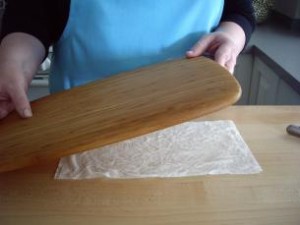
This is the easiest and most popular method. Place a damp paper towel or kitchen cloth under your board. The moisture increases friction and keeps the board stable.
- Wet a paper towel, squeeze out excess water.
- Lay it flat on the counter.
- Place the board on top.
Key benefit: It works for all types of boards and doesn’t require buying anything new.
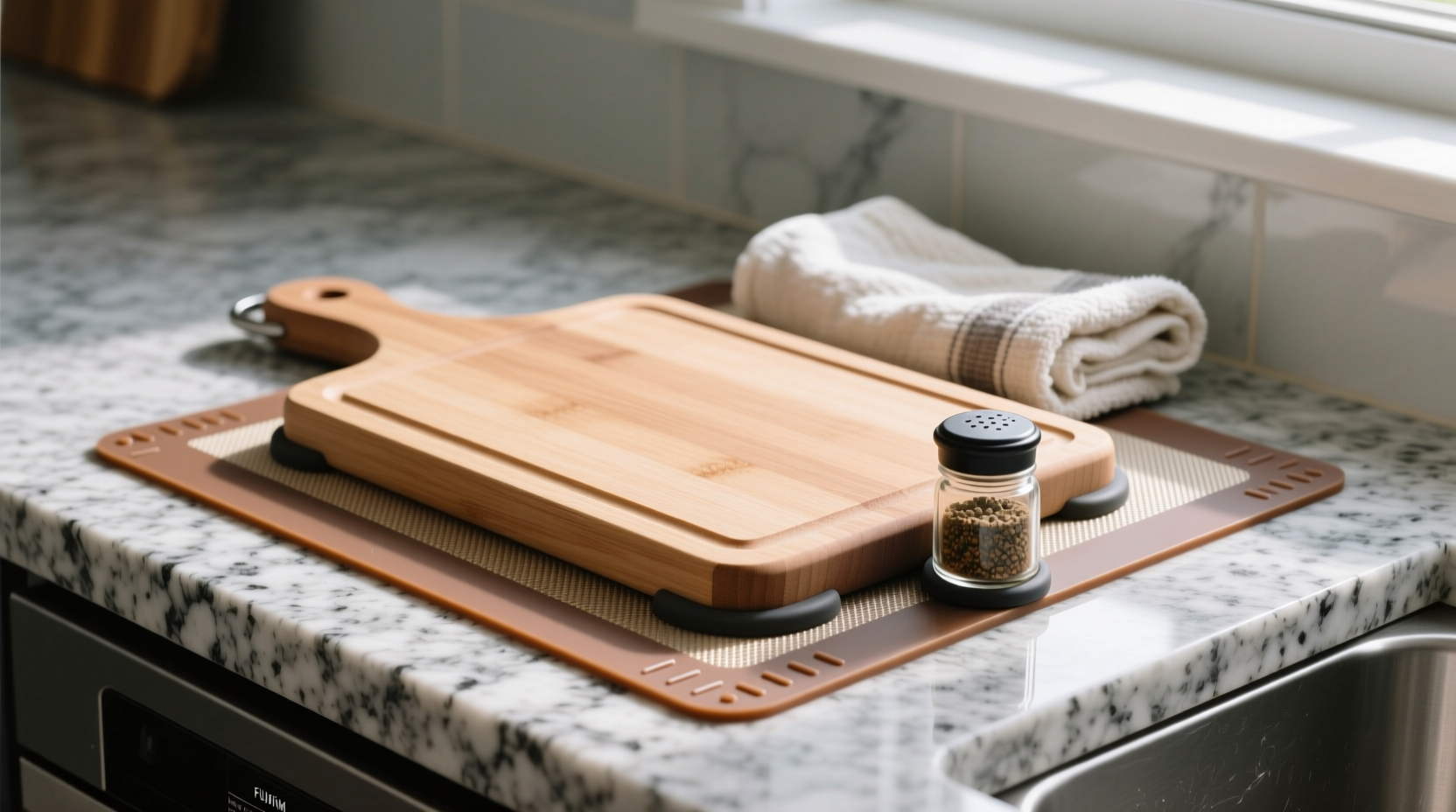
2. Silicone Baking Mat
Silicone mats are made for baking, but they’re also perfect for stopping a board from sliding. They grip both the board and the countertop.
- Put a silicone mat under your board.
- Adjust as needed for full coverage.
Silicone mats are washable and reusable. They last longer than paper towels and don’t attract bacteria.
3. Drawer/shelf Liner
Many people use non-slip liners for drawers or shelves. These liners are made of rubber or foam, and they’re cheap and easy to cut.
- Cut a piece of liner to fit under your board.
- Place it on the counter, then put your board on top.
This method is used in professional kitchens because it’s reliable and easy to clean.
4. Damp Sponge
A sponge under the board can also work, especially for small boards.
- Wet the sponge slightly.
- Place it flat under the board.
It’s best for quick tasks, but not as stable as a mat or liner.
Choosing The Right Cutting Board
Some cutting boards are less likely to slide from the start. If you’re buying a new board, consider these features:
- Weight: Heavier boards stay put better.
- Material: Wood and bamboo grip better than plastic or glass.
- Rubber feet: Boards with built-in rubber feet rarely slide.
Here’s a comparison of common board features:
| Feature | Benefit | Drawback |
|---|---|---|
| Rubber Feet | Excellent grip | May trap dirt |
| Heavy Weight | Stays put | Hard to move |
| Textured Surface | Reduces slip | Hard to clean |
| Smooth Surface | Easy to clean | More slip |
If you use a plastic or glass board, adding a non-slip mat or liner is almost always necessary.
You might find this helpful: Cutting Boards for Daily Use
Permanent Solutions For Non-slip Cutting Boards
For people who cook often, temporary fixes may not be enough. There are several ways to make your cutting board non-slip for good.
1. Attach Rubber Feet
Many boards have small rubber feet already. If yours doesn’t, you can add them.
- Buy adhesive rubber feet from a hardware store.
- Clean the board bottom.
- Stick feet on each corner.
Rubber feet are durable and make the board easy to lift. However, they don’t work well for boards used on both sides.
2. Use Non-slip Tape
Non-slip tape is made for stairs and floors, but it works for cutting boards too.
- Cut the tape to size.
- Apply strips to the board’s underside.
Tape is thin and keeps the board stable without adding height.
3. Glue Silicone Pads
Silicone pads are soft and grip well. They’re available online or at kitchen stores.
- Glue pads to corners or edges.
- Let them dry fully before use.
This option is more permanent and works for most board materials.
4. Buy A Non-slip Board
Some brands make boards with built-in silicone edges or non-slip surfaces. These boards are designed for safety and stability.
- Look for brands like OXO, Epicurean, or Joseph Joseph.
- Check for non-slip features when shopping.
Investing in a non-slip board can save time and reduce risk.
Credit: lifetips.alibaba.com
Cleaning And Safety Tips
A stable board is safer, but it also needs to be clean. Moisture under the board can lead to bacteria growth. Here’s how to keep your board and your kitchen safe:
- Remove mats, towels, or liners after cooking.
- Wash them in hot soapy water, or wipe with disinfectant.
- Dry everything thoroughly before storing.
Wood boards need extra care. Never leave a wet cloth under a wood board for long—it can cause warping or mold.
Plastic boards can be washed in the dishwasher, but make sure any rubber or silicone is dishwasher-safe.
Common Mistakes And How To Avoid Them
Even experienced cooks make mistakes when trying to stop a board from sliding. Here are some you should avoid:
- Using a dry towel: Dry towels don’t increase friction—they can actually make sliding worse.
- Placing the board on a wet surface: Water on the countertop makes the board slippery and dangerous.
- Ignoring crumbs or oil: Dirt under the board reduces grip. Always clean the surface first.
- Overloading the board: Too much weight or uneven pressure can cause sliding, even with non-slip mats.
If your board slides even after trying these fixes, check for cracks or uneven surfaces. Sometimes an old board needs replacing.

Credit: www.wikihow.life
Non-obvious Insights For Beginners
Most guides focus on towels and mats, but there are some less-known solutions:
- Magnetic mats: Some high-end kitchens use magnetic mats under metal boards. The magnets grip the board and the countertop for maximum stability.
- Double-sided boards: Boards designed to be used on both sides often lack rubber feet. Try using a silicone mat instead, so you don’t lose the double-sided feature.
A second insight: If your board is still sliding, check your cutting technique. Chopping with quick, uneven force can move any board. Try pressing down gently with your non-cutting hand to anchor the board, especially when slicing hard foods.
Data: How Common Is The Problem?
A 2021 survey by the Food Safety and Inspection Service found that over 60% of home cooks reported their cutting board moved during food prep at least once a week. Unsafe boards are linked to 12% of kitchen knife injuries.
Stabilizing your board is more than a convenience—it’s a safety must.
Credit: 247moms.com
Professional Kitchen Tips
Chefs use simple tricks every day to keep boards stable, even in busy kitchens.
- Most restaurants use rubber shelf liners under boards. They’re cheap, easy to clean, and last for months.
- Some kitchens bolt heavy boards directly to the counter for tasks like meat cutting.
- Lightweight boards are avoided in professional settings. If you cook often, consider a heavier board.
Here’s a quick comparison of methods used at home vs. restaurants:
| Method | Home Kitchens | Professional Kitchens |
|---|---|---|
| Wet Towel | Common | Rare |
| Rubber Liner | Sometimes | Very Common |
| Built-in Feet | Common | Rare |
| Heavy Board | Less Common | Common |
If you want more tips from professional chefs, check Serious Eats for expert advice.
Frequently Asked Questions
How Do I Stop A Plastic Cutting Board From Sliding?
Plastic boards are very slippery. The best solution is a non-slip mat or rubber liner under the board. Silicone mats and shelf liners work for all sizes. Avoid using just a dry towel.
Can I Use A Towel Under My Cutting Board?
Yes, but make sure it’s damp. A dry towel won’t grip the board. Wet the towel, squeeze out excess water, and lay it flat. For daily cooking, silicone mats or liners are better.
Are Glass Cutting Boards Safe If They Slide?
Glass boards are not recommended. They slide easily and can break or damage knives. If you must use glass, place a silicone mat or rubber liner underneath. For safety, wood or bamboo boards are better.
Will Adding Rubber Feet Make My Board Dishwasher-safe?
No, most rubber feet are not dishwasher-safe. Heat and water can loosen the adhesive. Wash boards with rubber feet by hand and dry thoroughly.
How Do I Clean A Silicone Mat Used Under My Board?
Silicone mats are easy to clean. Wash with hot soapy water and rinse well. Dry completely before storing. Most mats can also go in the dishwasher, but check the manufacturer’s instructions.
Stopping a cutting board from sliding is simple once you know the right methods. Whether you use a damp towel, a silicone mat, or invest in a non-slip board, you’ll make your kitchen safer and your food prep easier. Try different solutions to see what works best for your setup.
Remember, stability is key for good cooking and safety. With these tips, you’ll never have to worry about a sliding board again.