Testing your meat thermometer for accuracy is more important than many people realize. If your thermometer is off by even a few degrees, your steak could be undercooked, or your chicken might not reach a safe temperature. For anyone who cooks meat at home, knowing how to check and adjust your thermometer can help you cook safely and confidently.
This guide will show you exactly how to test a meat thermometer, which methods work best, and what to do if your thermometer is inaccurate.
Why Accuracy Matters For Meat Thermometers
A meat thermometer is a small tool, but its job is big: it keeps food safe and delicious. When a thermometer is inaccurate, it can cause two main problems:
- Food Safety Risks: Undercooked meat can carry bacteria like Salmonella or E. coli. The Centers for Disease Control and Prevention (CDC) says that foodborne illnesses cause about 48 million cases each year in the US. Cooking meat to the right temperature kills these bacteria.
- Quality Issues: Overcooked meat loses flavor and moisture. If your thermometer is off, you might end up with dry chicken or tough steak.
For example, the USDA recommends cooking chicken to 165°F and ground beef to 160°F. Even a small error can make a big difference.
Types Of Meat Thermometers
Before testing your thermometer, it’s helpful to know what kind you have. There are three main types:
| Type | How It Works | Accuracy Range |
|---|---|---|
| Dial (Analog) | Uses a spring or bimetal coil to move the needle | ±2°F to ±5°F |
| Digital | Electronic sensor sends temperature to a display | ±1°F to ±3°F |
| Thermocouple | Measures temperature with two metal wires | ±0.5°F to ±2°F |
Digital and thermocouple thermometers are usually more accurate. Dial types can be less precise, especially as they get older.
How To Test A Meat Thermometer For Accuracy
There are two main ways to test your meat thermometer: the ice water method and the boiling water method. Both are easy and require only basic supplies.
Ice Water Method
This method checks if your thermometer reads 32°F (0°C), the freezing point of water.
Steps:
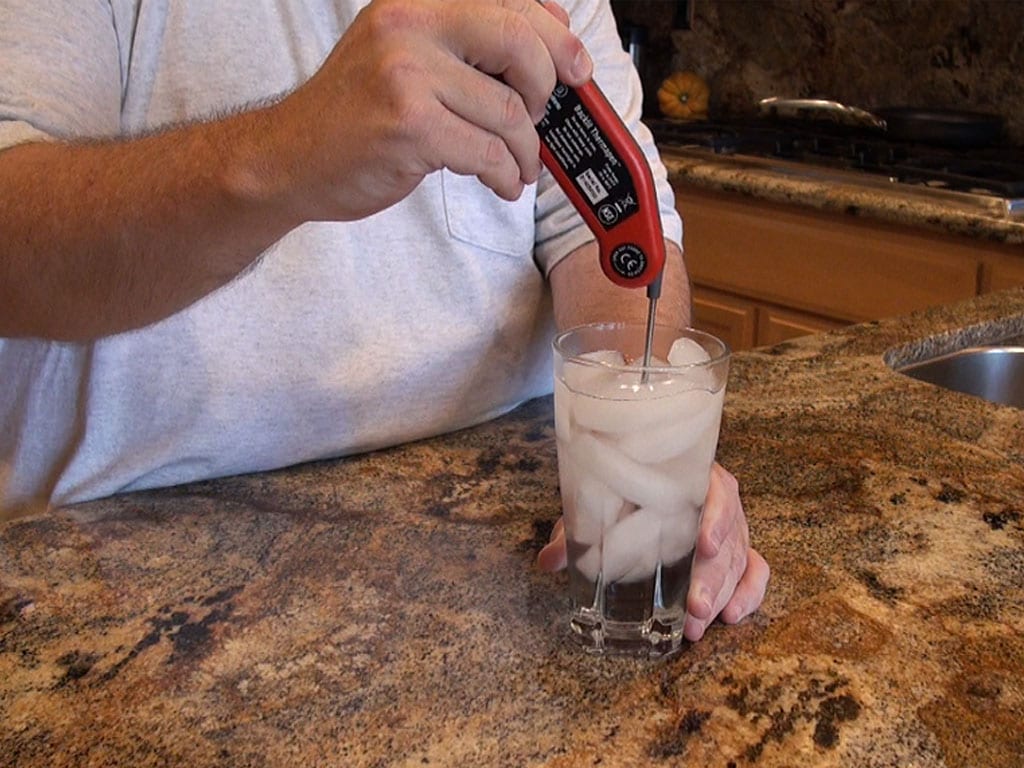
- Fill a glass with ice cubes. Add cold water to cover the ice.
- Stir well and let it sit for 2-3 minutes.
- Insert your thermometer into the center of the ice-water mix (not touching the sides or bottom).
- Wait until the reading stabilizes.
What to Look For:
Your thermometer should read 32°F. If it’s off by more than 2°F, it needs calibration.
Boiling Water Method
This checks if your thermometer reads 212°F (100°C), the boiling point of water at sea level.
Steps:
- Bring a pot of water to a rolling boil.
- Insert the thermometer tip into the boiling water, keeping it away from the sides and bottom.
- Wait for the reading to stabilize.
What to Look For:
Your thermometer should read 212°F. If you live at high altitudes, the boiling point will be lower (see table below).
| Altitude (ft) | Boiling Point (°F) |
|---|---|
| 0 | 212 |
| 1000 | 210 |
| 5000 | 202 |
| 8000 | 197 |
Non-obvious insight: Many people forget about altitude. If you live in Denver (about 5,000 feet), water boils at 202°F—not 212°F. Always check your local boiling point.
You might find this helpful: Best Meat Thermometers for Grilling
How To Calibrate Your Meat Thermometer
If your thermometer is off by more than 2°F, calibration is needed. Not all thermometers allow calibration, so check your manual first.
For Dial Thermometers
Most dial thermometers have a small nut or screw on the back.
Steps:
- Use the ice water or boiling water method.
- If the reading is wrong, use a wrench to turn the nut until the needle points to the correct temperature.
- Repeat the test to confirm.
For Digital Thermometers
Digital thermometers rarely allow manual calibration. Some high-end models have a reset button or calibration mode.
Steps:
- Check the manual for calibration instructions.
- If calibration isn’t possible and the thermometer is inaccurate, it’s time to replace it.
Common mistake: Many cooks ignore small errors, but even a 3°F difference can matter for food safety.

Credit: www.youtube.com
Checking Thermometer Accuracy Over Time
Testing your thermometer once is not enough. Over time, thermometers can lose accuracy because of drops, high heat, or regular use.
Recommended schedule:
- Test every 3-6 months
- Always test before cooking large meals (like Thanksgiving turkey)
- Test after dropping or damaging the thermometer
Pro tip: Keep a record of your tests. Write the date and results on a sticker on the thermometer or in a kitchen notebook.
Signs Your Thermometer May Be Inaccurate
Sometimes, you notice clues that your thermometer isn’t reliable:
- Meat is undercooked even though the thermometer says it’s done.
- You see large temperature jumps (for digital models).
- Dial needle sticks or moves slowly.
- Batteries run low (for digital types).
If you notice any of these, test your thermometer right away.
Comparing Popular Meat Thermometer Brands
Accuracy varies by brand and model. Here’s a quick comparison of three popular brands based on customer reviews and manufacturer data:
| Brand | Type | Accuracy | Calibration Feature |
|---|---|---|---|
| ThermoWorks Thermapen ONE | Digital | ±0.5°F | Yes |
| CDN ProAccurate | Dial | ±2°F | Yes |
| Oxo Good Grips | Digital | ±2°F | No |
Non-obvious insight: Not all digital thermometers allow calibration. Check before you buy if this matters to you.
What To Do If Your Thermometer Is Inaccurate
If your thermometer is consistently inaccurate and can’t be calibrated, it’s best to replace it. Using a faulty thermometer puts your health at risk and can ruin meals.
Tips for buying a new thermometer:
- Choose a model with good reviews for accuracy.
- Look for a calibration feature.
- Check for easy-to-read displays.
Budget-friendly advice: You don’t need the most expensive model. Reliable dial thermometers are available for under $15.
Mistakes To Avoid When Testing Thermometers
Many beginners make simple mistakes when testing:
- Touching the sides or bottom of the container: This can give a false reading.
- Not waiting for the reading to stabilize: Thermometers need time to adjust.
- Ignoring altitude: Boiling point changes with elevation.
- Assuming all thermometers can be calibrated: Many digital models are fixed.
Avoid these mistakes for accurate results every time.
Practical Tips For Everyday Use
- Clean your thermometer before and after every use with hot, soapy water.
- Store it away from heat and moisture.
- Check batteries regularly if you use a digital model.
- Test the thermometer before big events or holidays.
Example: If you’re cooking a holiday roast, test your thermometer a week before. If it’s inaccurate, you have time to fix or replace it.
:max_bytes(150000):strip_icc()/__opt__aboutcom__coeus__resources__content_migration__serious_eats__seriouseats.com__images__2016__10__20161008-meat-temp-5-e10885b8363b44bf825df1d9ae43a702.jpg)
Credit: www.seriouseats.com
Real-world Data: How Often Are Thermometers Off?
A 2026 study from the USDA found that about 18% of home cooks had thermometers reading more than 5°F off. This is a big reason why foodborne illnesses remain common. Regular testing and calibration can prevent these issues.
When To Seek Professional Help
If your thermometer is expensive or used for commercial cooking, consider professional calibration. Many kitchen supply stores and equipment companies offer this service.
Credit: www.virtualweberbullet.com
Frequently Asked Questions
Can I Use Other Liquids To Test My Meat Thermometer?
Testing with ice water and boiling water is best because their temperatures are well known. Other liquids may have variable temperatures and can lead to inaccurate tests.
How Often Should I Test My Meat Thermometer?
Test your thermometer every 3-6 months, or before major cooking events. If you drop it or notice problems, test it right away.
What Should I Do If My Digital Thermometer Cannot Be Calibrated?
If your digital thermometer cannot be calibrated and is inaccurate, it’s safest to replace it. Accuracy is key for both food safety and quality.
Does Altitude Affect Thermometer Testing?
Yes, altitude changes the boiling point of water. For example, at 5,000 feet, water boils at 202°F. Always check your local boiling point when using the boiling water method.
Are Expensive Thermometers Always More Accurate?
Not always. Some affordable thermometers are very accurate. However, high-end models often offer better features like faster readings or calibration options. Look for accuracy and calibration features over price.
Testing your meat thermometer for accuracy is simple, but it makes a huge difference in your cooking and safety. Using the ice water and boiling water methods, and calibrating when possible, helps you avoid foodborne illness and ensures your meals are cooked just right. Remember to check your thermometer regularly, avoid common mistakes, and replace it if it’s unreliable. For more details on food safety, you can visit the CDC Food Safety page. Safe cooking starts with a reliable thermometer—make it a habit to test yours and enjoy better meals every time.