Most home cooks and bakers struggle with recipes that do not turn out as expected. Sometimes, the bread is too dense, the cake is dry, or the soup tastes off. Usually, the reason is simple: incorrect measurements. Measuring ingredients by eye or using cups and spoons can introduce errors.
A kitchen scale is a powerful tool that solves this problem. It helps you cook with confidence, saves time, and improves results. Whether you want to bake bread, portion meals, or manage your diet, learning how to use a kitchen scale will change your kitchen experience.

Why Use A Kitchen Scale?
A kitchen scale is not just for professional chefs. It gives you accuracy. When you measure flour, sugar, or liquids, even small differences can affect the outcome. For example, one cup of flour can weigh anywhere from 120 grams to 150 grams, depending on how you scoop it. This inconsistency is why many recipes fail.
With a kitchen scale, you measure ingredients by weight, not volume. This method is especially important in baking, where precision matters. Studies show that using a scale reduces errors by up to 80%. It also helps you portion food for calorie control, making it a great tool for those on a diet.
Types Of Kitchen Scales
Choosing the right kitchen scale depends on your needs. There are two main types:
| Type | Features | Best For |
|---|---|---|
| Digital Scale | Displays weight in grams/ounces, tare function, precise readings | Baking, meal prep, portion control |
| Mechanical Scale | Uses dial, no batteries, less precise | General cooking, rustic kitchens |
Most home cooks prefer a digital kitchen scale. It is more accurate, easier to read, and often comes with extra functions. Mechanical scales are simple and durable, but usually less precise.
Features To Look For
Not all kitchen scales are equal. Here are key features to consider:
- Capacity: Choose a scale that can handle the largest amount you plan to weigh, usually 5–11 pounds (2–5 kg).
- Readability: Ensure the display is clear and easy to read, even with large bowls.
- Units: Good scales switch between grams, ounces, pounds, and kilograms.
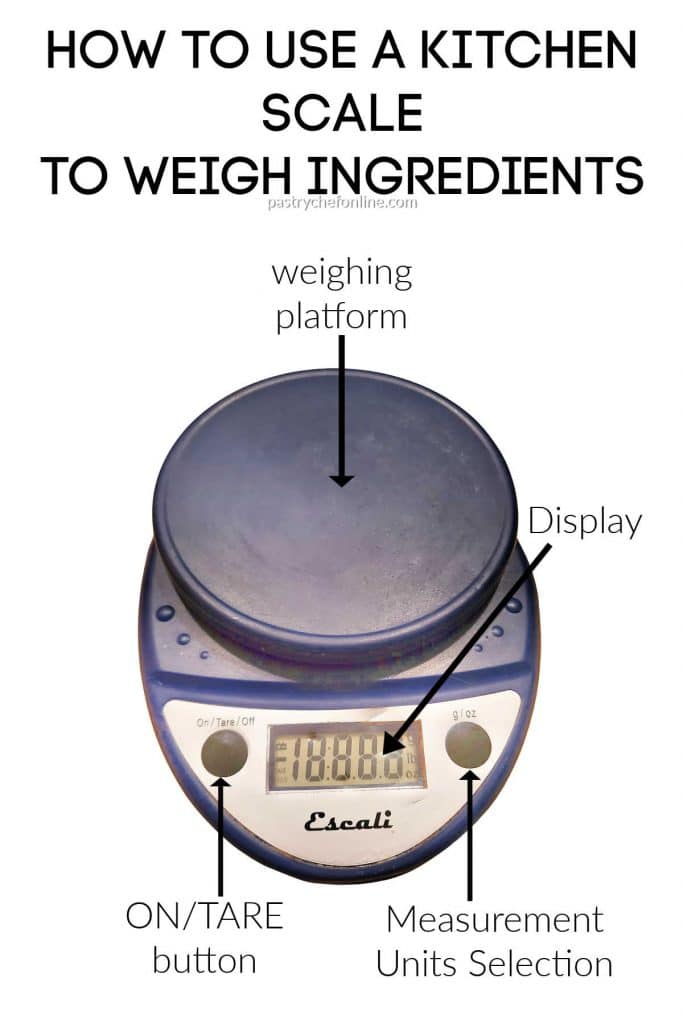
- Tare function: Lets you reset the scale to zero after placing a bowl. Essential for weighing multiple ingredients.
- Accuracy: Look for scales that measure to 1 gram or 0.05 ounces.
- Size: Compact scales save space but may have smaller weighing platforms.
A beginner mistake is buying a scale with too small a platform. This makes it hard to weigh big bowls or plates. Always check the platform size before buying.
How To Use A Kitchen Scale Step By Step
Using a kitchen scale is simple, but doing it correctly makes all the difference.
- Turn on the scale. Place the scale on a flat, stable surface. Press the power button.
- Select units. Most scales let you choose grams, ounces, or pounds. Use the unit button to select what your recipe needs.
- Place your bowl or container. Put the empty bowl on the scale.
- Use the tare function. Press the tare button to reset the scale to zero. Now, you can measure only the ingredient, not the bowl.
- Add your ingredient. Pour or place your ingredient into the bowl. The display will show the weight.
- Check for accuracy. Make sure the weight is stable. If you add too much, remove some.
- Repeat for other ingredients. If your recipe needs several ingredients, press tare after each one to zero out the scale.
Many beginners forget to use the tare function. This causes wrong measurements. Always tare after placing a new bowl or before adding a new ingredient.
Example: Measuring Flour For Bread
Say your recipe asks for 500 grams of flour. Instead of scooping, you:
- Place your mixing bowl on the scale.
- Press tare to set to zero.
- Pour flour until the scale reads 500 grams.
- Done! No guessing, no mistakes.
Tips For Accurate Weighing
Getting the most from your kitchen scale needs a few smart habits:
- Always place the scale on a hard, flat surface for correct readings.
- Avoid using the scale near heat or moisture. This can damage electronics.
- Use containers that do not block the display.
- Add ingredients slowly to avoid overshooting the required weight.
- Clean the scale after each use. If food spills, wipe with a damp cloth. Do not immerse in water.
A non-obvious insight: Some scales lose accuracy if the batteries are low. If your scale gives strange readings, replace the batteries before assuming it’s broken.
Weighing Different Ingredients
Not all ingredients behave the same. Here’s how to handle some common ones:
Dry Ingredients
For flour, sugar, rice, and salt, pour slowly into your bowl. If you add too much, use a spoon to remove the excess until you reach the exact weight.
Liquids
Most digital scales can measure liquids if you use a container. Put the container on the scale, tare, then pour. Some scales can show milliliters, but grams are usually fine for water-based liquids since 1 ml of water = 1 gram.
Small Quantities
For spices or yeast, use a small dish. Place it on the scale, tare, then add the ingredient. Some scales struggle to measure below 5 grams, so check your scale’s minimum range.
Large Quantities
If you need to weigh big amounts, make sure your scale can handle the weight. A common mistake is exceeding the scale’s maximum capacity, which can break the scale or give wrong readings.
You might find this helpful: Best Kitchen Scale
Kitchen Scale Vs. Measuring Cups
Many cooks wonder why not just use measuring cups. Here’s a clear comparison:
| Method | Accuracy | Speed | Consistency |
|---|---|---|---|
| Kitchen Scale | High | Fast | Always the same |
| Measuring Cups | Low to Medium | Slower | Can vary |
Using a kitchen scale improves your recipes, saves time, and reduces cleanup. You can weigh directly into the mixing bowl, avoiding extra dishes.
Using A Kitchen Scale For Meal Prep And Diet
Many people use kitchen scales for portion control. For example, if you want to eat 100 grams of chicken for lunch, a scale makes it easy. You can also track calories better.
Some fitness plans and diets require weighing food. Nutrition experts recommend using a scale to reduce guesswork. According to a 2026 study, people who weighed their food lost 20% more weight than those who used estimations.
Credit: pastrychefonline.com
Common Mistakes And How To Avoid Them
When starting with a kitchen scale, beginners make certain mistakes:
- Not taring the scale before adding ingredients. Always tare after placing a new bowl.
- Using the scale on a soft or uneven surface. This causes wrong readings.
- Ignoring maximum capacity. Overloading can damage the scale.
- Letting food block the display, making it hard to see readings.
- Forgetting to check units. Make sure your scale matches your recipe units.
A helpful tip: Mark your recipes with grams and ounces. This way, you can quickly switch units as needed.
Cleaning And Maintaining Your Kitchen Scale
Keeping your scale clean is simple but important. Wipe the surface with a damp cloth after each use. Never immerse the scale in water. For sticky spills, use a mild soap and a cloth. Store the scale away from heat and humidity.
If your scale is not accurate, check the batteries. Old batteries often cause problems. Some scales need recalibration, which you can do by following the manual.
Practical Examples
Here are a few practical ways to use a kitchen scale:
- Baking: Measure 200 grams of sugar for cookies. No more guessing.
- Meal prep: Portion 150 grams of cooked rice for lunch. Helps with calorie counting.
- Making sauces: Weigh 50 grams of butter for a smooth sauce.
- Weighing leftovers: Know exactly how much food you have for storage.
- Coffee brewing: Use 18 grams of coffee for the perfect cup.
You’ll quickly notice better results in your cooking and baking.
Comparing Popular Kitchen Scale Brands
To help you choose, here’s a quick comparison of three popular digital kitchen scales:
| Brand | Capacity | Accuracy | Special Features |
|---|---|---|---|
| Ozeri Pronto | 11 lbs (5 kg) | 1 gram | Large buttons, easy tare |
| Escali Primo | 11 lbs (5 kg) | 1 gram | Multiple colors, compact design |
| GreaterGoods Digital Scale | 11 lbs (5 kg) | 1 gram | Backlit display, charity support |
All three brands offer good accuracy, easy use, and reliable results. Choose based on your budget and style preferences.
Frequently Asked Questions
How Do I Calibrate My Kitchen Scale?
Most digital kitchen scales do not need regular calibration. If your scale gives wrong readings, check the manual for calibration steps. Usually, you place a known weight on the scale and press a button. If you lose the manual, find instructions online for your specific model.
Can I Measure Liquids With A Kitchen Scale?
Yes. Place a container on the scale, tare it to zero, then pour your liquid. Most recipes use grams for water-based liquids, as 1 ml of water equals 1 gram. For oils or syrups, check their density if you need exact measurements.
What Is The Tare Function And Why Is It Important?
The tare function resets the scale to zero after you place a bowl or container. This lets you weigh only the ingredient, not the container. It is essential for measuring multiple ingredients or using heavy bowls.
Do Kitchen Scales Work For Small Amounts Like Spices?
Most digital scales can measure small amounts down to 1 gram. For tiny amounts, use a small dish and check if your scale can handle below 5 grams. If not, consider a specialized scale for spices.
How Do I Clean My Kitchen Scale?
Wipe the surface with a damp cloth. For sticky spills, use mild soap. Never immerse the scale in water. Avoid harsh cleaners or scrubbing pads, as these can damage the surface.
A kitchen scale is one of the most useful tools you can add to your kitchen. It brings accuracy, saves time, and improves your cooking and baking. With the right scale and good habits, your recipes will be more consistent. You’ll also find meal prep easier and healthier. If you want more tips or details, check out this Wikipedia article for further reading. Once you start using a kitchen scale, you’ll wonder how you managed without it.