Using a fire extinguisher may seem simple, but in a real emergency, most people forget the right steps. Fires can spread fast, and confusion can make things worse. Knowing how to use an extinguisher can save lives and property. This guide helps you understand what type to use, how to operate it safely, and what mistakes to avoid.
Whether at home, work, or public spaces, these steps will give you confidence and clarity, even if English is not your first language.
Understanding Fire Extinguishers
Fire extinguishers are not all the same. Each type is made for a certain kind of fire. Using the wrong extinguisher can make the fire worse or even cause injury.
Types Of Fire Extinguishers
There are five main types:
- Water (Class A) – For wood, paper, cloth.
- Foam (Class A & B) – For wood, paper, plus liquids like oil or paint.
- Dry Powder (Class A, B & C) – For solids, liquids, gases.
- Carbon Dioxide (CO2) (Class B & Electrical) – For flammable liquids, electrical fires.
- Wet Chemical (Class K/F) – For cooking oils and fats.
Here’s a quick comparison:
| Extinguisher Type | Use For | Do NOT Use For |
|---|---|---|
| Water | Paper, Wood | Electrical, Oil |
| Foam | Paper, Wood, Oil | Electrical |
| Dry Powder | Paper, Oil, Gas | Cooking Oil |
| CO2 | Oil, Electrical | Paper, Wood |
| Wet Chemical | Cooking Oil | Electrical |
Non-obvious insight: CO2 extinguishers are safe for electrical fires because they don’t leave residue. However, they can cause frostbite if the nozzle touches your skin.
Reading The Labels
Every extinguisher has a label showing the class (A, B, C, D, K) and instructions. Look for the fire class symbols and check them before you use. The label also tells you how to use the extinguisher and how much it weighs.
Before Using An Extinguisher: Safety First
Do not rush. A small mistake can be dangerous.
- Assess the fire: Is it small and contained? If the fire is bigger than a trash can, do NOT attempt to fight it.
- Know your escape route: Always stand with your back toward an exit. If the fire grows, leave quickly.
- Call emergency services: Dial 911 (or your local number) before you try to extinguish the fire.
- Check your extinguisher: Is it suitable for this fire? Is it fully charged? The pressure gauge should be in the green zone.
Practical tip: If you don’t feel safe or the smoke is thick, leave immediately. Fire can double in size every minute.
The Pass Technique: Step-by-step
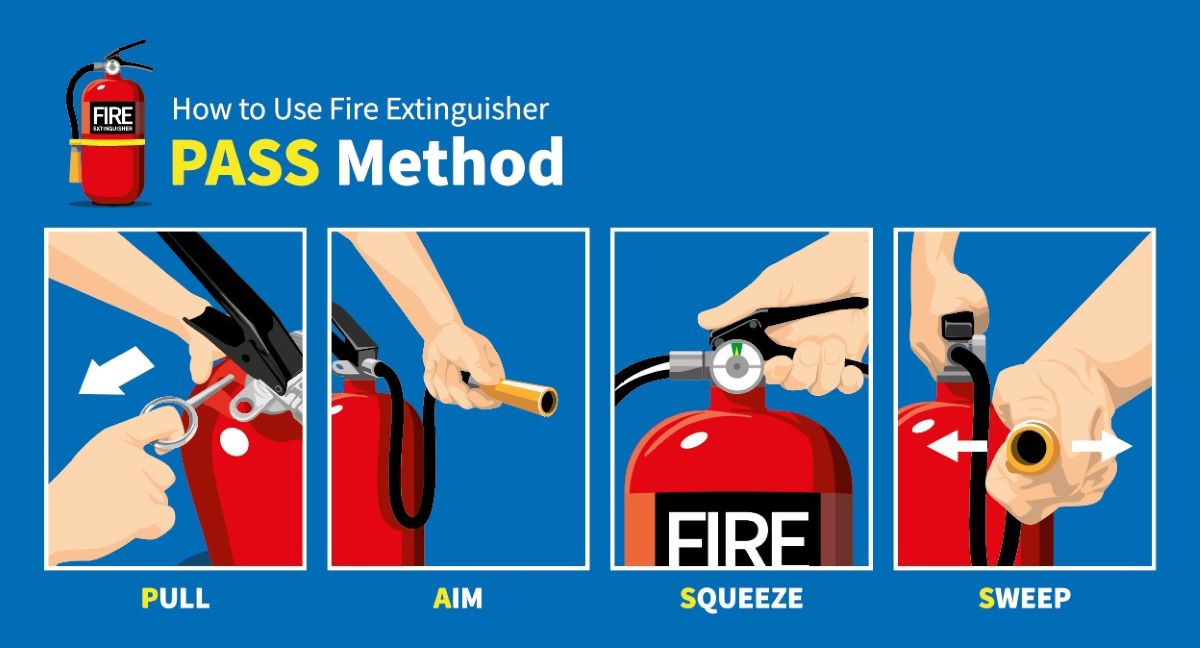
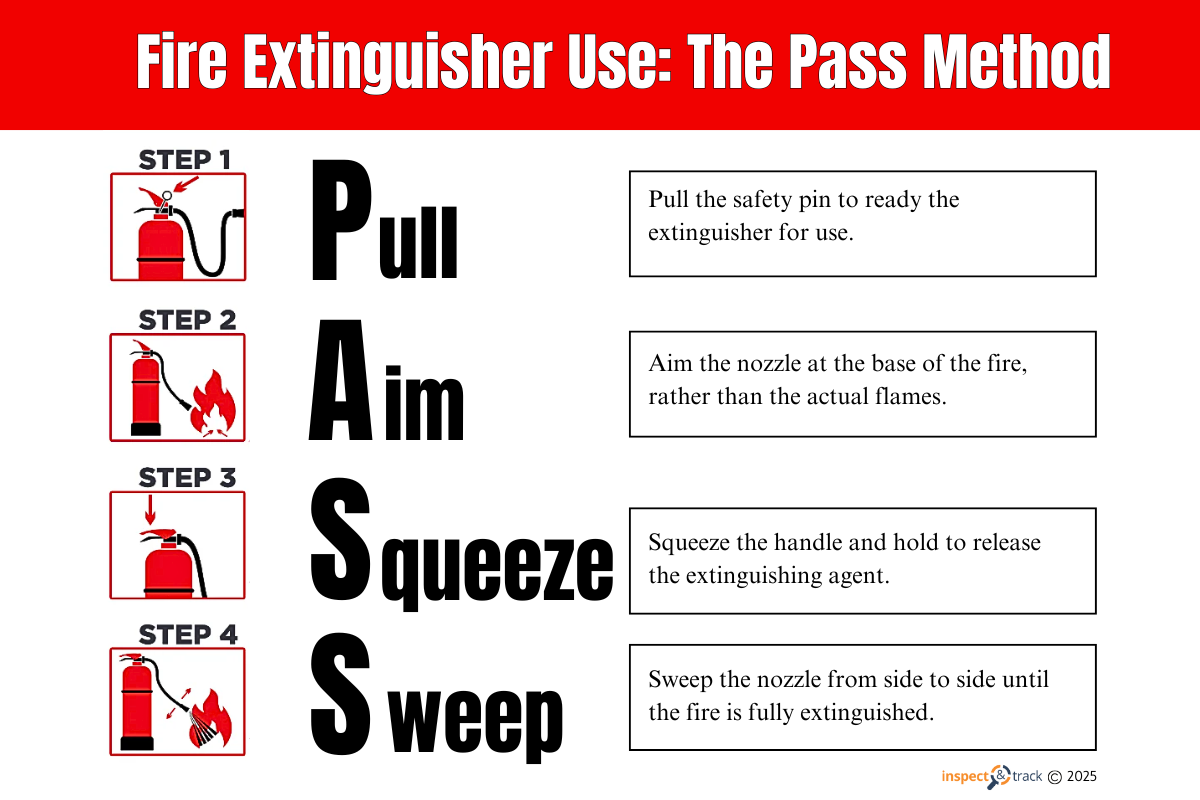
Most fire extinguishers are operated using the PASS method. This is easy to remember and works for almost every extinguisher.
- Pull the pin: This unlocks the handle so you can squeeze it.
- Aim the nozzle: Point it at the base of the fire, not the flames.
- Squeeze the handle: Slowly squeeze to release the extinguishing agent.
- Sweep side to side: Move the nozzle from left to right, covering the base of the fire.
Let’s see a quick breakdown:
| Step | Action | Why It Matters |
|---|---|---|
| Pull | Remove safety pin | Unlocks handle |
| Aim | Point at fire base | Targets source |
| Squeeze | Press handle | Releases agent |
| Sweep | Move nozzle | Covers area |
Non-obvious insight: Many people aim at the flames. This does not put out the fire. Always aim low, at the base.
Common Mistakes To Avoid
Even experienced people make errors when using fire extinguishers. Here are mistakes and how to avoid them:
- Using the wrong extinguisher: This is dangerous. For example, spraying water on an electrical fire can cause shock.
- Standing too close or too far: Stand about 6–8 feet away. If you’re too close, you may get burned. Too far, and the agent won’t reach the fire.
- Not checking the pressure: An empty extinguisher won’t help. Always check the gauge.
- Not knowing the exit: If you don’t have a clear path, you risk getting trapped.
- Panicking: Take a deep breath. Act calmly and quickly.
- Spraying without a plan: Start from one edge and sweep across. Don’t just spray randomly.
Example: In 2026, a study showed that 42% of people in the US did not know how to use a fire extinguisher properly. Most failed to aim at the base or forgot to pull the pin.
Practical Tips For Different Situations
Home Fires
Most home fires start in the kitchen. If you face a grease fire (oil or fat), use a wet chemical or dry powder extinguisher. Never use water—it spreads the fire.
Tip: Keep an extinguisher near the kitchen but not too close to the stove, so you can reach it easily.
Electrical Fires
In offices or homes, electrical fires are common. Always use a CO2 or dry powder extinguisher. Unplug devices if safe before spraying.
Tip: After extinguishing, ventilate the room. CO2 removes oxygen and can cause dizziness.
Car Fires
If your car catches fire, stop and move away. Use a dry powder extinguisher. Aim at the engine area, not the flames. If the fire grows, leave and call for help.
Public Spaces
Many public buildings have dry powder or CO2 extinguishers. Know their locations. Practice the PASS steps mentally so you are ready in an emergency.
Maintaining Your Fire Extinguisher
A fire extinguisher needs regular checks to stay effective.
- Monthly check: Look at the pressure gauge. It should be in the green zone.
- Annual service: Have a professional check for leaks, rust, or damage.
- After use: Even a small spray means you must recharge or replace the extinguisher.
- Keep accessible: Do not block with furniture or boxes.
Stat: The National Fire Protection Association (NFPA) reports that 30% of extinguishers in homes are blocked or not easily accessible during emergencies.
Comparing Fire Extinguisher Sizes
Fire extinguishers come in different sizes. A larger one lasts longer but is heavier. Here’s a simple comparison:
| Size | Duration | Weight | Best Use |
|---|---|---|---|
| 2.5 lb | 8–10 seconds | 2.5 lb | Cars, Small rooms |
| 5 lb | 12–15 seconds | 5 lb | Homes, Offices |
| 10 lb | 20–25 seconds | 10 lb | Public spaces, Warehouses |
Practical tip: For most homes, a 5 lb extinguisher is a good balance between duration and weight.
Training And Practice
Reading instructions is not enough. Practice helps you use a fire extinguisher correctly in real life.
- Hands-on training: Join local fire safety workshops. Many fire departments offer free sessions.
- Practice PASS steps: Try with old or demo extinguishers. Practice aiming and sweeping.
- Teach family or coworkers: Everyone should know where extinguishers are and how to use them.
Example: In Singapore, fire drills and extinguisher training are mandatory for schools and offices. This has reduced fire injuries by 20% in the past decade.
Credit: blog.koorsen.com
When Not To Use A Fire Extinguisher
There are times when you should NOT use an extinguisher:
- Fire is too big: If it spreads quickly or fills the room with smoke, leave immediately.
- You don’t know the exit: If you risk getting trapped, escape first.
- Extinguisher is empty or wrong type: Don’t waste time with an unsuitable extinguisher.
- You feel unsafe: Trust your instincts. Safety is more important.
Stat: According to the NFPA, nearly 50% of fire deaths happen when people try to fight large fires instead of escaping.
Frequently Asked Questions
How Do I Know Which Extinguisher To Use?
Look at the label and symbols on the extinguisher. Match the fire type (wood, oil, electrical) to the extinguisher class (A, B, C, etc.). If unsure, a dry powder type covers most fires except cooking oil.
Can I Use A Fire Extinguisher More Than Once?
No. After any use, even a short burst, recharge or replace the extinguisher. It may not work properly next time.
How Often Should I Check My Extinguisher?
Check monthly for pressure and damage. Have a professional service it once a year. After use or expiry, replace.
What Should I Do If The Fire Grows After Using The Extinguisher?
Stop using the extinguisher. Evacuate immediately and call emergency services. Do not try to fight a large fire.
Where Should I Store My Fire Extinguisher At Home?
Keep in easy-to-reach places like the kitchen, near exits, or hallways. Do not block with furniture. Make sure all family members know its location.
Knowing how to use a fire extinguisher can make the difference between a small accident and a disaster. Choose the right type, follow the PASS steps, and stay calm. Practice regularly and teach others. Your safety comes first—never take risks with large or dangerous fires.
If you remember these steps and tips, you’ll be ready to protect yourself and others in any emergency.
Credit: inspecttrack.com