Skip to content
Keeping your ice maker working well is not just about having cold drinks. It also means you avoid expensive repairs, save energy, and make sure the ice is clean and safe. Many people forget this small machine until something goes wrong. But with a simple maintenance checklist, you can extend your ice maker’s life and avoid most problems. Whether your ice maker is in your home, office, or restaurant, regular care makes a big difference.
Why Ice Maker Maintenance Matters
Ice makers work hard behind the scenes. They freeze water, break up the ice, and store it for you—all with moving parts that need care. If you skip maintenance, several things can happen:
- Dirty ice can make drinks taste bad or even cause health risks.
- Mechanical problems can stop the machine or waste energy.
- Water leaks can damage floors and equipment.
A well-maintained ice maker uses less energy, makes ice faster, and reduces the chance of breakdowns. Studies from the US Department of Energy show that commercial ice makers with regular cleaning can use up to 20% less energy than neglected ones. That translates to real savings on your power bills.
Basic Ice Maker Maintenance Tasks
Taking care of an ice maker is not hard, but it does need consistency. Here are the most important tasks you should do, divided by how often they should be done.
Daily Maintenance
- Check the ice bin: Empty old ice and wipe the inside. Old ice can absorb odors from the freezer or air.
- Inspect for leaks: Look at the water line and connections. Even a small leak can cause big problems over time.
- Wipe exterior surfaces: Use a damp cloth. This keeps dust and food debris off the machine.
Weekly Maintenance
- Clean the ice scoop: Always use a clean scoop, not your hands, to avoid bacteria.
- Check water filter indicators: Some machines have a light or alert if the filter needs attention.
- Look for odd noises: Listen when the machine is running. New sounds can mean something is wrong.
Monthly Maintenance
- Deep clean the ice bin: Use a mild cleaner safe for food equipment. Rinse well to remove chemicals.
- Inspect the water filter: Replace if needed. A clogged filter slows ice making and affects taste.
- Check the condenser coil: Dusty coils make the machine work harder. Use a vacuum or brush to clean.
Quarterly Maintenance
- Sanitize the machine: Use a special ice maker sanitizer. This kills bacteria or mold inside the unit.
- Check for mineral buildup: Hard water leaves white, chalky deposits. Remove with a scale remover.
Annual Maintenance
- Professional inspection: Have a technician check the system. They can spot wear and tear you might miss.
- Replace gaskets and seals: These rubber parts can crack over time, leading to leaks or less efficient cooling.
Common Problems And Warning Signs
No machine is perfect, and ice makers will have issues from time to time. The key is to catch them early.
Signs Your Ice Maker Needs Attention
- Ice is cloudy or smells bad: Usually caused by dirty water or buildup inside the machine.
- Less ice than usual: Could be a clogged filter or blocked water line.
- Ice is too small or hollow: Often means low water pressure or a dirty evaporator.
- Machine is noisy: Grinding or loud buzzing can mean a mechanical problem.
What To Do When Problems Appear
Start by checking the simplest things: Is the water supply open? Is the ice bin full? If you can’t find the cause, unplug the unit and call a professional. Ignoring small issues often leads to bigger (and costlier) repairs.
Step-by-step Ice Maker Cleaning Guide
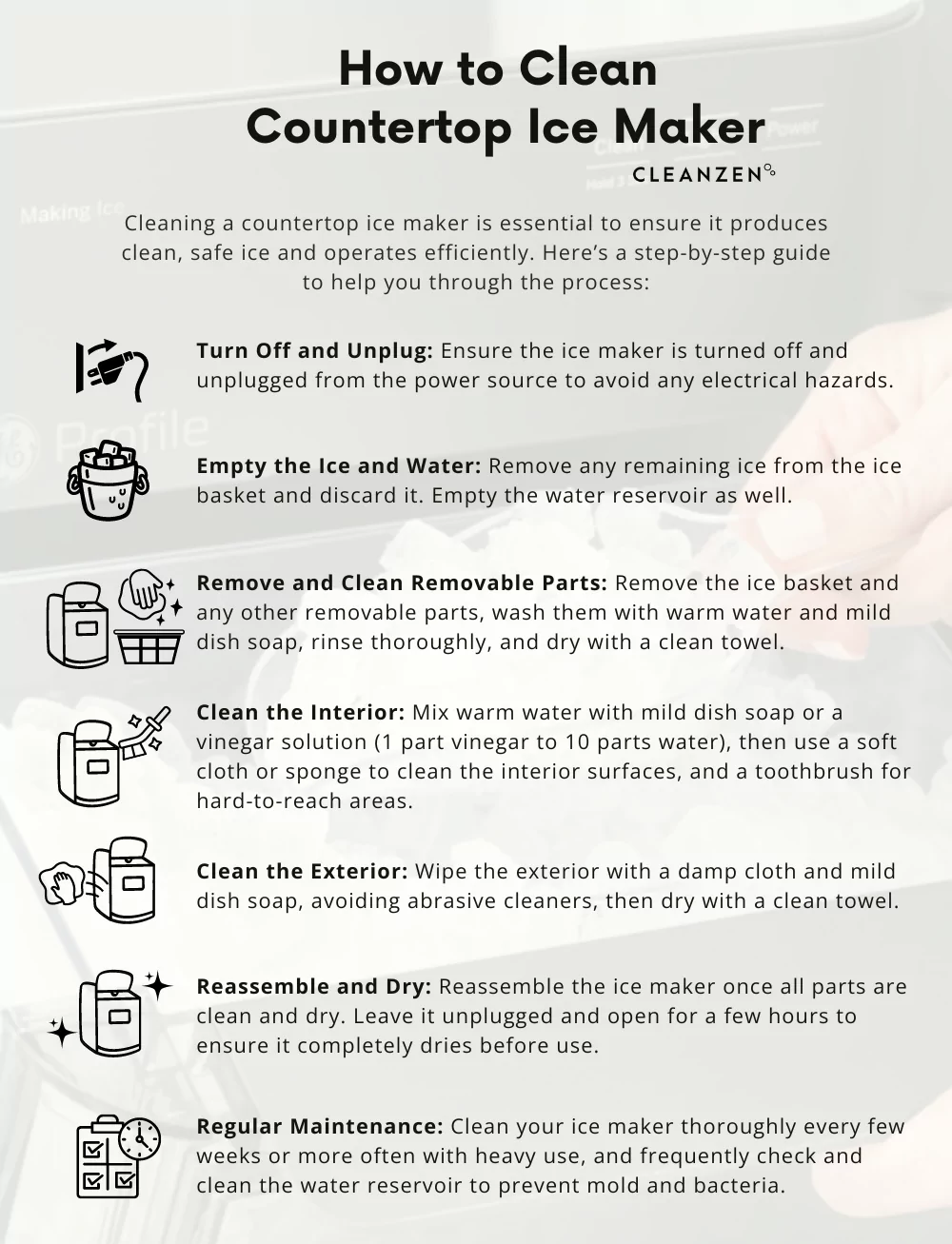
Cleaning is the heart of ice maker maintenance. Here’s a clear process you can follow for most household and commercial ice makers.
- Turn off and unplug the ice maker.
- Remove all ice. Throw away any ice inside.
- Clean removable parts. Take out the ice bin and scoop. Wash with warm, soapy water and rinse well.
- Wipe interior surfaces. Use a mix of water and mild dish soap. Avoid strong chemicals.
- Run a cleaning cycle. Add ice maker cleaner (follow your manual) and run the machine. Discard the first batch of ice after cleaning.
- Rinse. Run one or two cycles with clean water to remove any cleaner.
- Sanitize. Use a sanitizer approved for ice machines. Wipe all surfaces, then let air dry.
- Reassemble and restart. Plug in the machine and turn it on.
Tip: Always check your manual for exact cleaning instructions. Some machines have unique needs.
Essential Tools And Supplies For Maintenance
Having the right tools saves time and helps you do a good job. Here are some essentials for ice maker care:
- Soft cloths: For wiping surfaces.
- Mild detergent: Non-abrasive and food safe.
- Ice maker cleaner: Removes scale and mineral deposits.
- Sanitizer: Specifically for ice machines.
- Bottle brush: To reach small spaces.
- Vacuum cleaner: For dusting the condenser coil.
- Replacement water filters: Keep extras on hand.
- Screwdriver: For opening access panels if needed.
- Gloves: For hygiene and safety.
Most supplies are available at hardware or restaurant supply stores.
Ice Maker Maintenance Schedule Comparison
To help you plan, here’s a simple comparison of maintenance tasks for home and commercial ice makers.
| Task | Home Ice Maker | Commercial Ice Maker |
|---|---|---|
| Empty and clean ice bin | Weekly | Daily |
| Check water filter | Monthly | Weekly |
| Sanitize machine | Every 6 months | Quarterly |
| Professional inspection | Annually | Annually |
Commercial ice makers need more frequent care because they run longer hours and make more ice.
Water Quality And Its Effect On Ice Makers
Most people don’t realize how much water quality affects their ice machine. Hard water leaves mineral deposits inside, and water with many impurities can block filters and lower ice quality.
- Hard water: Causes white scale buildup. Use a water softener if your water is hard.
- Chlorine or chemicals: Can damage machine parts. A carbon filter helps.
- Sediment: Blocks water lines and filters. Regular filter changes are key.
Some newer ice makers come with built-in sensors to detect water quality problems.
Ice Maker Filter Types: Which One Is Right?
Choosing the right water filter helps your ice maker last longer and makes ice taste better. Here’s a quick comparison of the main types:
| Filter Type | Removes | Best For |
|---|---|---|
| Carbon Filter | Chlorine, taste, odor | Most homes, city water |
| Sediment Filter | Dirt, rust, particles | Older pipes, well water |
| Scale Inhibitor | Mineral deposits | Hard water areas |
For best results, use the type your ice maker manufacturer recommends. Combining filters can solve multiple problems.
Credit: cleanzen.com
Reducing Energy Use And Extending Ice Maker Life
A well-maintained ice maker uses less power and lasts longer. Here are some ways to save energy and get more years from your machine:
- Keep it clean: Dust and buildup force the compressor to work harder.
- Don’t overload the ice bin: Too much ice blocks airflow and slows production.
- Set the right temperature: 0°F to 5°F (-18°C to -15°C) is ideal for ice storage.
- Leave space around the machine: Good airflow stops overheating.
- Fix leaks fast: Water leaks waste energy and can damage floors.
A study by Energy Star showed that efficient ice makers can save more than 300 kWh per year compared to older, dirty models.
Pro Tips And Advanced Insights
Here are a few tips that even experienced owners sometimes forget:
- Don’t ignore slow ice making. Even small drops in speed often mean a filter or water flow problem.
- Check the drain line. Blocked drains cause water to back up and freeze, sometimes damaging the machine.
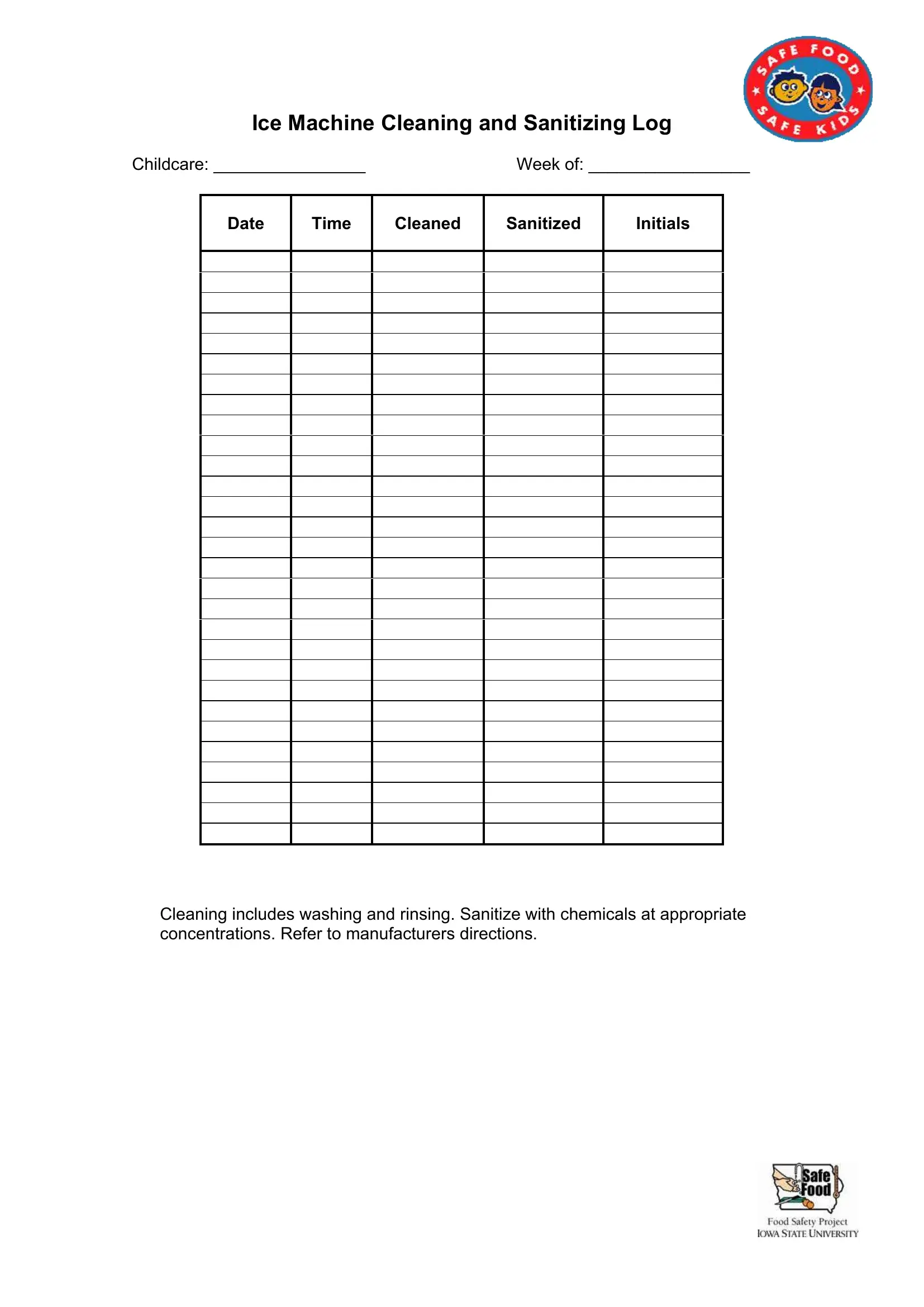
- Keep a maintenance log. Write down when you clean or change parts. This helps with warranty claims and shows patterns if problems repeat.
Many owners think only the inside matters, but dust on the outside (especially the condenser coil) can cause just as many issues as dirty ice bins. Regular outside cleaning is as important as cleaning the ice bin.
When To Call A Professional
You can handle most maintenance yourself, but there are times when a professional technician is needed:
- Electrical problems: If the machine trips breakers or won’t turn on.
- Refrigerant leaks: Only licensed professionals can fix and recharge cooling systems.
- Recurring water leaks: Sometimes leaks are deep inside and need special tools.
- Strange noises: Grinding or squealing often means motor or fan problems.
Calling an expert when you spot these issues saves money in the long run by preventing bigger breakdowns.
Ice Maker Maintenance Record Template
Keeping track of your maintenance helps you stay on schedule and spot patterns. Here’s a simple template you can use or copy:
| Date | Task | Notes | Next Due |
|---|---|---|---|
| 2024-07-01 | Cleaned ice bin | All clear, no odor | 2024-07-08 |
| 2024-07-01 | Replaced filter | Used carbon filter | 2024-10-01 |
| 2024-07-01 | Sanitized machine | Used food-safe sanitizer | 2024-10-01 |
You can keep this record on paper or in a spreadsheet for easy access.
Credit: formspal.com
Frequently Asked Questions
How Often Should I Clean My Ice Maker?
For home use, clean the ice bin every week and deep clean the whole machine every month. In busy commercial settings, clean and sanitize at least once a week. Always follow your manual’s guidelines for best results.
What Type Of Water Filter Should I Use For My Ice Maker?
It depends on your water quality. Most homes do well with a carbon filter to remove taste and odor. If you have hard water or lots of sediment, add a scale inhibitor or sediment filter. Check your ice maker’s manual for recommendations.
Why Does My Ice Taste Or Smell Bad?
Bad taste or smell usually comes from dirty water, a dirty machine, or old ice. Replace the water filter, clean the ice bin, and run a sanitizing cycle. If the problem continues, check your water source for issues.
What Happens If I Skip Ice Maker Maintenance?
Skipping maintenance can lead to dirty ice, machine breakdowns, higher energy bills, and even health risks. Problems like mold, bacteria, and scale buildup are common in neglected machines. Regular care prevents most of these issues.
Where Can I Find Official Maintenance Instructions For My Model?
The best place is your machine’s user manual or the manufacturer’s website. You can also find trusted guidance from sources like ENERGY STAR, which offers tips and resources for many popular brands.
By following this ice maker maintenance checklist, you’ll enjoy clean, fresh ice and a machine that works smoothly for years. Regular care is simple, saves money, and protects your investment—so make it part of your routine.