Skip to content
Is Teak Good For Cutting Boards?
Choosing the right wood for a cutting board is more important than many people realize. A good cutting board protects your knives, lasts for years, and keeps your food safe. Among all the wood options, teak is often recommended. But is teak really a good choice for cutting boards? Let’s look closely at its strengths, weaknesses, and how it compares to other popular woods.
What Makes A Good Cutting Board Wood?
Before focusing on teak, it helps to know what matters most in a cutting board material. The best woods share several key qualities:
- Hardness: Hard enough to resist deep cuts, but not so hard that it damages knife edges.
- Grain structure: Closed-grain woods are less likely to trap bacteria and moisture.
- Durability: Should last for years of daily use.
- Maintenance: Easy to clean and care for.
- Food safety: Non-toxic and does not leach harmful chemicals.
Not every wood checks all these boxes. For example, softwoods like pine scratch easily. Some tropical woods may contain toxins. Teak, however, is often mentioned as a top choice. Let’s see why.
Teak Wood: What Is It?
Teak is a tropical hardwood native to Southeast Asia, especially Myanmar, India, and Thailand. Its scientific name is Tectona grandis. Teak is famous for its use in boat building and outdoor furniture because of its natural oils and resistance to water. The color ranges from golden brown to darker chocolate shades, and it has a straight, tight grain with occasional streaks.
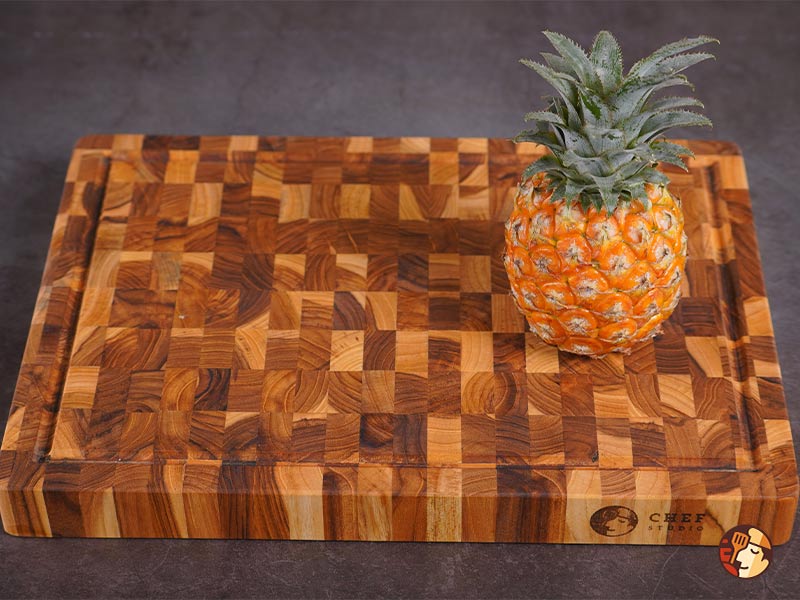
Credit: en.chefstudio.vn
Teak Cutting Boards: Main Benefits
Teak brings several advantages as a cutting board material. Some features are obvious, but a few benefits are less well known.
1. High Oil Content
Teak contains natural oils that make the wood water-resistant. These oils help prevent the wood from absorbing liquids, which is important when cutting juicy foods like tomatoes or raw meats. Less water absorption means less risk of warping, cracking, or hosting bacteria.
2. Moderate Hardness
On the Janka Hardness Scale, teak scores around 1,070 lbf (pounds-force). This makes it harder than maple (1,450 lbf) but softer than bamboo (1,380 lbf). This middle ground means:
- It resists deep cuts and gouges.
- It is gentle on knife edges, so your knives stay sharp longer.
Some harder woods can dull knives quickly, while softer woods get damaged fast. Teak finds a useful balance.
3. Durability
Teak’s combination of density, strength, and oil content makes it very durable. Many teak cutting boards last for ten years or more with proper care. The wood resists cracking, splitting, and warping in both dry and humid climates.
4. Natural Beauty
Teak has a rich, warm color that deepens over time. The wood’s golden to dark brown shades look attractive in any kitchen. Unlike some woods, teak’s color stays stable and does not fade quickly.
5. Resistance To Stains And Odors
Because of its oils, teak is less likely to pick up stains or strong odors from garlic, onions, or raw meat. This makes cleaning easier and keeps your board looking new.
6. Low Maintenance
Teak does not require as much oiling as other woods. While it is still smart to oil your cutting board occasionally, the natural oils help maintain moisture balance and prevent drying out.
Downsides Of Teak Cutting Boards
No material is perfect. Teak has some drawbacks that you should know before buying.
1. Price
Teak is not cheap. Because it is a slow-growing tropical hardwood, prices for teak boards are often higher than for maple, walnut, or acacia.
2. Silica Content
Teak naturally contains silica, a mineral picked up from the soil. Silica makes teak very resistant to wear, but it can slowly dull knife edges faster than woods like maple or walnut. For home cooks, the effect is mild, but professional chefs who sharpen knives daily may notice.
3. Source And Sustainability
Most teak comes from plantations, but illegal logging and unsustainable harvesting can be problems. Always look for FSC-certified (Forest Stewardship Council) teak to ensure your board comes from a responsible source.
4. Weight
Teak is dense and heavy. Large cutting boards can be difficult to move or clean, especially for people with limited strength.
Teak Vs. Other Popular Cutting Board Woods
How does teak compare to other top woods for cutting boards? Here’s a side-by-side look at common options.
| Wood Type | Janka Hardness | Water Resistance | Knife Friendliness | Price Range |
|---|---|---|---|---|
| Teak | 1,070 lbf | Excellent | Very Good | High |
| Maple (Hard) | 1,450 lbf | Good | Excellent | Medium |
| Walnut | 1,010 lbf | Moderate | Excellent | High |
| Bamboo | 1,380 lbf | Very Good | Fair | Low-Medium |
| Acacia | 1,100 lbf | Good | Good | Low-Medium |
Teak stands out for its water resistance and durability. Maple is a classic choice, especially in North America, because it is both gentle on knives and affordable. Walnut offers a softer surface and a beautiful dark color. Bamboo is cheap and eco-friendly but can be tough on knives. Acacia is similar to teak but usually less expensive.
Common Mistakes When Choosing A Teak Cutting Board
Even if you decide teak is right for you, there are some pitfalls to avoid:
- Buying non-certified teak: This can support illegal logging and poor-quality boards.
- Picking edge-grain or face-grain boards for heavy use: End-grain boards are more durable and easier on knives.
- Ignoring board thickness: Thin boards may warp, even with teak’s natural stability.
- Not checking for food-safe glue: Some boards use glues that can leach chemicals.
- Thinking all teak is equal: Plantation teak and old-growth teak differ in oil content and durability.
If you want a board to last for years, check for certifications and construction quality.
How To Care For A Teak Cutting Board
Teak is low maintenance, but you still need to take care of it if you want it to last.
Cleaning
- Wash with warm, soapy water after each use. Never put in the dishwasher.
- Rinse well, and dry with a towel immediately.
- Stand the board on its edge to air-dry fully.
Oiling
- Oil with food-grade mineral oil or a special cutting board oil every 3–4 weeks, or when the wood looks dry.
- Avoid vegetable oils, which can go rancid.
Avoid These Mistakes
- Do not soak your board in water or leave it in a wet sink.
- Never use bleach or harsh chemicals.
- Do not expose to extreme heat or direct sunlight.
Removing Stains And Odors
- Sprinkle coarse salt or baking soda on the board and rub with half a lemon.
- Rinse and dry well.
Following these steps will keep your teak cutting board in top shape for years.
Real-world Data: How Long Do Teak Boards Last?
Many home cooks report their teak cutting boards last 7–10 years with only minor scratches. Professional kitchens sometimes replace boards more often, but that’s due to very heavy use. Compared to bamboo or softwoods, teak’s lifespan is much longer.
Here’s a quick comparison of average cutting board lifespan, based on typical home use:
| Wood | Average Lifespan | Special Care Needed? |
|---|---|---|
| Teak | 7–10 years | Moderate |
| Maple | 8–12 years | Moderate |
| Bamboo | 3–5 years | Frequent oiling |
| Acacia | 6–9 years | Low |
| Plastic | 2–4 years | High (staining, bacteria) |
Non-obvious insight: Teak’s longevity is not just due to hardness or thickness. It’s the combination of natural oils and closed grain structure that keeps it from drying out and splitting, especially in drier climates.

Credit: butcherblockco.com
Is Teak Food Safe?
Teak is considered safe for food contact. It does not leach toxins, and its oils are not harmful. However, always make sure your cutting board is made with food-safe glue and finishes. Avoid cheap boards that use unknown adhesives.
Some people worry about allergies. Teak is rarely allergenic. If you have sensitivities, use the board for a few weeks with non-critical foods and see if you react.
When Teak Is Not The Best Choice
Teak is not ideal for everyone. Here are situations where another wood might be better:
- You want a lightweight board: Go for acacia or bamboo.
- You sharpen knives daily and want maximum edge life: Choose maple or walnut.
- You need a budget option: Bamboo or acacia are often cheaper.
- You want a dishwasher-safe board: Plastic is the only real choice, though it’s not as attractive or durable.
Environmental Impact Of Teak
Teak is often targeted by illegal loggers because of its value. Responsible sourcing is crucial. Always look for boards with FSC or similar certification. Plantation-grown teak is common and sustainable if managed well. Ask the seller about the source if it’s not clear.
For more on sustainable wood sourcing, see the Forest Stewardship Council.
Frequently Asked Questions
Is Teak Better Than Maple For Cutting Boards?
Both are excellent, but maple is slightly more gentle on knives and usually less expensive. Teak wins in water resistance and durability. If you want the best knife edge retention, maple is the winner. If you want a board that’s less likely to warp or crack, teak is a strong choice.
Does Teak Wood Make Knives Dull Faster?
Teak contains silica, which can dull knives a bit faster than woods like maple or walnut. For most home cooks, the effect is small, especially with regular knife honing. Professional chefs may prefer softer woods to maximize knife sharpness.
How Often Should I Oil My Teak Cutting Board?
You should oil your teak cutting board every 3–4 weeks, or whenever it looks dry. Teak’s natural oils reduce the need for frequent oiling, but regular maintenance will help it last even longer.
Is Teak Safe For Cutting Raw Meat?
Yes, teak is safe for cutting raw meat. Its natural oils and closed grain make it less likely to harbor bacteria. However, always wash your board thoroughly after contact with raw meat and avoid cross-contamination.
Can I Put A Teak Cutting Board In The Dishwasher?
No, never put a teak cutting board in the dishwasher. The heat and moisture can cause warping and splitting, and the harsh detergents can strip the wood’s natural oils. Always hand wash and dry immediately.
Choosing a cutting board is a mix of science, tradition, and personal preference. Teak offers outstanding durability, resistance to water, and a beautiful look. While it has a few downsides—mainly price and knife edge wear—it remains one of the best options for serious home cooks.
If you value a board that lasts and looks great, and you maintain it well, teak is a smart investment for your kitchen.

Credit: koppenhouse.com