Imagine buying an air purifier and expecting it to clean your home’s air quickly and efficiently. But how do you know if the model you chose is powerful enough for your room? Many shoppers look at the design, price, or brand. Yet, one key factor is often missed: CADR. If you’ve seen this term on air purifier boxes or websites but wondered what it actually means, you’re not alone. Understanding CADR can help you pick the right air purifier for your needs, avoid common mistakes, and breathe cleaner air every day.
What Is Cadr?
CADR stands for Clean Air Delivery Rate. It is a number that shows how fast an air purifier can remove particles from the air. Think of it as a measure of how much clean air the machine produces each minute. CADR is usually expressed in cubic feet per minute (CFM).
This rating is not just about airflow. CADR tells you both the volume of air moved and how well the purifier removes pollutants like dust, pollen, and smoke. For example, a purifier with high airflow but poor filters will not have a high CADR. The rating comes from tests done in labs, usually following standards set by the Association of Home Appliance Manufacturers (AHAM).
How Cadr Is Measured
The process for measuring CADR is strict and scientific. In a test, a purifier is placed in a closed room. The air is filled with pollutants: usually dust, pollen, and smoke. Sensors measure how quickly the machine removes these particles. The test tracks the decrease in particle concentration over time and calculates how much clean air is delivered per minute.
There are three main CADR numbers for each purifier:
- Dust CADR
- Pollen CADR
- Smoke CADR
Each number reflects how well the purifier removes that specific type of particle. Smoke CADR is for very small particles; pollen CADR is for larger ones. Dust CADR sits in the middle.

Credit: airdoctor.zendesk.com
Why Cadr Matters For Air Purifiers
CADR is important because it helps you compare air purifiers objectively. Some purifiers may look powerful but actually clean the air slowly. A high CADR means the machine can clean a room faster and more thoroughly. If you have allergies, asthma, or live in a polluted area, CADR is a reliable way to see which purifier will help you most.
A low CADR can mean:
- You need to run the purifier for longer
- You may not notice improvement in air quality
- It may not be suitable for larger rooms
Some brands may focus on features like quiet operation or smart controls. But if the CADR is low, these features won’t help much with cleaning the air.
Cadr Ratings: What Numbers Are Considered Good?
CADR numbers range widely, usually from 50 to over 400 CFM. The right rating depends on your room size and your air quality goals.
| Room Size (sq ft) | Recommended CADR | Purifier Efficiency |
|---|---|---|
| Small (<150) | 60–100 | Basic |
| Medium (150–300) | 100–200 | Standard |
| Large (300–500) | 200–350 | High |
| Extra Large (>500) | 350+ | Very High |
For example, a purifier with a CADR of 150 is suitable for a medium-sized bedroom. If you put it in a large living room, it may not clean the air fast enough. Always check the CADR for smoke, dust, and pollen, since each number may vary.
Credit: www.aosmith.com.ph
Cadr Vs. Airflow: What’s The Difference?
Sometimes, people confuse CADR with airflow. Airflow is the amount of air the purifier moves, usually shown in CFM. But airflow alone doesn’t tell you how well the purifier removes pollutants. A machine may move a lot of air but filter poorly.
CADR combines both airflow and filtration efficiency.
To clarify, here’s a quick comparison:
| Factor | What It Measures | Why It Matters |
|---|---|---|
| CADR | Clean air output (CFM) | Shows real-world cleaning speed |
| Airflow | Air moved (CFM) | Does not reflect filtration quality |
| Filter Efficiency | Percentage of particles removed | Needs to be combined with airflow |
Non-obvious tip: Some purifiers advertise high airflow, but their filters may be thin or low-quality. Always check CADR for a true measure.
How To Use Cadr When Choosing An Air Purifier
When shopping, look for CADR ratings on the box, manual, or product page. If the numbers are missing, ask the manufacturer. Here’s how to use CADR to find the best model:
- Measure your room. Calculate the area in square feet.
- Check recommended CADR for your room size (see previous table).
- Compare CADR ratings for dust, pollen, and smoke.
- Choose the highest CADR that fits your budget and room size.
Some brands may list only one CADR number. If possible, find all three for a complete picture. For homes with smokers or wildfire risk, focus on smoke CADR. For allergy sufferers, pollen CADR is key.
Common Mistakes Buyers Make With Cadr
- Ignoring CADR and relying on brand reputation
- Choosing purifiers with low CADR for large rooms
- Not checking which CADR (dust, pollen, smoke) matters most for their needs
- Believing all models clean equally, regardless of CADR
For example, if you buy a purifier with CADR of 80 for a big living room, you might need to run it at high speed all day to see results. This wastes energy and can be noisy.
You might find this helpful: Best Air Purifiers for Large Rooms
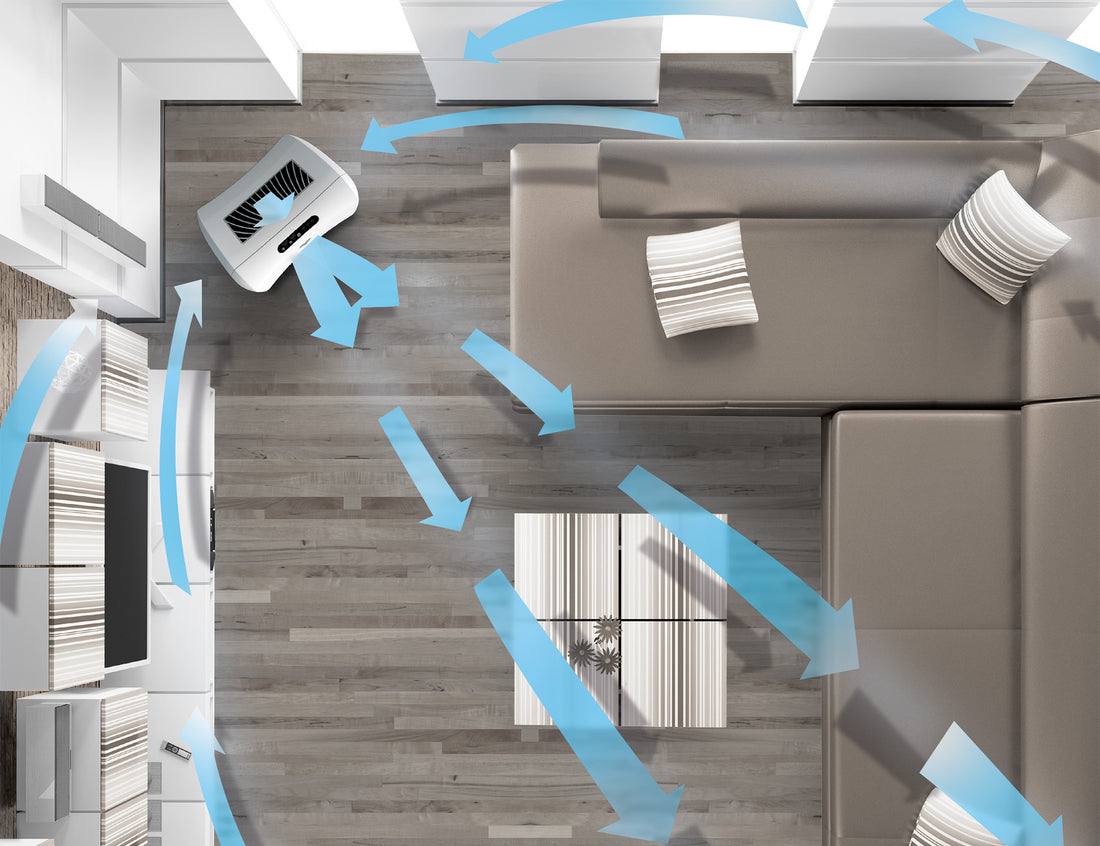
Credit: vornado.com.au
Real-world Examples Of Cadr In Popular Air Purifiers
To help you understand CADR differences, here are three real-world examples:
- Coway AP-1512HH: Dust CADR 246, Pollen CADR 240, Smoke CADR 233. Suitable for rooms up to 360 sq ft.
- Levoit Core 300: Dust CADR 140, Pollen CADR 145, Smoke CADR 141. Best for rooms up to 219 sq ft.
- Honeywell HPA300: Dust CADR 320, Pollen CADR 300, Smoke CADR 300. Can handle spaces up to 465 sq ft.
These numbers show how CADR affects room coverage and cleaning speed. A higher CADR means faster, more effective cleaning.
Factors That Affect Cadr
CADR depends on several things:
- Filter quality: HEPA filters usually deliver higher CADR.
- Fan strength: Stronger fans push more air through the filter.
- Design: Airflow paths, sealing, and filter placement impact CADR.
- Maintenance: Dirty filters reduce CADR over time.
A purifier may lose efficiency if the filters are clogged or not replaced on schedule. Always check the manufacturer’s filter replacement guide.
Cadr And Filter Types
Most air purifiers use HEPA, carbon, or other filters. HEPA filters are known for trapping tiny particles and usually provide high CADR for dust and smoke. Carbon filters mainly remove odors and gases, not particles. Some models use both types.
Non-obvious insight: Not all HEPA filters are equal. “True HEPA” filters must trap 99.97% of particles 0.3 microns or larger. “HEPA-type” filters may not meet this standard, and the CADR can be lower.
Cadr And Room Size Matching
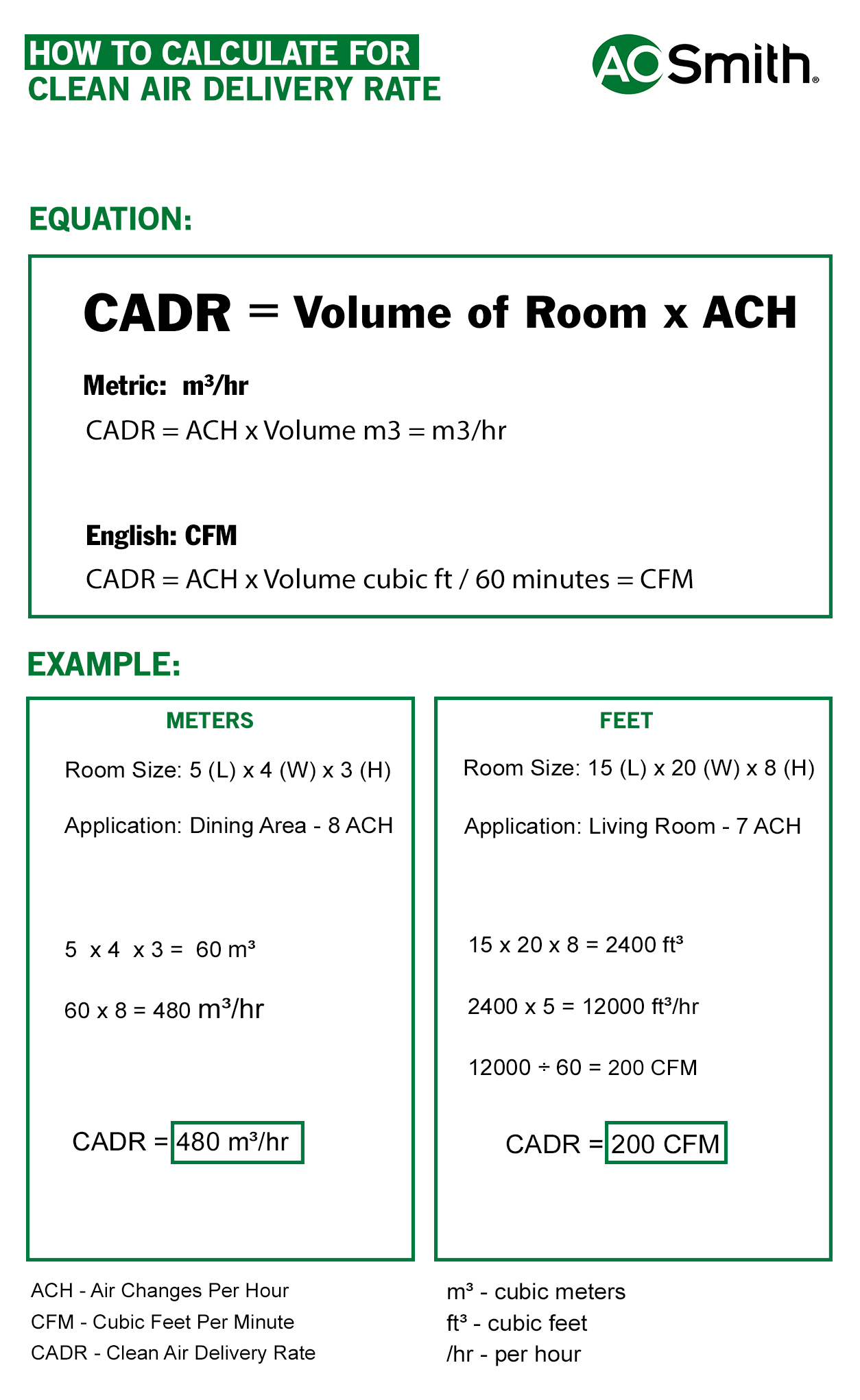
Matching CADR to your room is essential. If the CADR is too low, pollutants can build up faster than the purifier removes them. Here’s a simple formula to estimate the right CADR:
Room area (sq ft) × Ceiling height (ft) × Desired air changes per hour ÷ 60 = Minimum CADR (CFM)
For most homes, aim for 4–5 air changes per hour. For example, a 250 sq ft room with an 8 ft ceiling needs:
- 250 × 8 × 5 ÷ 60 = 167 CFM
Choose a purifier with a CADR close to this number for best results.
Limitations Of Cadr
While CADR is useful, it has some limits:
- It measures only particles, not gases or odors
- Results are from lab tests, not real homes with open doors/windows
- Does not account for noise, energy use, or other features
CADR is still the most reliable way to compare particle-removing power, but it’s smart to check other specs as well.
Cadr Vs. Other Air Purifier Ratings
Air purifiers may list other ratings like ACH (Air Changes per Hour), MERV (Minimum Efficiency Reporting Value), or filter grade. CADR is unique because it combines speed and efficiency for particles. ACH tells you how often the purifier can clean the room air, but it does not show filter performance. MERV is mainly used for HVAC filters, not portable purifiers.
Hidden Insights: What Beginners Miss About Cadr
- CADR drops if filters are dirty. Many buyers assume the purifier works at full power all year. But a clogged filter can reduce CADR by 20–40%. Regular cleaning and filter changes are essential.
- CADR is not about chemicals. If you want to remove VOCs (volatile organic compounds) or odors, CADR does not measure this. You need purifiers with activated carbon or special filters.
The Future Of Cadr
More brands are adopting CADR ratings to help buyers make informed choices. Some new models also add CADR ratings for bacteria or viruses. As air quality becomes more important, CADR will likely become a standard part of shopping for air purifiers.
If you want more details about CADR testing and standards, visit the Association of Home Appliance Manufacturers website.
Frequently Asked Questions
What Does Cadr Mean In Air Purifiers?
CADR stands for Clean Air Delivery Rate. It measures how quickly an air purifier removes dust, pollen, and smoke from the air, showing the purifier’s cleaning speed in cubic feet per minute.
How Do I Know Which Cadr I Need For My Room?
Calculate your room size (length × width) in square feet. For best results, choose a purifier with a CADR equal to at least two-thirds of your room size. For example, a 300 sq ft room needs a CADR of at least 200.
Is A Higher Cadr Always Better?
Yes, a higher CADR means faster and more effective air cleaning. However, larger machines may be louder or use more energy. Match CADR to your room size for the best balance.
Can Cadr Measure Removal Of Odors Or Gases?
No, CADR only measures particles like dust, pollen, and smoke. It does not show how well a purifier removes gases or odors. For those, look for models with activated carbon filters.
Why Are There Three Cadr Numbers?
Each CADR number (dust, pollen, smoke) reflects how well the purifier handles different particle sizes. Smoke is very small, pollen is large, dust is medium. Check all three to see if the purifier fits your needs.
Understanding CADR can change how you shop for an air purifier. Instead of guessing or relying on marketing, you can use real data to make a smart choice. Remember, clean air starts with picking the right purifier—and CADR is the key to finding it.