Finding the best place for your trash can in the kitchen can feel simple, but it affects your daily routine, cleanliness, and even the look of your home. Many people just put their bin anywhere, but smart placement makes cooking easier, keeps odors away, and helps you stay organized.
Let’s explore practical ways to decide where your trash can should go, including common mistakes, creative solutions, and tips for every type of kitchen.
Why Trash Can Placement Matters
The location of your trash can influences how you cook, clean, and move around the kitchen. If your bin is too far from where you work, you waste time and might spill garbage. Placing it too close to food prep can create hygiene issues. A well-placed trash can helps:
- Reduce mess: Easy access means fewer spills.
- Save time: Less walking means faster cooking and cleaning.
- Control odors: Smart placement keeps smells away from living spaces.
- Improve appearance: Hidden bins keep kitchens looking tidy.
Many people miss the impact of trash can placement. For example, placing a bin near the entry door might seem logical, but it can lead to bad smells greeting guests. Instead, the right spot is often less obvious and depends on how you use your kitchen.
Popular Trash Can Locations In Kitchens
Let’s look at common places people put their trash cans, with pros and cons for each. These are not just guesses—data shows certain locations are more popular in US homes.
| Location | Popularity (%) | Main Advantage | Main Drawback |
|---|---|---|---|
| Under Sink | 43 | Hidden from view | Limited space |
| Beside Prep Area | 28 | Easy access | Visible bin |
| End of Counter | 15 | Quick disposal | May block walkway |
| Pantry or Closet | 9 | Odor control | Less convenient |
| Kitchen Island | 5 | Central location | Requires custom build |
These numbers come from surveys by home improvement magazines and show that most people prefer to hide their trash can under the sink. However, this isn’t always possible or ideal.
Factors To Consider Before Choosing The Spot
Before you move your bin, consider these important points:
- Kitchen layout: Where are your sink, stove, and fridge? The triangle between these spots is the main work area.
- Traffic flow: Do people walk through your kitchen? Avoid blocking walkways.
- Cabinet space: Some kitchens have space for a pull-out trash bin. Others don’t.
- Family size: Large families produce more trash and need bigger bins.
- Cooking habits: If you cook often, easy access is key.
A common mistake is not thinking about how the kitchen is used. For example, you might place the bin next to the fridge, but most trash comes from food prep or cooking, not grabbing snacks.
Under The Sink: Classic And Convenient
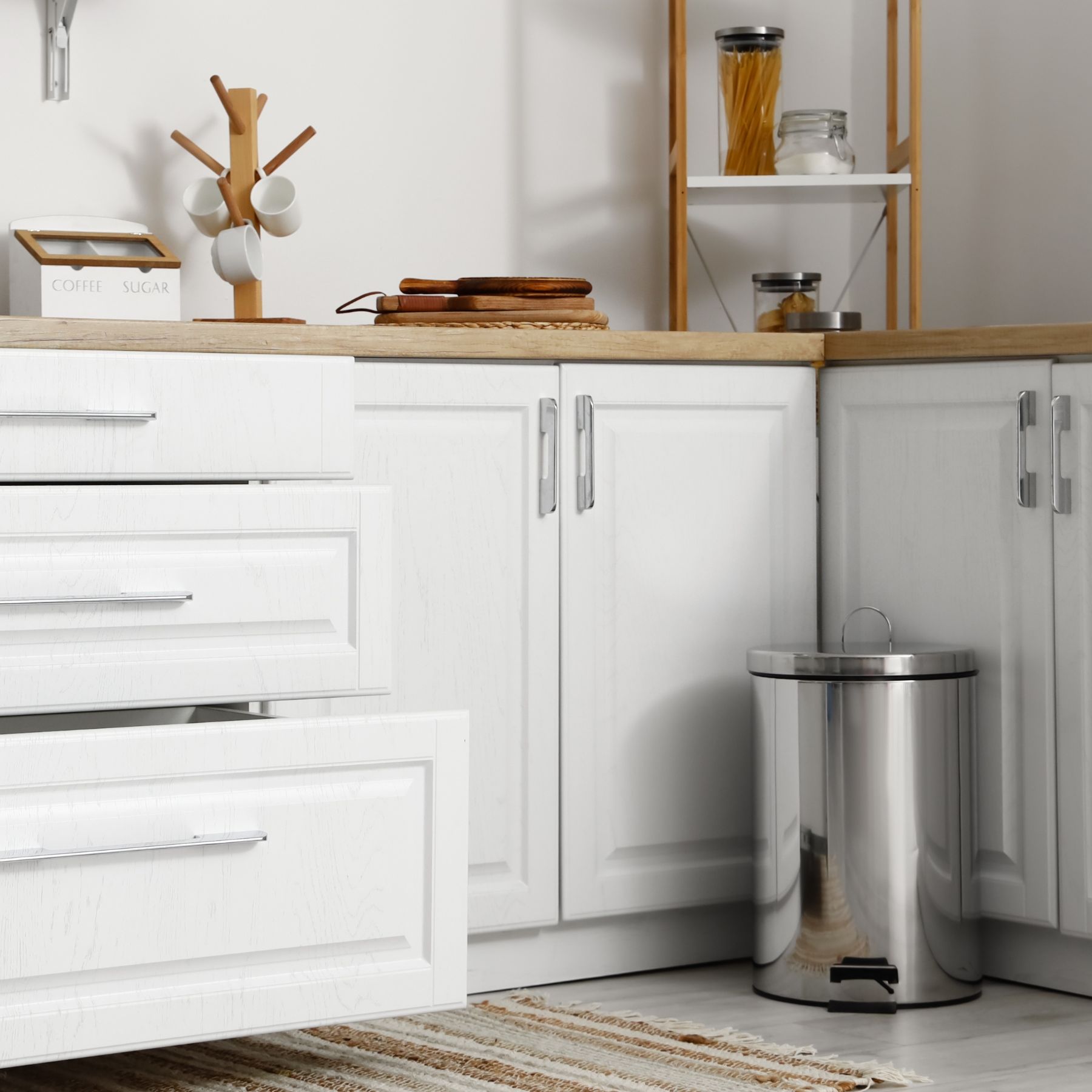
Putting your trash can under the sink is a classic choice. It hides the bin, controls odors, and keeps the kitchen looking neat. Most US homes use this spot because it’s easy to reach when cleaning dishes or prepping food.
Pros
- Hidden: Keeps bin out of sight.
- Easy access: Right where you wash and prep.
- Odor control: Smells stay inside cabinet.
Cons
- Size limit: Only small bins fit.
- Moisture risk: Water leaks can damage the bin.
- Limited recycling: Hard to fit extra bins for sorting.
If you have a small kitchen, this is usually the best option. Just check your cabinet measurements before buying a bin.

Credit: www.gssv.at
Beside Food Prep Area: Fast And Efficient
Placing the trash can beside the food prep area is perfect for people who cook often. You can sweep scraps directly into the bin, saving time and keeping counters clean.
Pros
- Quick disposal: Drop waste as you chop.
- Time-saving: No need to walk across the kitchen.
- Flexible size: Can use larger bins.
Cons
- Visible bin: May look messy.
- Odor: Smells can spread if uncovered.
- Safety: Can trip over bin if not careful.
If you have a spacious kitchen, this spot is practical. Consider using a bin with a lid or a motion sensor to keep things tidy.
End Of Counter: Accessible For All
The end of the counter is a smart place for homes with children or people who need easy access. It keeps the bin close but out of the main work area.
Pros
- Accessible: Easy for kids and guests.
- No cabinet needed: Works in open kitchens.
- Flexible placement: Move as needed.
Cons
- Can block walkway: Not ideal for narrow kitchens.
- Visible: May stand out in modern designs.
- Less odor control: Needs a tight-sealing lid.
This spot is often overlooked, but it works well for busy families. If you have a breakfast bar or open space, try placing the bin at the end.
Pantry Or Closet: Maximum Odor Control
Some homes keep the trash can in a pantry or closet. This is best for controlling smells, especially if you cook fish or spicy foods.
Pros
- Odor control: Trash stays behind closed doors.
- Hidden: No one sees the bin.
- Room for sorting: Can add bins for recycling and compost.
Cons
- Less convenient: Extra steps to throw away waste.
- Not for small kitchens: Needs extra space.
- Can forget to empty: Out of sight, out of mind.
If you care about air quality and have space, this is a solid choice. Just remember to empty the bin often.
Kitchen Island: Modern And Stylish
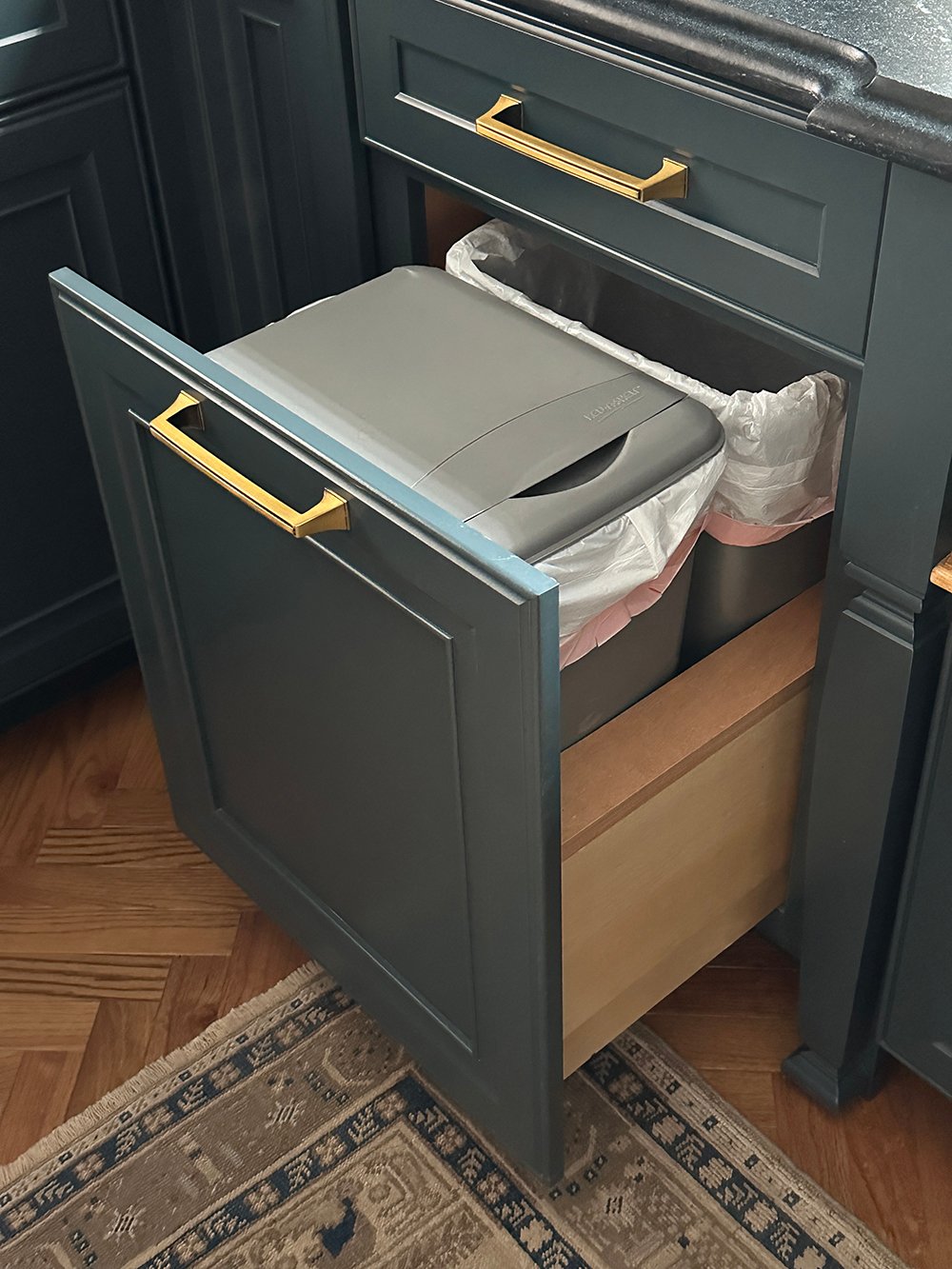
Placing the trash can in a kitchen island is a new trend. Many designers build pull-out bins inside the island for easy access from all sides.
Pros
- Central location: Everyone can reach it.
- Hidden design: Bin stays out of sight.
- Custom fit: Can add multiple bins.
Cons
- Requires custom build: Not for renters.
- Higher cost: Remodeling needed.
- Can reduce storage: Takes up island space.
If you are remodeling, add a trash bin to the island. It keeps the kitchen clean and modern.
Credit: roomfortuesday.com
Comparing Trash Can Types And Sizes
Choosing the right bin is as important as choosing the location. Here’s a comparison of popular trash can types for kitchens:
| Type | Average Size (gal) | Recommended Location | Odor Control |
|---|---|---|---|
| Step-On Bin | 13 | Beside prep or end of counter | Medium |
| Pull-Out Bin | 10 | Under sink or island | High |
| Open Top Bin | 15 | Pantry or closet | Low |
| Touchless Bin | 12 | Beside prep area | High |
For most families, a 13-gallon step-on bin is enough. If you recycle, add a smaller bin for bottles and cans.
Creative Solutions For Small Kitchens
If you have a small kitchen, finding space for a trash can can be tricky. Here are some creative ideas:
- Slim bins: Narrow bins fit between cabinets and appliances.
- Wall-mounted bins: Save floor space by using wall brackets.
- Corner bins: Place a bin in an unused corner.
- Stackable bins: Use vertical space for recycling and trash.
Many people forget that wall-mounted bins exist. They are perfect for tiny kitchens and can be installed at any height.
Smart Trash Can Features
Modern trash cans have features that make them more useful and easier to place. Look for these:
- Motion sensors: Open automatically when you wave your hand.
- Deodorizer filters: Reduce smells inside the bin.
- Soft-close lids: Stop loud noises.
- Bag holders: Make changing bags easier.
A motion sensor bin is great for prep areas, while a deodorizer filter is important for bins in open spaces.
Mistakes To Avoid When Placing Your Trash Can
Some mistakes are easy to make, but can cause problems. Here are two you might not think about:
- Ignoring workflow: If your bin is far from the prep area, you’ll waste time and may spill food on the floor.
- Blocking appliances: Placing a bin near the dishwasher or oven can create traffic jams and safety risks.
Another common error is not measuring the space. Always check the size before buying a new bin.
How To Keep Your Kitchen Clean And Odor-free
Where you put your trash can helps control smells, but there are extra steps you can take:
- Use tight-sealing lids: Stops odors from escaping.
- Empty trash daily: Especially after cooking meat or fish.
- Clean the bin regularly: Wash with soap and water weekly.
- Add baking soda: Sprinkle some in the bin to absorb smells.
These simple steps, along with smart placement, will keep your kitchen fresh.
Real-life Example: Small Apartment Kitchen
Let’s look at a real example. Mia lives in a studio apartment in Los Angeles. Her kitchen is only 8 feet wide, with limited cabinet space. At first, she put her bin next to the fridge, but it blocked the walkway. After reading design tips, she:
- Switched to a slim bin under the sink.
- Added a wall-mounted recycling bin above the counter.
- Uses a motion sensor lid for easy disposal.
Now, Mia’s kitchen stays tidy, and she saves time while cooking. This shows that even small spaces can have smart trash can placement.
Credit: www.realhomes.com
Data On Kitchen Trash Can Usage
According to the National Kitchen and Bath Association (NKBA), about 67% of US homes use a single bin for all trash. Only 33% use separate bins for recycling and compost. The main reasons are lack of space and habit. However, homes with multiple bins are 42% more likely to sort waste correctly.
Many people don’t realize that adding a second bin can improve recycling rates. If you care about the environment, try placing a recycling bin next to your main trash can.
Tips For Families And Busy Kitchens
If you have a large family or cook often, your needs are different. Here’s what works:
- Choose a big bin (at least 13 gallons).
- Use bins with lids to control odors.
- Place bins near prep and clean-up areas.
- Add smaller bins for compost or recycling.
For busy kitchens, think about workflow. The best spot is often between the sink and the stove.
Comparing Trash Can Placement For Different Kitchen Styles
Kitchen style affects where you can put the trash can. Here’s a quick comparison:
| Kitchen Style | Best Trash Can Spot | Why It Works |
|---|---|---|
| Open Plan | Kitchen island | Central access for all |
| Galley | Under sink | Hidden, saves space |
| L-shaped | End of counter | Easy access, avoids corners |
| Small apartment | Slim bin under sink | Fits limited space |
| Traditional | Pantry or closet | Keeps odors out |
Knowing your kitchen style helps you pick the right spot.
Where To Put Trash Can In Kitchen: Final Advice
Choosing the best place for your trash can in the kitchen isn’t just about convenience—it’s about hygiene, workflow, and style. Start by thinking about your kitchen layout, family needs, and cooking habits. Don’t be afraid to try creative options, like wall-mounted bins or placing bins in the pantry. If you want more ideas, check out Houzz’s expert tips.
A well-placed trash can keeps your kitchen clean, saves time, and makes cooking more enjoyable. Remember to measure your space, compare bin types, and avoid blocking walkways. With these tips, your kitchen will stay fresh and organized.
Frequently Asked Questions
Where Should I Put The Trash Can If My Kitchen Is Very Small?
In a small kitchen, the best spot is usually under the sink. Use a slim bin that fits cabinet measurements. If that’s not possible, try a wall-mounted bin or a corner bin to save floor space.
How Can I Keep Kitchen Trash Odors Under Control?
Choose a bin with a tight-sealing lid and add a deodorizer filter or baking soda. Empty your trash daily and wash the bin weekly to prevent smells from building up.
Should I Have Separate Bins For Recycling And Compost?
Yes, if you have space. Homes with separate bins recycle more and reduce waste. Place recycling and compost bins next to your main trash can for easy sorting.
Can I Put The Trash Can In The Pantry Or Closet?
Yes, this is a good way to hide the bin and control odors. Just make sure the spot is convenient so you don’t forget to empty it. Use bins with wheels if you need to move them.
What Size Trash Can Is Best For A Family Kitchen?
For most families, a 13-gallon bin is ideal. If you cook often or have a big family, go for 15 gallons or add extra bins for recycling and compost. Always measure your space before buying.