That beeping coming from your range hood is one of the most annoying kitchen sounds there is. If you’ve been wondering why is my range hood beeping, you’re not alone, and the good news is that in most cases, it’s not a serious malfunction. It’s your hood trying to tell you something simple, usually that a filter needs attention.
Manufacturer specifications indicate that the vast majority of beeping incidents trace back to one of three causes: a dirty grease filter, a saturated carbon filter in ductless models, or a filter reminder timer that needs resetting. As of 2026, nearly every major range hood brand ships with some form of filter status alert system. Let’s walk through exactly how to figure out which one is bothering you and how to silence it for good.
Quick Answer
Your range hood is beeping because its filter reminder timer has triggered. The hood tracks hours of use and alerts you when the grease filter or carbon filter needs cleaning or replacement. A simple reset usually stops the beeping.
The fix takes under five minutes. Clean or replace the offending filter. Then press and hold the reset button for 3 to 5 seconds.
If the beeping persists, check for sensor issues or error codes.
How to Decode Your Range Hood’s Beep Pattern
Before you start pulling filters out, listen carefully to the beeping. The pattern tells you a lot about what’s wrong. Different brands use different signals, but there are some common threads across the industry.
Single beep every 30 to 60 seconds typically means the filter cleaning reminder has triggered. This is the most common pattern. The hood has logged enough cooking hours that it wants attention.
Continuous beeping or rapid repeating beeps usually indicates a sensor issue. Heat sensors, smoke detectors, or gas sensors can trigger this pattern. If you were cooking something particularly smoky or at high heat, that’s likely the culprit.
A series of three beeps repeated often points to an error code on the control board. This could mean a wiring issue, a stuck button, or a more serious electronic fault. Check your manual for the specific code.
Single beep when powering on or off is normal. That’s the hood confirming it received your command. You don’t need to worry about that one.
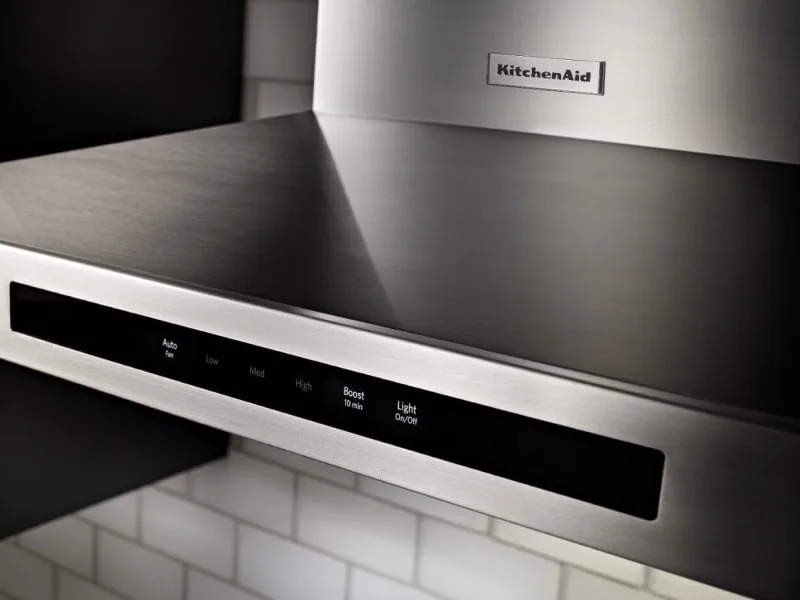
Image source: Bing (Web (fair-use with source credit))
If the beeping started right after a power outage or electrical surge, that’s another clue. The control board may have reset itself and lost its configuration. A simple power cycle often fixes that.
The key is to match the pattern to the likely cause. That narrows your troubleshooting from a dozen possibilities down to one or two. Write down the pattern if you need to, then move on to checking your filter setup.
Step 1: Check Your Filter Setup (Ducted vs. Recirculating)
The first thing you need to know is what kind of range hood you have. This determines which filter is causing the beep and what you need to do about it. There are two basic configurations.
Ducted range hoods vent air outside through ductwork in your walls or ceiling. These hoods only have one type of filter: a grease filter. If your hood is ducted and beeping, the grease filter is almost certainly the issue.
Recirculating range hoods don’t vent outside. They pull air through a grease filter, then through a carbon filter, and release it back into the kitchen. These hoods have two filters to maintain.
If you’re not sure which type you have, look up at the hood. If there’s no duct going into the ceiling or wall, it’s recirculating.
You can also check your model number. It’s usually printed on a sticker inside the hood, often near the lights or under the filter. A quick online search of that number will tell you exactly which configuration you have.
This distinction matters for one big reason: carbon filters need replacement, not just cleaning. The grease filter can be washed and reused. The carbon filter cannot.
Once it’s saturated, you have to swap in a new one.
For ductless models, the beeping often comes on because the carbon filter has hit its replacement interval. Most manufacturers recommend changing it every 3 to 6 months depending on cooking frequency. If you’ve been ignoring that schedule, the hood will eventually start nagging you.
Understanding your setup also helps with the reset process. Some hoods have different reset sequences depending on whether they’re ducted or recirculating. Getting this step right saves you time later.
If you need a deeper dive into how ductless systems work, check out how ductless range hoods operate.
Step 2: Inspect and Clean the Grease Filter
The grease filter is the workhorse of your range hood. It catches oil, grease, and airborne particles before they get into the fan motor or vent ductwork. Over time, it gets coated in a sticky film that reduces airflow and makes your hood work harder.
That’s when the beep starts.
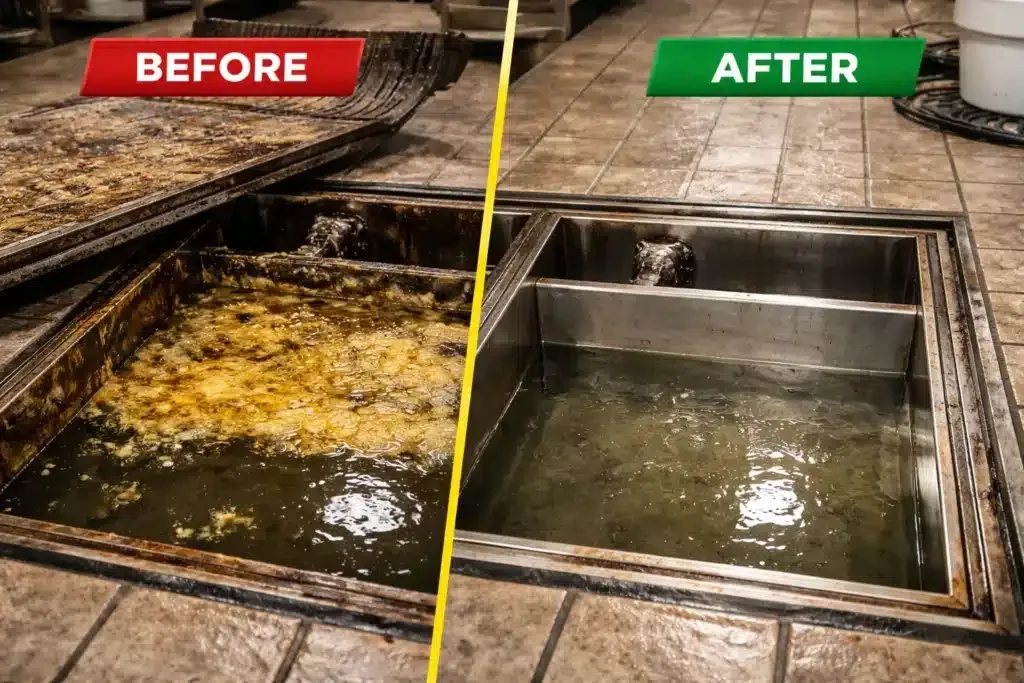
Image source: Bing (Web (fair-use with source credit))
Removing the grease filter is usually simple. It slides out from the underside of the hood, either from the front or the side. Some models have a metal tab or latch you need to press.
Most filters are held in place with small clips or a track system.
Once it’s out, hold it up to the light. If you can’t see through the mesh clearly, or if there’s a visible layer of grease, it needs cleaning. The photo above shows the difference between a clean filter and one that’s been neglected for months.
How to clean it:
- Fill a sink or large basin with hot water and add a degreasing dish soap
- Soak the filter for 10 to 15 minutes to loosen the grease
- Scrub gently with a soft brush or sponge
- Rinse thoroughly and let it air dry completely
- Never put grease filters in the dishwasher unless the manual says it’s safe
- Reinstall the filter once it’s fully dry
Some filters are aluminum mesh, others are stainless steel baffle filters. Both clean up the same way. A paste of baking soda and water works well for stubborn buildup.
After cleaning, replace the filter and see if the beeping stops. If it does, you’re done. If it doesn’t, you may need to reset the indicator timer, which we’ll cover in Step 4.
The cleaning frequency depends on how much you cook. Heavy frying and searing means more grease in the air. Most manufacturers suggest cleaning every 30 to 60 days for regular use.
If you cook oily foods daily, lean closer to the 30-day mark.
For the full rundown on this process, take a look at our guide on how to clean a range hood properly.
Step 3: Replace the Carbon Filter (If You Have One)
If your hood is recirculating and you’ve cleaned the grease filter but the beeping hasn’t stopped, the carbon filter is the next suspect. Carbon filters are designed to absorb odors and smoke particles that the grease filter can’t catch. Unlike grease filters, they can’t be cleaned and reused.
They simply wear out.
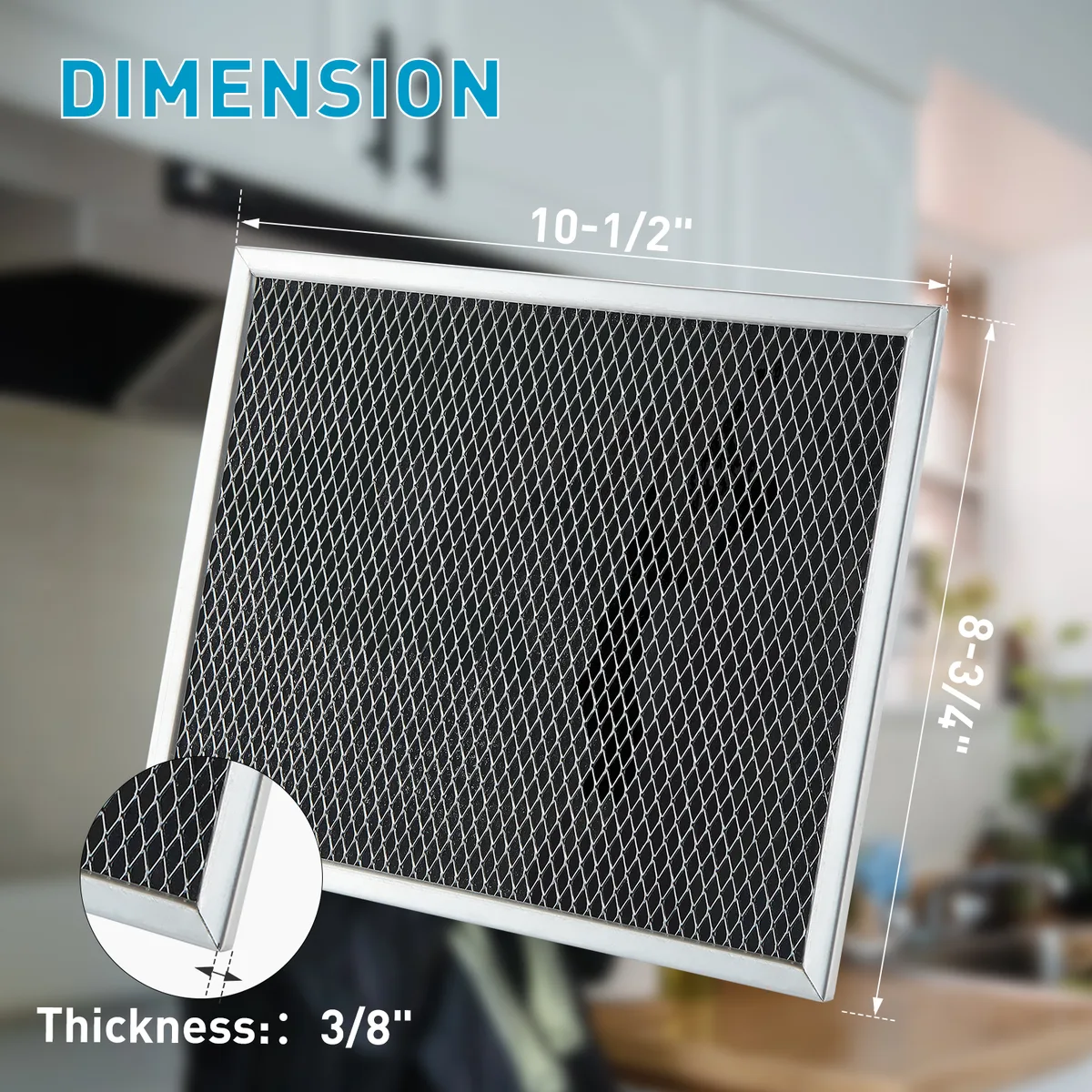
Image source: Bing (Web (fair-use with source credit))
Carbon filters are typically rectangular or circular pads filled with activated charcoal. They sit behind or above the grease filter in the hood. To access them, you’ll usually need to remove the grease filter first, then slide or unscrew the carbon filter from its housing.
Manufacturer specifications indicate that carbon filters typically last 3 to 6 months under normal cooking conditions. Some premium brands claim up to 12 months. If you do a lot of frying, grilling, or cooking with strong spices, you’ll probably need to replace them more often.
How to tell if your carbon filter is done:
- It looks gray, dusty, or has visible grease stains
- You can smell cooking odors lingering after the hood runs
- It’s been more than 6 months since the last replacement
- The beeping doesn’t stop after cleaning the grease filter
When you buy a replacement, make sure it matches your hood’s model number. Carbon filters are not universal. A quick search of your model number online will show you the right cartridge.
Major manufacturers like Broan, Zephyr, and KitchenAid all use their own proprietary sizing.
Replacing the filter takes about two minutes. Take the old one out, note its orientation, and slide the new one into the same slot. Make sure it sits flat and snug.
Then reinstall the grease filter.
Once both filters are clean or fresh, you’ll need to reset the reminder timer. Otherwise, the hood doesn’t know you’ve done the work, and the beeping will continue. That reset process is next.
Step 4: Reset the Filter Indicator — Brand-by-Brand Guide
Cleaning or replacing the filter is only half the job. Your hood has a counter that tracks usage hours. Until you reset that counter, the beeping will keep coming back every few minutes.
The reset process varies by brand, but most follow a similar pattern.
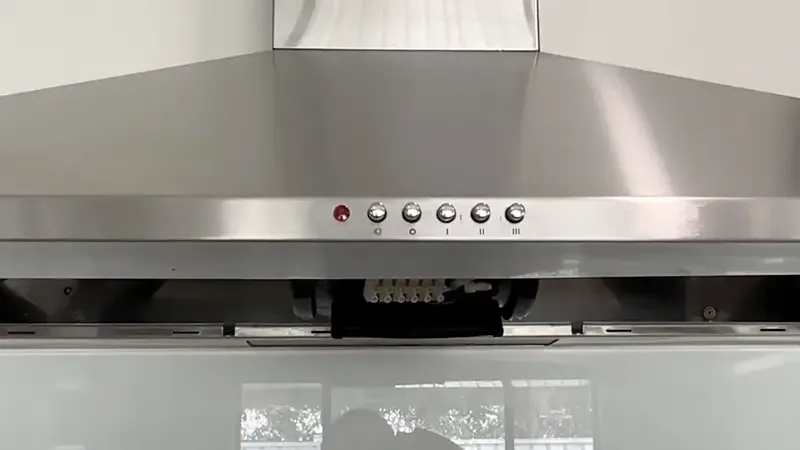
Image source: Bing (Web (fair-use with source credit))
Let’s go through the most common reset procedures. If your brand isn’t listed, check your manual or search for your model number plus “reset filter indicator.”
Broan / NuTone: Press and hold the “Filter” or “Reset” button for 3 seconds until the indicator light stops blinking. Some older models require you to press and hold the fan speed button for 5 seconds instead.
Zephyr: Look for a small button labeled “Filter Clean” or an icon that looks like a droplet. Press and hold it for 3 to 5 seconds until you hear a confirmation beep and the light turns off.
KitchenAid / Whirlpool: Press and hold the “Fan” button and the “Light” button simultaneously for 3 seconds. The indicator light will blink twice to confirm the reset.
GE / Frigidaire: Press and hold the “Power” button for 3 seconds until the indicator turns off. On some models, it’s the “Timer” button that serves this function.
Bosch: Press and hold the “Fan” button for 3 to 10 seconds depending on the model. The display will show “C0” or similar to confirm the reset.
Samsung: Press and hold the “Power” and “Light” buttons together for 5 seconds. The filter indicator will reset with a single beep.
Cosmo / Hauslane: These budget-friendly brands typically use a small recessed reset button that you press with a toothpick or paperclip. It’s often located near the control panel or under the filter.
If you’re unsure, look for a button with a filter icon, usually shaped like a diamond or a droplet. That’s almost always the reset control. The photo above shows where these reset buttons typically hide.
After resetting, the beeping should stop immediately. If it doesn’t, try a full power cycle, which is Step 5. If that still doesn’t work, you may have a control board issue that needs professional attention.
If you’ve recently had to reset your Keurig for a similar issue, you’ll notice the pattern is pretty standard across appliances.