Skip to content
If you’ve ever walked into a room and noticed a lingering smell—maybe smoke, pet odor, or cooking fumes—you probably wondered if an air purifier could help. Many people use air purifiers to improve indoor air quality, but do they actually remove smells?
The answer isn’t as simple as yes or no. It depends on the type of purifier, the source of the smell, and how the device works.
This article will guide you through how air purifiers deal with smells, which types are best for odor removal, and what to expect if you’re considering buying one. You’ll also find practical tips, data, and real-world examples to help you make a smart decision.
How Air Purifiers Work
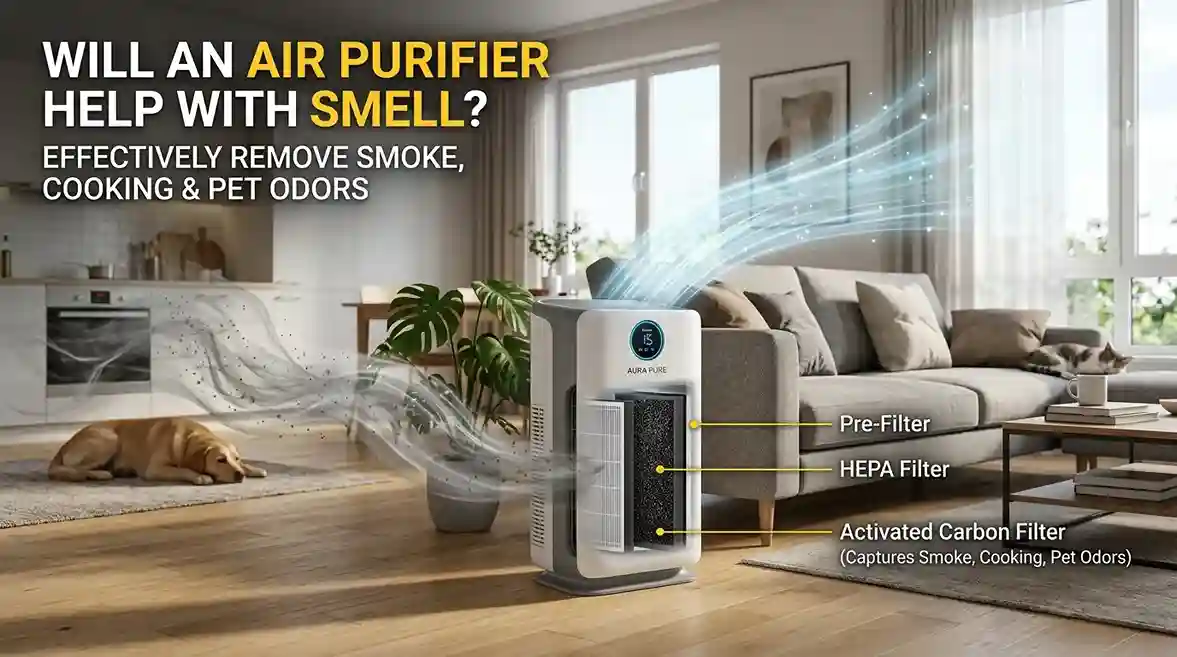
Air purifiers use different methods to clean the air. The most common types are HEPA filters, activated carbon filters, ionizers, and UV-C light purifiers. Each has unique strengths and weaknesses when it comes to removing odors.
Hepa Filters
HEPA stands for High Efficiency Particulate Air. These filters trap tiny particles like dust, pollen, and pet dander. However, HEPA filters are not very effective against smells. Odors are caused by molecules that are often much smaller than what HEPA filters can catch.
Activated Carbon Filters
Activated carbon is the champion for odor removal. It absorbs gases and chemicals, including many smells. When air passes through the carbon filter, odor molecules stick to the carbon and get removed from the air.
Ionizers
Ionizers release charged particles that attach to airborne particles, making them heavier so they fall out of the air or stick to surfaces. While ionizers can reduce some particles, they are not reliable for removing most smells. They also may produce ozone, which can be harmful in high amounts.
Uv-c Light Purifiers
UV-C light purifiers use ultraviolet light to kill germs and bacteria. This method doesn’t remove smells directly, but it can help with odors caused by mold or bacteria.
What Causes Indoor Smells?
Understanding what causes indoor odors helps you know how to tackle them. Smells in homes often come from:
- Pets: Dander, urine, and fur can produce persistent odors.
- Cooking: Frying, grilling, or spicy foods can leave strong smells.
- Smoking: Tobacco smoke penetrates fabrics and surfaces.
- Mold and mildew: These organisms release musty odors.
- Garbage: Decaying food and waste emit foul smells.
- Chemicals: Paint, cleaning products, and other household items can create unpleasant scents.
Some smells are from particles, while others are from gases and chemicals. Air purifiers target these in different ways.

Credit: www.covingtoncountyhospital.com
Air Purifiers And Smell Removal: What The Data Shows
Research has shown that air purifiers with activated carbon filters are the most effective for odor removal. According to a study by the U.S. Environmental Protection Agency (EPA), carbon filters can reduce indoor volatile organic compounds (VOCs) and odors by up to 80%.
Here’s a comparison of how different purifier types perform against odors:
| Purifier Type | Odor Removal Efficiency | Best For |
|---|---|---|
| HEPA Filter | Low | Dust, pollen, pet dander |
| Activated Carbon | High | Smoke, cooking, chemicals |
| Ionizer | Low | Some particles |
| UV-C Light | Medium | Mold, bacteria |
Non-obvious insight: Many people buy HEPA purifiers thinking they will remove smells, but without a carbon filter, they won’t be effective against most odors.
Real-world Examples
Let’s look at some common situations to see how air purifiers perform.
Pet Odors
If you have a cat or dog, their smell can stick to carpets, sofas, and air. An air purifier with both HEPA and activated carbon filters will capture dander and remove odors. But remember, it won’t clean surfaces—regular cleaning is still needed.
Cooking Smells
Cooking strong foods like fish or onions can leave persistent odors. Activated carbon filters absorb these smells quickly. For best results, run the purifier during and after cooking.
Cigarette Smoke
Tobacco smoke is tough to remove. It contains both particles and gases. Purifiers with both HEPA and activated carbon filters are your best bet. However, smoke can also stick to walls and furniture, so deep cleaning may be necessary.
Mold And Mildew
Musty odors from mold are caused by spores and chemicals. UV-C light purifiers can kill some mold, and carbon filters absorb the smell. But if mold is growing in your home, fix the moisture problem first.
Choosing The Right Air Purifier For Smell
When shopping for an air purifier, pay attention to these key factors:
- Filter Type: Make sure the purifier has an activated carbon filter. Some units combine HEPA and carbon for broader coverage.
- Room Size: Check the device’s coverage area. A purifier that is too small won’t be effective.
- CADR Rating: The Clean Air Delivery Rate (CADR) measures how quickly a purifier cleans the air. Higher CADR means faster odor removal.
- Maintenance: Filters need regular replacement to stay effective. Check costs and availability.
- Noise Level: Some purifiers can be loud, especially at high speeds.
Here’s a quick comparison of popular features:
| Feature | Importance for Smell Removal | Notes |
|---|---|---|
| Activated Carbon Filter | Essential | Absorbs odors and chemicals |
| HEPA Filter | Helpful | Removes particles, not odors |
| CADR Rating | High | Shows efficiency |
| Filter Replacement | Medium | Old filters lose effectiveness |
Non-obvious insight: Some purifiers advertise “odor removal” but only have HEPA filters. Always check for activated carbon in the specs.
Common Mistakes When Using Air Purifiers For Smell
Even the best air purifier can’t do everything. Here are mistakes people often make:
- Expecting instant results: Odor removal takes time, especially for strong smells.
- Ignoring filter changes: Old filters don’t work well. Replace them as recommended.
- Using the wrong size: A small purifier won’t clean a large room.
- Not addressing the source: If you don’t fix what’s causing the smell, it will return.
- Placing the purifier incorrectly: The device should be near the odor source, not hidden in a corner.
You may also like: Best Air Purifiers for Home
How Long Does It Take To Remove Smells?
The speed depends on the purifier’s power, room size, and odor strength. For mild cooking smells, you might notice improvement in 30 minutes. For tough odors like smoke, it could take several hours or more.
Here’s a rough guide:
| Odor Type | Estimated Removal Time | Tips |
|---|---|---|
| Cooking | 30–90 minutes | Run during and after cooking |
| Pet | 1–2 hours | Daily use recommended |
| Smoke | 2–6 hours | Combine with deep cleaning |
| Mold | 1–3 hours | Fix moisture source |
Practical Tips For Better Odor Removal
To get the most from your air purifier, follow these tips:
- Choose the right model: Always look for activated carbon.
- Keep doors and windows closed: This helps the purifier work faster.
- Clean regularly: Remove sources of smell, like garbage or pet mess.
- Change filters on time: Set reminders if needed.
- Position the purifier well: Place it near the odor source.
If you have severe odors, combine air purifiers with other solutions like cleaning, ventilation, and odor-neutralizing sprays.
Credit: www.youtube.com
Can Air Purifiers Remove All Smells?
Air purifiers are good at reducing many smells, but they aren’t magic. Some odors—like those soaked into carpets, curtains, or walls—need deep cleaning or replacement. If you’re dealing with a strong, persistent smell, check for hidden sources like mold or pet accidents.
Air purifiers also can’t remove every chemical. Some volatile organic compounds (VOCs) are too small or don’t stick to carbon. For tough cases, consider special purifiers or professional cleaning.
The Science Behind Activated Carbon
Activated carbon is made by heating carbon-rich materials (like wood or coconut shells) to create tiny pores. These pores trap molecules, including many odor-causing chemicals. This process is called adsorption (not absorption). Adsorption means the molecules stick to the surface of the carbon.
According to the EPA, activated carbon filters can remove up to 80% of VOCs and odors in a typical home. However, the filter becomes saturated over time and must be replaced.
Credit: www.youtube.com
Are Ionizers Safe For Smell Removal?
Ionizers are popular, but they aren’t the best for odor removal. They can help with particles but do little for gases. Some ionizers produce ozone, which can irritate lungs and worsen asthma. The EPA warns against using ozone generators at home.
Always check that your device is ozone-free or produces very low amounts.
For more information on air quality and purifier safety, see the EPA Indoor Air Quality guide.
Frequently Asked Questions
Will Any Air Purifier Help With Smell?
No. Only purifiers with activated carbon filters are effective against most odors. HEPA filters alone will not remove smells.
How Often Should I Change The Filters?
Usually every 6–12 months, but it depends on usage and air quality. Some purifiers have filter indicators to remind you.
Can Air Purifiers Remove Pet Smells?
Yes, especially those with activated carbon and HEPA filters. They capture dander and absorb odors, but regular cleaning is still needed.
Are Air Purifiers Safe To Use All Day?
Most modern purifiers are safe for continuous use. Avoid ionizers that produce high levels of ozone.
Will An Air Purifier Remove Mold Smell?
It can reduce musty odors if the filter has activated carbon. But to fully solve mold problems, you must fix moisture and clean affected areas.
A good air purifier can make your home smell fresher and improve air quality. Activated carbon filters are key for odor removal. Choose the right model, use it properly, and remember that air purifiers work best with regular cleaning and maintenance.
If you still have persistent smells, investigate deeper sources—sometimes the answer lies beyond the air.