Skip to content
Having pets at home brings joy, but it also means your floors face extra challenges. Dogs, cats, and other animals track in dirt, shed hair, and sometimes leave behind accidents. Keeping floors clean helps your pets stay healthy and your home smell fresh.
But how often should you mop your floors when you have pets? The answer isn’t the same for everyone—it depends on your pets, flooring type, and how much activity happens in your house. In this guide, we’ll break down the best schedule, give you practical tips, and cover what most pet owners miss.
By the end, you’ll know exactly how often to mop and how to do it efficiently.
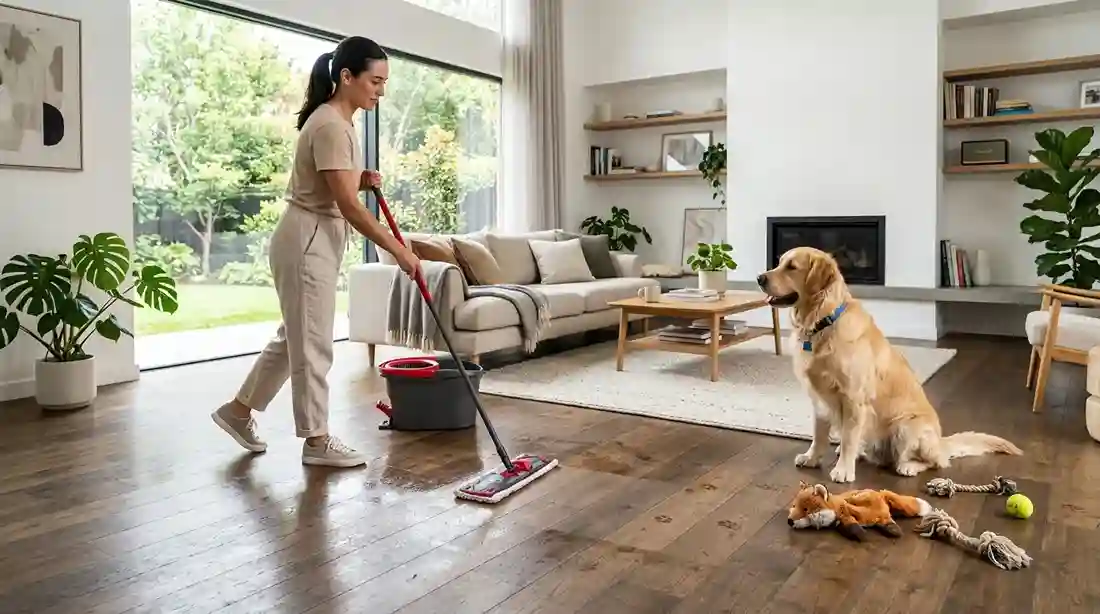
Why Mopping Matters More With Pets
Pets love to explore. They walk outside, roll on carpets, and sometimes drool or scratch. All these actions leave behind dirt, fur, and bacteria. Floors can become sticky, smell bad, and even harbor germs that affect both humans and animals.
Regular mopping does more than make your floors look clean. It removes pet dander (tiny skin flakes), which can trigger allergies. It also gets rid of bacteria from paws and prevents stains from accidents. For homes with pets, mopping isn’t just a chore—it’s part of a healthy routine.
Some pet owners don’t realize that even invisible dirt can be a problem. For example, urine residue can linger in tiny cracks on hard floors, causing smells and attracting more bacteria. Over time, this can make cleaning harder and more expensive.
Factors That Affect Mopping Frequency
You don’t need to mop every day, but you shouldn’t wait too long either. The ideal mopping schedule depends on several factors:
- Number of pets: More pets mean more mess.
- Type of pet: Dogs often bring in mud; cats may shed more hair.
- Flooring material: Hardwood, tile, and laminate need different care.
- Home activity: Busy homes see more dirt.
- Season: Rainy or snowy weather means muddy paws.
Let’s compare how these factors play out:
| Factor | Low Impact | High Impact |
|---|---|---|
| Number of Pets | 1 | 3 or more |
| Type of Pet | Small cat | Large dog |
| Flooring Material | Tile | Hardwood |
| Home Activity | Quiet | Busy |
| Season | Dry | Rainy |
If you have three big dogs and wood floors in a busy home, you’ll need to mop more often than someone with one cat and tile floors.

Credit: exactlycleangta.com
Recommended Mopping Schedules
There’s no single answer for every pet owner, but these guidelines help:
One Or Two Pets, Low Activity
- Mop once a week for most homes.
- If your pet is clean, sheds little, and rarely has accidents, weekly mopping is enough.
- Spot clean spills or accidents immediately.
Multiple Pets Or High Activity
- Mop twice a week or more.
- High-traffic areas (kitchen, entryway) may need mopping every 2–3 days.
- Use a quick mop (like a spray mop) for daily touch-ups.
Special Situations
- After accidents (urine, feces, vomit), mop the area right away.
- During muddy seasons, consider mopping every other day.
- Homes with allergy sufferers should mop more often to reduce dander.
Here’s a quick comparison:
| Situation | Recommended Frequency |
|---|---|
| Single cat, quiet home | Weekly |
| Two dogs, active family | Twice a week |
| Rainy weather, multiple pets | Every other day |
| Accident cleanup | Immediately |
Mopping Techniques For Pet Owners
How you mop matters as much as how often. Pet messes can be tough, so use the right tools and products.
Choose The Right Mop
- Microfiber mops pick up hair and dander better than cotton.
- Steam mops kill bacteria without chemicals, but check if your floor can handle heat.
- Spray mops are good for quick cleanups.
Use Pet-safe Cleaners
Many regular floor cleaners contain strong chemicals. These can harm pets if they lick the floor or walk on it. Look for pet-safe products or make your own with water and vinegar.
Common mistake: Using bleach or ammonia. These may remove stains, but the smell can confuse pets and cause repeat accidents.
Mop Smart
- Start with dry cleaning: Sweep or vacuum first to remove loose fur and dirt.
- Mop in sections: Divide your floor, so you don’t miss spots.
- Rinse mop often: Dirty water spreads germs.
Example: After your dog comes in from the rain, mop the entryway using a microfiber mop and pet-safe cleaner. This prevents muddy paw prints from spreading.
You might find this helpful: Best Mop for Tile Floors
Flooring Types And Pet Cleaning
Different floors need different care. Some surfaces show stains more easily, while others hide dirt but trap bacteria.
| Floor Type | Pet Mess Handling | Mopping Frequency |
|---|---|---|
| Hardwood | Stains easily, absorbs odors | Twice a week |
| Tile | Resists stains, easy to mop | Weekly |
| Laminate | Resists water, shows streaks | Weekly or as needed |
| Vinyl | Easy to clean, tough surface | Weekly |
Hardwood floors need gentle cleaners and quick action after accidents. Tile is more forgiving, but grout can trap dirt.
Common Mistakes Pet Owners Make
Many pet owners think vacuuming or sweeping is enough. But mopping is crucial, especially for sticky messes and bacteria.
- Skipping accident cleanups: Waiting lets stains set.
- Using harsh chemicals: Can harm pets and damage floors.
- Not drying floors: Wet floors attract more dirt and can be slippery.
- Ignoring corners and edges: Fur and dirt collect here.
- Using dirty mop water: Spreads germs instead of cleaning.
A less obvious mistake: Cleaning only visible messes. Pet dander and bacteria aren’t always easy to see, but they can cause smells and health issues.
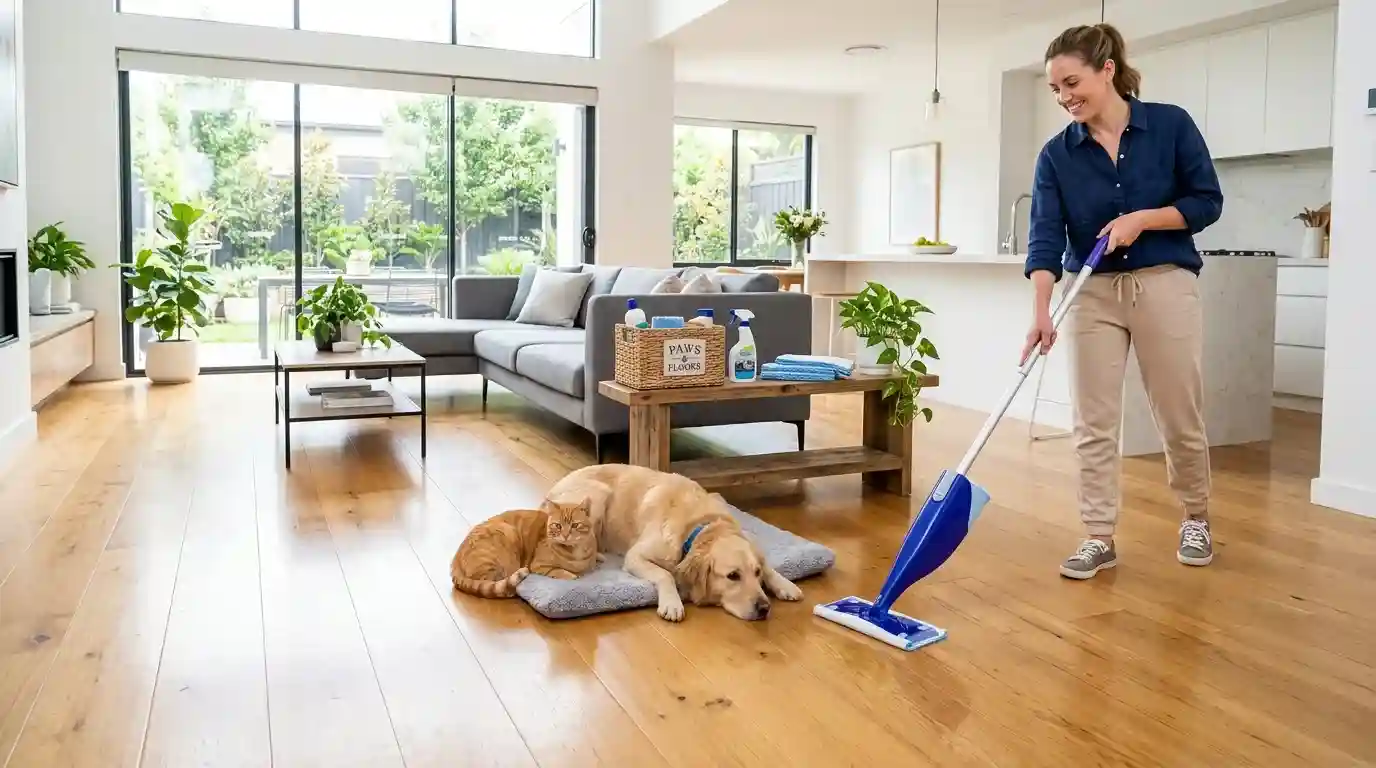
Tips For Efficient Mopping With Pets
Mopping doesn’t have to be a hassle. Small changes make it easier:
- Train pets to wipe paws: Place a mat at the door and teach your dog to stop there.
- Keep cleaning supplies handy: Store mop and cleaner near high-traffic areas.
- Use a robotic mop: If you have a busy home, this saves time.
- Regular grooming: Brush pets often to reduce shedding.
- Schedule cleaning: Set a reminder so you don’t forget.
Practical insight: Some pet owners find that mopping right after walks (when paws are dirtiest) prevents the need for deeper cleaning later.
Health Benefits Of Regular Mopping
Clean floors do more than look nice. They protect your family and pets from germs and allergens.
- Reduces allergies: Removes pet dander and dust.
- Prevents illness: Gets rid of bacteria from outside.
- Improves air quality: Clean floors mean less dust in the air.
- Prevents odors: Removes urine and food spills that cause bad smells.
According to the CDC, regular cleaning reduces the risk of respiratory problems and skin issues for both pets and people (CDC Healthy Homes).
How To Handle Pet Accidents
Accidents happen, even with trained pets. Quick response is key.
- Remove solids: Pick up feces or vomit with paper towels.
- Blot liquids: Use absorbent cloth to soak up urine.
- Mop immediately: Use pet-safe cleaner and mop the area well.
- Dry the floor: Prevents slips and further mess.
Non-obvious tip: Even if you can’t see a stain, mop the area thoroughly. Urine can seep into floor cracks and cause smells days later.
Maintaining Clean Floors Between Moppings
Daily habits keep floors cleaner, so you don’t need to mop as often.
- Wipe paws: Clean your pet’s feet after walks.
- Vacuum daily: Removes hair and dirt.
- Use rugs: Place washable mats in entryways and under pet bowls.
- Limit pet access: Keep pets out of muddy areas when possible.
Some owners use sticky rollers to pick up loose fur quickly. This prevents buildup and makes mopping easier.
Frequently Asked Questions
How Can I Tell If My Floors Need Mopping?
If you notice sticky spots, pet hair buildup, or a bad smell, it’s time to mop. Even if floors look clean, regular mopping helps prevent hidden germs.
Are Steam Mops Safe For Homes With Pets?
Yes, steam mops are safe for many floors and kill bacteria without chemicals. Always check if your flooring can handle heat before using one.
What Are The Best Pet-safe Floor Cleaners?
Look for cleaners labeled pet-safe or use diluted white vinegar and water. Avoid bleach and ammonia. Pet stores often sell specialty products designed for animal homes.
Should I Mop More Often If My Pet Is Sick?
Yes, sick pets may spread more bacteria. Mop daily until your pet recovers, especially in areas where they spend most of their time.
How Do I Prevent Pet Odors From Returning After Mopping?
Dry the floor well, use a deodorizing cleaner, and clean accidents quickly. Regular grooming and vacuuming also help keep odors away.
Keeping your home clean with pets can feel challenging, but a smart mopping routine makes it easier. By understanding your pets’ habits, your flooring type, and the best cleaning methods, you can enjoy a fresh home and happier animals. Regular mopping protects health, prevents stains, and keeps your living space comfortable for everyone.
With a few simple changes, you’ll spend less time cleaning and more time enjoying your pets.