Skip to content
Making homemade yogurt is a satisfying experience. You control the ingredients, flavor, and texture. But even with a yogurt maker, many beginners run into problems. The process sounds simple: just milk and starter, some waiting, and you get yogurt. Yet, small mistakes can ruin the result—leading to runny, sour, or grainy yogurt. If you’re new to yogurt makers or want better results, understanding common mistakes is key.
Let’s explore frequent errors, practical fixes, and insights most beginners miss. With this guide, you’ll avoid wasted batches and make yogurt that’s creamy, thick, and delicious every time.
Choosing The Wrong Milk
Milk is the base of yogurt. Picking the right type affects your final product. Many beginners don’t realize that milk quality and fat level matter.
- Low-fat milk often creates thinner yogurt. Whole milk gives a creamier, thicker result.
- Ultra-pasteurized milk can cause weak texture. It’s processed at high heat, which changes proteins. If possible, pick regular pasteurized milk.
- Old milk or milk near its expiration date increases risk of spoilage. Always use fresh milk.
Here’s a quick comparison of milk types and their yogurt results:
| Milk Type | Texture | Taste | Success Rate |
|---|---|---|---|
| Whole | Thick, creamy | Rich | High |
| 2% | Medium | Mild | Medium |
| Skim | Thin | Light | Lower |
| Ultra-pasteurized | Sometimes watery | Neutral | Low |
Tip: If you want thicker yogurt from skim or 2% milk, add a few tablespoons of milk powder before heating.
Incorrect Milk Heating
Heating milk is essential for yogurt making. Many people skip or rush this step. Heating changes the milk proteins so they can form a firm structure when fermenting.
- Not heating to 180°F (82°C): This step helps create thick yogurt. If you don’t reach this temperature, your yogurt might separate or feel grainy.
- Rapid cooling: Let the milk cool slowly to about 110°F (43°C) before adding the starter. Cooling too quickly can shock the proteins.
A thermometer is your best friend. If you don’t have one, heat the milk until it starts to steam and tiny bubbles appear around the edge (not boiling). Cool until it feels warm but not hot to the touch.
Using The Wrong Starter Culture
Yogurt starter contains live bacteria. These bacteria change milk into yogurt. Using the wrong starter or old starter can lead to weak or sour yogurt.
- Expired starter: Old starter cultures may have weak or dead bacteria. Always check the expiration date.
- Store-bought yogurt as starter: It works, but not all brands have active cultures. Look for labels saying “live and active cultures.”
- Too little or too much starter: Using too little starter makes the yogurt runny. Too much starter can make it sour or grainy.
As a rule, use about 2 tablespoons of starter per quart of milk. If using store-bought yogurt, choose plain, unsweetened, and avoid brands with added thickeners.
Poor Mixing Technique
Mixing the starter into the milk is a simple but critical step. Many people dump the starter straight in and stir roughly. This can create lumps or uneven fermentation.
- Dumping starter in hot milk: Always wait until milk cools to 110°F (43°C) before adding starter. High heat kills bacteria.
- Mixing too fast or too slow: Stir gently and thoroughly. Mix a small amount of cooled milk with the starter first, then add this mixture back to the rest of the milk.
This method spreads bacteria evenly and prevents clumps. It’s a small step, but it makes a big difference.
Incorrect Fermentation Time And Temperature
The fermentation phase is where magic happens. But mistakes here are common. Most yogurt makers set a constant temperature, but errors still occur.
- Too low temperature: Below 105°F (40°C), bacteria grow slowly, resulting in runny yogurt.
- Too high temperature: Above 115°F (46°C), bacteria die or produce sour, separated yogurt.
- Not fermenting long enough: Yogurt needs at least 6–8 hours. Less time leads to watery texture and weak flavor.
- Fermenting too long: More than 12–14 hours can create overly tart or dry yogurt.
Here’s a table showing fermentation effects:
| Time (Hours) | Texture | Flavor | Risk |
|---|---|---|---|
| 4–6 | Thin, weak | Mild | Underdeveloped |
| 6–10 | Thick, creamy | Balanced | Best |
| 12+ | Very thick | Very tart | Separation |
Most yogurt makers keep the temperature steady, but check your device’s accuracy. A kitchen thermometer can confirm if it’s running at the right temperature.
Opening The Lid During Fermentation
It’s tempting to check your yogurt, but opening the lid disturbs the process. Each time you open, you let out heat and introduce possible contaminants.
- Heat loss: Drops in temperature slow fermentation, making yogurt watery.
- Contamination: Airborne bacteria can spoil your batch.
Leave the yogurt undisturbed for the full fermentation time. If you need to check, use a transparent lid or wait until the minimum time has passed.
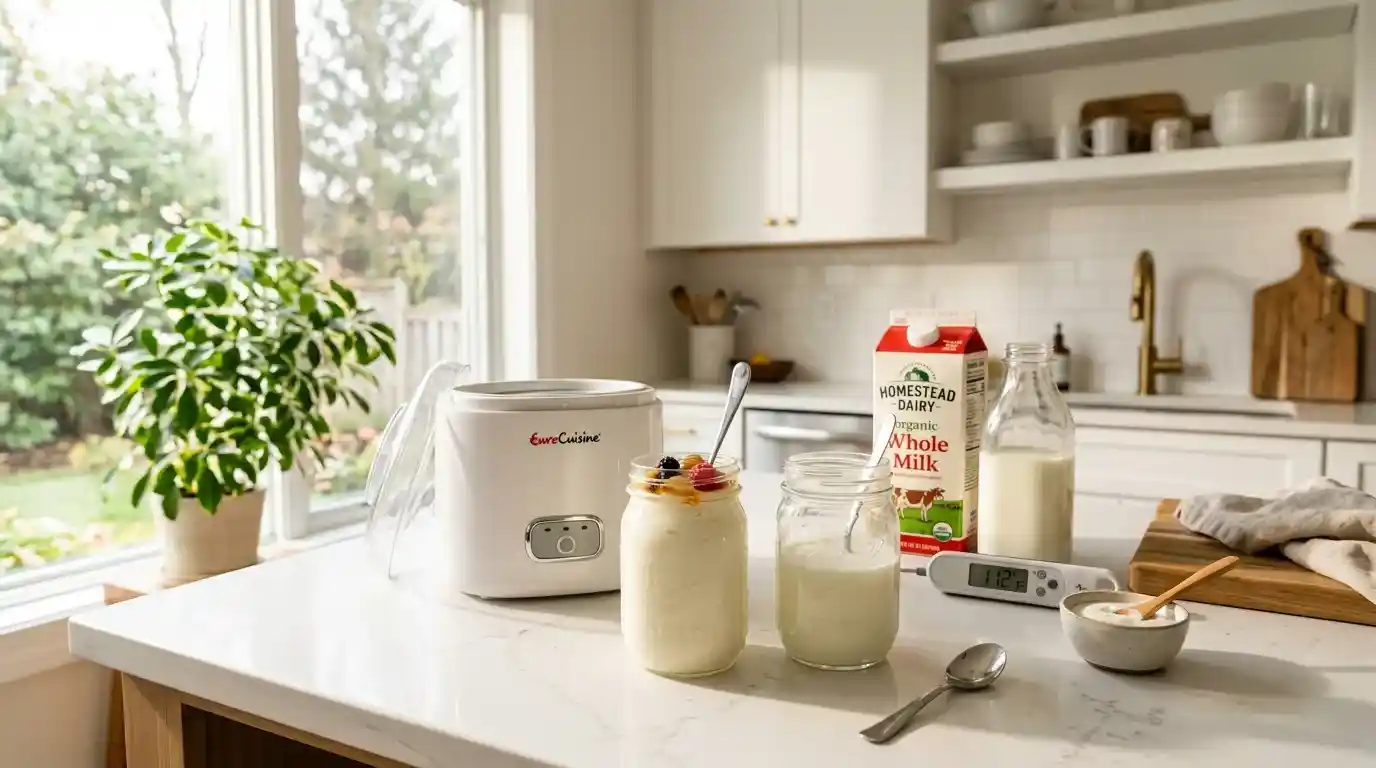
Not Cleaning Equipment Properly
Cleanliness is vital. Even small traces of old yogurt, soap, or bacteria can ruin a batch. Many beginners skip thorough cleaning, leading to strange flavors or failed fermentation.
- Residue in containers: Always wash and rinse containers, spoons, and the yogurt maker well.
- Soap traces: Soap residue can affect flavor and kill bacteria.
Rinse everything with hot water after washing. For extra safety, sterilize containers by boiling them or running through a dishwasher’s hot cycle.
Using Tap Water For Cleaning
Some cities have chlorine in tap water. Chlorine can kill beneficial bacteria, leading to failed yogurt. If your tap water has a strong smell or taste, rinse equipment with boiled or filtered water after cleaning.
This step is often missed by beginners but is critical if you get repeated failures.
Adding Sugar Or Flavorings Too Early
Many people want to add vanilla, sugar, or fruit before fermentation. But adding these too soon can interfere with bacteria and fermentation.
- Sugar: Can cause bacteria to ferment too fast, leading to thin or separated yogurt.
- Flavorings: Some extracts or fruits contain acids or preservatives that harm bacteria.
Add all flavorings, sweeteners, or fruit after the yogurt has finished fermenting and cooled.
Not Straining Yogurt Properly
If you want Greek yogurt or thicker texture, straining is essential. Some people skip it, or strain too long. Straining removes whey, but overdoing it makes yogurt dry and crumbly.
- Strain with a clean cheesecloth or coffee filter.
- Check texture every 30 minutes. Stop when it reaches your preferred thickness.
Here’s a comparison of straining times and results:
| Straining Time | Texture | Use |
|---|---|---|
| 30 mins | Thicker, still creamy | Regular yogurt |
| 1–2 hrs | Very thick, Greek-style | Greek yogurt |
| 3+ hrs | Firm, crumbly | Labneh |
Ignoring Yogurt Maker Instructions
Each yogurt maker model has its own quirks. Many users skip reading the manual. This leads to mistakes like wrong timings, wrong settings, or incorrect batch sizes.
- Follow the manufacturer’s guidelines for batch size, temperature, and timing.
- Some makers need preheating; others don’t.
If you lost your manual, check the manufacturer’s website for guides. For reliable info, see this Wirecutter yogurt maker review.
Not Storing Yogurt Properly
Homemade yogurt needs careful storage. Many people keep it too long or at the wrong temperature.
- Store at 40°F (4°C) or below. Use airtight containers.
- Eat within 7–10 days. Longer storage increases risk of spoilage.
If yogurt smells sour, has mold, or separates strangely, discard it.
You might find this helpful: Best Yogurt Makers With Temperature Control
Overusing Old Yogurt As Starter
Using yogurt from a previous batch as starter works, but after several batches, bacteria may weaken.
- After 3–4 cycles, use fresh starter.
- Older starter can cause weaker texture and flavor.
This is a common beginner mistake. Rotate your starter for best results.
Not Troubleshooting Failed Batches
When yogurt fails, many people just throw it away without learning why. Keep notes on milk type, starter, fermentation time, and temperature. You’ll spot patterns and improve.
Example: If your yogurt is always thin, try using whole milk, increasing fermentation time, or checking your starter’s freshness.
Frequently Asked Questions
How Can I Make Yogurt Thicker?
Use whole milk, heat to 180°F, and strain after fermentation. Adding milk powder before heating also helps. Don’t forget to ferment for at least 8 hours.
Why Does My Yogurt Taste Sour?
Too much starter, long fermentation, or high temperature causes sour yogurt. Adjust starter quantity and check your yogurt maker’s temperature settings.
Is It Safe To Use Store-bought Yogurt As Starter?
Yes, as long as it has live and active cultures. Avoid flavored or sweetened varieties, as additives can interfere with fermentation.
What Should I Do If My Yogurt Is Runny?
Check milk type, starter freshness, and fermentation time. Using skim or low-fat milk often leads to runny yogurt. Try using whole milk and fermenting longer.
Can I Freeze Homemade Yogurt?
You can freeze yogurt for up to 2 months, but the texture may change. Thawed yogurt is good for smoothies or cooking, but not for eating plain.
Avoiding these common mistakes takes practice and patience. Homemade yogurt with a yogurt maker can be as good as—or better than—store-bought, once you master the details. Stay clean, use fresh ingredients, and follow your device’s instructions. With time, you’ll enjoy creamy, healthy yogurt every batch.