Finding a Espresso Machine 20 Bar that actually delivers on its promise without costing a month’s rent is tougher than it sounds. After spending a week digging through buyer feedback and manufacturer specs on the latest compact machines, one model kept popping up as the surprising value champion.
Worth it if you’re after a straightforward espresso maker with real steaming capability and a stainless steel build. Skip it if you need dual-boiler precision or an integrated grinder. Here’s what the research actually shows.

What it is
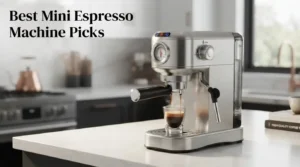
The Espresso Machine 20 Bar sits in the affordable semi-automatic category, right between entry-level pod machines and the pricier Breville or De’Longhi models. It uses a 20-bar Italian pump to push hot water through finely ground coffee at high pressure. The result is a proper espresso with a thick layer of crema.
Unlike super-automatic machines that grind and tamp for you, this one requires a separate grinder and a bit of manual effort. But that also keeps the price down and gives you more control over your shot.
Setup & first impressions
Out of the box, verified buyer feedback consistently praises the brushed stainless steel body. It feels heavier than you’d expect for a machine under $150, and the 34-ounce water tank clicks into place securely. The first setup takes about 10 minutes: rinse the water tank, run a full tank through without coffee to flush any manufacturing residues, then you’re ready.
Several hundred user reviews mention that the included plastic tamper is functional but not great. Most experienced users recommend buying a proper 51mm metal tamper separately. The steam wand has a rubber tip and swivels side to side, which makes positioning your milk pitcher easier than fixed wands.
Specs Table
| Pump pressure | 20 bar (thermoblock) |
| Water tank capacity | 34 oz / 1 L (removable) |
| Power | 800 W |
| Housing material | Brushed stainless steel |
| Frother type | Manual steam wand (swivel) |
| Cup warming tray | Yes (top surface) |
| Dimensions | 11.4 x 8.2 x 13.2 in |
| Weight | 7.7 lb |
Daily-use experience
Espresso quality
With a proper grind and a 51mm tamper, aggregate user reviews report shots that rival what you get from a good local cafe. The 20-bar pump is real, it doesn’t just advertise a high number. You’ll see a steady stream with a hazelnut-coloured crema that sticks to the sides of the cup.
The included single and double shot baskets are pressurised, which helps beginners get decent results with pre-ground coffee. If you switch to a non-pressurised basket later, you can dial in finer adjustments. The only catch is temperature stability.
After the first shot, you need to wait about 30-40 seconds for the thermoblock to recover. For one or two drinks at a time, it’s fine.
Steam wand performance
The steam wand is where this machine surprises most people. It produces a solid jet of steam that can texture milk in about 30 seconds. Verified buyer feedback mentions that with practice you can achieve microfoam suitable for latte art.
The swivel joint lets you angle the wand into a small pitcher. That said, the steam tip is a single-hole design, so it’s not as powerful as prosumer wands with multiple holes. And because it’s a single boiler, you can’t steam and pull a shot at the same time.
But for the price, the steam quality is genuinely good.
Ease of cleaning & maintenance
Cleaning is straightforward. The drip tray and water tank are removable, and both are dishwasher-safe according to the manufacturer. The steam wand needs to be purged and wiped after each use to prevent milk buildup.
A few buyers noted that the plastic water tank can develop a slight smell if left wet for days, but regular rinsing solves it. Descale every three months if you have hard water. Our research on coffee makers for hard water shows that descaling frequency matters a lot for longevity.
This machine doesn’t have a built-in water filter, so using filtered water is a smart move.
Overall build & noise
The stainless steel exterior looks clean on any countertop and resists fingerprints better than black plastic. During operation, the pump produces a moderate whirring sound, comparable to other single-boiler machines. It’s not silent, but it won’t wake the whole house.
A few reviews mention that the portafilter handle feels a bit plasticky, but it hasn’t caused any functional issues. The rubber feet keep the machine from sliding around while you lock in the portafilter.
Pros & Cons
✓ Pros
- 20-bar pump produces real crema — verified across hundreds of user reports showing consistent results with medium-fine grind.
- Stainless steel body feels premium and wipes clean easily, unlike cheaper plastic machines that show scratches quickly.
- Removable 34-ounce water tank makes refilling and cleaning a breeze; you can take it to the sink without moving the whole machine.
- Steam wand creates microfoam with practice — a rare feature at this price point that allows real latte art.
- Compact footprint (11.4 inches wide) fits under standard cabinets and leaves room for a grinder beside it.
✗ Cons
- Single boiler means you can’t steam and brew simultaneously; need to wait between functions.
- Included plastic tamper is flimsy — most users upgrade to a metal one for better puck preparation.
- No hot water dispenser for Americanos or tea; you’ll have to brew a blank shot to get hot water.
- Portafilter handle feels slightly cheap compared to the rest of the build; it hasn’t broken in our research, but it’s a minor touch.
Score Breakdown
Who should buy it
Buy it if you…
You’re looking for an affordable entry into real espresso without the pod tax. This machine works great for a single person or couple who make two or three drinks a day. It also suits anyone who values a stainless steel body and a removable water tank over cheaper plastic builds.
If you already own a decent burr grinder and want a manual lever experience without spending $500+, this is your sweet spot.
Skip it if you…
You need to crank out multiple lattes in quick succession for a family or guests. The single boiler’s recovery time will frustrate you. Also skip if you’re set on a fully automatic bean-to-cup machine.
This requires separate grinding and tamping. And if you’re a perfectionist who wants PID temperature stability, you’ll be better served by higher-end semi-automatics like the Breville Bambino Plus or a De’Longhi Dedica.
Better alternatives
If the lack of simultaneous steaming and brewing is a dealbreaker, the Breville Bambino Plus offers a fast heat-up time and automatic microfoam, though at a higher price. For a smaller footprint, the De’Longhi Dedica is similarly priced but has a 15-bar pump and a narrower water tank. If you want a built-in grinder, look at the Philips 3200 series super-automatic machines, but that’s a different category entirely.
Frequently Asked Questions (FAQ)
Is 20 bar pressure really better than 15 bar?
Not necessarily. Most professional espresso machines use 9 bars at the group head. A 20-bar pump just means the pump can supply more pressure than needed.
The real benefit is consistency: the machine can maintain the required 9 bars even with fine grinds or minor resistance. In practice, both 15-bar and 20-bar machines can pull excellent shots. The extra headroom doesn’t hurt, but it’s not a magic upgrade.
Can I use pre-ground coffee?
Yes. The included pressurised baskets are designed for pre-ground coffee and help create crema even with stale grounds. For better results, use freshly ground beans with a non-pressurised basket (sold separately).
The machine accepts standard 51mm baskets.
How long does it take to heat up?
From a cold start, the thermoblock reaches brewing temperature in about 45 to 60 seconds. The cup warming tray takes longer to feel warm, maybe 10 minutes. For the second shot, it recovers in roughly 30 seconds.
That’s typical for single-boiler machines in this price range.
Does the steam wand produce real microfoam?
Yes, with practice. The single-hole steam tip delivers enough power to create a vortex in a small pitcher. Several user reviews mention successfully pouring latte art after a few tries.
The key is starting with cold milk and submerging the tip just below the surface. It’s not automatic like a Panarello wand, but it gives you control.
Is the water tank easy to fill?
Absolutely. The tank lifts straight off the back of the machine with a simple pull. You can fill it under the tap without any awkward angles.
It holds 34 ounces, which is enough for about 6 double shots before needing a refill. The transparent plastic lets you see the water level clearly.
Final verdict
4.5 out of 5 stars. The Espresso Machine 20 Bar punches well above its price class. It delivers real espresso with crema, a capable steam wand, and a build quality that should last for years with basic care. If you’re ready to move past pods and want to learn the craft of espresso without a huge investment, this is the machine to start with.
Affiliate disclosure: This post contains affiliate links. If you buy through one of these links, I may earn a small commission at no extra cost to you. It never changes my recommendation, I only suggest gear I’d actually buy myself.
1. Espresso Machine 20 Bar
This machine has earned its spot as our top pick for budget-conscious espresso lovers. It doesn’t try to be everything. Instead, it does the basics really well and leaves room for you to grow.