Skip to content
Are Bamboo Cutting Boards Good For Knives?
If you enjoy cooking, you know the tools you use matter. The cutting board is a kitchen basic that touches almost every meal. But not all cutting boards are the same. Many home cooks and chefs ask, “Are bamboo cutting boards good for knives?” This question is more important than it sounds. The wrong surface can dull a sharp knife or even damage the blade over time. On the other hand, the right board can keep your knives sharp and make food prep easier and safer.
You might see bamboo boards everywhere today. They are affordable, eco-friendly, and look attractive on the kitchen counter. But are they really gentle on your knives? Let’s look deeper into how bamboo interacts with different types of kitchen knives. I’ll break down the facts, compare bamboo to other materials, share some surprising insights, and give you clear advice—so you can make the best choice for your kitchen.
What Makes A Good Cutting Board For Knives?
A good cutting board does more than just protect your countertop. It must also protect your knives. But what makes a surface “good” for knives?
- Gentle on the blade: The board should not be harder than the knife’s edge. If it is, it can dull the blade quickly.
- Non-slip surface: Stability helps avoid accidents while cutting.
- Easy to clean: A board should not trap bacteria or food particles easily.
- Durable: It should last through regular use and cleaning.
- Doesn’t absorb too much moisture: Boards that soak up water can warp or crack.
The right balance between these factors gives you a safe, effective, and long-lasting kitchen tool. Different materials offer different balances, so the choice is not as simple as “one size fits all. ”
What Is Bamboo As A Cutting Board Material?
Bamboo is often called a “wood,” but it’s actually a grass. It grows fast, sometimes up to three feet per day, making it one of the most sustainable materials available. To make a cutting board, manufacturers harvest bamboo stalks, cut them, and press them together with glue and high pressure.
Unique Properties Of Bamboo
- Hardness: Bamboo is harder than most common woods used for cutting boards, such as maple or walnut.
- Tight grain: It has a fine, closed grain, which helps resist water absorption.
- Eco-friendly: Because bamboo grows fast and doesn’t need replanting, it’s a renewable resource.
- Lightweight: Bamboo boards are often lighter than thick hardwood boards.
- Antimicrobial properties: Some studies suggest bamboo has natural resistance to bacteria, but this is not a substitute for washing.
These features make bamboo attractive for kitchen use. But its hardness and manufacturing process are key points to consider when thinking about your knives.
How Do Bamboo Cutting Boards Affect Knives?
This is where things get interesting. Bamboo’s hardness is both a strength and a weakness.
The Hardness Factor
Bamboo has a Janka hardness rating (a standard wood hardness test) of around 1,380 lbf. For comparison:
| Material | Janka Hardness (lbf) |
|---|---|
| Bamboo | 1,380 |
| Maple | 1,450 |
| Walnut | 1,010 |
| Plastic | Varies (softer) |
| Glass | Much harder |
Bamboo is harder than walnut and almost as hard as maple. It’s much softer than glass or ceramic boards but harder than most plastics.
Why Does Hardness Matter?
A harder surface means more resistance when your knife hits the board. Over time, this resistance can:
- Dull the knife edge faster than softer woods
- Cause microscopic chips in very hard or brittle knife steels (like some Japanese knives)
- Require more frequent sharpening
But bamboo is not as hard as glass, which can ruin a knife in just a few uses. So, the effect is not as extreme. For most home cooks using standard stainless steel knives, the difference may be small over a few months.
However, if you love sharp knives or use expensive blades, you’ll notice the effect more quickly.
The Glue Issue
Most bamboo boards are made by gluing small strips together. This means your knife sometimes hits tiny lines of glue. Even food-safe glue is harder than bamboo itself. Over time, these glue lines can:
- Accelerate dulling of the knife
- Create uneven wear, especially with fine-edged knives
Cheaper boards often use more glue and lower-quality adhesives, which can make the problem worse. High-end bamboo boards use better glues and manufacturing techniques to minimize this issue, but it’s rarely completely gone.
The Grain Direction
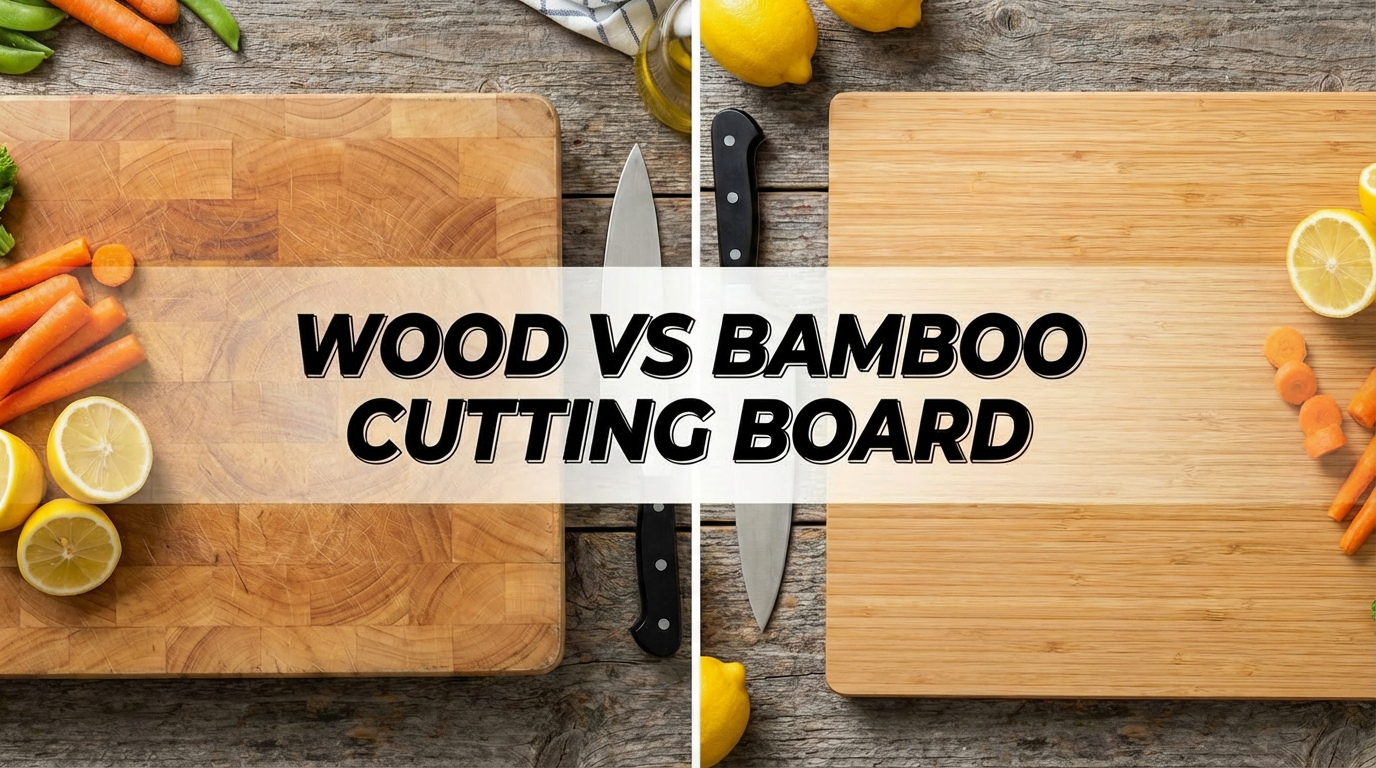
Most bamboo boards have a vertical grain (end-grain) or horizontal grain (edge-grain) construction. End-grain boards are gentler on knives because the blade slips between the fibers. But most bamboo boards are edge-grain, which is harder and less forgiving.
Key insight: If you can find a true end-grain bamboo board, it will be much better for your knives—but these are rare and more expensive.
Comparing Bamboo To Other Popular Cutting Board Materials
Choosing a cutting board is about balancing knife care, hygiene, price, and maintenance. Here’s a direct comparison to help you decide.
| Material | Knife Friendliness | Hygiene | Maintenance | Cost |
|---|---|---|---|---|
| Bamboo | Moderate | Good | Low | Low |
| Hardwood (e.g., maple, walnut) | Excellent | Good | Moderate | High |
| Plastic | Good | Moderate | Low | Low |
| Glass/Ceramic | Poor | Excellent | Very Low | Low–Moderate |
Bamboo Vs Hardwood Boards
- Hardwood boards (like maple or walnut) are the gold standard for knife care. Their softer surface is gentle on blades.
- Bamboo is harder and less forgiving but cheaper, lighter, and more sustainable.
- Bamboo is easier to clean and less likely to crack if you forget to oil it.
- Hardwood boards last longer with proper care, but require regular oiling.
Bamboo Vs Plastic Boards
- Plastic boards are soft and kind to knives, but they develop deep cuts that can harbor bacteria.
- Bamboo resists bacteria better and does not scar as easily.
- Plastic boards can go in the dishwasher; bamboo cannot.
Bamboo Vs Glass Or Ceramic Boards
- Glass and ceramic are the worst for knife edges. They can dull or chip a blade in just a few uses.
- Bamboo is much safer for your knives compared to these surfaces.
Real-life Performance: What Chefs And Home Cooks Report
Many professional chefs avoid bamboo boards for their main knives, especially high-end Japanese knives, because of the dulling effect. However, home cooks often choose bamboo for its price, look, and low maintenance.
A survey by America’s Test Kitchen found that most chefs prefer end-grain hardwood boards. Still, many home cooks are satisfied with bamboo, especially when using mid-range stainless steel knives.
Non-obvious insight: If you use a bamboo board for chopping vegetables and a separate, softer board for slicing proteins or bread, you can extend the life of your knives while still enjoying bamboo’s benefits.
Knife Types: Which Knives Are Most Affected?
Not all knives react the same way to bamboo boards. Understanding your knives helps you make the right choice.
- German-style knives (like Wüsthof, Zwilling): Made from softer stainless steel (around 56–58 HRC). They handle bamboo well and can be resharpened easily.
- Japanese knives (like Shun, Global): Made from harder steel (60+ HRC). These are sharper but more brittle. Bamboo boards can dull or chip these knives faster.
- Cheap stainless knives: Less affected, since they are already soft and easy to sharpen.
- Serrated knives: The teeth are less affected, but frequent use on bamboo can wear them down over time.
Practical tip: If you own expensive or high-hardness knives, consider using a wood or plastic board instead of bamboo for those blades.
Hygiene And Food Safety: Bamboo’s Surprising Strength
Hygiene is critical for cutting boards. Bamboo’s tight grain and natural properties make it more bacteria-resistant than many other materials.
Studies, such as those by the University of California, Davis, show that bamboo absorbs less water than hardwoods. Less water means less chance for bacteria to grow. Also, bamboo’s density makes it less likely to scar deeply, so bacteria don’t hide in the grooves as easily.
But it’s important to know:
- All cutting boards, even bamboo, must be cleaned well after use.
- Bamboo is not dishwasher safe. High heat and water can warp or split the board.
- For raw meat, some people prefer plastic, since it can be sanitized in the dishwasher.
Maintenance: How To Care For A Bamboo Cutting Board
One reason for bamboo’s popularity is low maintenance. But a little care goes a long way.
How To Clean
- Wash with warm, soapy water right after use.
- Dry with a towel immediately; don’t let water sit on the board.
- Stand the board upright to air dry completely.
Oil Regularly
Bamboo doesn’t need as much oil as hardwood, but a thin coat of mineral oil every few weeks helps prevent drying and cracking.
Avoid The Dishwasher
Never put bamboo boards in the dishwasher. The heat and moisture will damage them.
Remove Odors
Rub the board with lemon juice or baking soda, then rinse and dry. This helps remove smells from onions, garlic, or fish.
Common Mistake
Many people soak their bamboo boards, thinking it helps with cleaning. This actually causes warping and shortens the board’s life.
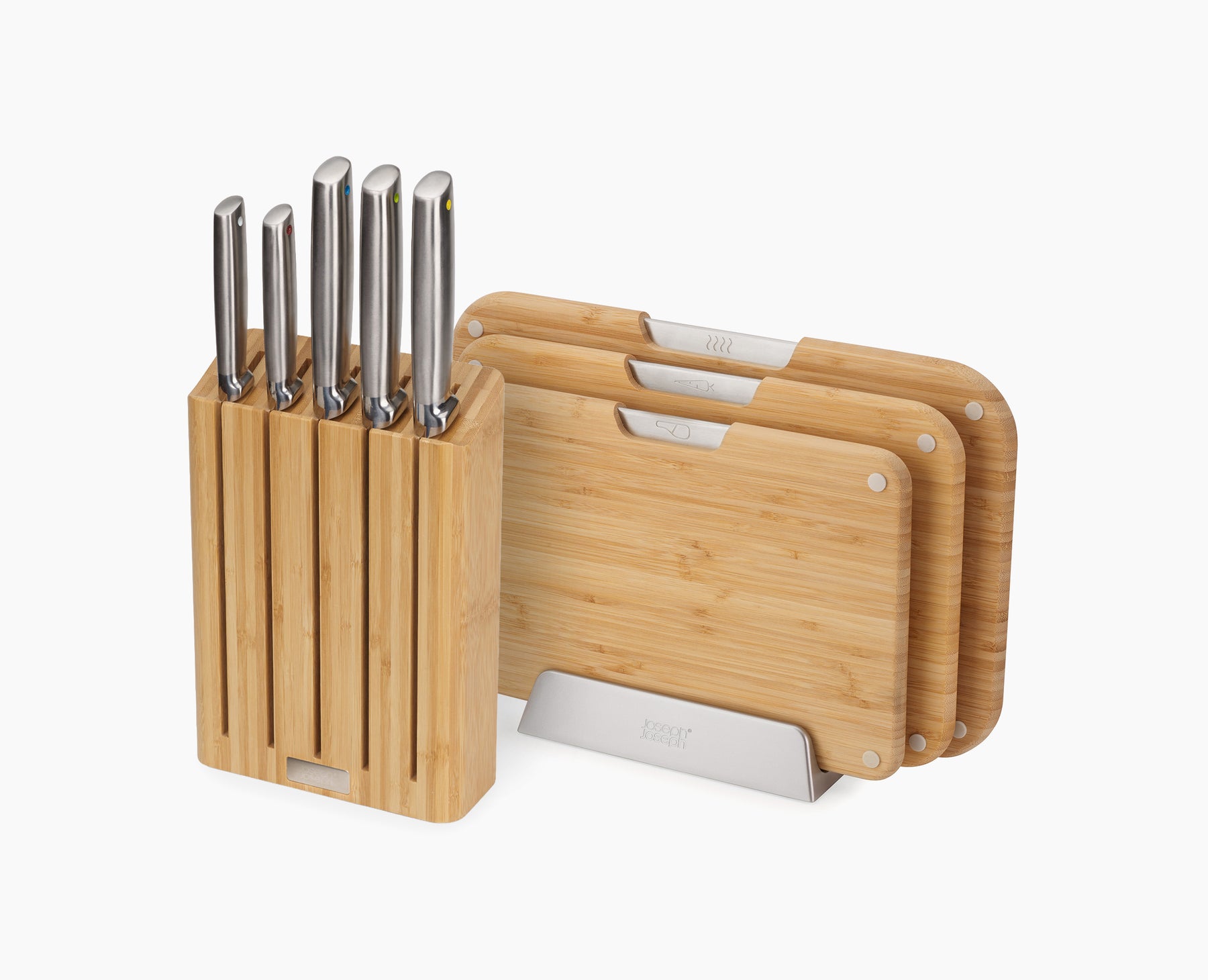
Credit: us.josephjoseph.com
Environmental Impact: Is Bamboo Really Sustainable?
For eco-conscious cooks, bamboo’s sustainability is a big plus. Bamboo grows much faster than hardwood trees. It can be harvested every 3–5 years, compared to 20–100 years for many woods.
Also, bamboo does not need replanting after cutting. It spreads through its root system and grows back quickly.
But, not all bamboo boards are equally green. Some low-cost boards are made using harsh chemicals or non-food-safe glues. Look for boards certified by organizations like the Forest Stewardship Council (FSC) or those labeled as “formaldehyde-free.”
When Is Bamboo The Right Choice?
Bamboo is a practical choice if you:
- Want a board that is low cost, attractive, and easy to maintain
- Use mostly stainless steel knives, not expensive Japanese knives
- Care about sustainability
- Don’t mind sharpening your knives a little more often
It might not be the best for you if:
- You own high-end or delicate knives
- You want the absolute best surface for knife edge retention
- You need a dishwasher-safe board

Credit: www.deerandoak.co.uk
Myths And Misunderstandings About Bamboo Boards
Let’s clear up a few common myths:
- Bamboo is as gentle as wood. Not true. Bamboo is harder and can dull knives faster.
- Bamboo is naturally antimicrobial. Bamboo does resist bacteria better than some woods, but you must still wash it well.
- All bamboo boards are eco-friendly. Only boards made with safe glues and without harsh chemicals are truly eco-friendly.
- You never need to oil bamboo. Oiling is still helpful to prevent cracks and extend the board’s life.
Practical Tips For Knife And Board Longevity
If you want to get the most out of both your knives and your bamboo board:
- Use a pull-through sharpener or whetstone to keep knives sharp. Dull knives are actually more dangerous.
- Consider a two-board system: Bamboo for veggies and general prep, a hardwood or plastic board for your best knives and proteins.
- Rotate your board regularly to spread out wear.
- Store your board upright to prevent warping.
What To Look For When Buying A Bamboo Cutting Board
If you decide bamboo is right for you, here’s how to choose a quality board:
- Solid construction: Fewer glue lines mean better durability and less knife wear.
- Thickness: At least 0.75 inch thick for stability and resistance to warping.
- Finish: Look for a smooth, well-sanded surface without splinters.
- Food-safe glue: Boards should be labeled as using food-safe adhesives.
- No added dyes or chemicals: Some colored boards can leach chemicals.
- Certified sustainable: FSC or other eco-certifications are a plus.
Pro tip: If you see a board that is much cheaper than others, check for signs of poor construction, thinness, or rough finish.
You might find this helpful: Best Bamboo Cutting Boards
Alternatives To Bamboo: If Knife Care Is Your Top Priority
If you love your knives and want the very best care, consider these alternatives:
- End-grain hardwood boards: These are the top choice for knife edge retention. The blade slips between the fibers, reducing wear.
- Plastic boards: Good for raw meats and easy cleaning, but replace them when they get deep grooves.
- Composite boards: Made from wood fibers and resin, these can be gentle on knives and dishwasher safe.
Each material has trade-offs in price, maintenance, and hygiene. For most home cooks, a combination of boards works best.
Credit: www.ruvati.com
Scientific Studies And Expert Opinions
There is no single “perfect” cutting board. Scientific research, like the studies from the University of California, Davis, shows that both material hardness and board hygiene play key roles. Food safety experts recommend using separate boards for meat and vegetables, regardless of material.
Knife makers, such as those at Wüsthof and Shun, suggest using end-grain wood or soft plastic for their knives. However, they recognize that bamboo is a reasonable choice for many home kitchens, especially if knives are sharpened regularly.
For more on material safety and food hygiene, see Wikipedia’s Cutting Board article.
Frequently Asked Questions
Is Bamboo Better Or Worse For Knives Than Plastic Cutting Boards?
Bamboo is harder than plastic, so it can dull knives a bit faster. However, bamboo resists deep cuts and bacteria better than plastic. If you sharpen your knives often, bamboo is a good choice. For easy cleaning, plastic is better, especially for raw meats.
Do Bamboo Cutting Boards Need To Be Oiled?
Yes. While bamboo needs less oiling than hardwood, a thin coat of food-grade mineral oil every few weeks helps keep the board from drying out or cracking. This also improves water resistance.
Can I Put A Bamboo Cutting Board In The Dishwasher?
No. Dishwashers expose bamboo to high heat and water, which can warp, crack, or split the board. Always wash bamboo by hand and dry it right away.
Are All Bamboo Cutting Boards Safe And Eco-friendly?
Not always. Some boards use non-food-safe glue or harsh chemicals in production. Look for boards with certifications like FSC and labels that say “food safe” and “formaldehyde-free” to be sure.
Will A Bamboo Board Ruin My Expensive Japanese Knife?
Bamboo is harder than wood, so it can dull or chip a high-end Japanese knife faster than softer boards. If you use premium knives, choose an end-grain hardwood or plastic board for those blades and save bamboo for less delicate knives.
The Bottom Line
So, are bamboo cutting boards good for knives? The answer depends on your priorities. Bamboo boards offer many benefits: they are affordable, eco-friendly, easy to care for, and attractive. But their hardness and the presence of glue lines mean they will dull knife edges a bit faster than softer woods or plastics—especially with high-end or hard-steel knives.
For most home cooks using standard stainless steel knives, bamboo is a practical choice if you are willing to sharpen your knives regularly. If you own expensive or delicate knives, you’ll get better results with an end-grain hardwood or soft plastic board.
Regardless of your choice, good board care and regular knife maintenance are the keys to a safe and efficient kitchen.
Choose what fits your cooking style, and you’ll find that a well-chosen cutting board can make food prep easier, safer, and more enjoyable every day.