Skip to content
Boiling water is a simple task that most people do every day. But what if you only have an electric skillet and need hot water—for instant noodles, tea, or cleaning? Many people wonder if you can boil water in an electric skillet, and how effective or safe it is.
This guide will walk you through the answer, explore practical details, compare electric skillets with other appliances, and help you avoid common mistakes. If you’re considering using your skillet for boiling water, or just curious, you’ll find clear answers here.
How Electric Skillets Work
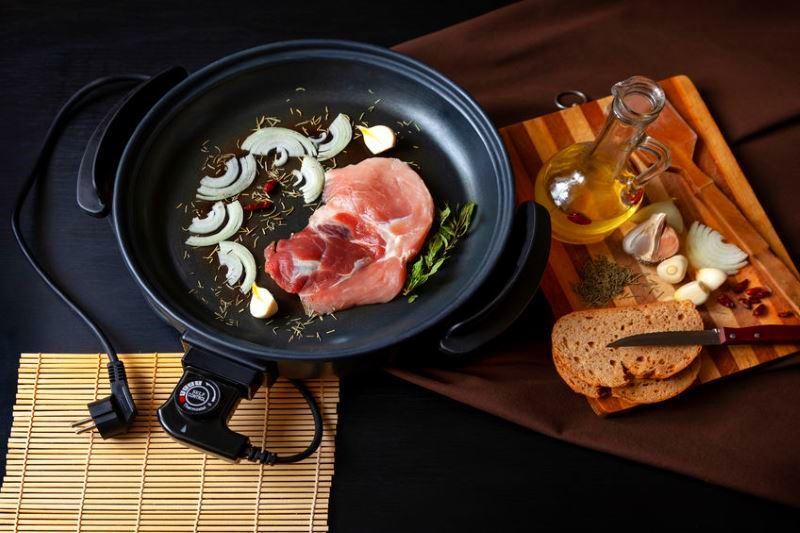
An electric skillet is a flat cooking pan with a built-in heating element. Unlike stovetop pans, it plugs into a wall socket and heats up quickly. Most models have adjustable temperature controls, allowing you to fry, sauté, grill, or simmer food. The surface is usually non-stick, making cleaning easy.
Electric skillets are popular because they:
- Cook food evenly
- Use less energy than stovetops for some tasks
- Are portable and easy to use
But their main purpose is frying and sautéing, not boiling. Still, many people use them for boiling water in situations where a stove is not available.
Can You Really Boil Water In An Electric Skillet?
Yes, you can boil water in an electric skillet. But there are important points to understand:
- Most electric skillets can reach temperatures above 212°F (100°C), which is the boiling point of water at sea level.
- The flat, wide surface means water heats evenly, but not as fast as in a kettle or saucepan.
- Some skillets have temperature limits; check your manual to see if the maximum temperature is high enough.
In practice, boiling water in an electric skillet is possible, but not the most efficient method. It takes longer, and the design is not ideal for holding large amounts of water.

Credit: www.amazon.com
Step-by-step: Boiling Water In An Electric Skillet
If you need to boil water in your skillet, follow these steps for best results:
- Clean the skillet: Make sure it’s clean and free of grease.
- Add water: Pour water into the skillet. Don’t fill above the maximum line. Most skillets hold 2–4 quarts (1.9–3.8 liters).
- Set the temperature: Turn the heat to the highest setting (usually 400°F or above).
- Cover with lid: If your skillet has a lid, use it to speed up heating and prevent water loss.
- Wait for boil: Watch for bubbles forming and steam rising. Depending on the skillet and amount of water, boiling can take 10–20 minutes.
- Use carefully: Remove the lid slowly to avoid steam burns.
Important tip: Never leave boiling water unattended in an electric skillet. Overheating or spilling can damage the appliance and create safety risks.
Comparing Electric Skillets With Other Appliances
Boiling water is faster and more efficient in some appliances compared to others. Here’s how electric skillets stack up against common alternatives:
| Appliance | Boiling Speed | Energy Efficiency | Maximum Capacity |
|---|---|---|---|
| Electric Skillet | Slow (10–20 min) | Moderate | 2–4 quarts |
| Electric Kettle | Fast (3–7 min) | High | 1–2 quarts |
| Stovetop Pan | Medium (5–10 min) | Varies | 2–5 quarts |
| Microwave | Medium (5–8 min) | Moderate | Up to 1 quart |
Electric skillets are not designed for boiling water, so they are slower and less efficient than kettles or pans. However, in situations where you don’t have access to other appliances, they work well enough.
Credit: inthekitch.net
Safety Concerns And Practical Limits
Boiling water in an electric skillet is possible, but there are risks and limits to keep in mind:
- Overflow risk: Skillets are shallow. Too much water can spill and cause burns or short circuits.
- Steam burns: The wide surface area means more steam escapes. Always use oven mitts and open the lid carefully.
- Electrical hazards: Water and electricity are a dangerous mix. Never let water spill onto the cord or heating element.
- Plastic parts: Some skillets have plastic handles or knobs. High heat and steam can damage them.
Many beginners overlook the importance of lid use. Using a lid traps heat and speeds up boiling, but it also increases pressure and risk of overflow. Monitor the water level closely.
What Happens If You Boil Water For Too Long?
Leaving water to boil for too long can lead to:
- Evaporation: Water disappears, leaving the skillet dry, which can damage the non-stick surface.
- Burn marks: Mineral deposits can stain the pan.
- Appliance damage: Overheating without water can ruin the heating element.
A non-obvious insight: Electric skillets often have automatic shut-off features if they overheat, but this is not guaranteed. It’s best to stay nearby and turn off the appliance when boiling is complete.
Real-life Examples: When People Use Electric Skillets For Boiling
People use electric skillets for boiling water in:
- Dorm rooms without stoves
- Camping sites with electricity
- Small apartments with limited kitchen space
- Hotel rooms during travel
In these situations, a skillet can be a lifesaver. For example, a college student might use an electric skillet to boil water for pasta or tea in their dorm. It’s not the fastest way, but it works.
Using Electric Skillets For Cooking Beyond Boiling
Electric skillets are versatile. Besides boiling water, you can use them to:
- Cook pasta or rice (after boiling water)
- Blanch vegetables
- Make soups and stews
- Warm up sauces
However, cooking tasks like deep boiling or steaming large quantities are better handled by other appliances.
How Temperature Settings Affect Boiling
Most electric skillets have temperature dials ranging from 200°F to 450°F. Water boils at 212°F, but the time to reach this temperature depends on:
- Skillet wattage: Higher wattage means faster heating.
- Water volume: More water takes longer.
- Room temperature: Cold environments slow boiling.
Some skillets have inaccurate temperature markings. For best results, set the dial to the highest setting and monitor closely.
Here’s a comparison of boiling times for different water volumes in typical electric skillets:
| Water Volume | Boiling Time (Approx.) |
|---|---|
| 1 quart (0.95 L) | 10–12 minutes |
| 2 quarts (1.9 L) | 15–18 minutes |
| 3 quarts (2.8 L) | 18–22 minutes |
Cleaning And Maintenance After Boiling
Boiling water leaves fewer stains than frying, but minerals in tap water can leave residue. After boiling:
- Let the skillet cool completely.
- Pour out leftover water.
- Wipe the surface with a soft cloth.
- If there are stains, use a mixture of vinegar and water to clean.
Pro tip: Never submerge the entire skillet in water. Only wash the removable pan or surface.

Credit: inthekitch.net
Common Mistakes Beginners Make
Many new users make errors when boiling water in an electric skillet. Here are some to avoid:
- Overfilling: Causes spills and safety hazards.
- Incorrect temperature: Setting too low won’t boil; too high can damage the appliance.
- Leaving unattended: Risk of burning out the pan or causing electrical damage.
- Using damaged skillets: Cracked or broken skillets can leak water onto the heating element.
A less obvious mistake: Not checking for mineral build-up after boiling hard water. This can reduce heating efficiency over time.
Should You Use An Electric Skillet To Boil Water?
If you have no other option, an electric skillet will get the job done. But for regular boiling, a kettle or saucepan is better. Skillets are slower, less energy-efficient, and riskier for large volumes.
For emergency or occasional use, it’s safe if you follow precautions. If you need more details, you can check reliable sources like Wikipedia.
Frequently Asked Questions
Is It Safe To Boil Water In An Electric Skillet?
Yes, it’s generally safe if you follow the manufacturer’s guidelines, don’t overfill, and monitor the process. Always avoid letting water spill onto the cord or heating element.
How Long Does It Take To Boil Water In An Electric Skillet?
Boiling 1–2 quarts of water takes about 10–18 minutes, depending on the skillet’s wattage, water volume, and room temperature.
Can I Cook Noodles Or Pasta Directly In An Electric Skillet?
Yes, after boiling water, you can add noodles or pasta. The skillet works well for small batches, but avoid overfilling to prevent spills.
Will Boiling Water Damage The Non-stick Surface Of My Skillet?
No, water alone won’t harm the non-stick surface. But if the skillet dries out while still hot, the surface can be damaged. Always turn off the skillet once the water is gone.
What Should I Do If Water Spills Onto The Electric Part?
Immediately unplug the skillet. Let it dry fully before using again. If water gets inside the electrical components, the skillet may be unsafe to use.
Boiling water in an electric skillet is practical in some situations. By following safety tips and understanding the limits, you can use your skillet for boiling water when needed. It’s not the best tool for the job, but with care and attention, it works.
If you want to make the most of your kitchen appliances, knowing how and when to use each one is key.