Skip to content
Freezing food at home is a smart way to save money, reduce waste, and enjoy your favorite meals longer. But when it comes to choosing containers, many people wonder if Mason jars are safe and practical for freezing. Mason jars are popular for canning, pantry storage, and even serving drinks. But do they work well in the freezer? Can you avoid cracked glass, freezer burn, or wasted food? Here’s what you need to know if you’re considering freezing food in Mason jars.
Why People Want To Freeze Food In Mason Jars
Many home cooks and meal preppers love Mason jars for their sturdy glass, airtight lids, and reusable design. Freezing in glass means you avoid plastic chemicals, and you can see your food clearly. Plus, Mason jars stack neatly and look tidy in the freezer.
People use them for soups, sauces, smoothies, leftovers, and even desserts. But while the idea is appealing, there are a few important details that can make or break your freezing success.
The Science: What Happens To Glass In The Freezer
Glass is strong, but it’s not flexible. When you freeze food, the liquid expands as it turns to ice. If the container doesn’t allow for this movement, the glass can crack or shatter. Mason jars are made of tempered glass, which is tougher than normal glass, but not unbreakable. Freezer-safe jars are designed to handle temperature changes and the pressure of expanding food. Still, using the wrong jar or filling it incorrectly is a common mistake.

Credit: masonjars.com
Which Mason Jars Are Safe For Freezing?
Not all Mason jars are created equal. Some types work better for freezing than others. Here’s a comparison of common Mason jar shapes:
| Jar Shape | Freezer Safe? | Why |
|---|---|---|
| Straight-Sided | Yes | Allows food to expand upward; less pressure on glass |
| Shouldered (Curved) | No | Pressure builds at curve; higher risk of cracking |
| Wide-Mouth | Best Choice | Easier to fill; safer for freezing; easy to clean |
| Narrow-Mouth | Acceptable (if straight-sided) | Harder to fill/clean; less ideal for chunky foods |
Straight-sided, wide-mouth Mason jars are the best option for freezing. Avoid jars with “shoulders” (the part that curves in near the top) because they’re much more likely to crack when food expands.
You might find this helpful: Best Mason Jars for Freezing Food
How To Freeze Food In Mason Jars: Step-by-step
Freezing in Mason jars is simple if you follow some key steps. Skipping any of these can lead to broken glass or wasted food.
1. Choose The Right Jar
Pick a straight-sided, wide-mouth jar. Check for any chips or cracks—damaged jars are more likely to shatter.
2. Cool Food First
Never pour hot food into a cold jar, or put a hot jar in the freezer. Let food cool to room temperature before filling the jar. Sudden temperature changes can break the glass.
3. Leave Headspace
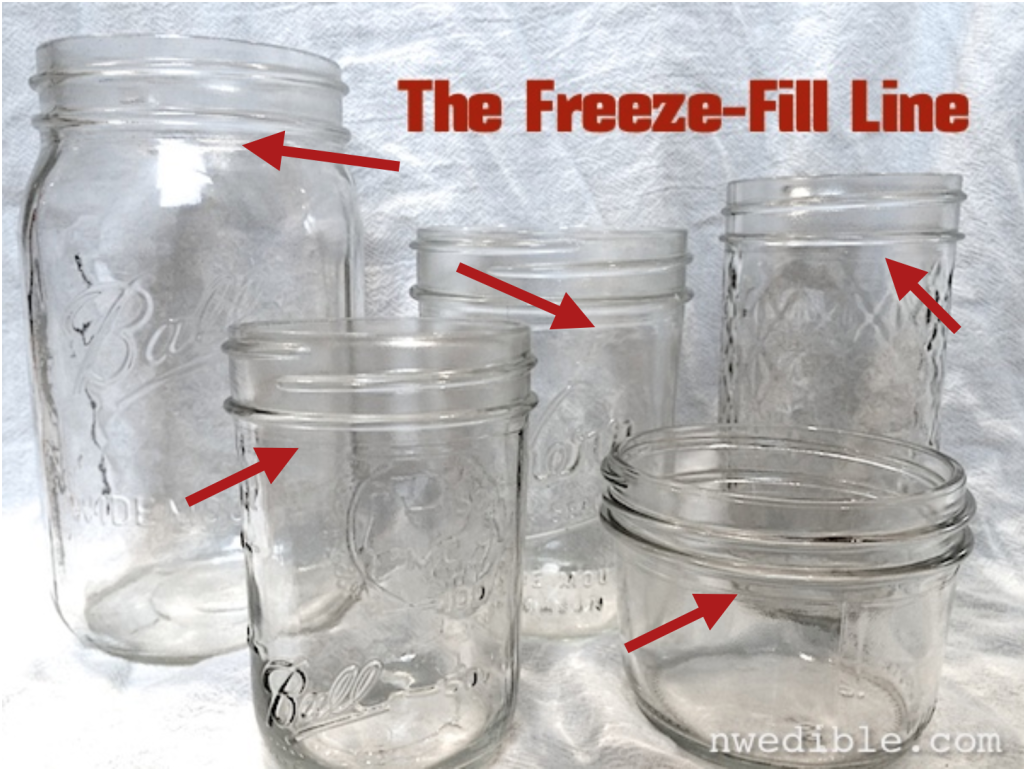
Food expands as it freezes. Leave at least 1 inch (2.5 cm) of empty space at the top of the jar—called headspace. For liquids, leave even more if possible.
4. Fill Properly
Fill jars up to the “freeze line” or below the neck. Wipe rims clean before sealing.
5. Loosen The Lid
Before freezing, screw the lid on just finger-tight (not fully tight). This lets air escape as food expands. Once frozen solid, you can tighten the lid completely.
6. Freeze Upright
Place jars upright in the freezer, not on their side. This helps keep food below the fill line and reduces pressure on the glass.
7. Label And Date
Use freezer-safe labels to mark contents and the freeze date. Glass jars look alike, so this avoids confusion later.
8. Don’t Overcrowd
Make sure jars aren’t touching when you first freeze them. After 24 hours, you can move them closer together.
9. Thaw Carefully
To avoid cracking, let jars thaw in the fridge or at room temperature. Never put a frozen jar into hot water or a microwave.
Foods That Freeze Well In Mason Jars
Some foods freeze better than others. Here are examples of foods that work well:
- Soups and stews (without noodles or cream)
- Broths and stocks
- Cooked beans or lentils
- Pasta sauces
- Fruit purees or jams
- Chili
- Smoothies (pre-blended, ready to grab)
- Single portions of grains (rice, quinoa)
- Baby food
Avoid freezing foods with a lot of cream, dairy, or eggs, as these can separate or become grainy after thawing. If you must freeze them, expect a change in texture.
Foods To Avoid Freezing In Mason Jars
Some foods do not freeze well in glass jars, either because they expand too much, change texture, or pose a safety risk:
- Carbonated liquids (like soda, kombucha)
- Raw eggs in shells
- Leafy salads
- Foods with lots of oil or mayonnaise (can separate)
- Foods that fill the jar completely (no headspace)
These items can create too much pressure, cause breakage, or become unsafe to eat after thawing.
Freezer Burn: How To Prevent It In Mason Jars
Freezer burn happens when food is exposed to air and dries out. Glass jars help limit this, but only if used correctly. Here’s a side-by-side look at how Mason jars compare to other containers for freezer burn prevention:
| Container Type | Freezer Burn Risk | Best For |
|---|---|---|
| Glass Mason Jars | Low (if air removed, sealed tightly) | Soups, sauces, liquids |
| Plastic Freezer Bags | Medium-Low (if air pressed out) | Solids, stacking flat items |
| Plastic Containers | Medium (depends on seal quality) | Leftovers, stews |
| Vacuum-Sealed Bags | Very Low | Meats, long-term storage |
To minimize freezer burn in Mason jars:
- Use jars that fit the portion size (less air inside)
- Fill to the right level, leaving headspace but not too much empty air
- Seal tightly after freezing
- Don’t open and refreeze multiple times
Real-life Examples And Common Mistakes
Many people have learned the hard way that not all Mason jars survive the freezer. The most common mistakes include:
- Using old pasta sauce jars or recycled glass (not made for freezing)
- Filling jars to the top (no room for expansion)
- Putting hot food straight into the freezer (thermal shock cracks the glass)
- Using shoulder jars (breaks at the curved part)
One home cook reported freezing homemade chicken broth in wide-mouth pint jars, leaving an inch of headspace, and thawing overnight in the fridge. She had no breakage and the broth tasted fresh. In contrast, another user filled a curved jar with tomato soup to the top, put it in the freezer while still warm, and found it shattered the next morning.
Non-obvious tip: Slightly under-filling the jar (even more than 1 inch) for foods that expand a lot—like beans or lentils in liquid—gives extra safety.
How Long Can You Store Frozen Food In Mason Jars?
Most home-frozen foods last 2 to 6 months in Mason jars without losing quality. Here’s a quick reference for common foods:
| Food Type | Typical Freezer Life | Tips |
|---|---|---|
| Soups, Stews | 3-4 months | Avoid cream-based soups |
| Broths, Stocks | 4-6 months | Use within 6 months for best flavor |
| Cooked Beans | 2-3 months | Leave extra headspace |
| Fruit Purees/Jams | 4-6 months | Use freezer-safe lids |
| Grains (cooked) | 2-3 months | Cool before freezing |
Label jars with the date and contents so you can use the oldest first.
Pros And Cons Of Freezing Food In Mason Jars
Pros
- Non-toxic glass: No plastic chemicals
- Reusable: Eco-friendly, reduces waste
- Airtight seal: Prevents odors, freezer burn
- Versatile: Good for liquids, sauces, grains
- See contents: Easy to identify food
Cons
- Breakable: Risk of shattering if misused
- Takes up more space: Jars can be bulky compared to bags
- Not for all foods: Some foods don’t freeze well in glass
- Extra steps: Must cool foods, leave headspace, thaw slowly
- Initial cost: Mason jars cost more than single-use bags
Expert insight: If you’re short on freezer space or want to freeze large items (like a whole chicken), bags or vacuum-sealed containers might be better.
Are Mason Jars Better Than Plastic For Freezing?
The choice depends on your priorities. Mason jars are safer for those avoiding plastic, and they’re sturdy for repeated use. They’re perfect for anyone who likes batch-cooking soups, prepping smoothies, or freezing baby food. However, if you need to save space, freeze large items, or want to thaw quickly in the microwave, plastic bags may work better.
For best results, you can combine both: use Mason jars for liquids and sauces, and plastic bags for solid items.
Safety Tips: Avoiding Broken Glass
Broken glass in the freezer is not only messy—it’s dangerous. Here’s how to avoid it:
- Inspect every jar before use
- Never use jars with chips, cracks, or “shoulders”
- Always leave enough headspace
- Cool food before filling and before freezing
- Don’t expose frozen jars to sudden heat
- Store upright and don’t overcrowd
If a jar cracks, throw out the food (even if it looks safe). Tiny glass shards are hard to see and can be harmful.
Credit: nwedible.com
Reusing Mason Jars After Freezing
You can reuse Mason jars many times if they’re not damaged. Wash with hot, soapy water after each use. Check for chips or cracks before freezing again. If a jar ever feels rough or has a cloudy spot after freezing, retire it from food use.
Non-obvious tip: Over time, glass can develop tiny stress fractures from repeated freezing and thawing. If a jar has gone through many cycles, use it for dry pantry storage instead of freezing.
Frequently Asked Questions
Can You Freeze Glass Jars From The Store, Like Pasta Sauce Jars?
It’s not recommended. Store-bought jars are not made for freezing and often crack because the glass is thinner or not tempered. Use only Mason jars labeled as freezer-safe for best results.
How Can I Thaw Frozen Food In A Mason Jar Safely?
The safest way is to move the jar from the freezer to the fridge and let it thaw overnight. If you’re in a hurry, set the jar at room temperature for a short time, but never use hot water or a microwave.
Sudden temperature changes can crack the glass.
What’s The Difference Between Regular And Freezer-safe Mason Jars?
Freezer-safe Mason jars are usually straight-sided and made of thicker, tempered glass. They handle expansion and contraction better. Regular Mason jars may have curves (shoulders) and thinner glass, making them more likely to break.
Can You Freeze Hot Food In A Mason Jar?
No. Always cool food to room temperature before putting it in a Mason jar for the freezer. Putting hot food in the jar, or a hot jar in the freezer, can cause thermal shock and breakage.
Is It Safe To Eat Food If The Mason Jar Has Cracked In The Freezer?
No. If your jar cracks or shatters, throw out the food. Glass shards can be tiny and invisible but dangerous if eaten.
For more details on safe freezing and storage methods, see the National Center for Home Food Preservation.
Freezing food in Mason jars is a smart way to enjoy home-cooked meals and reduce waste, as long as you follow the right steps. With the right jars, careful filling, and safe thawing, you can keep your food fresh and your freezer organized—without broken glass or wasted meals.