Skip to content
When cooking meat in the oven, you want it to be safe and delicious. Many home cooks wonder, can you leave a meat thermometer in the oven while food cooks? This simple question leads to important answers about kitchen safety, thermometer types, and best practices. Understanding how to use a meat thermometer correctly can help you avoid undercooked or dry meat, prevent foodborne illness, and improve your confidence in the kitchen.
Let’s explore the facts, clear up common mistakes, and learn how to choose and use oven-safe thermometers.
Why Use A Meat Thermometer In The Oven?
Cooking meat to the right temperature is critical for both taste and safety. Bacteria like Salmonella and E. coli can live in raw or undercooked meat, so reaching a safe internal temperature is essential. The USDA recommends cooking poultry to 165°F, beef steaks to 145°F, and ground meats to 160°F. Using a thermometer is the most reliable way to check these temperatures.
A meat thermometer helps you:
- Avoid overcooking by stopping heat at the perfect moment
- Prevent undercooking and foodborne illness
- Cook with confidence instead of guessing
Leaving a thermometer in the meat during oven cooking means you can monitor temperature without opening the oven door and losing heat.
Types Of Meat Thermometers
Not all meat thermometers are designed to stay in the oven. There are several types, each with unique features and limits. Here’s a quick comparison:
| Type | Oven-Safe? | Best Uses | Common Mistakes |
|---|---|---|---|
| Dial/Analog Oven-Safe Thermometer | Yes | Roasts, whole poultry | Leaving in small cuts, slow response |
| Digital Probe Thermometer | Yes (with heatproof cable) | Large cuts, monitoring while cooking | Damaging cable, not sealing oven door |
| Instant-Read Thermometer | No | Quick spot checks | Leaving in oven, melting plastic |
| Wireless Thermometer | Yes (if rated for oven use) | Remote monitoring | Using non-oven-safe models |
You might find this helpful: Best Meat Thermometers for Oven
Oven-safe Thermometers
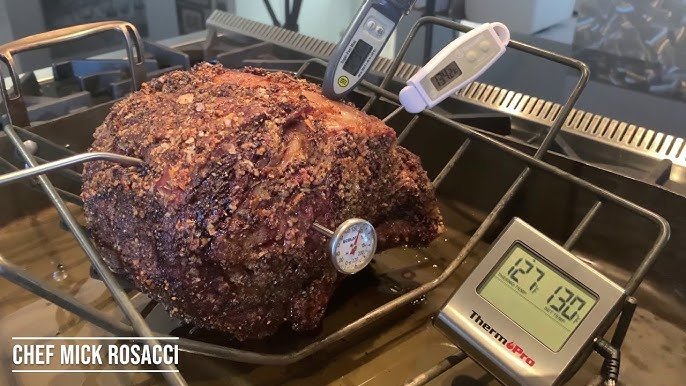
Oven-safe dial thermometers are made to stay in the meat during cooking. The metal construction and glass face can withstand oven heat. They are best for roasts or whole poultry, where you want continuous monitoring.
Digital probe thermometers use a metal probe connected by a heatproof wire to a digital display outside the oven. You can see the temperature rise in real time. These are popular because they combine accuracy and convenience.
Wireless thermometers with oven-safe probes let you check temperatures from your smartphone or receiver. However, not all wireless models are oven-safe, so always check the manual.
Not Oven-safe Thermometers
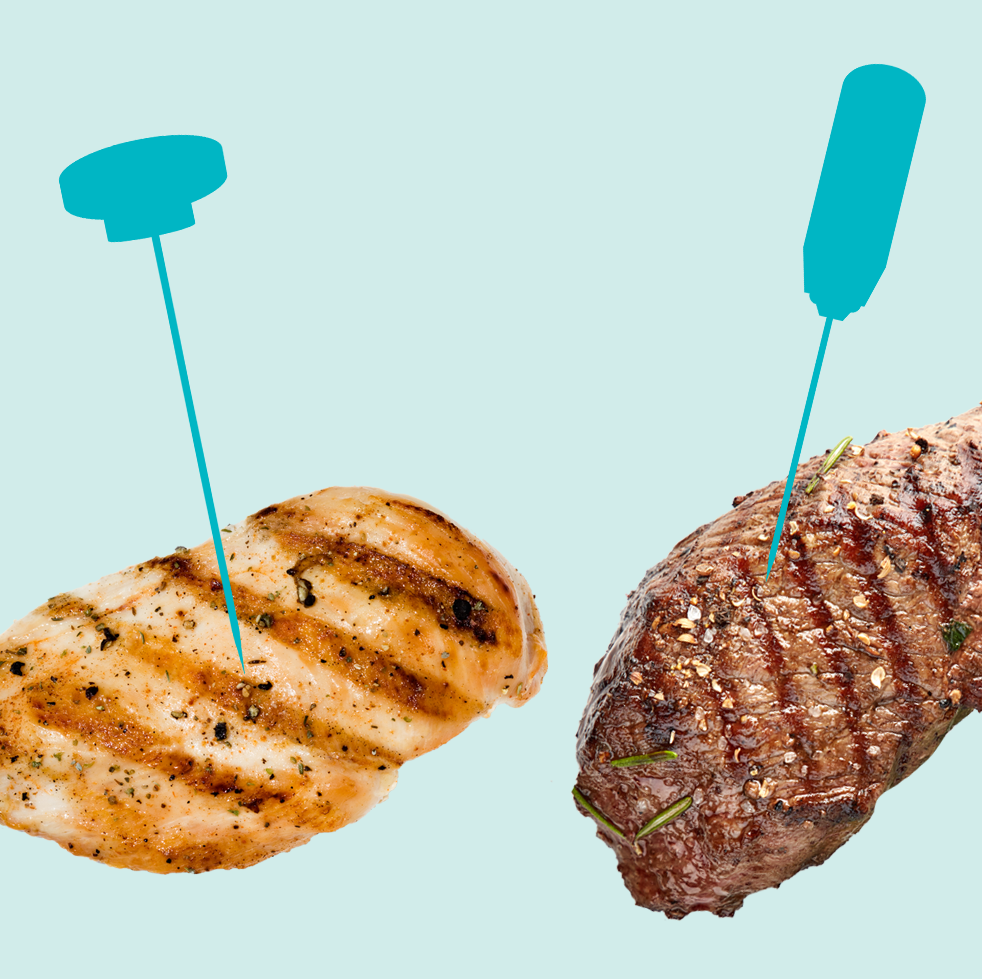
Instant-read thermometers are designed for quick spot checks. Their bodies often contain plastic or sensitive electronics that cannot handle oven heat. If you leave them in the oven, they can melt or break.
Credit: www.goodhousekeeping.com
Can You Leave A Meat Thermometer In The Oven?
Yes, you can leave certain types of meat thermometers in the oven, but only if they are oven-safe. Never leave an instant-read thermometer or any thermometer not labeled as oven-safe inside an oven, as this can cause damage and inaccurate readings.
How To Identify Oven-safe Thermometers
Look for these signs:
- “Oven-safe” or “leave-in” marked on packaging or product description
- All-metal construction (for analog models)
- Heatproof cable (for digital probes)
- Manufacturer’s rating for oven temperatures
If you’re unsure, check the manual or the manufacturer’s website.
Common Mistakes
- Leaving a plastic-bodied thermometer in the oven: It will melt or warp.
- Using a digital probe with a non-heatproof cable: The cable can burn or fail.
- Inserting the thermometer incorrectly: Placing the probe too close to bone, fat, or touching the pan gives false readings.
- Not calibrating analog thermometers: Over time, analog models can lose accuracy. Test in boiling water (212°F) to check.
How To Use An Oven-safe Meat Thermometer
Proper use ensures both safety and accurate results. Follow these steps:
- Insert the thermometer into the thickest part of the meat before cooking. Avoid bone, fat, or gristle for a true reading.
- Place the meat in the oven with the thermometer sticking out so you can read it (for analog) or connect the probe cable (for digital).
- Monitor the temperature as the meat cooks. For digital models, set an alarm to alert you when the target temperature is reached.
- Check for doneness by confirming the internal temperature matches USDA guidelines.
Example: Using A Digital Probe Thermometer
Suppose you’re roasting a beef tenderloin:
- Insert the probe into the center of the thickest section.
- Set the digital display outside the oven.
- Program the target temperature (e.g., 135°F for medium rare).
- When the alarm sounds, remove the meat and let it rest.
Resting meat after cooking allows the juices to redistribute and the temperature to rise slightly (carryover cooking).
Comparison: Oven-safe Vs. Instant-read Thermometers
The table below highlights differences to help you choose:
| Feature | Oven-Safe Thermometer | Instant-Read Thermometer |
|---|---|---|
| Usability | Leave in meat while cooking | Use after cooking or for spot checks |
| Accuracy | Continuous monitoring | Quick, but must insert each time |
| Safety | No need to open oven frequently | Must open oven, risk of burns or heat loss |
| Durability | Built to withstand oven heat | Can be damaged by oven heat |
| Price Range | $10–$60 | $10–$40 |
Practical Tips For Using Meat Thermometers In The Oven
Using a thermometer the right way can make a big difference. Here are tips that many beginners miss:
- Preheat the oven first: Inserting the thermometer into cold meat and then into a cold oven can delay cooking and give inaccurate readings.
- Insert the thermometer before cooking: For oven-safe models, insert before placing meat in the oven to avoid burns or mess.
- Don’t force the thermometer: Pushing too hard can damage the meat or the probe. Insert gently and only as deep as needed.
- Clean the probe after each use: Bacteria can grow on the probe. Wash it with hot, soapy water.
- Avoid hitting bone: Bones conduct heat differently, giving a false high reading.
- Check calibration: Test your thermometer in boiling water (should read 212°F at sea level) and ice water (should read 32°F).
- Let meat rest: After reaching the target temperature, remove from oven and let rest for 5–10 minutes. Internal temp can rise 5–10°F.
Credit: www.youtube.com
Safety And Maintenance
Taking care of your thermometer ensures it stays accurate and lasts longer.
Cleaning
- Clean probes with hot, soapy water after each use.
- Never submerge digital displays or cables in water.
Storage
- Store thermometers in a dry place.
- Keep digital probe cables loosely coiled to avoid kinks.
Battery Care (for Digital Models)
- Replace batteries every 6–12 months, or when readings fade.
- Remove batteries for long-term storage.
Choosing The Right Meat Thermometer
When buying a meat thermometer, consider:
- Oven-safe rating: Always check if it’s designed for oven use.
- Type of meat you cook most: Roasts and poultry benefit from oven-safe models; steaks and burgers may only need instant-read.
- Accuracy and speed: Digital probes are faster and often more precise.
- Budget: Prices range from $10 for basic analog to $60 for advanced digital models.
Avoid buying a thermometer based on appearance alone. Read reviews and check product specs. Some brands, like ThermoWorks or Taylor, are known for reliability.
Real-world Example
Many cooks have learned from experience. For example, leaving a plastic instant-read thermometer in the oven ruins it in minutes. In another case, a digital probe cable was pinched in the oven door, causing it to fail halfway through cooking.
Always follow manufacturer instructions. If you’re unsure, use a search engine or visit a trusted site like Foodsafety.gov for guidance.
Frequently Asked Questions
Can I Leave Any Meat Thermometer In The Oven?
No, only oven-safe thermometers should be left in the oven. Instant-read thermometers and those with plastic parts are not safe for oven use.
What Happens If I Leave A Non-oven-safe Thermometer In The Oven?
It can melt, break, or give wrong readings. You risk damaging the thermometer, ruining your meat, or even starting a fire.
How Do I Know If My Thermometer Is Oven-safe?
Check the packaging, manual, or manufacturer’s website. Look for labels like “oven-safe” or “leave-in. ” All-metal analog models and digital probes with heatproof cables are usually safe.
Can I Use An Oven-safe Thermometer For Grilling?
Yes, many oven-safe thermometers work for grilling as well. Just make sure the probe and cable can withstand direct heat and are not exposed to flames.
How Do I Clean An Oven-safe Meat Thermometer?
After use, wash the probe with hot, soapy water. Avoid immersing digital displays or cables. Dry thoroughly before storing.
Cooking meat safely and perfectly is easier with the right thermometer. Always check if your thermometer is oven-safe before leaving it in the oven, and follow best practices for accurate readings. With a little care and knowledge, you’ll enjoy tastier, safer meals every time.

Credit: www.youtube.com