Skip to content
Most people use a thermos to keep drinks hot or cold for hours. But is it safe to pour boiling water into a thermos? Some worry about damaging the thermos, while others are concerned about safety risks. Understanding how thermoses work, and what happens when you add very hot water, can help you use yours better, avoid accidents, and even keep your drinks hot for longer.
This guide explains whether you can put boiling water in a thermos, what happens when you do, and how to do it safely. You’ll also find practical tips, mistakes to avoid, real-life examples, and clear answers to common questions.
How Thermoses Work
A thermos, also called a vacuum flask, uses a double-wall design with a vacuum between the walls. This vacuum space slows down heat transfer between the inside and outside. The inner wall is usually made of stainless steel or glass, with the outer wall made from metal or plastic. This design helps keep drinks hot or cold for much longer than regular bottles.
When you pour hot liquid inside, the vacuum and reflective coating stop most of the heat from escaping. The lid also creates a tight seal, reducing heat loss. However, not all thermoses are made the same—some are built to handle very high temperatures, while others are not.
Can You Pour Boiling Water In A Thermos?
The short answer is yes, you can put boiling water in most thermoses. Most modern thermoses are designed to handle high temperatures, including water just off the boil (around 212°F or 100°C).
But, there are important details to consider:
- The thermos must be made from heat-resistant materials (like stainless steel or borosilicate glass).
- Cheaper or older thermoses with plastic interiors may not be safe for boiling water.
- Pouring boiling water into a cold thermos can cause temperature shock, possibly cracking glass or damaging seals.
Materials Matter
Thermoses come in different materials. Here’s a comparison of how each handles boiling water:
| Material | Boiling Water Safe? | Risks | Best Use |
|---|---|---|---|
| Stainless Steel | Yes | Very few; may get hot outside | Coffee, tea, soups |
| Borosilicate Glass | Yes, with care | Thermal shock can crack | Delicate drinks, infusions |
| Plastic | No/Not recommended | May warp, leach chemicals | Cold drinks only |
Stainless steel thermoses are the best choice for boiling water. Glass thermoses can also work, but you should pre-warm them to avoid cracks. Avoid plastic thermoses for hot liquids above 140°F (60°C).
Credit: www.foodrepublic.com
Risks Of Pouring Boiling Water Into A Thermos
Even if your thermos is designed for hot liquids, there are some risks to be aware of:
- Thermal Shock: Pouring boiling water into a cold glass thermos can cause it to crack due to rapid temperature change.
- Pressure Build-Up: Sealing a thermos immediately after adding boiling water can create pressure as the steam tries to escape. This may make the lid hard to open, or even cause leaks.
- Burns: Metal parts, especially lids and cups, can get extremely hot.
- Seal Damage: Repeated exposure to extreme heat can slowly degrade rubber or silicone seals, leading to leaks.
Real-life Example
A user on a hiking forum shared that they poured boiling water into a glass-lined thermos without pre-warming it. The inner glass shattered, ruining the thermos and spilling hot water everywhere. The lesson: always pre-warm glass thermoses.
How To Safely Put Boiling Water In A Thermos
If you want to keep drinks piping hot, here’s how to do it safely:
- Check the Thermos Label
- Most quality thermoses say “safe for hot liquids” or show a temperature range. Confirm that yours is suitable for boiling water.
- Pre-Warm the Thermos
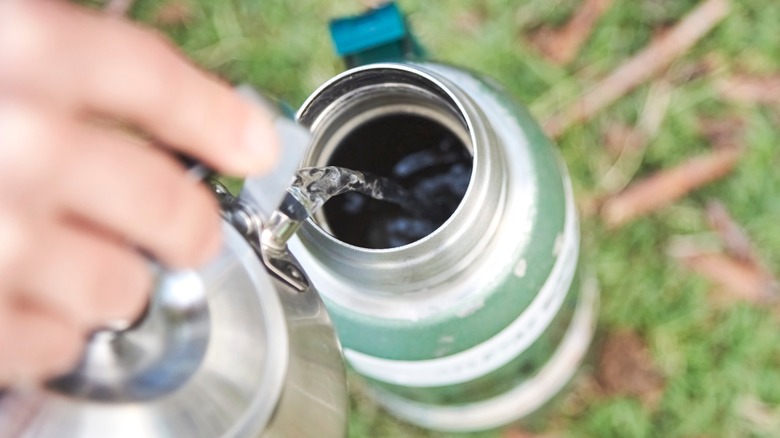
- Pour in warm tap water and let it sit for a minute. Swirl and pour it out. This step is crucial for glass thermoses.
- Add Boiling Water Carefully
- Pour slowly to avoid splashing and reduce stress on the thermos material.
- Leave Some Space
- Fill the thermos up to 90%. Don’t fill to the brim—leave a little room for steam.
- Seal Loosely First
- Tighten the lid only after a few seconds. This allows most steam to escape and avoids pressure build-up.
- Handle With Care
- The outside may be hot, especially with lower-quality thermoses.
Quick Comparison: Pouring Techniques
| Step | With Pre-Warming | Without Pre-Warming |
|---|---|---|
| Thermal Shock | Low risk | High risk (glass cracks) |
| Heat Retention | Better | Lower (heat lost to cold walls) |
| Safety | Safer | Possible burns or leaks |
:max_bytes(150000):strip_icc()/ThermosLeadImage-9fb6192228bf4843b47c8fbdecb52c88.jpg)
Credit: www.seriouseats.com
How Long Does Boiling Water Stay Hot In A Thermos?
A good stainless steel thermos can keep boiling water hot (above 160°F/71°C) for 6–12 hours, depending on the brand and capacity. After 12 hours, the temperature drops, but it’s usually still warm enough for tea or coffee.
Factors That Affect Heat Retention
- Initial water temperature: The closer to boiling, the longer it stays hot.
- Pre-warming: A pre-warmed thermos keeps water hotter for longer.
- Thermos quality: Double-walled, vacuum-sealed models perform best.
- Amount filled: A full thermos retains heat better than a half-full one.
- External temperature: Cold surroundings cool the thermos faster.
Example: Heat Loss Over Time
Here’s a look at how a 1-liter stainless steel thermos performs:
| Time Elapsed | Water Temp (°F) |
|---|---|
| 0 hours | 210 |
| 2 hours | 180 |
| 6 hours | 165 |
| 12 hours | 140 |
| 24 hours | 110 |
This data shows that water remains very hot for many hours, but will gradually cool.
Common Mistakes To Avoid
Many people use a thermos every day but still make mistakes that reduce its life or make it unsafe. Here are the most common errors:
- Pouring boiling water into a cold glass thermos: This can crack the inner lining. Always pre-warm glass models.
- Using plastic thermoses for boiling water: Plastic may warp, leak, or leach chemicals at high temperatures.
- Overfilling: Boiling water expands as it creates steam. Overfilling can cause leaks or make the lid difficult to open.
- Not checking the seal: A damaged or loose seal leads to heat loss and spills.
- Shaking the thermos: Shaking a thermos with hot liquid can force steam to build up and cause leaks.
A non-obvious mistake: Many people forget to periodically check the lid and gasket for wear. If the seal is damaged, the thermos loses heat quickly and could leak boiling water.
Credit: www.foodrepublic.com
Cleaning After Using Boiling Water
Boiling water can leave mineral deposits or stains inside your thermos. Here’s how to clean it properly:
- Rinse with warm water right after use.
- For tough stains, add a spoon of baking soda and fill with hot water. Let it soak for a few hours, then scrub with a bottle brush.
- Avoid using bleach or harsh chemicals, which can damage stainless steel or glass linings.
- Always let the thermos dry completely with the lid off to prevent odors and mold.
You might find this helpful: Best Thermos for Hot Water
When Not To Use Boiling Water In A Thermos
There are a few situations where boiling water isn’t a good idea:
- Plastic-lined thermoses: The high heat can melt, warp, or release chemicals.
- Damaged or cracked thermoses: Boiling water can leak or cause further damage.
- For carbonated drinks: The pressure from steam and carbonation can cause the lid to pop off.
- With food that expands: Some foods (like noodles or oatmeal) expand with heat and steam, which may cause spills.
Choosing The Right Thermos For Boiling Water
If you often need to carry boiling water, pick a thermos that matches your needs:
- Look for double-wall vacuum insulation: This keeps water hot the longest.
- Check for food-grade stainless steel: It’s safe and durable.
- Read temperature ratings: Look for models rated for 200°F or higher.
- Avoid models with a lot of plastic inside.
- Choose a wide-mouth thermos if you want to use it for soups or easy cleaning.
Brands like Thermos, Stanley, and Zojirushi are known for high-quality models. For more details on vacuum flask design, see this article from Wikipedia.
Tips For Better Heat Retention
To get the most from your thermos:
- Pre-heat with hot water before adding boiling water.
- Keep the lid closed as much as possible.
- Fill it up—less empty space means better heat retention.
- Avoid opening and closing the lid too often.
Many people don’t realize that opening the thermos even for a few seconds lets out a lot of heat. Plan to pour all you need at once.
Frequently Asked Questions
Can A Thermos Explode With Boiling Water?
A thermos will not explode just from boiling water, but if you fill it completely and seal it tight, pressure from steam can build up. This may force the lid off or cause leaks, especially in cheaper thermoses. Always leave some space and let steam escape before sealing.
Is It Safe To Drink Water From A Thermos After 12 Hours?
If you started with boiling water and used a good-quality thermos, the water should still be safe to drink after 12 hours. However, the temperature may be below what kills bacteria (above 160°F/71°C). For best safety, drink hot water within 6–8 hours.
Why Does My Thermos Smell After Putting Boiling Water In It?
A smell can develop if the thermos was not cleaned properly, or if the seal trapped moisture or food particles. Sometimes, minerals in tap water leave an odor. Clean with baking soda and let it dry open to remove smells.
Can I Use A Thermos For Soup Made With Boiling Water?
Yes, many people use thermoses to keep soup hot. Just make sure your thermos is food-safe and keep some space for steam. Don’t overfill, and avoid using thermoses with narrow necks for chunky soups.
Does Boiling Water Damage The Thermos Over Time?
For stainless steel and high-quality glass thermoses, boiling water will not damage the flask if used correctly. The rubber gasket or seal may wear out faster, but these are usually replaceable. Avoid using boiling water in thermoses not rated for high heat.
Using a thermos with boiling water is safe and very effective if you follow the right steps. Choose the right material, pre-warm your flask, and always check for wear. With a little care, your thermos will keep drinks hot for hours—no matter where your day takes you.