Skip to content
So, you’ve pulled out the basket and the grill plate is nowhere to be found. Can you use an air fryer without the grill plate? The short answer is yes, but only if you understand the risks and follow a few non-negotiable rules. Toss in a handful of chips or a chicken breast without the raised insert and you’re gambling with smoke, soggy food, or a full-blown grease fire.
A standard basket-style air fryer pushes superheated air between 180°C and 200°C. Without that perforated plate lifting food off the floor, pooled fat can hit its smoke point in under two minutes. That’s not a hypothetical, it’s basic kitchen physics.
Let’s walk through exactly what the plate does and how to work around its absence without turning dinner into a call to the fire brigade.
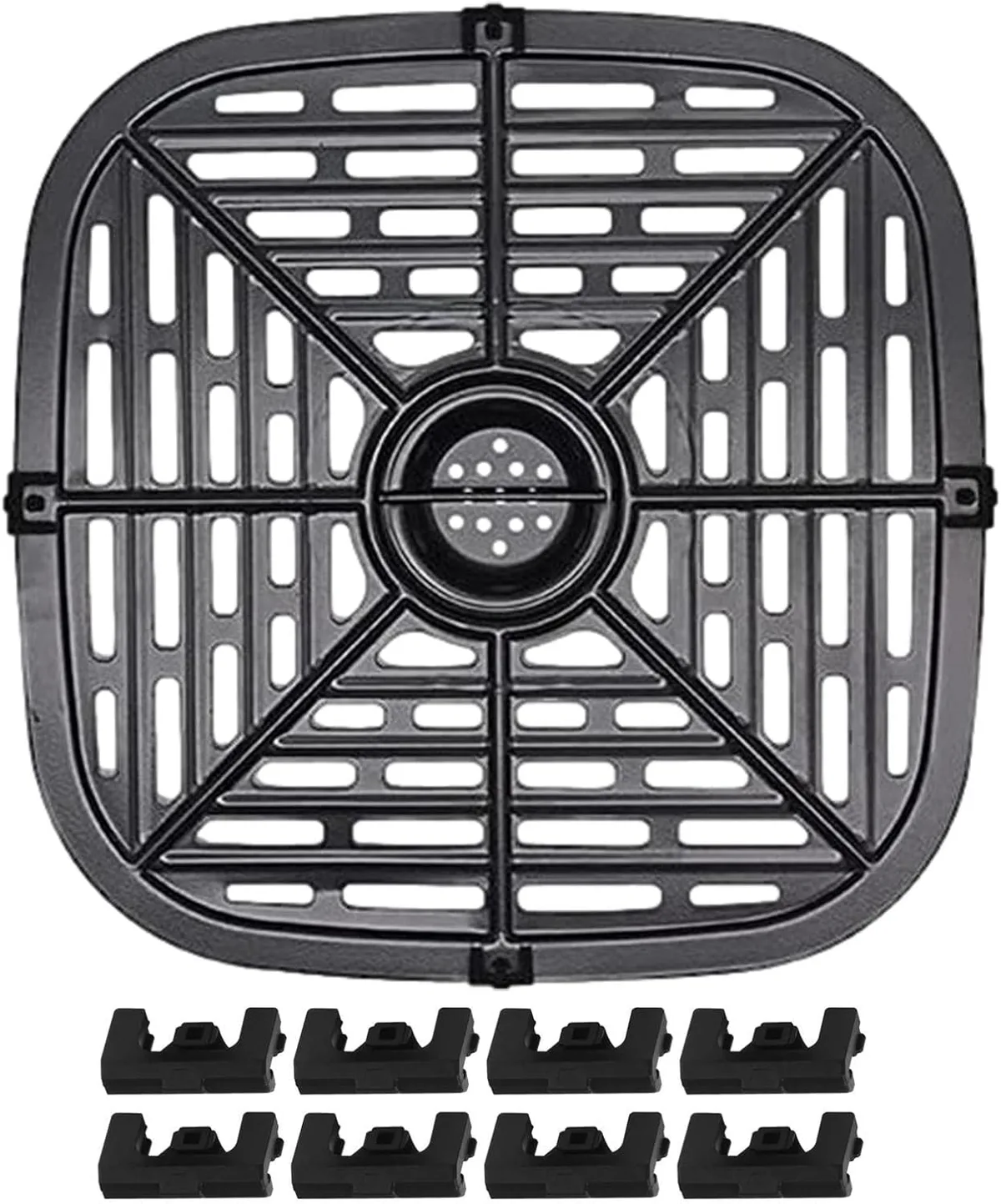
Image source: Web (Bing) / amazon.co.uk (Web image (fair-use with source credit))
Quick Answer: Can You Use Air Fryer Without Grill Plate
Yes, you can use an air fryer without the grill plate. But the answer depends on your air fryer type. Oven-style models are far more forgiving than basket designs.
Foods that release fat are a genuine fire risk. You need a safe substitute. Never cook fatty meats directly on the basket floor.
A perforated parchment liner or a wire trivet can replicate the air gap. Without that gap, expect uneven cooking and possible smoke.
What That Removable Grill Plate Actually Does (And Why You Miss It)
The grill plate, crisper tray, basket insert: it goes by a lot of names. No matter what you call it, its job is to create an air gap. Hot air blasts down from the heating element, swirls around the food, and escapes through the perforations.
Without that lift, the bottom of your food sits in its own moisture and fat. You lose crispness almost immediately.
That raised floor also channels rendered grease away from the food. The holes let fat drip into the empty space below the plate. In a basket-style air fryer, that pool sits beneath the plate, safely away from the heating element.
Remove the plate and that grease spreads across the hot basket floor. If the floor temperature climbs past 200°C, the grease starts smoking. Keep going and it can ignite.
Airflow is the other piece. The plate’s perforations are deliberately sized and spaced to balance air pressure. Block those holes by placing food flat on a solid surface and the fan has nowhere to push the air.
The heating element keeps pumping heat into a now stagnant pocket. The result is uneven browning, longer cook times, and a basket floor that gets dangerously hot. For understanding the interior layout of your particular model, it helps to see exactly where the element sits.
Manufacturer specs consistently show a minimum air gap of 1.5 cm under the food for proper convection. That’s why the plate has raised feet or silicone bumpers. It’s not just a convenience, it’s part of the appliance’s thermal engineering.
The First Question: What Type of Air Fryer Do You Have?
The answer to “can I skip the plate” hinges on this one detail. Basket-style air fryers and oven-style air fryers handle absent trays very differently. Let’s break it down.
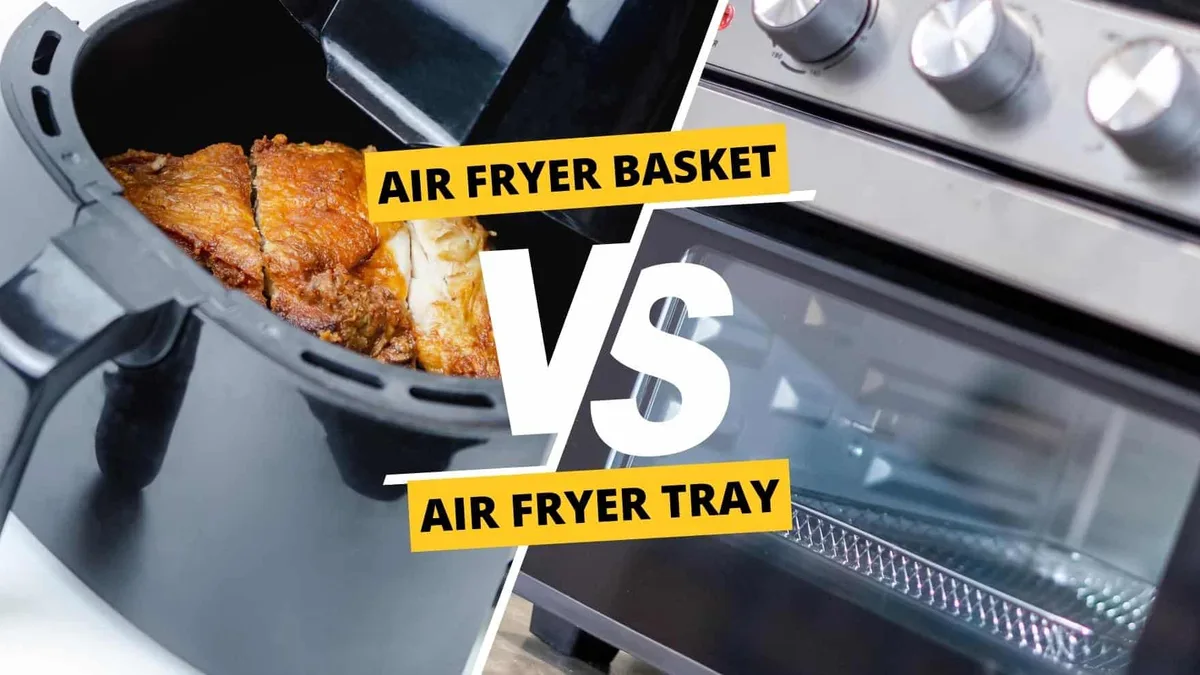
Image source: Web (Bing) / kitchenwink.com (Web image (fair-use with source credit))
Basket air fryers have a single heating element directly above the pull-out drawer. The grill plate sits inside that drawer. Remove it and your food rests on the non-stick base, only a few centimetres from the element.
That’s the high-risk scenario. Grease pools directly on a hot surface. Any lightweight liner like parchment can lift up into the element and catch fire instantly.
Oven-style air fryers look like small toaster ovens. They often have multiple rack positions and a separate drip tray at the very bottom. If your model’s drip tray is still in place, you can sometimes cook without the grill plate by using a wire rack or an oven-safe dish on a higher shelf.
The heating elements sit at the top and sometimes the bottom too. Because the grease catches in the drip tray, the fire risk drops significantly. You still need air circulation around the food, but the appliance itself is more forgiving.
If you’re unsure which type you own, pull out the basket. If the heating element is a coil above the drawer and the fan is behind it, you’ve got a basket model. If you see multiple racks and a windowed door, it’s an oven style.
When Skipping the Plate Is a Genuine Fire Hazard
This isn’t overstating things. The National Fire Protection Association consistently ranks cooking equipment as the leading cause of home fires, and grease fires can erupt in seconds. In a basket air fryer, the danger is dead simple.
Chicken thighs release fat as they cook. Without the perforated plate, that fat collects on the floor. The floor sits right under a 200°C heating element.
Pooled grease smokes first. Then it becomes a fuel source.
A paper towel fire risk is already well documented. Loose parchment or lightweight liners behave the same way. They get sucked upward by the fan and touch the element.
The flame is immediate. The same physics apply if you try using a flimsy piece of foil that isn’t weighed down.
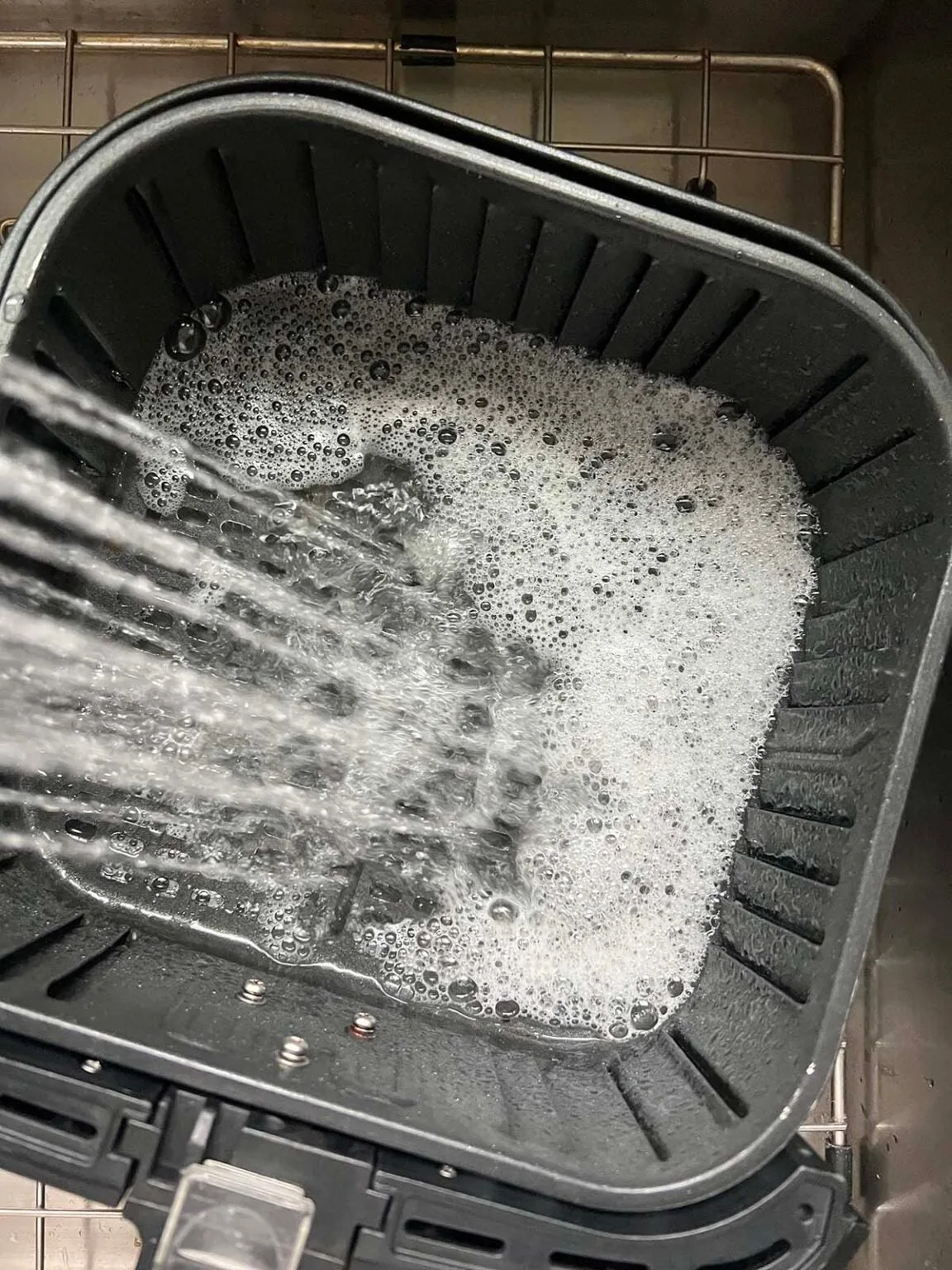
Image source: Web (Bing) / storage.googleapis.com (Web image (fair-use with source credit))
Signs you’re heading toward a dangerous situation are white or grey smoke, a sharp acrid smell, and splattering sounds without food movement. If you see any of those, shut the machine off. Unplug it.
Do not open the basket while it’s smoking heavily, because the inrush of oxygen can cause a flare-up.
Certain foods are especially risky when cooked without the plate. Bacon, sausages, chicken wings, duck breasts, and anything with a high fat content should never touch the bare basket floor. Even leaner meats can release enough juice to cause a problem if the temperature is set high.
This is one reason some people give up on air fryers after a smoky kitchen experience: they unknowingly misused the appliance.
On the other hand, foods with almost no fat, like chopped vegetables, plain bread, or dry baked goods, present a much lower ignition risk. You still won’t get great browning without airflow underneath, but the safety concern diminishes sharply.
Okay, But Can You Safely Cook Without It? Here’s the Decision Map
If you’re standing in the kitchen right now staring at an empty basket, run through this simple decision tree. It’ll give you a clear yes or no in about ten seconds.
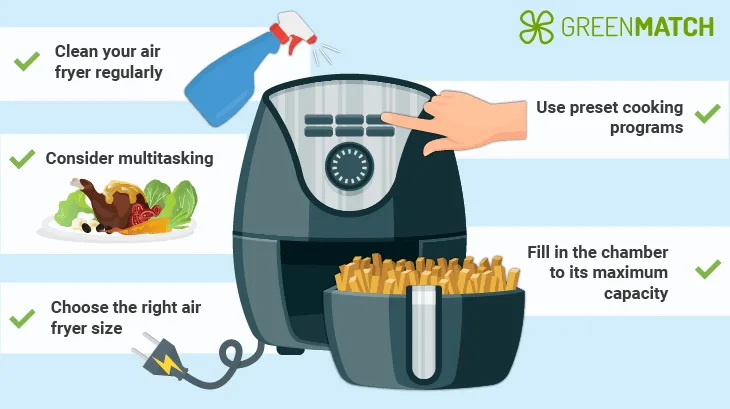
Image source: Bing (Web (fair-use with source credit))
Step 1: What’s your air fryer type?
If it’s an oven-style with a separate drip tray, proceed with caution but you have options. If it’s a basket-style, the answer is almost always no for fatty foods and a guarded maybe for everything else.
Step 2: Does your food release grease or liquid?
If yes, stop. Do not cook it without either a safe substitute that recreates the air gap or a containment dish that catches the drippings. If no, and you’re cooking something dry like a plain jacket potato or a slice of toast, you might be okay.
Step 3: Do you have a safe substitute on hand?
A stainless steel trivet, an oven-safe wire rack, a silicone air fryer mat, or a fitted perforated parchment liner can all work. You need at least one of these. If you have nothing but the bare basket, only dry, low-fat foods are an acceptable risk.
Even then, monitor constantly.
Step 4: Are you prepared to stay in the kitchen?
Unattended cooking without the grill plate is a bad idea. You need to watch for smoke and be ready to react. If you can’t stand by the appliance the whole time, don’t do it.
This decision framework works every time. It strips out guesswork and separates the genuinely safe workarounds from the “probably fine but not worth the risk” crowd. For any meat that needs flipping, remember why flipping matters and treat it as mandatory when the plate is missing.
The Best Stand-Ins for a Missing Grill Plate
Losing the plate doesn’t mean you’re stuck ordering takeaway. Several common kitchen items can step in, provided you know each one’s limits. Here’s the cheat sheet.
| Substitute | Basket-Style Safe? | Oven-Style Safe? | Best For | Watch Out For |
|---|---|---|---|---|
| Perforated parchment liner | Yes, if it has holes and food weighs it down | Yes | Dry foods, baked goods, veg | Can lift into the element if empty or too light |
| Silicone air fryer mat | Yes, but only if it has raised ridges | Yes | Sticky foods, cheese, delicate items | Non-perforated mats block all airflow underneath |
| Stainless steel trivet / wire rack | Yes, excellent air gap | Yes | Any food, especially fatty meats | Must fit the basket without touching the element |
| Oven-safe dish or ramekin | Only for contained dishes | Yes | Sauces, casseroles, baked eggs | Food steams rather than fries without top exposure |
| Aluminium foil (weighted down) | Only with extreme caution | Yes, on a rack | Reheating, catching drips under a rack | Foil can block airflow and melt onto the heating element if loose |
For basket models, a small stainless steel trivet is the closest thing to the original plate. It raises food above the floor, lets fat drip away, and won’t fly up into the fan. Look for one with silicone feet to prevent scratches.
If you often use foil safely, crinkle it into a low rack shape and poke holes, but always weigh it down with food before you close the drawer.
In oven-style air fryers, you can place an oven-safe dish directly on a wire shelf. The separate drip tray catches any overflow. This is the simplest way to cook a saucy dish or reheat leftovers without any plate at all.
The trade-off is that food cooks mostly from the top and may need a stir halfway through.
No single substitute works for every scenario. Keep a perforated liner and a small trivet in the drawer. They cost less than a tenner and solve the problem instantly when the original plate vanishes into the Tupperware abyss.
Step-by-Step: How to Actually Cook Without the Grill Plate
Grab a safe substitute from the previous section. If you don’t have one, limit yourself to dry, low-fat foods only.
First, place your trivet, lined parchment, or silicone mat flat on the basket floor. Make sure it doesn’t block the air intake vents near the back or sides. For basket models, keep at least 1.5 cm of clearance between the food’s top and the heating element.
That often means cooking smaller portions than usual.
Set the temperature 10°C to 15°C lower than the recipe calls for. Without the plate’s air gap, the bottom of the food gets conductive heat from the basket floor while the top gets convection heat. Dropping the temp prevents scorching before the centre cooks through.
Check for cooking time adjustments on recipes you already know.
Shake or flip the food at the halfway point. Use silicone-tipped tongs to avoid scratching the non-stick coating. Never use metal utensils on the bare basket floor.
Scratches expose the aluminium underneath, which can oxidise and flake.
Stay in the kitchen. Watch for any wisp of white smoke. If you see it, pause cooking immediately.
Let the basket cool for thirty seconds, check for pooled grease, and blot it with a paper towel held by tongs. Then decide whether it’s safe to continue.
When time’s up, remove the food and check the basket floor for residue. A quick wipe with a damp cloth while the basket is still warm stops buildup from baking on. Never submerge a hot basket in cold water.
The thermal shock can warp the metal.
Foods You Should Never Cook Without the Grill Plate
Some ingredients are simply too risky when the plate is missing. The problem is always fat rendering into a hot, stagnant pool. Skip any workaround attempts for these.
- Bacon releases copious liquid fat that fills the basket floor in minutes.
- Sausages and bratwurst drip rendered pork fat and can spit hot grease upward.
- Chicken wings have skin that renders fat quickly and heavily.
- Duck breast produces an ocean of fat even with the plate in place.
- 80/20 ground beef patties will leave a pool that smokes at temperatures above 190°C.
- Oily marinated meats where the marinade drips off and collects underneath.
Cooking times for high-fat items often look easy. A large chicken breast with some oil is one thing. But skin-on cuts are a different beast.
The smoke point of pork fat sits around 190°C. Your air fryer runs at 200°C. Without the plate, you’re already above the ignition threshold.
Don’t play that game.
If you must cook these foods, use a trivet over a foil-lined basket floor to catch drips. But honestly, you’re better off waiting until you have the proper plate.
Foods That Work Surprisingly Well Without the Plate
Plenty of everyday items handle the missing plate just fine. The common thread is low moisture release and almost no free fat.
- Toast and bread crisp up quickly on the bare floor. A perforated liner helps, but it’s not essential.
- Jacket potatoes have dry skin that won’t pool anything. Pierce them deeply first.
- Hard-boiled eggs cook perfectly right on the basket floor. The shell contains everything.
- Plain chopped vegetables like broccoli, cauliflower, or carrots release steam but not grease.
- Frozen chips that aren’t coated in oil work if you shake the basket every few minutes.
- Baked goods in a ramekin sit fully contained and don’t touch the heating chamber directly.
For reheating, a slice of leftover pizza does well on a silicone mat. The crust crisps without burning, and any cheese drips stay on the liner. Just don’t let the liner shift and expose the floor underneath.
These foods all have one thing in common. They don’t create a flammable puddle. That’s the line.
Stay on the right side of it and you’ll get decent results.
What Your Air Fryer Manual Won’t Tell You (But You Need to Know)
Manufacturer manuals almost always state that you should use the crisper plate for all cooking. That language is there partly for safety and partly for legal protection. It doesn’t mean the appliance will explode without it.
It means the company won’t cover damage caused by misuse.
One thing manuals rarely mention is that some newer basket models have an integrated raised floor pattern moulded directly into the basket. If you see small ridges on the base of your drawer, you already have a built-in air gap. In those models, you can often skip the separate plate for low-fat foods without any substitute.
Check your basket floor carefully.
Manuals also don’t explain that the non-stick coating degrades faster with direct high-heat food contact and metal tool scratches. Using a liner preserves the basket. That’s useful even when you aren’t in an emergency no-plate situation.
Finally, many manuals stay silent about using spray oil near the heating element. Aerosol propellants can damage non-stick coatings over time. When cooking without the plate, you might be tempted to oil the basket floor directly.
Apply oil with a brush or a pump mister instead of an aerosol can. That keeps the coating intact and reduces the chance of a propellant flash.
Common Mistakes That Lead to Smoke, Sparks, or a Scratched Basket
Most problems come down to three things: ignoring fat pooling, using the wrong liner in the wrong way, and cleaning with abrasive tools. Here’s what to avoid.
- Cooking bacon or sausage on the bare floor. Even a few minutes produces a pool of grease that smokes and then burns.
- Using parchment paper without food on top. A single sheet lifted by the fan becomes a flaming flag in under a second.
- Piling food too high. Food that touches the heating element can ignite directly. Without the plate, stacking gets risky faster.
- Relying on non-perforated silicone mats for everything. They trap steam underneath and make food soggy. They’re fine for baking, but not for crisping.
- Scrubbing the hot basket with a metal scouring pad. The Teflon or ceramic coating scratches off. Once it’s damaged, it’s gone for good.
- Adding oil to the basket floor and walking away. The oil heats up fast. Without food to absorb it, you’re preheating a pan of hot oil inside a small enclosed space.
- Forgetting that oven-style models have bottom elements. If your air fryer oven has a bottom heating element, placing food directly on the drip tray without a rack can cause scorching and fire. Always elevate.
One small correction after a mistake is all it takes. If you see scratches, start using silicone-tipped tools and a parchment liner every time. If you’ve had a close call with smoke, install a trivet and never skip it again.
These aren’t complicated fixes. They just need to become habit.
When to Just Order a Replacement Plate (And Where to Get One Fast)
If your basket model sees frequent use, skip the workarounds and order an OEM replacement. Most manufacturer websites sell the exact plate for £10 to £25. Third-party stainless steel versions are available on major online retailers.
Check the model number on the bottom of the basket before ordering. A properly fitted plate eliminates every fire risk covered in this guide and restores full airflow. It’s the simplest fix.
Common FAQ’s
Can I put aluminium foil directly on the basket floor without the grill plate?
Only if you crinkle it into a low rack, poke holes, and fully weigh it down with food. Loose foil that lifts into the element can cause a flame in seconds. For more on foil safety, read our guide to using tin foil.
Will a parchment liner burn without the grill plate underneath?
No, if it’s a fitted perforated liner with food on top. An empty liner, or one without holes, can lift and ignite. Never preheat with parchment inside and nothing weighing it down.
Can I cook frozen chips without the grill plate?
Yes, but shake the basket every three to four minutes. Use a perforated liner or a silicone mat with ridges. Expect less crispness than with the plate in place.
Is it safe to cook a steak directly on the basket floor?
No, unless you use a trivet to elevate it. A steak releases rendered fat that pools and smokes almost immediately. Use a stainless steel rack and monitor the temperature closely.
The Final Decision Guide: A Quick Safety Checklist
- Oven-style with a drip tray: generally safe with a rack.
- Basket-style with fatty food: stop, do not proceed.
- Basket-style with dry food and a liner or trivet: proceed with caution, stay nearby.
- No substitute available: wait until you get one.
- Smoke appears: shut off and unplug immediately.