Most people use microwaves every day, but many wonder if aluminum foil is safe inside these appliances. You might have heard warnings or seen sparks when foil is used incorrectly. Understanding the real risks, rules, and smart practices can help you avoid mistakes, protect your microwave, and cook food safely. Let’s explore whether you can use aluminum foil in a microwave, the science behind it, and how to do it right.
Why People Want To Use Aluminum Foil In Microwaves
Microwaves heat food quickly, but sometimes parts of the meal cook unevenly. Aluminum foil is popular in ovens for wrapping and shielding food, and some people try it in microwaves for similar reasons:
- To prevent overcooking certain parts (like the edges of a pie)
- To cover food and keep moisture inside
- To stop splattering and keep the microwave clean
But microwaves work differently from ovens, and foil reacts to microwave energy in unique ways. It’s important to know how foil interacts with microwaves before using it.
How Microwaves Work
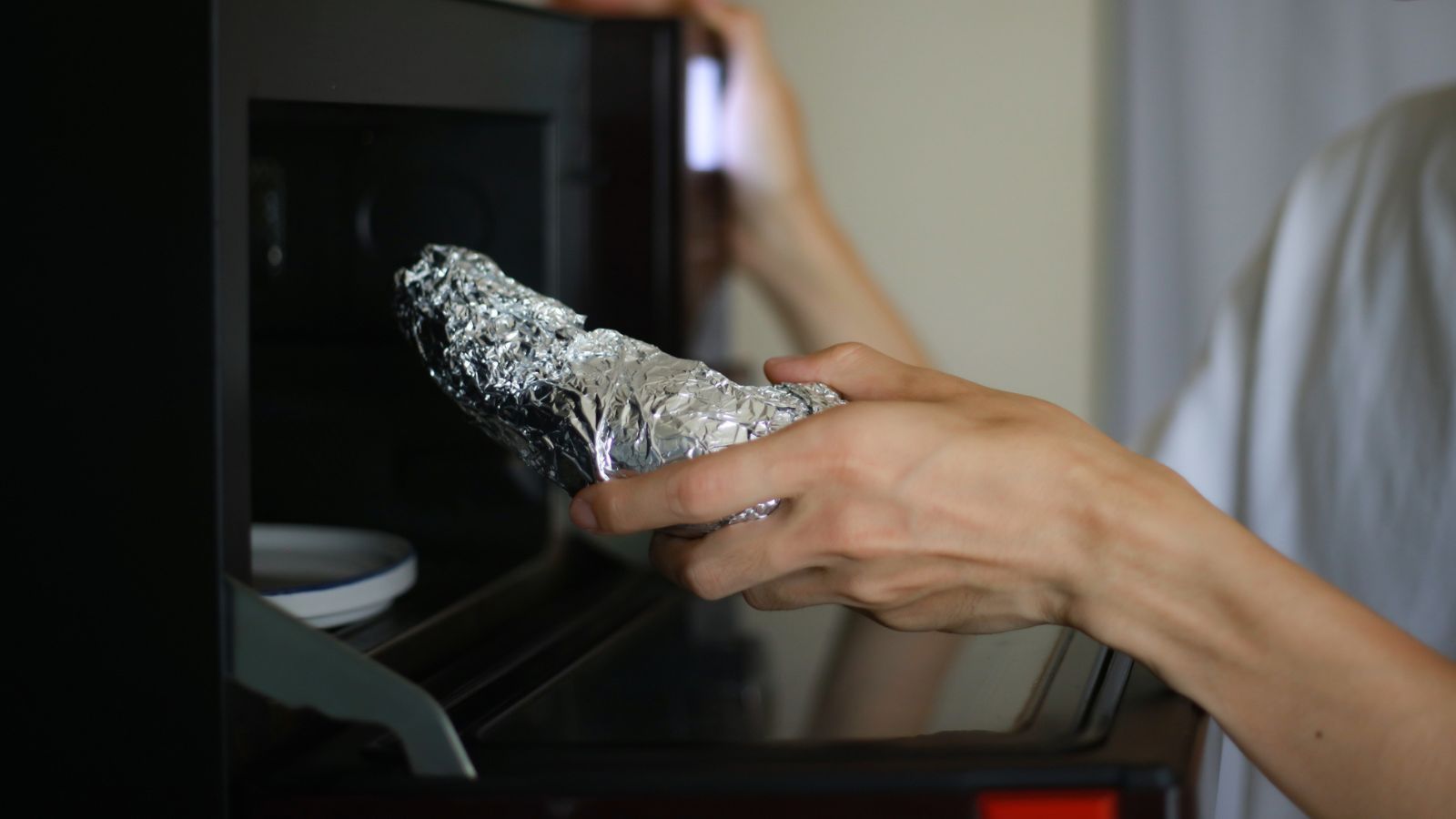
Microwaves use electromagnetic waves to heat food. These waves bounce around inside the oven and make water molecules in food vibrate, producing heat. Metal, like aluminum foil, does not absorb these waves; instead, it reflects them. That’s why foil can cause problems:
- Sparks: If foil is crumpled or touches the microwave’s wall, it can create sparks (called arcing).
- Uneven heating: Foil blocks microwaves, so covered parts may not heat at all.
- Damage risk: Sparks can damage the microwave’s interior or electronics.
Credit: www.homesandgardens.com
Can You Use Aluminum Foil In A Microwave?
The short answer: Yes, you can, but only in very specific situations and with strict precautions. Most microwave manufacturers, including well-known brands like Panasonic and GE, allow limited use of aluminum foil. Always check your microwave’s manual for guidance.
When Is Aluminum Foil Safe In The Microwave?
Foil can be used safely if:
- It covers only small areas: For example, covering the edges of a casserole to prevent burning.
- It does not touch the walls or floor: Keep foil away from the microwave’s metal surfaces.
- It is smooth and flat: Wrinkled or crumpled foil increases the risk of sparks.
- It does not cover the entire food: Only use foil on parts that need shielding.
- You use small amounts: Large sheets of foil block microwaves and can cause arcing.
Here’s a quick overview:
| Situation | Safe? | Why |
|---|---|---|
| Covering pie crust edges | Yes | Foil shields crust, used in small strips |
| Wrapping entire food item | No | Microwaves can’t reach food |
| Foil touching microwave walls | No | High risk of sparks |
| Flat foil under food | Sometimes | Safe if not touching walls, but can block heating |
What Happens If You Use Aluminum Foil Incorrectly?
If you ignore the rules, several things can happen:
- Sparks (arcing): This is the most common result. Sparks look scary and can damage the microwave.
- Fire risk: In rare cases, foil can start a fire, especially if it’s touching another metal object.
- Food stays cold: If you wrap food in foil, microwaves can’t reach it, so the food doesn’t heat.
- Microwave damage: Repeated sparks can harm the magnetron (the part that produces microwaves).
A 2022 study showed that misuse of metal in microwaves causes 15% of reported kitchen appliance fires, mostly from foil or metal containers.
Manufacturer Guidelines
Most brands include advice in their manuals. Here’s a comparison of instructions from three major microwave manufacturers:
| Brand | Foil Use | Main Warning |
|---|---|---|
| Panasonic | Small pieces allowed | Keep away from walls, use only to shield |
| GE | Small strips OK | Do not let foil touch oven surfaces |
| Samsung | Not recommended | Risk of sparks, only allow in rare cases |
Always read your microwave’s manual. Not all models allow foil use.
Best Practices For Using Aluminum Foil In A Microwave
If you decide to use foil, follow these tips to stay safe:
- Use small, flat pieces: Only cover the parts of food that need shielding.
- Never let foil touch the oven’s walls: Leave space around all sides.
- Avoid wrinkled foil: Smooth foil reflects energy more safely.
- Don’t cover food completely: Microwaves need to reach the food.
- Keep cooking time short: Longer times increase risk.
- Watch closely: Never leave the microwave unattended with foil inside.
Practical Example: Shielding Pie Crust
Suppose you’re reheating a pie and want to keep the crust from burning. Cut small strips of foil and gently cover just the edge. Make sure the foil doesn’t touch the microwave’s walls. Keep the foil flat and press it lightly onto the crust.
Microwave in short bursts, checking often.

Credit: www.youtube.com
Common Mistakes To Avoid
Many beginners make mistakes that can cause sparks or damage:
- Using large sheets or wrapping food entirely in foil
- Letting foil touch the microwave’s walls or ceiling
- Using wrinkled or crumpled foil
- Not checking the manufacturer’s instructions
- Leaving the microwave unattended
A non-obvious mistake: placing foil on a rotating turntable, where it can move and touch the walls. Always place foil on a stationary plate and check its position.
Alternatives To Aluminum Foil For Microwave Cooking
If you’re not comfortable using foil, there are safer options:
- Microwave-safe covers: These are made of plastic or glass and prevent splattering.
- Parchment paper: Good for shielding and wrapping food, safe in microwaves.
- Ceramic plates: Can cover parts of food to prevent overcooking.
- Silicone lids: Flexible and reusable, safe for microwave use.
These alternatives are recommended for most situations. They don’t carry the risks of foil and are easy to find.
The Science Behind Metal And Microwaves
Why does foil cause sparks? Microwaves are reflected by metal. When foil has sharp edges or is wrinkled, it can concentrate electrical energy, causing a spark (arc). Smooth, flat foil is less likely to spark, but any metal can cause problems if positioned wrong.
Interestingly, microwave ovens themselves contain metal parts. The interior walls are metal to keep microwaves inside. But loose foil or metal objects behave differently and can cause trouble.
Real-life Examples And Statistics
Many people have tried using aluminum foil in their microwaves, sometimes with bad results. Here are a few examples:
- Sparks from crumpled foil: A user in California reported that covering a plate with wrinkled foil led to sparks after just 10 seconds.
- Fire from foil-wrapped sandwich: In New York, someone microwaved a foil-wrapped sandwich and started a small fire, damaging the appliance.
- Successful pie shielding: A baker in Texas used small strips of smooth foil to protect pie crust edges, with no issues. She kept the microwave under supervision.
According to the National Fire Protection Association, misuse of metal in microwaves causes over 1,000 fires each year in the US. Most are minor, but some lead to injuries or property damage.
Testing Foil In Your Microwave: Should You Try It?
If you want to test foil in your microwave, follow these steps:
- Check the manual: Confirm if your microwave allows foil use.
- Start with small amounts: Use only small, flat strips.
- Keep the foil away from walls: At least 1 inch (2.5 cm) distance.
- Monitor closely: Watch for any signs of sparks.
- Stop immediately if you see arcing: Remove the foil and let the oven cool.
If you’re unsure, it’s safer to avoid foil altogether.
Microwave Safety Tips With Aluminum Foil
To keep your kitchen safe, remember these tips:
- Never microwave metal containers: Only use foil in small strips.
- Don’t use recycled foil: Old foil is often wrinkled and unsafe.
- Avoid using foil with high-power settings: Lower power reduces risk.
- Stay nearby: Always supervise when using foil.
If your microwave sparks, unplug it and inspect for damage. If you see burn marks or smell smoke, contact a professional before using it again.
Data Comparison: Foil Vs. Other Materials In Microwaves
Let’s compare aluminum foil to other common microwave materials:
| Material | Microwave Safe? | Typical Uses | Risks |
|---|---|---|---|
| Aluminum foil | Limited | Shielding parts of food | Sparks, fire risk |
| Plastic wrap | Yes (if labeled) | Covering dishes | Melting, chemical leaching |
| Parchment paper | Yes | Wrapping, shielding | None |
| Glass/ceramic | Yes | Cooking, covering | Cracking if not microwave-safe |
Frequently Asked Questions
Is It Ever Safe To Use Aluminum Foil In A Microwave?
Yes, it is safe if you use small, flat pieces and keep them away from the microwave’s walls. Only use foil to shield parts of food, not to wrap or cover the whole item. Always check your microwave’s manual for advice.
What Happens If Aluminum Foil Touches The Microwave’s Walls?
If foil touches the walls, it can cause sparks or arcing. This might damage the microwave or even start a fire. Always place foil at least an inch away from any metal surface inside the oven.
Can You Wrap Food Completely In Aluminum Foil For Microwaving?
No, you should never wrap food completely in foil for microwaving. The microwaves cannot penetrate the foil, so the food will not heat properly. Full coverage increases the risk of sparks and damage.
Are There Safer Alternatives To Aluminum Foil In A Microwave?
Yes, safer alternatives include microwave-safe covers, parchment paper, and silicone lids. These materials can prevent splattering and protect food without the risks of foil.
What Should You Do If Your Microwave Sparks With Foil Inside?
If you see sparks, stop the microwave immediately, unplug it, and remove the foil. Check for damage before using the appliance again. If there are burn marks or a strong smell, consult a technician.
Using aluminum foil in a microwave is possible, but only with careful attention to safety and proper technique. Always use small, flat strips, keep foil away from the walls, and follow manufacturer guidelines. For most tasks, alternatives like parchment paper or microwave-safe covers are easier and safer. If you’re unsure, avoid foil and protect your microwave. For more details on microwave safety, you can check out this guide from Consumer Reports. Stay safe and enjoy convenient cooking with confidence.
Credit: www.alufoil.org