Defrosting Meat In The Microwave: A Safe And Fast Method
Defrosting meat is something almost everyone faces, whether you’re cooking dinner after work or preparing for a weekend barbecue. Sometimes, you forget to take the chicken out of the freezer, or you realize your beef is still rock solid when you want to start cooking.
The microwave offers a quick solution, but many people worry about safety, uneven thawing, or even cooking the edges by accident. With the right approach, defrosting meat in the microwave can be both safe and effective. This article will guide you through the process, highlight common mistakes, and provide insights you might not find on the box or appliance manual.
Why Use A Microwave For Defrosting?
Microwaves are popular for defrosting because they are fast and convenient. Unlike refrigerator thawing, which can take hours or overnight, a microwave can get meat ready in minutes. This is useful if you need to cook right away or forgot to plan ahead.
However, microwaves thaw food by heating water molecules inside the meat. This process can sometimes start cooking the edges before the center is thawed. That’s why understanding the right steps is important for food safety and quality.
How Does Microwave Defrosting Work?
Microwaves use electromagnetic waves to make water molecules vibrate. This creates heat inside the food, especially in areas with more moisture. For frozen meat, the outside thaws first because it absorbs more energy. The inside, still frozen, takes longer. That’s why microwave defrosting is not always even.
Most modern microwaves have a defrost setting. This usually uses about 30% power. Lower power helps thaw the meat more gently, reducing the risk of cooking the surface while the inside stays cold.
Step-by-step Guide To Defrosting Meat In The Microwave
1. Remove Packaging
Start by taking the meat out of any plastic wrap, foam trays, or store packaging. These materials can melt or release harmful chemicals when microwaved. Place the meat on a microwave-safe plate.
2. Use The Defrost Setting
Set your microwave to the defrost mode. If your microwave doesn’t have this, use 30% power. Higher power can start cooking the meat instead of just thawing it.
3. Enter The Weight
Most microwaves ask for the weight of the meat. Weigh the meat if possible, or check the packaging for the net weight. Enter this amount for more accurate defrosting.
4. Arrange The Meat Properly
Spread the pieces out in a single layer if possible. For bigger cuts, place the thickest part toward the edge of the plate and the thinner part in the center. This helps the meat thaw more evenly.
5. Rotate And Flip
About halfway through, pause the microwave and turn or flip the meat. This ensures all areas thaw at a similar rate.
6. Check Progress Regularly
Microwaves can work faster than you expect. Open the door and check the meat every few minutes. If some areas are already soft or starting to cook, stop the microwave and remove those sections.
7. Cook Immediately
Once the meat is thawed, cook it right away. Bacteria can multiply quickly in the “danger zone” (40°F to 140°F). Do not refreeze meat that has been defrosted in the microwave.
Safe Meat Defrosting Times In The Microwave
How long should you defrost different meats? Times vary by meat type and amount. Here is a helpful comparison:
| Meat Type | Weight | Approximate Defrost Time |
|---|---|---|
| Ground Beef | 1 lb (450g) | 4–6 minutes |
| Chicken Breasts | 1 lb (450g) | 7–8 minutes |
| Pork Chops | 1 lb (450g) | 7–8 minutes |
| Fish Fillets | 1 lb (450g) | 3–5 minutes |
| Steak | 1 lb (450g) | 6–8 minutes |
These are estimates. Always check the meat for cold spots or partially frozen areas before cooking.
Advantages Of Microwave Defrosting
- Speed: Meat can be ready to cook in minutes, not hours.
- Convenience: No need to plan far in advance.
- Less Mess: No dripping fluids in your fridge or sink.
Microwave defrosting is especially helpful for busy people or last-minute meal changes.
Common Mistakes And How To Avoid Them
Many people get frustrated with microwave defrosting because of uneven results or partially cooked meat. Here are some mistakes and tips:
- Using full power: This can partially cook the meat and leave the inside frozen. Always use defrost mode or 30% power.
- Not rotating or flipping: Microwaves heat unevenly, so turning the meat halfway helps a lot.
- Forgetting to check regularly: It’s easy to get distracted, but checking every few minutes prevents over-thawing.
- Defrosting too much at once: Large batches do not defrost well. It’s better to do small amounts for even results.
- Refreezing thawed meat: Never refreeze meat that’s been thawed in the microwave, as bacteria may have started to grow.
Credit: www.thekitchn.com
Which Types Of Meat Defrost Best In The Microwave?
Some meats defrost better than others. Thin cuts like chicken breasts, fish fillets, and ground beef work well. Thick roasts or large bone-in pieces may thaw unevenly, so it’s best to cut them into smaller parts if possible before freezing.
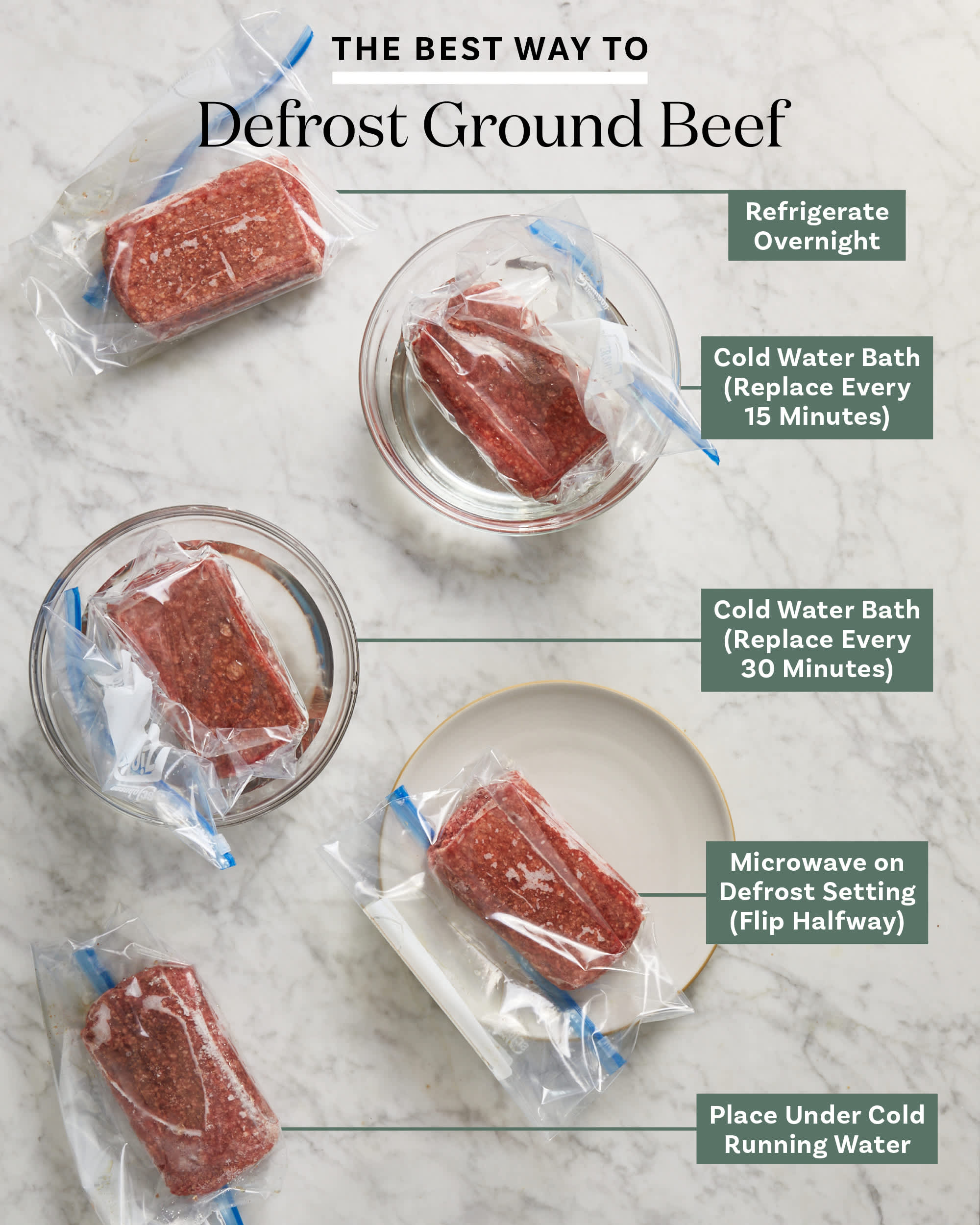
Microwave Defrosting Vs. Other Methods
How does microwave defrosting compare to other common methods? Here’s a quick look:
| Method | Time Needed | Food Safety | Meat Texture |
|---|---|---|---|
| Microwave | 5–10 minutes | Safe if cooked immediately | Risk of partial cooking |
| Refrigerator | 12–24 hours | Very safe | Best texture |
| Cold Water Bath | 1–3 hours | Safe if water changed often | Good texture |
| Room Temperature | 2–8 hours | Unsafe (bacteria risk) | Texture loss possible |
Microwave thawing wins for speed but can affect texture if not done with care.
Tips For Better Microwave Defrosting Results
- Pause and separate pieces as they start to thaw. This lets each piece defrost evenly.
- Cover with microwave-safe wrap (leave a corner open) to hold in moisture without trapping steam.
- Use a meat thermometer. After cooking, check the internal temperature to ensure it’s safe (usually 165°F for poultry, 145°F for beef/pork).
- Let the meat rest a few minutes after microwaving. This helps heat distribute more evenly.
- Never use metal trays or foil in the microwave.
Non-obvious Insights For Better Results
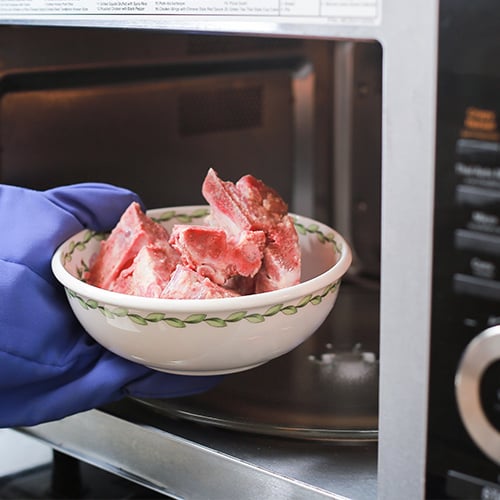
- Start with smaller pieces: If you freeze meat in smaller portions, you’ll have less trouble with uneven thawing. Large pieces are hard to defrost evenly in the microwave, but thin cuts or pre-portioned packages work much better.
- Use the “power level” button: Many people only use the defrost preset. But adjusting the microwave to 20–30% power manually can give you even more control, especially with older or less sophisticated microwaves.
Credit: www.webstaurantstore.com
Food Safety: What You Must Know
Food safety is one of the main concerns with microwave defrosting. Here’s what matters:
- The danger zone for bacteria is between 40°F and 140°F (4°C to 60°C). Meat can enter this range during microwave thawing, so cook it immediately.
- Never refreeze meat that’s been thawed in the microwave. The quick temperature changes encourage bacterial growth.
- Check for hot spots: Some microwaves heat unevenly, so stir, flip, or rearrange meat as needed.
For more on meat safety, you can visit the USDA Food Safety site.
How To Tell If Meat Is Properly Thawed
It’s not always clear if your meat is ready to cook. Here are signs to look for:
- No ice crystals inside or on the surface.
- Even softness throughout, with no hard frozen spots.
- Juice release: Thawed meat may release some juice. If the meat is dry or stiff, it may still be frozen inside.
- No cooked edges: If you see white or brown edges, those parts have started to cook. Cut them off before cooking the rest.
Practical Example: Defrosting Chicken Breasts
Suppose you have two frozen chicken breasts, about 1 lb total. Here’s how you would defrost them:
- Remove all packaging and place on a microwave-safe plate.
- Set the microwave to defrost mode or 30% power.
- Enter 1 lb as the weight.
- Start for 3 minutes, then pause and flip the breasts.
- Continue for another 3–4 minutes, checking every minute.
- Once soft and flexible (no ice crystals), cook immediately.
What To Do If The Meat Starts To Cook
Sometimes, parts of the meat will start to turn white or brown. If this happens:
- Stop the microwave right away.
- Cut off the cooked sections (they may be tough if left).
- Continue defrosting the rest, checking every 30 seconds.
- Lower the power next time to avoid this problem.
Credit: www.tastingtable.com
Microwave Power Levels And Defrosting
Not all microwaves are the same. Here’s a quick comparison:
| Microwave Power (Watts) | Suggested Defrost Time (1 lb meat) | Best Power Level |
|---|---|---|
| 700W | 8–10 minutes | 30% |
| 900W | 6–8 minutes | 30% |
| 1100W | 5–7 minutes | 30% |
Always check your microwave’s manual for specific instructions.
When Not To Use The Microwave For Defrosting
Microwave defrosting is not ideal for:
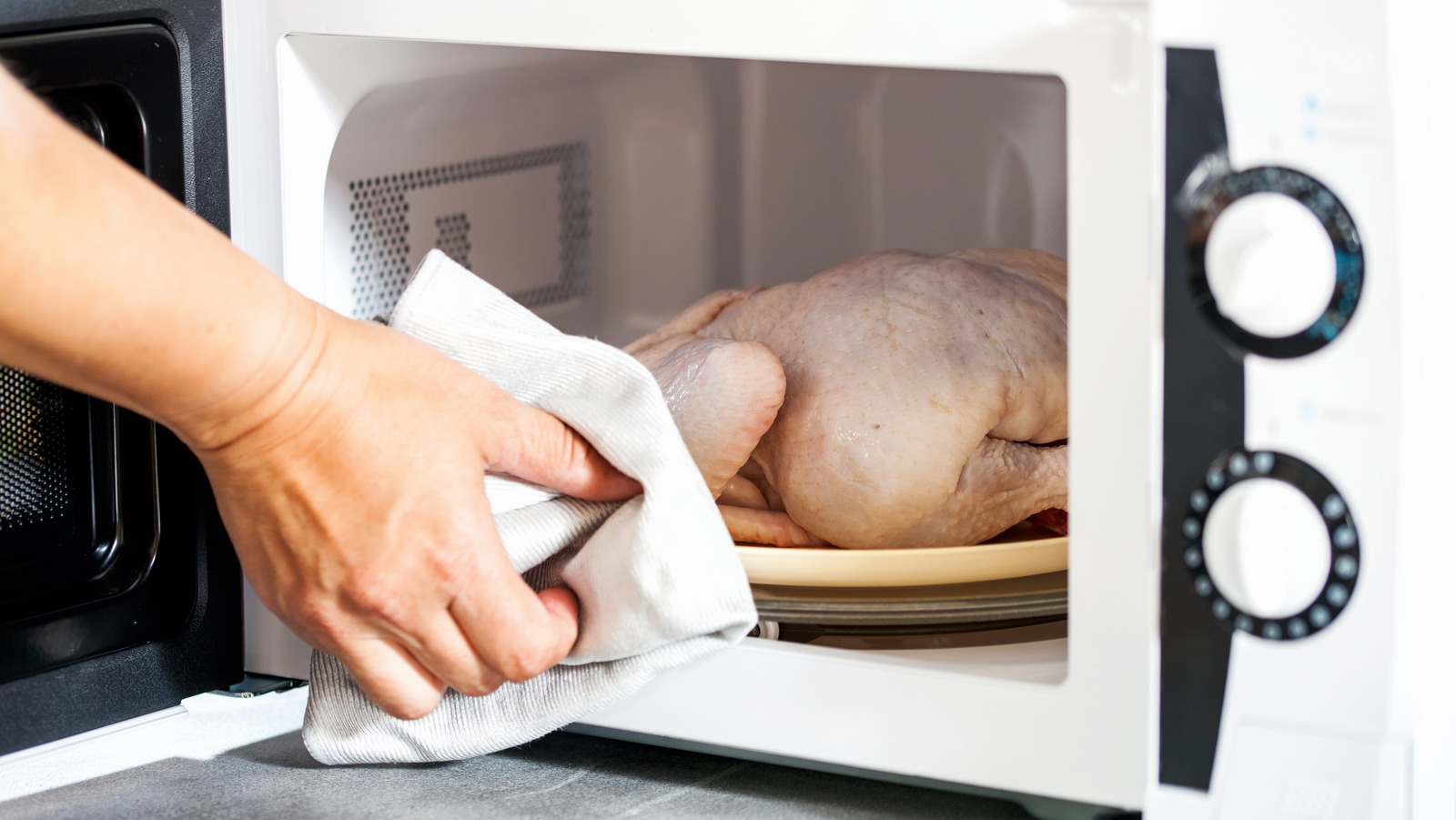
- Very large cuts: Like whole turkeys or big roasts.
- Delicate seafood: Like scallops, which can cook very quickly.
- Meat with uneven thickness: Thin parts can cook before thick parts thaw.
For these, it’s better to use the refrigerator or a cold water bath.
Frequently Asked Questions
Is It Safe To Defrost All Types Of Meat In The Microwave?
Yes, it’s safe for most meats like chicken, beef, pork, and fish, as long as you cook them immediately after thawing. Avoid very large pieces that may thaw unevenly.
Can I Refreeze Meat After Defrosting In The Microwave?
No, you should never refreeze meat that has been thawed in the microwave. The temperature changes can cause bacteria to grow, making the meat unsafe.
Why Does My Microwave Sometimes Cook The Edges Of The Meat?
This happens because microwaves heat food unevenly. Thinner parts or edges absorb more energy and can start to cook while the inside is still frozen. Using the defrost setting and pausing to flip the meat helps reduce this problem.
What Should I Do If Some Parts Are Still Frozen After Defrosting?
If small areas are still frozen, separate them and continue defrosting at a lower power. If they are large, let them sit for a few minutes after microwaving—the heat will continue to spread.
Is It Better To Use Cold Water Or The Microwave To Defrost Meat?
Cold water gives more even results and better texture but takes longer (1–3 hours). The microwave is faster but may affect texture if not carefully managed.
Defrosting meat in the microwave is a helpful tool for busy cooks. With the right steps, it’s both safe and convenient. Remember to use low power, check progress often, and cook meat right after thawing. With a little practice, you’ll get great results and keep your meals safe and delicious.