If you live with someone who smokes, or if you’re exposed to cigarette smoke in your home or workplace, you know how difficult it is to get rid of the smell and harmful particles. Many people wonder if air purifiers can help with cigarette smoke. The answer isn’t simple, but understanding how air purifiers work, what types are best for smoke, and their limitations can help you make a smart choice.
Let’s break down the facts, compare purifier technologies, and explain what you can realistically expect from using an air purifier for cigarette smoke.
What Happens When Cigarette Smoke Fills Your Space
Cigarette smoke is more than just an unpleasant smell. It contains over 7,000 chemicals, including formaldehyde, benzene, and ammonia. Of these, at least 70 are known to cause cancer. The smoke creates tiny particles called particulate matter (PM2.5) and releases volatile organic compounds (VOCs) into the air. These particles are so small, they can get deep into your lungs and cause health issues.
Secondhand smoke is dangerous for everyone, especially children, seniors, and people with asthma or allergies. The Centers for Disease Control and Prevention (CDC) says there’s no safe level of exposure to cigarette smoke indoors.
How Air Purifiers Work
Air purifiers use different technologies to clean the air. Their main job is to remove particles, chemicals, and odors. The most common types of air purifiers include:
- HEPA filters – trap fine particles (like PM2.5) from smoke.
- Activated carbon filters – absorb odors and chemicals (VOCs) from smoke.
- Ionizers – release ions that attach to particles and pull them from the air.
- UV-C light purifiers – kill bacteria and viruses, but don’t help much with smoke.
Some purifiers use a combination of these methods. Not all are equally effective for cigarette smoke.
Comparing Air Purifier Technologies For Smoke
To understand which technology works best, let’s look at how each handles smoke particles and smells:
| Purifier Type | Removes Smoke Particles | Removes Smoke Odor | Removes VOCs |
|---|---|---|---|
| HEPA Filter | Yes | No | No |
| Activated Carbon | No | Yes | Yes |
| Ionizer | Limited | No | No |
| UV-C Light | No | No | No |
You can see that a HEPA filter is good for particles, while activated carbon is needed for odors and chemicals. A combination of both is best for cigarette smoke.
What Makes An Air Purifier Effective Against Cigarette Smoke
When choosing an air purifier for smoke, look for these features:
- True HEPA filter: Removes at least 99.97% of particles down to 0.3 microns (PM2.5 and smaller).
- Large activated carbon filter: The bigger the filter, the more odor and VOCs it can absorb.
- High Clean Air Delivery Rate (CADR): Measures how fast the purifier cleans smoke particles from the air. Look for a CADR rating of at least 200 for smoke in a medium-sized room.
- Room size coverage: Match the purifier’s capacity to your room size. If your room is bigger than the purifier’s rated area, it won’t work well.
Example: Comparing Two Air Purifiers
Here’s a side-by-side comparison of two popular models:
| Feature | Purifier A | Purifier B |
|---|---|---|
| HEPA Filter | Yes | Yes |
| Activated Carbon Filter | Small | Large |
| CADR (Smoke) | 150 | 250 |
| Room Coverage | 200 sq ft | 400 sq ft |
| Price | $120 | $250 |
Purifier B is better for removing smoke, but it costs more and covers a larger area.
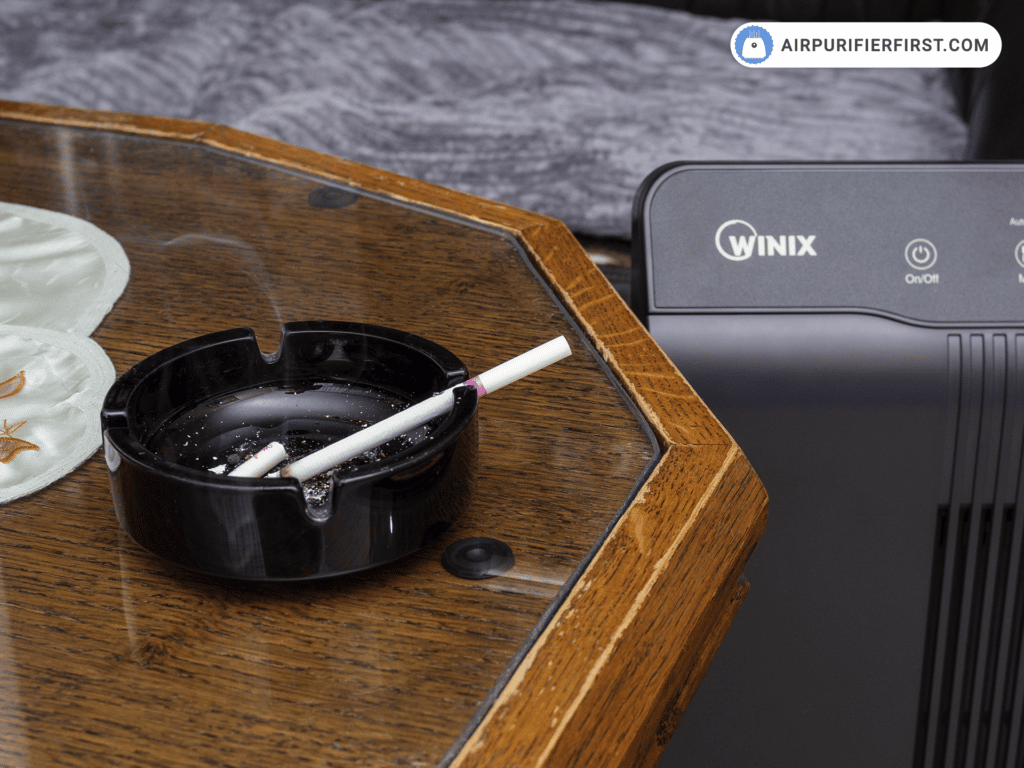
Credit: www.airpurifierfirst.com
What Air Purifiers Can Remove (and What They Can’t)
Air purifiers can do a lot, but they have limits. Here’s what they can and can’t remove:
- Particles: HEPA filters trap most fine particles from cigarette smoke.
- Odors and chemicals: Activated carbon filters absorb many VOCs and smells, but may not catch all.
- Surface residue: Smoke leaves sticky residue (tar and nicotine) on walls, furniture, and fabrics. Air purifiers can’t remove this – you must clean it yourself.
- Thirdhand smoke: Even after smoke is gone, chemicals stay on surfaces and can be harmful.
Many people think an air purifier will make a room “smoke-free. ” This isn’t true. They reduce, but don’t eliminate, all risks. The best way to protect yourself is to avoid indoor smoking.
Real-world Results: Data And Studies
Scientific studies show that air purifiers with HEPA and activated carbon filters can reduce smoke particles and some VOCs by up to 85% in a closed room. However, they don’t remove every chemical, and effectiveness drops if the purifier is too small or filters get dirty.
One study found that in a home where someone smoked, a high-quality air purifier reduced PM2.5 levels from 130 µg/m³ to 20 µg/m³ within two hours. That’s a big improvement, but still not as clean as outdoor air (usually below 10 µg/m³).
Another insight: Filters lose effectiveness as they fill up. Change filters regularly for best results. If you smoke daily indoors, you’ll need to replace filters more often.

Credit: www.haddadjewelers.com
Practical Tips For Using Air Purifiers With Cigarette Smoke
If you want the best results, follow these steps:
- Place the purifier near the smoke source (but not right next to the person smoking).
- Keep doors and windows closed while running the purifier, so outside air doesn’t dilute its effect.
- Run the purifier continuously, not just when someone is smoking.
- Clean or replace filters as recommended by the manufacturer (sometimes every 1-2 months).
- Vacuum and clean surfaces regularly, as purifiers won’t remove sticky residue.
Common Mistakes To Avoid
- Using a purifier without activated carbon: HEPA alone won’t remove odors.
- Buying a too-small purifier: It won’t clean air fast enough.
- Ignoring filter changes: Old filters can spread bacteria or lose effectiveness.
You might find this helpful: How Often to Change Air Purifier Filter
Alternatives And Complementary Solutions
While air purifiers help, combining methods gives better protection:
- Ventilation: Open windows after smoking, if possible, to let fresh air in.
- Smoking outdoors: The most effective way to keep indoor air clean.
- Deep cleaning: Wash walls, floors, and fabrics regularly.
- No indoor smoking: The best solution for health and air quality.
If you want to learn more about air quality and health risks, visit this CDC Secondhand Smoke Resource.

Credit: www.londoncollegept.co.uk
Choosing The Best Air Purifier For Cigarette Smoke
When shopping for a purifier, check these key factors:
- Filter quality: Only buy purifiers with a certified True HEPA filter and a thick activated carbon filter.
- CADR rating: Higher is better for smoke; check the specs.
- Noise level: Some purifiers are loud on high settings. If you’re sensitive, look for quiet models.
- Maintenance cost: Replacement filters can be expensive. Check prices before buying.
- Trusted brands: Stick to brands with good reviews and clear certifications.
Here’s a quick overview comparing three popular models:
| Brand | HEPA Filter | Activated Carbon | CADR (Smoke) | Room Size | Filter Cost |
|---|---|---|---|---|---|
| Model X | Yes | Large | 230 | 350 sq ft | $50 |
| Model Y | Yes | Medium | 180 | 250 sq ft | $35 |
| Model Z | Yes | Small | 150 sq ft | $25 |
Choose a model that matches your room size and budget. Don’t forget to factor in the cost of filters over time.
Non-obvious Insights Most Beginners Miss
- Air purifiers need the right filters: Many cheap purifiers claim to remove smoke, but without activated carbon, they only clean particles—not odors or chemicals.
- Room placement matters: Purifiers work best when placed in the middle of the room or near the smoke source. Putting them in a corner reduces their efficiency.
- Thirdhand smoke lingers: Even after using a purifier, smoke residue stays on walls and furniture. Only deep cleaning removes this.
- Continuous use is key: Running a purifier part-time won’t clear smoke fully; it must operate non-stop for best results.
Final Thoughts
Air purifiers can help reduce cigarette smoke in indoor spaces, especially if you choose models with both HEPA and activated carbon filters and use them correctly. They’re useful for lowering smoke particles and odors, but they cannot remove all harmful chemicals or sticky residue left behind.
The most effective way to keep your air clean is to stop smoking indoors or ask smokers to go outside. If you must live with indoor smoke, an air purifier is a wise investment—just remember its limits, keep it well-maintained, and combine it with other cleaning and ventilation methods.
Frequently Asked Questions
How Long Does It Take For An Air Purifier To Remove Cigarette Smoke?
It depends on the purifier’s power and room size. A strong purifier can reduce smoke particles by up to 80% in 1-2 hours in a medium room. Odors may take longer to fade, especially if smoke has built up over time.
Do Air Purifiers Remove All Cigarette Smoke Toxins?
No. They remove many particles and some chemicals, but not all toxins. Residue on surfaces (thirdhand smoke) and some VOCs can remain. The safest way is to avoid indoor smoking.
Can I Use Any Air Purifier For Cigarette Smoke?
Not all purifiers work for smoke. You need one with a True HEPA filter and activated carbon. Models without carbon won’t remove odors or chemicals.
How Often Should I Replace Filters If Someone Smokes Indoors?
You should change filters more often—every 1-2 months for HEPA and carbon filters if smoke is frequent. Check the manufacturer’s advice, but err on the side of caution.
Is It Better To Ventilate Or Use An Air Purifier?
Both help, but ventilation removes smoke faster. Air purifiers are good if you can’t open windows or need ongoing protection. Using both methods together is most effective.