Skip to content
If you share your home with a furry dog, you know how quickly dog hair can take over. It clings to couches, floats through sunlight, and sometimes even ends up in your morning coffee. Many people wonder: do air purifiers help with dog hair, or are they better for allergies and odors only?
This guide takes a clear look at what air purifiers can (and can’t) do for dog hair, what features really matter, and how to make your home cleaner—without spending hours vacuuming every day.
How Air Purifiers Work
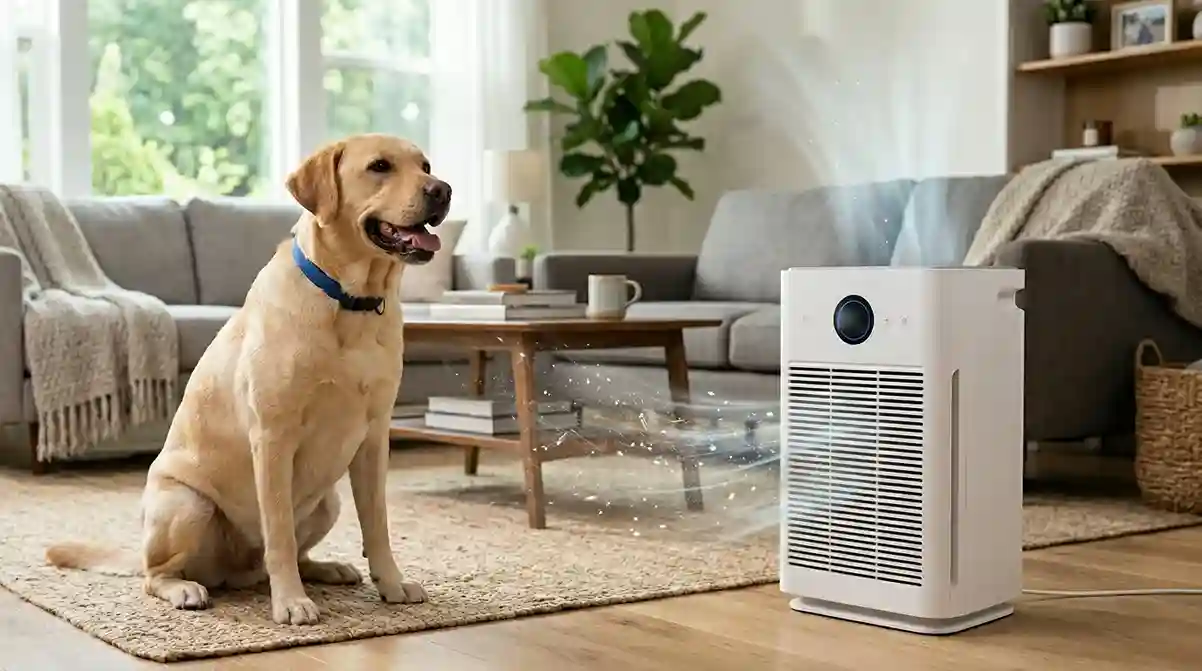
Air purifiers pull air through a series of filters. The most effective machines use a HEPA filter (High Efficiency Particulate Air), which can trap very small particles. As air moves through the purifier, dust, pollen, and some pet hair get caught in the filter, and cleaner air goes back into your room.
What Hepa Filters Catch
A true HEPA filter captures at least 99.97% of particles as small as 0.3 microns. Dog hair, by comparison, is much larger—often between 5 and 100 microns wide—so it’s easily trapped. However, there’s more to the story. Air purifiers are excellent at removing pet dander (tiny flakes of skin) and airborne particles, but there are limits when it comes to larger, heavier dog hair that falls straight to the floor.
Can Air Purifiers Remove Dog Hair?
Yes, but with some important details. Air purifiers can help with dog hair that’s floating in the air, especially if you have a dog that sheds a lot or likes to shake. If you see hair drifting or notice it collecting on surfaces near vents or windows, an air purifier will catch much of that as air cycles through. But hair that lands on the floor, your bed, or the sofa won’t be sucked up—purifiers don’t vacuum.
Airborne Vs. Settled Hair
Think of it this way: air purifiers deal with what’s in the air, not what’s already settled. So, if your dog shakes after a bath and hair starts floating, a good purifier helps reduce how much ends up on shelves and tables. For hair that’s already on your rug, you’ll still need a broom or vacuum.

Credit: www.amazon.com
What About Pet Dander And Allergens?
While dog hair itself is mostly a cleaning headache, pet dander (tiny skin flakes) is often the cause of allergies. Dander sticks to dog hair, but it’s so small it can stay in the air for hours. This is where air purifiers really shine.
Why Dander Matters More Than Hair
Unlike hair, dander is microscopic and can trigger sneezing, watery eyes, and even asthma. A strong HEPA purifier removes most dander particles from the air, helping allergy sufferers breathe easier. In fact, studies show that HEPA purifiers can cut indoor allergen levels by over 50% when used regularly.
Air Purifier Features That Matter For Dog Hair
Not all air purifiers perform the same way. If dog hair is your main concern, focus on these features:
- Pre-filters: These catch larger particles like dog hair before they reach the HEPA filter, helping both filters last longer.
- Strong airflow (CADR rating): The Clean Air Delivery Rate (CADR) tells you how quickly the purifier cleans the air. A higher CADR means faster removal of airborne hair and dander.
- Easy-to-clean filters: Dog hair can clog filters quickly. Removable, washable pre-filters make cleaning simpler.
- Room size coverage: Pick a purifier that matches the size of your room for best results.
Here’s a quick comparison of features in common air purifiers:
| Feature | Basic Purifier | Pet-Specific Purifier |
|---|---|---|
| Pre-filter | No | Yes |
| HEPA Filter | Standard | Upgraded |
| Odor Control | Low | High (with carbon) |
| Filter Maintenance | Replace Only | Washable Pre-filter |
What Air Purifiers Can’t Do
It’s easy to expect too much from an air purifier. Here’s what they cannot do for dog hair:
- Remove hair from floors, beds, or furniture
- Clean up heavy shedding after brushing or grooming
- Catch hair trapped in thick carpets or under cushions
If most of your dog’s hair ends up on the floor or furniture, you’ll still need regular cleaning—air purifiers are only part of the solution.
How To Get The Most From Your Air Purifier
To make your air purifier work best for dog hair, use these tips:
- Place it wisely: Put the purifier where your dog spends the most time, like the living room or bedroom.
- Keep doors and windows closed: This helps the purifier cycle the same air and catch more hair and dander.
- Clean filters often: Check pre-filters weekly and HEPA filters as recommended by the manufacturer.
- Vacuum and dust: Continue regular cleaning to remove hair that settles before it gets in the air.
- Brush your dog regularly: Less loose hair means less floating hair for the purifier to catch.
Comparing Air Purifiers To Other Cleaning Methods
How does an air purifier stack up against a vacuum or lint roller? Here’s a direct look:
| Method | Best For | Limitations |
|---|---|---|
| Air Purifier | Airborne hair, dander, and allergens | Doesn’t clean surfaces or carpets |
| Vacuum Cleaner | Floors, carpets, and upholstery | Doesn’t catch airborne particles |
| Lint Roller | Clothes, bedding, small surfaces | Limited area; not for air or large rooms |
Common Mistakes When Using Air Purifiers For Dog Hair
Many dog owners get less benefit from their air purifier because of these easy-to-avoid mistakes:
- Wrong purifier size: Using a small purifier in a large room means not enough air gets cleaned.
- Ignoring filter changes: Clogged filters can’t catch hair or dander well.
- Placing near open windows: Outdoor air brings in new dust and pollen, making the purifier less effective.
- Assuming it replaces cleaning: Air purifiers help, but they don’t replace vacuuming or wiping down surfaces.
- Not running it long enough: For best results, run the purifier all day, not just for a few hours.
Real-life Example: What To Expect
Imagine you have a Labrador who sheds year-round. After setting up a quality HEPA air purifier in your living room:
- You’ll notice less floating hair in sunbeams and on shelves.
- Allergic visitors may sneeze less or feel fewer symptoms.
- You’ll still need to sweep up hair from the floor and sofa, but overall dust and hair buildup drops.
The biggest change? The air feels fresher, and your home looks cleaner between deep cleans.
You might find this helpful: Best Air Purifiers for Pets
Are Some Air Purifiers Better For Pet Hair?
Yes. Brands often sell “pet” air purifiers, but what matters most is the filter type and strength. Look for:
- HEPA or True HEPA filters
- Strong pre-filter for hair
- Carbon filter if you want to reduce pet odors
Here’s a comparison of two common filter setups:
| Filter Type | Removes Dog Hair? | Removes Dander? | Removes Odors? |
|---|---|---|---|
| HEPA Only | Yes (airborne only) | Yes | No |
| HEPA + Carbon | Yes (airborne only) | Yes | Yes |
Two Insights Dog Owners Often Miss
First, dog hair floating in the air is only a small part of the problem. The majority settles quickly, so even the best air purifier can’t replace the need for physical cleaning. Second, pet dander—not the hair itself—is what causes most allergy issues. If allergies are a concern, the purifier’s ability to catch tiny dander is much more important than its ability to trap visible hair.
Practical Tips For Cleaner Air With Dogs
- Run your purifier on high when grooming your dog or after cleaning.
- Consider using two purifiers in large homes or homes with multiple dogs.
- If you have a breed that sheds heavily, weekly filter checks are essential.
- Don’t forget about odor control—a carbon filter can help if your home smells “doggy.”
When An Air Purifier Isn’t Enough
Some homes need more than just a purifier. If you have severe allergies, also consider:
- Using a vacuum with a HEPA filter
- Washing pet bedding weekly
- Keeping dogs out of bedrooms or allergy-sensitive areas
- Using washable covers on furniture
Remember, the best results come from a combination of air purification and regular cleaning.
Frequently Asked Questions
Can Air Purifiers Completely Remove Dog Hair From My Home?
No, air purifiers only remove hair that’s floating in the air. They don’t pick up hair from the floor, furniture, or bedding. You’ll still need to vacuum and dust for full hair removal.
Which Type Of Air Purifier Is Best For Dog Hair?
A purifier with a HEPA filter and a washable pre-filter works best for dog hair. If you also want to control odors, look for a model with an activated carbon filter.
How Often Should I Clean Or Replace Filters If I Have A Dog?
Check the pre-filter every week, as dog hair can build up fast. Replace or wash it as needed. The main HEPA filter usually lasts 6–12 months, but homes with heavy shedding may need more frequent changes.
Do Air Purifiers Help With Dog Smells Too?
Yes, if the purifier has an activated carbon filter. This type of filter absorbs odors from pets, cooking, and smoke, making your home smell fresher.
Can Air Purifiers Reduce Dog Allergies?
Yes, they remove pet dander and other allergens from the air. For the best results, use a HEPA air purifier and keep up with cleaning routines. For more on air cleaning and allergies, see the EPA’s guide on air cleaners.
A good air purifier is a smart part of a dog-friendly home, but it works best alongside regular cleaning and good habits. With the right setup, you’ll breathe easier—and find less hair in your coffee cup.

Credit: www.amazon.com