Cooking meat to the right temperature is more than just a matter of taste—it’s about safety. Undercooked meat can harbor bacteria like salmonella or E. coli, putting health at risk. That’s why digital meat thermometers have become essential in kitchens worldwide.
But how accurate are digital meat thermometers, really? Are they reliable enough to trust for your next steak or Thanksgiving turkey? Let’s dive into the details to understand their precision, what affects their readings, and how you can get the most accurate results every time you cook.
How Digital Meat Thermometers Work
Digital meat thermometers use a metal probe to measure temperature inside food. The tip of the probe contains a thermistor or a similar sensor. When you insert the probe into meat, it senses the internal temperature and sends the signal to a digital display. Most models show the temperature within a few seconds, making them faster and more user-friendly than traditional dial thermometers.
There are two main types:
- Instant-read thermometers: Give a temperature reading within 5–10 seconds. Ideal for quick checks.
- Leave-in thermometers: Stay inside the meat during cooking, often with a cable running to a digital monitor outside the oven.
These devices are now common in both home and professional kitchens, but their accuracy can vary.
Factors Affecting Accuracy
Several factors can influence how accurate a digital meat thermometer is. Understanding these helps you avoid common mistakes and get the best results.
Sensor Quality
The core of any digital thermometer is its sensor. High-quality sensors offer better accuracy and faster response times. Cheap models might use lower-grade sensors that can be off by several degrees.
Calibration
Factory calibration is important, but over time, thermometers can drift out of calibration. Some models allow manual calibration, letting you reset the device using ice water or boiling water tests.
Probe Placement
Where you place the probe in the meat matters a lot. If the tip touches bone or fat, you may get a false reading. The most accurate reading comes from the thickest part of the meat, away from bone and fat.
Battery Life
Low battery power can affect sensor accuracy and display response. Always check batteries before important cooks.
Cooking Environment
Direct exposure to flames or high heat can damage some probes, leading to inaccurate readings. Only use thermometers within their recommended temperature range.
How Accurate Are Digital Meat Thermometers In Practice?
Most quality digital meat thermometers have an accuracy range of ±1–2°F (±0.5–1°C) when new and properly calibrated. This is usually enough for safe, precise cooking.
Here’s a comparison of typical accuracy ratings:
| Thermometer Type | Typical Accuracy | Response Time |
|---|---|---|
| High-end digital (e.g. Thermapen) | ±0.7°F (±0.4°C) | 2–3 seconds |
| Standard digital | ±2°F (±1°C) | 5–10 seconds |
| Cheap digital | ±4°F (±2°C) or more | 10+ seconds |
| Dial/analog | ±5°F (±3°C) | 30–60 seconds |
Key insight: Instant-read digital thermometers from reputable brands are usually very accurate. Cheaper or unbranded models can be much less reliable.
Common Sources Of Error
Even a high-quality thermometer can give a wrong reading if used incorrectly. Here are some mistakes to avoid:
- Incorrect probe placement: Always insert into the center of the thickest part.
- Touching bone or fat: Bones conduct heat differently, and fat heats up faster than muscle.
- Not waiting for stabilization: Some models need a few extra seconds to lock onto the true internal temperature.
- Dirty or wet probes: Residue or water on the probe can affect readings.
- Using with frozen meat: Probes can give false low readings if the surface is much colder than the inside.
Calibrating Your Digital Meat Thermometer
For the most accurate results, it’s smart to test your thermometer every few months. Here’s a simple method:
- Ice water test: Fill a glass with ice and water. Stir and let sit for 3 minutes. Insert the thermometer— it should read 32°F (0°C).
- Boiling water test: Boil water and insert the probe without touching the pot. At sea level, it should read 212°F (100°C). (Note: Boiling point changes with altitude.)
If your thermometer is off, many models let you adjust the calibration. If not, you may need a new device.
Comparing Digital And Analog Thermometers
Digital meat thermometers are popular for a reason, but how do they stack up against old-fashioned analog (dial) models?
| Feature | Digital Thermometer | Analog Thermometer |
|---|---|---|
| Accuracy | ±1–2°F | ±5°F |
| Response Time | 2–10 seconds | 30–60 seconds |
| Readability | Easy digital display | Small needle, harder to read |
| Calibration | Usually possible | Rarely possible |
| Cost | Varies, $10–$100+ | Usually cheaper, $5–$20 |
Tip: For most home cooks, digital thermometers are worth the higher price for their accuracy and speed.
Real-world Testing And Studies
Independent tests and consumer reviews have shown that leading digital meat thermometers are quite reliable. For example, a Cook’s Illustrated review found that top models like the ThermoWorks Thermapen and Lavatools Javelin Pro were accurate to within 1°F of laboratory standards.
In a study published by the US Department of Agriculture, researchers found that digital thermometers were superior to dial thermometers for both speed and accuracy. This is one reason why food safety agencies recommend digital devices for checking meat doneness.
How To Choose A Reliable Digital Meat Thermometer
With so many options on the market, picking a good thermometer can be tough. Focus on these features:
- Accuracy rating: Look for ±2°F or better.
- Speed: Faster response times (under 5 seconds) reduce the chance of errors.
- Build quality: Water resistance and sturdy probes last longer.
- Calibration option: Helpful for long-term reliability.
- Easy-to-read display: Large, backlit screens are better in low light.
Paying a bit more for a reputable brand often means better accuracy and durability.
You might find this helpful: Best Meat Thermometers for Grilling
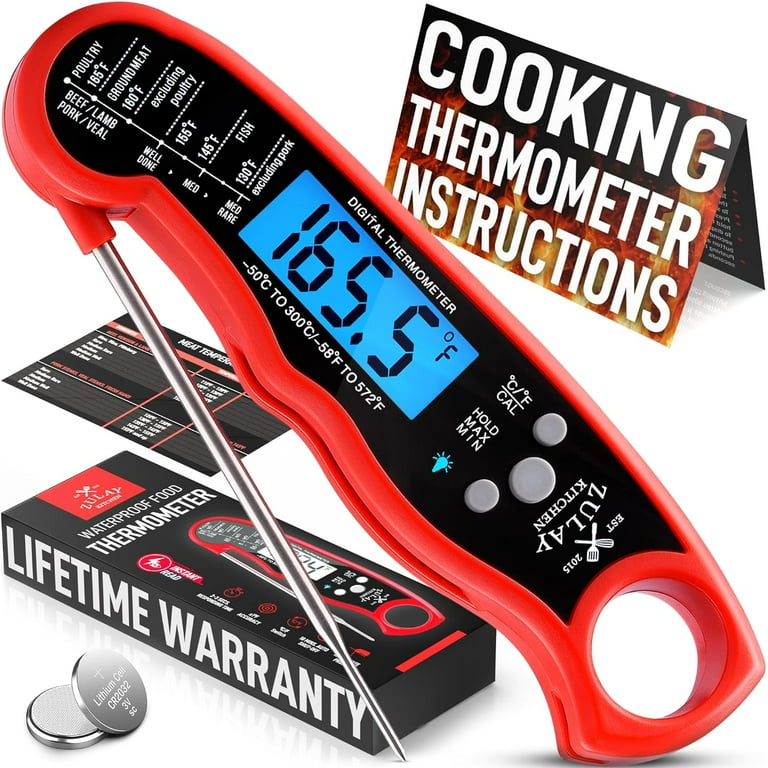
Credit: www.walmart.com
Practical Examples Of Accuracy In The Kitchen
Let’s see how accuracy matters in real cooking:
- Chicken breast: The safe minimum temperature is 165°F (74°C). If your thermometer reads 163°F, but it’s actually off by 2°F, you might undercook the chicken, risking foodborne illness.
- Steak doneness: Medium-rare steak is 130–135°F (54–57°C). A 5°F error can mean the difference between juicy and overcooked.
Here’s a quick look at how small errors can change food safety:
| Measured Temp | Actual Temp (if off by -3°F) | Food Safety Risk? |
|---|---|---|
| 165°F | 162°F | Possible undercooking |
| 145°F | 142°F | Unsafe for pork |
| 130°F | 127°F | Undercooked steak |
Two Insights Most Beginners Miss
- Thermometer accuracy is not just about the device, but also how you use it. Even the best thermometer will mislead you if you put the probe in the wrong spot or check the temperature too soon.
- Regular calibration is critical. Many people never test their thermometer after buying it, but small errors can develop over time. Testing with ice water or boiling water is a simple way to stay accurate.
Are Wireless And Bluetooth Thermometers As Accurate?
Wireless and Bluetooth digital thermometers are popular for grilling and smoking. They let you monitor temperature from your phone or a remote receiver. But are they as accurate as wired models?
Most reputable wireless models use the same types of sensors as standard digital thermometers. The main risk comes from signal interference or battery issues that can cause delays or incorrect readings. For best results, choose a model with strong reviews for both reliability and app performance.
Caring For Your Digital Meat Thermometer
To keep your thermometer accurate and long-lasting:
- Clean the probe after every use with warm, soapy water.
- Avoid submerging the entire device unless it’s waterproof.
- Store in a dry place to prevent corrosion.
- Replace batteries regularly to avoid weak readings.
- Check calibration every 3–6 months.
Neglecting care can lead to slow response times and inaccurate readings.
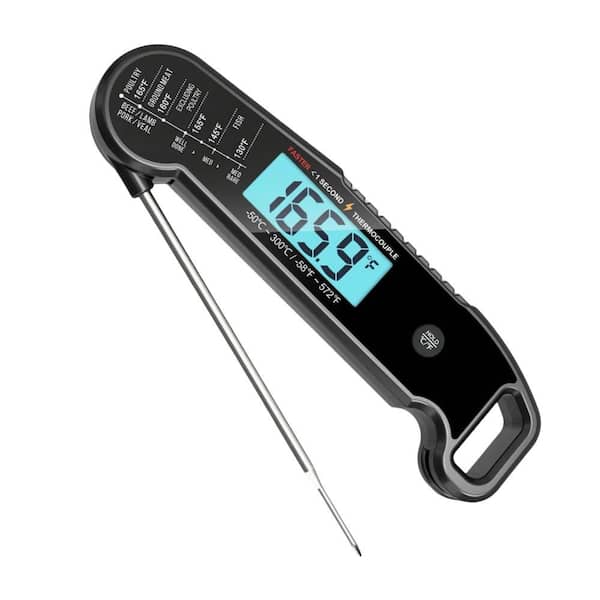
Credit: www.homedepot.com
When Should You Replace Your Thermometer?
If your thermometer consistently fails calibration tests, gives erratic readings, or the display is unreadable, it’s time for a replacement. Modern digital thermometers are affordable, and replacing them every few years is a good way to maintain accuracy.
The Bottom Line: Can You Trust Digital Meat Thermometers?
For most people, yes—digital meat thermometers are accurate enough for home and even professional cooking. When you use a reputable brand, calibrate regularly, and follow best practices, you can trust your thermometer to keep your food safe and delicious. They’re a key tool for anyone who cares about quality and safety in the kitchen.
For more technical details on thermometer technology and food safety, see the Wikipedia entry on food thermometers.
Frequently Asked Questions
How Often Should I Calibrate My Digital Meat Thermometer?
It’s smart to check calibration every 3–6 months, or before any big cooking event. Use ice water and boiling water tests to confirm accuracy.
Can A Digital Meat Thermometer Go Bad?
Yes, over time, sensors can degrade, or electronics can fail. If your thermometer gives inconsistent readings or fails calibration checks, replace it.
Why Do I Get Different Readings In Different Parts Of The Meat?
Meat does not cook evenly. The thickest part will heat up last. Always insert the probe into the center of the thickest part, away from bone and fat, for the most accurate reading.
Are Expensive Thermometers Worth It?
Higher-end thermometers often offer better accuracy, faster response, and more durability. For frequent cooks, they are usually worth the investment.
Can I Use My Meat Thermometer For Other Foods?
Yes, digital meat thermometers work well for many foods—baked goods, candy, or even checking water temperature for brewing. Just be sure to clean the probe thoroughly between uses.