Choosing the right set of kitchen utensils can transform your cooking experience. The right tools make food preparation faster, easier, and more enjoyable. But with so many options, materials, and brands in stores and online, it’s easy to feel overwhelmed.
Whether you’re stocking a kitchen for the first time or upgrading your current set, understanding what matters most can save you money, time, and frustration.
Why Kitchen Utensils Matter
Kitchen utensils are not just about style or matching colors. The right set helps you cook more efficiently and safely. For example, a flimsy spatula can melt or break, making it harder to flip food. A poorly designed whisk can leave lumps in your batter.
On the other hand, quality utensils can prevent burnt fingers, scratched pans, or wasted ingredients. Good tools last for years and often make cooking more enjoyable.
Many beginners overlook how much ergonomics matter. If you spend a lot of time in the kitchen, a comfortable handle can prevent tired hands or even injury. Also, utensils designed for nonstick pans (like silicone or wood) avoid damaging your cookware—a detail that can save you from replacing expensive pots and pans sooner than needed.
Types Of Kitchen Utensils: What You Really Need
It’s tempting to buy large sets with dozens of pieces, but most home cooks only need a few essential items. Here’s a breakdown of the basics:
| Utensil | Main Use | Recommended Material |
|---|---|---|
| Spatula (turner) | Flipping, sautéing | Silicone, stainless steel, wood |
| Ladle | Serving soups, stews | Stainless steel, silicone |
| Slotted spoon | Draining food | Stainless steel, nylon |
| Whisk | Mixing, beating | Stainless steel, silicone coated |
| Tongs | Grabbing, turning food | Stainless steel, silicone tips |
| Peeler | Peeling vegetables | Stainless steel, ceramic blade |
For most kitchens, 8-10 high-quality pieces cover 90% of daily cooking tasks. Remember, you can always add more specialized tools (like a zester or pasta fork) later if you need them.
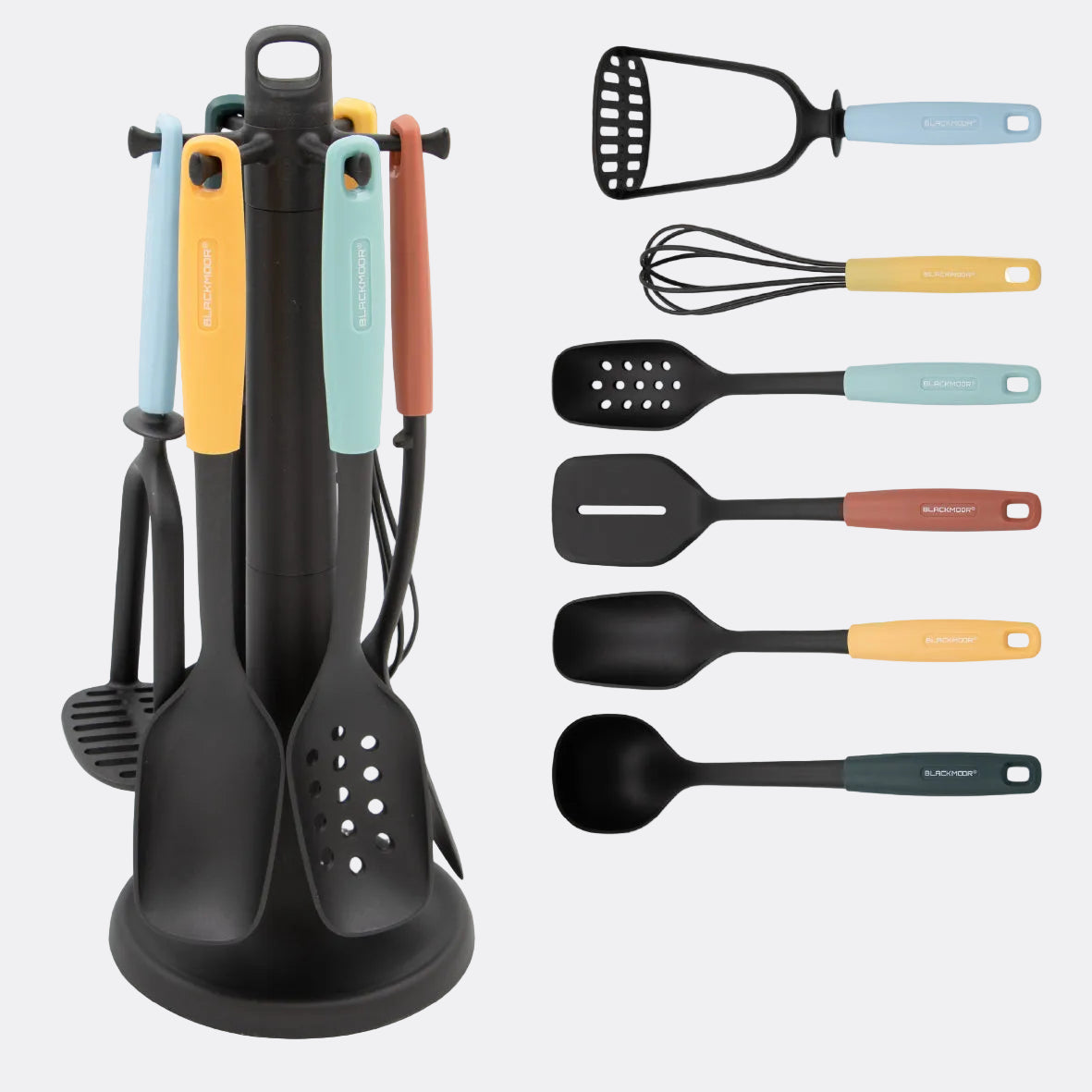
Credit: blackmoorhome.co.uk
Material Matters: Pros And Cons
The material of your kitchen utensils affects durability, safety, and even taste. Here’s a closer look:
| Material | Pros | Cons |
|---|---|---|
| Stainless Steel | Strong, heat-resistant, dishwasher safe | Can scratch nonstick pans, heavy |
| Silicone | Heat-resistant, non-scratch, flexible, colorful | Not as sturdy for heavy tasks, can absorb odors |
| Wood | Gentle on cookware, eco-friendly, won’t melt | Needs hand washing, can stain or crack |
| Nylon/Plastic | Inexpensive, gentle on pans, lightweight | Can melt, less durable, may absorb stains/odors |
Non-obvious insight: Some cheap plastic utensils contain materials that can leach chemicals at high temperatures. Always choose BPA-free plastics or, when possible, stick with silicone or stainless steel.
Key Factors To Consider
When you’re ready to buy a set, keep these factors in mind:
1. Your Cooking Style
Do you cook often, or just sometimes? Are you a beginner, or do you enjoy trying new recipes and techniques? Serious cooks may need more specialized tools, while occasional cooks can get by with the basics.
2. Type Of Cookware
If you use nonstick pans, avoid stainless steel or metal utensils, which can scratch the surface. Silicone, nylon, or wood are better choices. For cast iron or stainless steel pans, any material works, but metal utensils are best for scraping or flipping.
3. Number Of Pieces
More is not always better. Large sets often include tools you’ll rarely use. Focus on sets with essential pieces, or build your own set by buying items individually.
4. Comfort And Grip
Handles should feel comfortable and secure, even when wet or oily. Try holding a few utensils before buying, or check for ergonomic designs online. Some utensils have rubber or silicone grips for extra comfort.
5. Heat Resistance
Not all utensils are safe at high temperatures. Check the product details—silicone utensils should handle at least 400°F (204°C), and stainless steel can handle much more. Low-quality plastic can melt and contaminate food.
6. Maintenance And Cleaning
Are the utensils dishwasher safe? Do they stain easily? Wooden utensils require hand washing and regular oiling to prevent cracking. Stainless steel and silicone are usually easier to clean.
7. Storage Options
Some sets come with a holder or hanging loops. If you have limited kitchen space, look for stackable or compact designs.
Practical tip: If you cook daily, avoid sets that include only one of each utensil. It’s often handy to have two spatulas or spoons, especially when preparing multiple dishes.
Comparing Set Vs. Individual Purchases
You can buy kitchen utensils as a set or one by one. Here’s a quick comparison to help you decide:
| Buying Option | Pros | Cons |
|---|---|---|
| Set | Matches in style and color, often cheaper per piece, convenient | Includes rarely used items, may have lower quality overall |
| Individual | Customizable, pick best brand for each tool, higher quality possible | Can cost more, pieces may not match, takes more time to choose |
Non-obvious insight: Some premium brands sell “open stock” utensils, allowing you to build a high-quality, matching set without buying unwanted extras.
Budget: How Much Should You Spend?
Utensil sets range from $15 for a basic plastic set to over $200 for premium brands. Most home cooks find the best balance of quality and price between $40 and $80. Don’t be tempted by very cheap sets—they often break, melt, or warp quickly.
High-end sets can be worth it if you cook daily and want tools that last years. If you’re just starting, a mid-range set with the essentials is a smart choice. You can always upgrade or add specialized tools as you gain experience.

Credit: www.carawayhome.com
Brand And Warranty
Well-known kitchen brands like OXO, Cuisinart, KitchenAid, and All-Clad often offer better durability and design. Look for products with a warranty—this shows the company stands behind its quality.
Some brands offer lifetime warranties, but read the fine print. Damage from misuse (like melting a spatula on a hot burner) is usually not covered.
Common Buyer Mistakes To Avoid
- Buying for looks, not function. Stylish utensils are nice, but comfort and durability matter more.
- Choosing the wrong material. Metal utensils on nonstick pans is a common error that ruins cookware.
- Buying large sets with useless tools. Many sets include items you’ll never use, like corn holders or butter spreaders.
- Ignoring heat resistance. Cheap plastic or nylon tools can melt when left in a hot pan.
- Not considering storage. Oversized utensils or sets without a holder can clutter your kitchen.
Environmental Impact
If you care about sustainability, look for utensils made from bamboo, recycled materials, or certified sustainable wood. Stainless steel is also recyclable and lasts many years. Avoid single-use or disposable utensils.
Cleaning And Care Tips
- Wash new utensils before first use.
- Avoid soaking wooden utensils.
- Dry all utensils thoroughly to prevent mold or rust.
- Use mild soap—harsh cleaners can damage silicone or wood.
- Store utensils in a clean, dry holder or drawer.
Taking care of your utensils ensures they last longer and stay safe for food contact.

Credit: hestanculinary.com
When To Replace Your Kitchen Utensils
Even the best utensils wear out over time. Replace tools if you notice:
- Cracks or splinters in wood
- Melted or warped plastic/silicone
- Rust on metal parts
- Loose handles or parts
Old or damaged utensils can harbor bacteria or break during use, causing safety risks.
Where To Buy Kitchen Utensils
You can find quality utensils at kitchen stores, big box retailers, or online. Shopping in person lets you feel the handles and check quality, but online stores offer more variety and reviews from other buyers. Reputable sites like Amazon, Williams Sonoma, and Bed Bath & Beyond are good options.
For more insights into kitchen utensil materials and safety, check out this Wikipedia article.
Frequently Asked Questions
What Are The Essential Kitchen Utensils For A Beginner?
Beginners need a spatula, slotted spoon, ladle, tongs, whisk, peeler, and a basic can opener. These cover most daily cooking tasks. As you cook more, you can add items like a grater or garlic press.
Are Silicone Utensils Safe For Cooking?
Yes, silicone utensils are safe if they are high-quality and food-grade. They withstand high temperatures (usually up to 400°F or more), don’t scratch cookware, and are easy to clean. Avoid very cheap silicone that smells strongly of chemicals.
How Do I Know If A Utensil Is Dishwasher Safe?
Check the product packaging or manufacturer’s instructions. Most stainless steel and silicone utensils are dishwasher safe. Wood and some plastics should be washed by hand to avoid warping or cracking.
Can I Use Metal Utensils On All Cookware?
No. Metal utensils can scratch and ruin nonstick or ceramic-coated pans. Use silicone, nylon, or wood on these surfaces. Metal is fine for stainless steel or cast iron cookware.
How Do I Organize My Kitchen Utensils?
Use a countertop holder for frequently used utensils and a drawer organizer for others. Hanging racks or magnetic strips can also save space. Avoid overfilling drawers—this can make it hard to find what you need quickly.
Choosing the right set of kitchen utensils isn’t just about buying tools—it’s about making your kitchen a place where cooking is easier, safer, and more fun. Take your time, focus on quality over quantity, and remember that the best utensil set is one that matches your own cooking habits and kitchen needs.
With the right utensils in hand, you’ll be ready to tackle any recipe and enjoy the process every step of the way.