If you love coffee, you know a good espresso can make your day. But owning an espresso machine is not just about brewing rich, aromatic shots. Regular cleaning is essential if you want your machine to last, taste great, and run safely.
Many people underestimate how fast coffee oils, milk, and hard water can build up inside. This not only changes the flavor but can cause expensive breakdowns. Whether you’re a home barista or manage a small café, learning how to clean an espresso machine the right way is a must.
Let’s break down every step, from daily wipe-downs to deep cleaning, so you can enjoy your espresso at its best every time.
Why Cleaning Your Espresso Machine Matters
Espresso machines are precise devices. Even tiny amounts of old coffee or milk can spoil your drink or damage parts. If you skip cleaning, you might notice your espresso tastes bitter or odd. Over time, blockages from scale or residue can cause the machine to stop working.
Regular cleaning does much more than just protect flavor. It:
- Prevents bacteria and mold growth inside tubes and parts
- Reduces the risk of parts breaking or needing expensive repairs
- Keeps the steam wand working so you can froth milk safely
- Extends your machine’s lifespan, sometimes by years
One overlooked fact: manufacturers may void your warranty if they see signs of neglect. So, a few minutes of cleaning can save you a lot of money and stress later.
Understanding Key Espresso Machine Parts
Before you start, it helps to know the main parts that need cleaning. Most espresso machines share similar components, though high-end and commercial models may have extra features.
- Portafilter – The handle holding the basket for ground coffee.
- Filter Basket – Where you place the coffee grounds.
- Group Head – The part where hot water comes out to brew espresso.
- Steam Wand – Used to froth and steam milk.
- Drip Tray – Catches spills and excess water.
- Water Reservoir – Holds the water for brewing.
- Shower Screen – Distributes water evenly over the coffee.
- Gasket – A rubber ring that seals the group head and portafilter.
- Descale Valve – Found on some machines, for removing mineral build-up.
Knowing these helps you clean thoroughly and spot problems early.
Daily Cleaning Routine
Cleaning your espresso machine every day prevents buildup and keeps flavors pure. Here’s a routine you can follow in just a few minutes.
1. Clean The Portafilter And Basket
After each use, knock out old coffee grounds and rinse the portafilter and basket under hot water. Use a brush or cloth to remove any stuck grounds. Dry them before the next shot to avoid soggy coffee pucks.
2. Flush The Group Head
Run water through the group head without the portafilter attached. This washes away stray grounds and oils. Do this after every shot and again at the end of the day.
3. Wipe The Steam Wand
Milk can dry fast and clog the steam wand. Right after steaming, wipe the wand with a damp cloth. Then, open the valve to let out steam for a second. This clears milk inside the tip.
4. Empty The Drip Tray
Spilled espresso and water can get sticky and smell bad. Remove and wash the drip tray with warm, soapy water. Rinse and dry before replacing.
5. Rinse The Water Reservoir
If your machine has a removable water reservoir, empty it and rinse with fresh water. This reduces slime and keeps water tasting clean.
Weekly Cleaning Steps
A deeper clean once a week keeps your machine running smoothly. These steps reach areas daily cleaning misses.
1. Soak Portafilter And Basket
Fill a bowl with hot water and add a small amount of espresso machine cleaner or mild detergent. Soak the portafilter and basket for 15–20 minutes. Scrub with a brush and rinse well.
2. Clean The Shower Screen
Use a group head brush to scrub around the shower screen. If it’s removable, unscrew and soak it in hot water with cleaner. Rinse and dry before replacing.
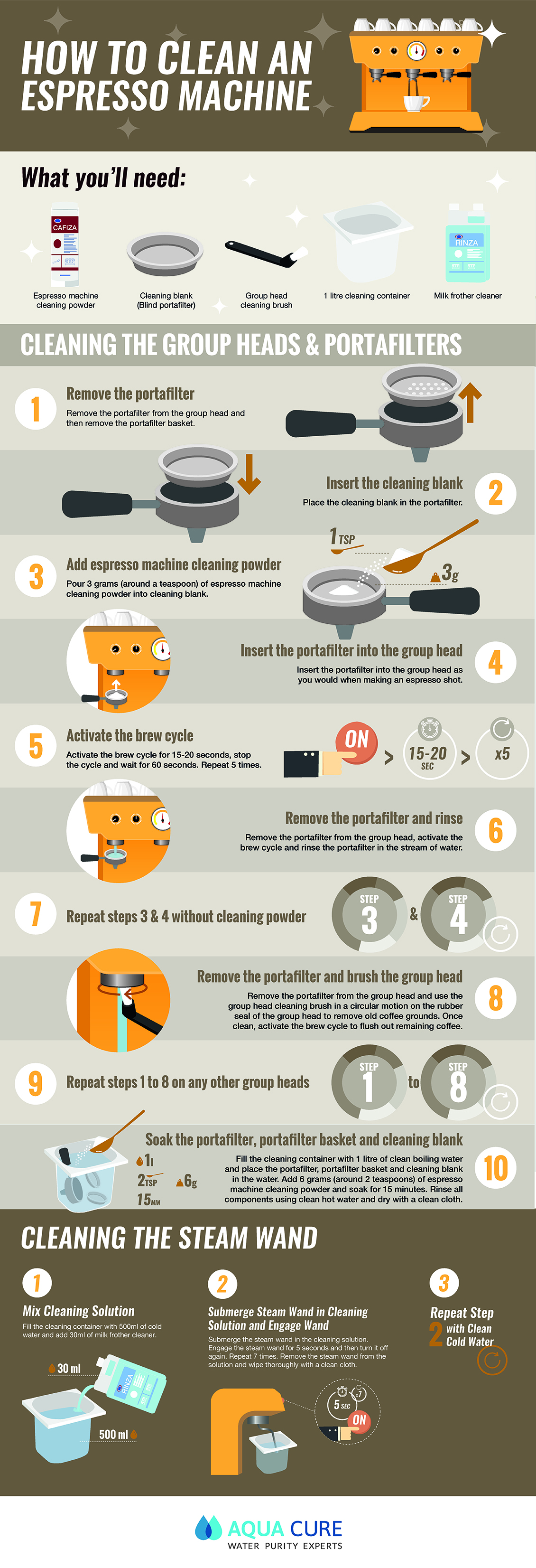
3. Backflush The Machine
Most semi-automatic and commercial machines can be backflushed. This means forcing water and cleaner through the system to wash out hidden oils.
- Insert a blind filter (no holes) in the portafilter.
- Add a small amount of backflush cleaner.
- Lock in the portafilter and run the pump for 10 seconds.
- Stop, wait a few seconds, and repeat 4–5 times.
- Remove and rinse everything well.
Check your machine’s manual before backflushing—some entry-level models are not designed for this.
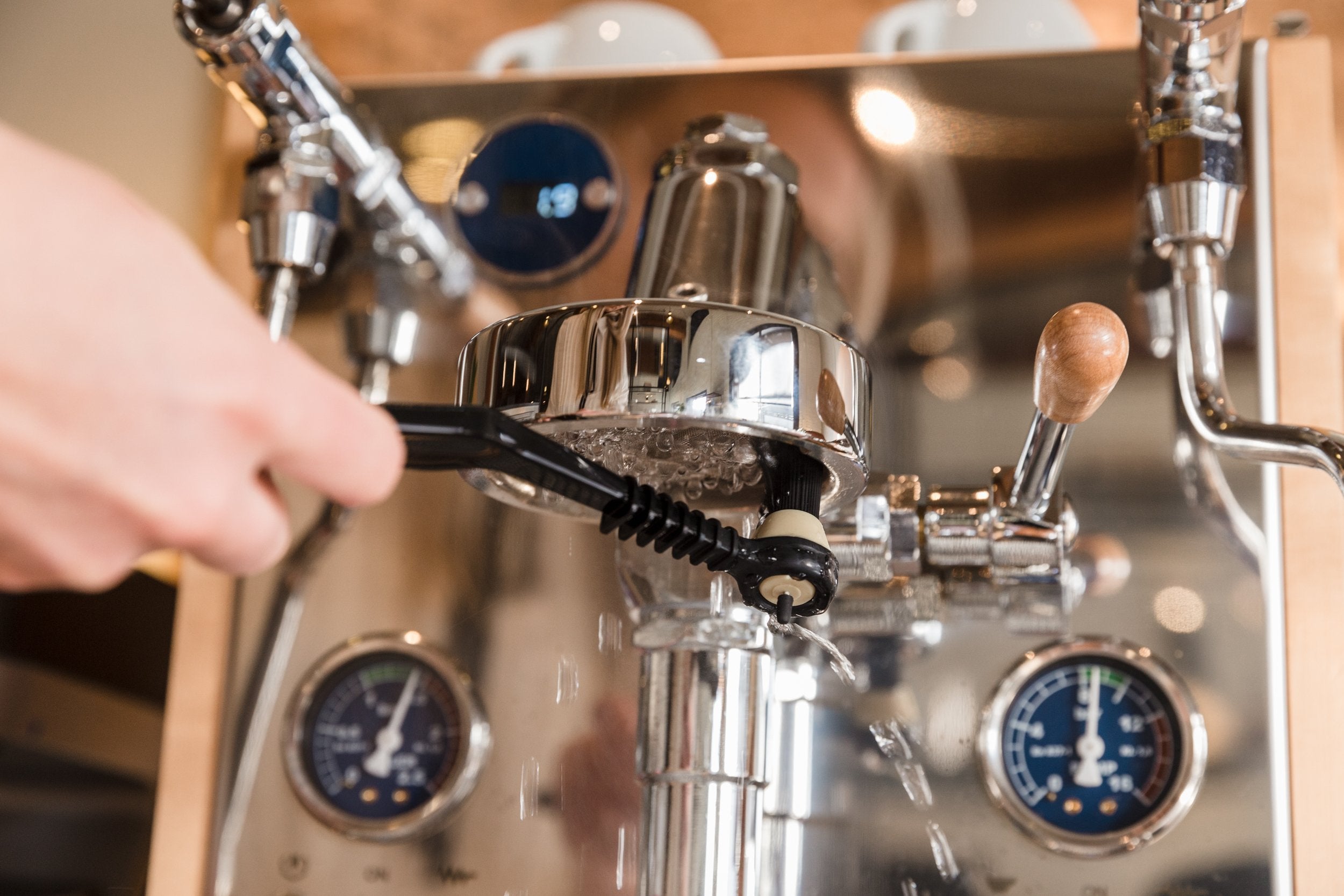
4. Clean The Gasket
Coffee oils can make the gasket sticky and cause leaks. Use a small brush or cloth to clean around the group head gasket.
Credit: clivecoffee.com
Monthly Deep Cleaning
About once a month, you need to remove mineral deposits (scale) and do a total clean. Neglecting this can ruin the boiler and pipes.
Descaling The Machine
Hard water leaves scale inside, which can block heat and damage parts. Use a descaling solution (follow the package instructions) or mix 1 part white vinegar with 1 part water. Fill the water reservoir and run the brew cycle without coffee, letting the solution flow through the system. Repeat until the reservoir is empty. Then, rinse by running 2–3 full tanks of clean water through the machine.
Removing And Cleaning The Water Tank
Take out the water reservoir and wash with mild soap, then rinse thoroughly. Check for slime or mold, especially if you don’t use the machine daily.
Inspecting And Cleaning The Steam Wand Tip
Unscrew the steam wand tip and soak it in hot water. Use a pin or cleaning tool to clear the holes. This is a step many people miss, and it can make your steam wand work poorly if blocked.
Cleaning Different Types Of Espresso Machines
Not all espresso machines are the same. Here’s how cleaning varies by type.
Manual Lever Machines
Manual machines are simple but need careful cleaning. Always wipe the lever and lubricate parts if the manual suggests it. Never force the lever if it feels sticky—clean and check for old grounds first.
Semi-automatic Machines
These are the most common home machines. Follow daily, weekly, and monthly steps as above. Be sure to check for a backflush option.
Super-automatic Machines
These grind, brew, and froth milk automatically. They have cleaning programs—run them regularly. Remove and wash the brew group (if possible), clean the milk system, and descale as the machine tells you. Always empty the used coffee grounds container and drip tray.
Pod Or Capsule Machines
These are low-maintenance but still need care. Rinse the water reservoir, run a cleaning cycle with water, and descale monthly. Wipe the pod holder and clean the spout.
Credit: www.aquacure.co.uk
Comparing Cleaning Needs For Espresso Machine Types
To make it easy to see how different machines compare, here’s a summary:
| Machine Type | Daily Cleaning | Backflush Needed? | Descale Frequency |
|---|---|---|---|
| Manual Lever | Wipe, flush, rinse parts | No | Every 1–2 months |
| Semi-Automatic | Full daily routine | Yes (if supported) | Every 1–2 months |
| Super-Automatic | Run auto-clean, clean parts | Programmed cycle | As prompted by machine |
| Pod/Capsule | Rinse, wipe, empty tray | No | Every 1–2 months |
Choosing The Right Cleaning Products And Tools
Not all cleaning products are safe for espresso machines. Some household cleaners contain chemicals that can damage metal or leave bad tastes. Here’s what you should look for:
- Espresso machine cleaner powder or tablets – Designed to remove coffee oils.
- Descaling solution – Removes mineral deposits, safe for boilers and pipes.
- Group head cleaning brush – Cleans tight spaces and gaskets.
- Microfiber cloths – Lint-free, great for wiping surfaces.
- Blind filter – For backflushing (usually comes with machine).
- Milk system cleaner – For machines with automatic milk frothing.
Never use bleach, abrasive sponges, or dish soap with strong scents.
Comparison Of Cleaning Product Types
Here is a simple comparison of common cleaning products:
| Product Type | Main Use | Safe for Espresso Machines? | Notes |
|---|---|---|---|
| Espresso Machine Cleaner | Remove coffee oils | Yes | Use as directed |
| Descaler Solution | Remove scale | Yes | Check for aluminum boilers |
| Vinegar | Descale | Sometimes | Can damage aluminum, leaves odor |
| Dish Soap | General cleaning | Only for trays/tanks | Rinse well, avoid strong scents |
| Bleach | Disinfect | No | Corrosive, unsafe for machines |
Step-by-step Guide: How To Clean An Espresso Machine
Let’s walk through a full cleaning session using a common semi-automatic machine. These steps ensure you cover every area that can affect taste or performance.
Step 1: Gather Supplies
You’ll need:
- Espresso machine cleaner
- Descaling solution (or vinegar/water mix if safe)
- Group head brush
- Microfiber cloth
- Blind filter (if your machine supports backflushing)
Step 2: Clean Portafilter And Basket
- Remove the portafilter and basket.
- Rinse under hot water, scrubbing with a brush.
- If greasy, soak in cleaner for 10–20 minutes, then rinse and dry.
Step 3: Backflush The Group Head
- Put a small amount of espresso cleaner in the blind filter.
- Lock into the group head and run the pump for 10 seconds.
- Stop, wait, and repeat 4–5 times.
- Remove, rinse, and run the pump with just water to flush out residue.
Step 4: Clean The Steam Wand
- Wipe the steam wand with a damp cloth after every use.
- Once a week, unscrew the tip and soak in hot water.
- Use a pin to clear any blocked holes.
- Run steam for a few seconds to clear milk inside.
Step 5: Empty And Wash Drip Tray And Water Reservoir
- Take out the drip tray and water reservoir.
- Wash with mild soap, rinse, and dry thoroughly.
Step 6: Descale The Machine
- Fill the water reservoir with descaling solution.
- Run the brew cycle to let solution flow through the system.
- Let sit for 15–20 minutes if recommended.
- Flush with 2–3 tanks of clean water to remove all chemicals.
Step 7: Clean Outside Surfaces
- Wipe the exterior with a microfiber cloth.
- Pay attention to buttons, knobs, and display panels.
Common Mistakes To Avoid
Even experienced coffee lovers make cleaning errors that can harm their machines. Here’s what to watch out for:
- Skipping backflushing – Not all machines need it, but many do. Ignoring this leads to clogs and bitter espresso.
- Using the wrong cleaner – Bleach, strong soaps, or ammonia can corrode parts.
- Neglecting the steam wand tip – Old milk hardens inside, blocking steam and causing unsafe frothing.
- Forgetting to rinse after descaling – Leftover chemicals ruin the taste and may damage the boiler.
- Not cleaning the gasket and group head – Grounds here cause leaks and poor seals.
A good rule: if it touches water, coffee, or milk, it needs regular cleaning.

Credit: perfectdailygrind.com
How Clean Water And Storage Matter
One thing many people miss—water quality. Hard water causes scale faster, so use filtered or bottled water if possible. Don’t leave water sitting in the reservoir for days; bacteria can grow quickly.
If you store your espresso machine for a while, empty all water, clean every part, and leave it dry. This prevents mold and keeps the machine fresh.
Benefits Of Regular Espresso Machine Cleaning
A well-cleaned espresso machine offers more than just great taste:
- Longer machine life – Avoids expensive repairs and keeps your investment safe.
- Consistent espresso quality – Every shot tastes as good as the last.
- Safer operation – No bacteria or mold in the milk or water systems.
- Lower energy use – Scale makes heating less efficient, so a clean machine uses less power.
Some coffee shops report machines lasting twice as long with regular maintenance compared to those that are neglected.
Real-world Example: How Cleaning Improved A Café’s Espresso Quality
A small café in Seattle noticed their espresso had become bitter and inconsistent. After checking their cleaning routine, they realized backflushing was skipped and the steam wand was rarely deep cleaned. They began following a strict daily and weekly cleaning process, including backflushing and soaking all milk and coffee contact parts.
Within a week, customers commented the espresso tasted “fresh” and “smoother. ” The staff also noticed the machine ran quieter and heated faster. It’s a reminder that even small cleaning changes can make a big difference.
Professional Maintenance: When To Call A Technician
Even with perfect home cleaning, some jobs need a pro. If you notice any of these, call a service technician:
- Water leaks from unusual places
- Machine makes loud, strange noises
- Pressure drops or is hard to control
- No steam, or steam wand is blocked after cleaning
- Electrical issues or burning smells
A yearly professional check can also catch hidden issues and keep your machine running safely.
Frequently Asked Questions
How Often Should I Descale My Espresso Machine?
Most machines need descaling every 1–2 months, but it depends on water hardness and usage. If you use hard tap water, descale more often. Some machines have indicators for when to descale—follow these alerts for best results.
Can I Use Vinegar To Descale My Espresso Machine?
Vinegar works for some machines, but it can damage aluminum boilers and leave a strong smell. It’s safer to use a commercial descaling solution designed for espresso machines. Check your manufacturer’s guidelines before using vinegar.
What Happens If I Don’t Clean My Espresso Machine Regularly?
Neglecting cleaning leads to:
- Bitter or sour espresso
- Milk residue causing bacteria growth
- Scale buildup that blocks water flow and damages the boiler
- Expensive repairs or a broken machine
It also may void your warranty.
Why Does My Espresso Taste Bad Even After Cleaning?
Sometimes old coffee oils or scale are still inside, or the water you use is poor quality. Try a deep clean with backflushing and descaling, and use filtered water. Also, check the freshness of your coffee beans.
Where Can I Find Official Cleaning Advice For My Espresso Machine?
Always check your machine’s manual. For more, you can visit the Home-Barista website, which has expert guides and forums for all machine types.
Keeping your espresso machine clean is not difficult but does require regular care. By following these steps, you’ll get better coffee, avoid repairs, and enjoy your espresso for years to come. Don’t wait until problems appear—make cleaning a habit and taste the difference in every cup.