A microwave is one of the most used kitchen appliances. It saves time, heats food fast, and makes cooking easier. But what if your microwave suddenly stops heating? You press the start button, hear the familiar hum, but your food stays cold. This problem is common, but it can feel frustrating, especially when you need a quick meal. Understanding why your microwave not heating is important before you try to fix it.
In this guide, you’ll learn how to diagnose the issue, what steps you can take at home, and when to call an expert. Whether you’re a beginner or have some experience with appliances, you’ll find clear advice and practical solutions to get your microwave working again.
Understanding How A Microwave Heats Food
Before you start fixing, it helps to know how microwaves work. A microwave oven uses microwave radiation to heat food. The key component is the magnetron, which produces microwaves. These waves bounce inside the oven and heat water molecules in the food. This process makes food hot quickly.
If your microwave turns on but does not heat, the problem is usually with one of these parts:
- Magnetron
- Diode
- Capacitor
- Door switch
- Control board
- High voltage transformer
Each part plays a role in producing and delivering heat. If any of these fail, your microwave won’t heat properly.
Safety First: What You Must Know
Microwaves use high voltage. Even when unplugged, some parts can hold dangerous electricity. Before you open or touch your microwave:
- Unplug the microwave from the wall.
- Let it sit for at least 15 minutes.
- If you plan to open the case, discharge the capacitor. The capacitor can keep a strong charge, which can shock or injure you.
- Wear rubber gloves and use insulated tools.
If you’re unsure or not comfortable, it’s best to call a professional. Some fixes are simple, but others require electrical knowledge.
Quick Checks Before You Start Repairs
Sometimes, the issue is minor and easy to fix. Try these basic checks first:
- Is the microwave plugged in?
- Is the door closed properly?
- Is the power outlet working?
- Is the timer set correctly?
- Is the turntable working?
If all these are fine, but the microwave still doesn’t heat, move to the next steps.
Common Reasons Why Your Microwave Is Not Heating
Several parts can fail and stop your microwave from heating. Here are the most common reasons:
1. Faulty Magnetron
The magnetron generates microwaves. If it fails, the oven will run but won’t heat. Magnetrons can break due to age, overheating, or power surges.
2. Burned Diode
The diode helps turn electricity into the right form for the magnetron. A burned diode stops this process, so no heat is produced.
3. Defective Capacitor
The capacitor stores and releases energy to the magnetron. If it fails, the microwave won’t heat.
4. Broken Door Switch
Microwaves have door switches for safety. If a switch doesn’t work, the magnetron won’t turn on, even if everything else seems normal.
5. Faulty High Voltage Transformer
The transformer sends high voltage to the magnetron. If it’s damaged, the microwave won’t heat.
6. Bad Control Board
The control board manages all functions. If it’s faulty, it might not send the right signals to start heating.
7. Blown Fuse
Microwaves have several fuses. If one blows, it can stop the heating function.
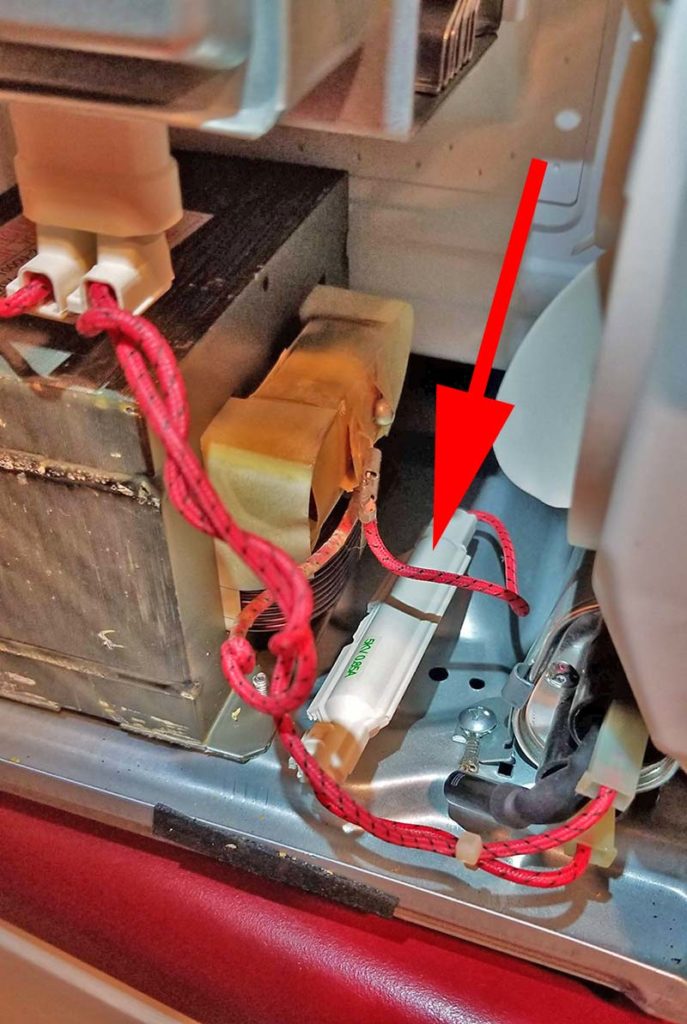
8. Defective Thermoprotector
Some microwaves have a thermoprotector. If this overheats, it cuts off power to protect the oven, stopping heating.
Credit: thecuriousstones.com
Diagnosing The Problem: Step-by-step Guide
To fix your microwave, you need to find out which part is causing the trouble. Here is a clear approach:
Step 1: Check The Power Supply
Plug the microwave into a working outlet. If the display lights up, power is fine. If not, try a different outlet.
Step 2: Check The Door Switches
Open and close the door slowly. Listen for clicks. Most microwaves have 2–3 switches. If you don’t hear clicks, the switch may be faulty.
Step 3: Test With Water
Fill a microwave-safe cup with water. Place it in the oven and run for 1–2 minutes. If the water stays cold, the heating system is not working.
Step 4: Inspect The Fuse
Unplug the microwave. Remove the cover. Locate the fuse (usually near the power cord). Use a multimeter to test for continuity. If the fuse is blown, replace it.
Step 5: Check The Diode
Diodes are usually attached to the capacitor. Use a multimeter to test. If the diode is burned, replace it.
Step 6: Examine The Magnetron
The magnetron is a metal box with fins and wires. It’s often located near the back. Use a multimeter to check for continuity between terminals. If there’s no reading, the magnetron is bad.
Step 7: Test The Capacitor
Capacitors can be dangerous. After unplugging and discharging, use a multimeter set to resistance. If the reading does not change or stays infinite, the capacitor is faulty.
Step 8: Inspect The Control Board
Look for burnt spots or broken connections. Sometimes, the board can be visually checked, but testing often needs expert tools.
Step 9: Check The High Voltage Transformer
Test with a multimeter for continuity. If the reading is zero or infinite, the transformer is bad.
Comparison: Common Microwave Problems And Symptoms
Here’s a simple table to help you match symptoms with possible causes:
| Problem | Likely Cause | How to Check |
|---|---|---|
| Microwave runs, but food stays cold | Magnetron, diode, capacitor | Multimeter test, water test |
| Microwave does not turn on | Fuse, power supply | Check outlet, test fuse |
| Microwave turns off during use | Thermoprotector, control board | Visual check, reset after cooling |
| Microwave display works, but no heating | Door switch, control board | Listen for clicks, inspect board |

Credit: www.youtube.com
How To Fix Each Problem: Step-by-step Solutions
Now that you know the possible causes, let’s look at how to fix each issue.
Magnetron Replacement
- Unplug the microwave.
- Remove the cover.
- Locate the magnetron (usually a metal box with cooling fins).
- Disconnect the wires.
- Unscrew and remove the magnetron.
- Install a new magnetron.
- Reconnect wires and screws.
- Replace cover and plug in.
- Test with water.
Magnetron replacement can cost $40–$100 for parts. If you buy a new microwave, average prices are $100–$300.
Diode Replacement
- Unplug and open the microwave.
- Locate the diode near the capacitor.
- Remove the old diode (usually one screw).
- Install a new diode, making sure the direction matches.
- Replace the cover and test.
Diodes are cheap ($5–$15). Make sure you buy the correct type.
Capacitor Replacement
- Unplug and discharge the capacitor (use a screwdriver with a rubber handle).
- Remove the wires from the capacitor.
- Unscrew and remove the capacitor.
- Install a new one.
- Connect wires and screws.
- Close the cover and test.
Capacitors cost $10–$25. Be careful with discharge—this is the most dangerous part.
Door Switch Replacement
- Unplug the microwave.
- Remove the cover.
- Locate the door switches near the latch.
- Unscrew and pull out the faulty switch.
- Install a new switch.
- Replace screws and cover.
- Test for proper closing and heating.
Door switches cost $5–$10. Always check that the door closes tightly.
Fuse Replacement
- Unplug the microwave.
- Open the cover.
- Find the fuse (usually glass or ceramic).
- Remove and replace with the same type and rating.
- Replace cover and test.
Fuses are cheap ($2–$5). Use only the correct rating.
High Voltage Transformer Replacement
- Unplug and discharge the capacitor.
- Remove the cover.
- Locate the transformer (large metal box with wires).
- Disconnect wires and screws.
- Remove the old transformer.
- Install a new one.
- Reconnect wires and screws.
- Replace cover and test.
Transformers cost $30–$80. If you’re unsure, get professional help.
Control Board Repair
Control boards are complex. If you see burnt spots, loose wires, or broken parts, you can sometimes replace the board. But often, this needs expert tools.
- Unplug the microwave.
- Open the cover.
- Locate the control board.
- Remove screws and connectors.
- Install a new board.
- Replace cover and test.
Boards cost $40–$150. Sometimes, repairs cost more than a new microwave.
When To Call A Professional
Some fixes, like replacing a fuse or door switch, are easy for beginners. But if the problem is with the magnetron, transformer, or control board, it’s safer to call a technician. Professionals can test high voltage parts, diagnose hidden issues, and ensure safety.
Average repair costs range from $50–$150, depending on the problem.
If your microwave is old (more than 8 years), replacing it can be smarter. New microwaves are more energy-efficient and safer.

Credit: www.youtube.com
Comparison: Repair Vs. Replacement
Here’s a quick comparison to help decide if you should fix your microwave or buy a new one:
| Repair | Replacement |
|---|---|
| Cheaper if only one part is faulty | More reliable if the microwave is old |
| Faster for minor issues | Comes with warranty and new features |
| Parts may not be available for older models | No risk of hidden damage |
| Can be done at home for simple fixes | Usually more expensive upfront |
How To Prevent Microwave Heating Problems
Prevention is better than repair. Here are tips to keep your microwave working:
- Don’t run empty: Running an empty microwave can damage the magnetron.
- Clean regularly: Food splatter can block vents and sensors.
- Avoid metal: Never use metal containers or foil.
- Close the door gently: Slamming can break switches.
- Don’t overload: Heating large items stresses parts.
- Check power supply: Use a stable outlet, avoid extension cords.
A well-maintained microwave can last 8–10 years.
Real-world Examples: Microwave Not Heating
Let’s look at two real cases:
Example 1: Door Switch Failure
Anna’s microwave turned on, but food stayed cold. She heard no click when closing the door. After opening the cover, she found a broken door switch. Replacing the switch ($7) fixed the problem.
Example 2: Magnetron Issue
Mike’s microwave ran but didn’t heat. After testing the magnetron, there was no continuity. He replaced the magnetron ($50), and the microwave worked. He learned that running the microwave empty had damaged the magnetron.
Data: Microwave Repair Costs And Lifespan
According to the US Department of Energy, the average microwave lasts 9 years. Common repair costs:
- Door switch: $5–$10 (parts), $30–$60 (labor)
- Fuse: $2–$5 (parts), $25–$50 (labor)
- Magnetron: $40–$100 (parts), $80–$150 (labor)
- Control board: $40–$150 (parts), $100–$200 (labor)
If repair costs are more than half the price of a new microwave, replacement is recommended.
Troubleshooting Checklist For Beginners
If you’re new to appliance repair, follow this simple checklist:
- Unplug the microwave.
- Check the power supply and outlet.
- Listen for door switch clicks.
- Test with water.
- Inspect fuses.
- Check the magnetron, diode, and capacitor.
- Decide if you feel safe with repairs—if not, call a technician.
Microwave Brands: Which Are Easier To Repair?
Some brands are easier to fix because parts are widely available. Here’s a quick overview:
| Brand | Repair Ease | Parts Availability |
|---|---|---|
| GE | Easy | High |
| Samsung | Moderate | Medium |
| Panasonic | Moderate | Medium |
| LG | Easy | High |
| Sharp | Moderate | Medium |
GE and LG are known for easy repairs and good support.
Non-obvious Tips Most Beginners Miss
- Microwave ovens hold charge even after unplugging. Always discharge the capacitor before touching any internal part.
- Door switch failures are more common than magnetron problems. If your microwave runs but doesn’t heat, check the door switches first.
- Running an empty microwave damages the magnetron quickly, even if it’s just for a few seconds.
What If Your Microwave Makes Noise But Doesn’t Heat?
If you hear buzzing or clicking but no heat, the problem is often the magnetron or diode. Sometimes, a faulty transformer can cause strange noises. If the noise is loud or smells like burning, unplug immediately and call a technician.
Environmental Impact: Repair Vs. Replace
Repairing your microwave helps reduce e-waste. According to the EPA, over 10 million microwaves are discarded in the US every year. If you can fix yours, you reduce waste and save money.
Strong Closing Paragraph
Fixing a microwave not heating can seem tricky, but with clear steps and careful attention, most people can diagnose the problem. Start with simple checks, listen for clues, and use the right tools. While some repairs are safe for beginners, others need expert help. Remember, safety comes first. If your microwave is old or expensive to fix, buying a new one may be smarter. With the guidance above, you can make informed decisions, save money, and keep your kitchen running smoothly. If you want more details on appliance repair, visit Wikipedia.
Frequently Asked Questions
Why Does My Microwave Run But Not Heat Food?
This is usually caused by a faulty magnetron, burned diode, or broken door switch. The oven may turn on and spin, but the key parts for heating are not working.
Can I Fix A Microwave Not Heating Myself?
Yes, some issues like door switch or fuse replacement are easy and safe for beginners. For high voltage parts (magnetron, transformer), it’s safer to call a professional.
How Much Does It Cost To Repair A Microwave That’s Not Heating?
Simple repairs (fuse, switch) cost $5–$50. Magnetron or control board repairs can cost $80–$200. If your microwave is old, replacement may be more cost-effective.
Is It Dangerous To Open A Microwave For Repair?
Yes, microwaves hold high voltage even after unplugging. Always discharge the capacitor and use insulated tools. If you’re unsure, call a technician.
What’s The Average Lifespan Of A Microwave Oven?
Most microwaves last 8–10 years. Regular cleaning and avoiding running empty can help yours last longer. Repairing instead of replacing helps reduce e-waste.