Skip to content
Learning how to hold a chef knife correctly is one of the most important skills in cooking. Many people, even those who cook often, struggle with this basic technique. The right grip can change your cooking experience. It makes cutting safer, faster, and more comfortable.
If you want to chop vegetables like a professional or avoid tired hands after prepping dinner, mastering this skill is essential.
This guide breaks down each step clearly. You’ll learn the best way to hold a chef knife, why it matters, and how it affects your cutting results. We’ll compare grips, share real examples, and answer common questions. By the end, you’ll know exactly what to do and what mistakes to avoid.
Whether you’re a beginner or you’ve cooked for years, this article will help you use your chef knife with confidence.
Why Knife Grip Matters
The grip is not just about comfort—it’s about safety and control. A chef knife is usually 8 to 10 inches long and weighs between 150–250 grams. If you hold it wrong, your hand gets tired fast, and you risk cutting yourself.
Professional chefs use a specific grip because it gives them:
- Better control over the blade
- Faster, smoother cuts
- Less hand fatigue
- Safer movement
A study by the Culinary Institute of America found that proper knife grip reduces accidents by over 30% in beginner kitchens. The right technique also keeps your knife sharp longer, since you use it more efficiently.
Anatomy Of A Chef Knife
Before learning the grip, you need to understand the parts of a chef knife:
| Part | Description |
|---|---|
| Blade | The sharp metal part used for cutting. |
| Handle | Where you hold the knife; made from wood, plastic, or metal. |
| Bollyster | The thick junction between the blade and handle, adds balance. |
| Spine | The top, blunt edge of the blade. |
| Tip | The pointy end used for precision tasks. |
Knowing these parts helps you understand where your fingers should go.
:max_bytes(150000):strip_icc()/20230821-SEA-HowtoHoldAKnife-AmandaSuarez-00-c9c3058f5f21473f9c20a37699fbce27.jpg)
Credit: www.seriouseats.com
The Pinch Grip: The Professional Way
Most experts recommend the pinch grip. This method gives you the best control and is used in top restaurants worldwide.
How To Do The Pinch Grip
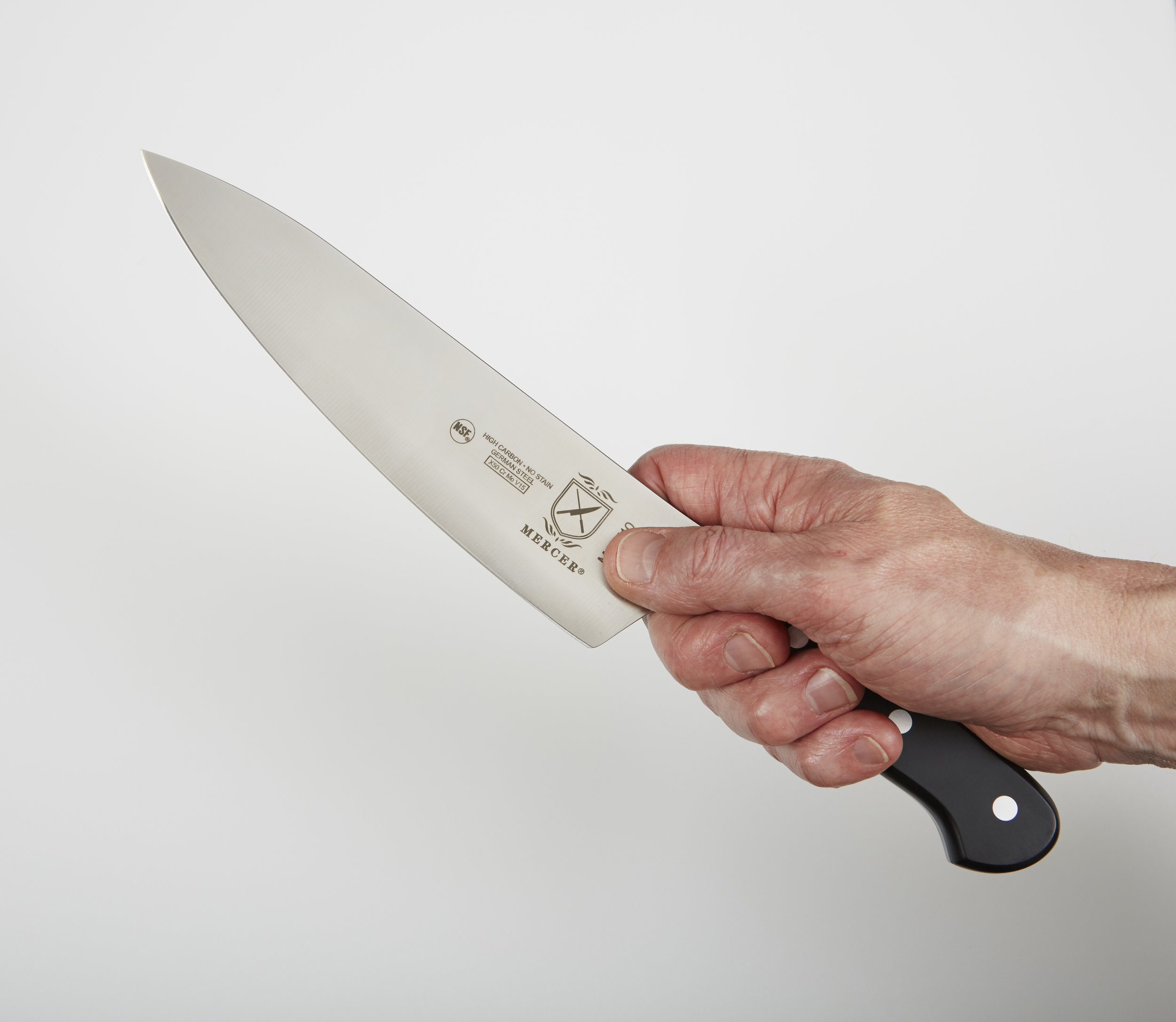
- Place your thumb and index finger on the sides of the blade, just above the bolster.
- Wrap your remaining three fingers around the handle.
- Make sure your fingers are relaxed, not tense.
- Your hand should feel balanced, not strained.
Here’s a simple example: Imagine you’re slicing a tomato. With the pinch grip, you guide the blade smoothly through the skin without crushing the fruit. This is difficult with other grips.
Why Beginners Often Miss This
Many people hold the handle only, keeping all fingers behind the blade. This makes the knife wobble and your cuts less accurate. The pinch grip lets your hand act as a guide for the blade. It feels strange at first, but after a few tries, it becomes natural.
Comparison: Pinch Grip Vs. Handle Grip
Let’s look at how these two grips compare:
| Feature | Pinch Grip | Handle Grip |
|---|---|---|
| Control | Excellent | Poor |
| Speed | Fast | Slow |
| Fatigue | Low | High |
| Safety | High | Low |
If you want to cut like a chef, use the pinch grip.
Step-by-step: Holding A Chef Knife
Let’s break down the process so you can practice at home:
- Pick up the knife: Place it on a flat surface. Use your dominant hand to pick it up.
- Position your thumb: Place your thumb on the side of the blade, just above the bolster.
- Place your index finger: Opposite your thumb, on the other side of the blade.
- Wrap your other fingers: Curl your remaining three fingers around the handle.
- Check your grip: The knife should feel steady. Your wrist should be straight.
- Practice moving the knife: Try slicing a cucumber or carrot slowly. Notice how much control you have.
A non-obvious tip: Don’t squeeze too hard. A relaxed grip works better and prevents tired hands.
Credit: www.theculinarypro.com
Common Mistakes Beginners Make
Even experienced cooks sometimes hold the knife wrong. Here are mistakes to watch for:
- Holding only the handle: This makes the blade feel heavy and unstable.
- Stretching fingers on the blade: This can lead to cuts.
- Gripping too tightly: Causes hand pain and fatigue.
- Bending wrist: Leads to poor cutting angles.
- Not adjusting for knife size: Small hands may need to pinch closer to the bolster.
If you find your cuts are uneven or your hand hurts, check your grip.
Other Knife Grips (and When To Use Them)
While the pinch grip is best for most tasks, there are situations where other grips work better.
The Handle Grip
This is the most common beginner grip. All fingers wrap around the handle. Use it for:
- Large chopping where speed is less important
- Heavy knives that need more stability
But remember, control is lower.
The Finger Grip
Some cooks place their index finger along the spine of the blade. This is useful for:
- Delicate slicing (like mushrooms or herbs)
- Short blades
However, it can tire your hand quickly.
The Claw Grip (for The Other Hand)
This isn’t a way to hold the knife, but your guide hand. Curl your fingers inward so your knuckles guide the blade. This keeps your fingertips safe.

Credit: notacook.com
Knife Size And Grip Adjustment
Chef knives come in different sizes. Most are 8 inches, but some are 6 or 10 inches. The grip changes slightly based on size.
| Knife Size | Recommended Grip | Best Use |
|---|---|---|
| 6 inches | Pinch or Finger Grip | Small vegetables, herbs |
| 8 inches | Pinch Grip | General prep |
| 10 inches | Handle Grip | Large meats, big vegetables |
If your hands are small, choose a smaller knife and adjust your grip closer to the bolster.
How Knife Handle Shape Affects Grip
Chef knife handles come in many shapes:
- Round: Easier to grip, but can slip.
- Oval: Offers better control.
- Octagonal: Japanese knives; excellent for precision.
Try different handle shapes to see what feels best for your hand. Some beginners miss this detail, but handle shape can make a big difference in comfort and safety.
Safety Tips For Holding A Chef Knife
Safety starts with grip, but there’s more to remember:
- Keep fingers away from blade edge: Use the claw grip with your guide hand.
- Don’t lift the knife too high: This reduces control.
- Always cut on a stable surface: A wobbly board increases risk.
- Use a sharp knife: Dull blades slip and cause accidents.
- Store knives safely: Avoid grabbing knives from a pile.
According to the Food Safety Consortium, over 70% of kitchen accidents involve improper knife handling. Practicing the correct grip reduces your risk.
Practice Exercises For Perfecting Your Grip
Improving your knife grip takes practice. Try these exercises:
- Slicing practice: Cut a cucumber into thin slices. Check for evenness.
- Dice an onion: Use the pinch grip. Notice how stable the knife feels.
- Chop herbs: Try the finger grip for delicate cuts.
- Grip switch: Move between pinch and handle grip. See which feels better.
- Speed challenge: Time yourself chopping carrots. Are your cuts still accurate?
A non-obvious insight: Practicing with different foods helps your grip adapt to different textures and resistance.
How Grip Affects Your Knife Skills
The right grip is the foundation for all knife skills:
- Chopping: Fast, even cuts without crushed food
- Slicing: Smooth, thin slices for presentation
- Dicing: Precise cubes, reducing waste
- Mincing: Fine cuts for garlic or herbs
If you struggle with these tasks, the grip is often the root cause. Professional chefs spend hours practicing grip before learning advanced skills.
Cleaning And Maintenance Tips
A good grip also helps when cleaning your knife:
- Hold the blade by the spine: Not the edge, to avoid cuts.
- Wash with warm water and soap: Dry immediately.
- Sharpen regularly: A sharp knife is safer and easier to grip.
You can also read: Chef Knife Maintenance Tips for Beginners
Frequently Asked Questions
How Do I Know If My Grip Is Correct?
If your hand feels relaxed and you have full control over the blade, your grip is correct. Your wrist should be straight, not bent. Try slicing a tomato—if you can cut thin slices without crushing it, your grip is likely right.
Is The Pinch Grip Good For All Knife Types?
The pinch grip works best for chef knives, but it’s also useful for paring and utility knives. For large or heavy knives, you may prefer a handle grip. Always test what feels stable and safe for your hand size.
What If My Hands Are Small?
Choose a smaller knife (like 6 inches) and pinch closer to the bolster. Some knife brands make handles specially for smaller hands. You don’t need to force your grip—comfort is key.
How Do I Prevent Hand Fatigue?
Keep your grip relaxed. Don’t squeeze the handle tightly. Take breaks when prepping large meals. Using a sharp knife also reduces effort and fatigue.
Can I Use The Pinch Grip If I’m Left-handed?
Yes, the pinch grip works for both right and left-handed users. Just mirror the finger placement. Some chef knives are designed for ambidextrous use, so check the handle shape before buying.
Holding a chef knife properly is a small change with big results. When you learn the right grip, you cook faster, safer, and with less effort. Practice often, adjust for your hand and knife size, and pay attention to comfort.
With these tips, you’ll chop like a chef—and enjoy cooking much more.