If you’ve ever wondered how to measure coffee beans for grinding, you’re not alone. Most people grab a scoop and hope for the best. The problem is, that “best” rarely tastes great twice in a row.
The Specialty Coffee Association recommends a brew ratio of 1:15 to 1:17, that’s 15 to 17 grams of water for every gram of coffee. To hit that ratio consistently, you need to measure accurately. And there are two real ways to do it: weighing or scooping.
Let’s break down both.
Quick Answer
Weigh your coffee beans on a digital scale for best results. A standard ratio is 15 to 17 grams of water per gram of coffee. If you don’t have a scale, use a scoop, one tablespoon of whole beans weighs roughly 5 to 7 grams.
Adjust based on your brew method.
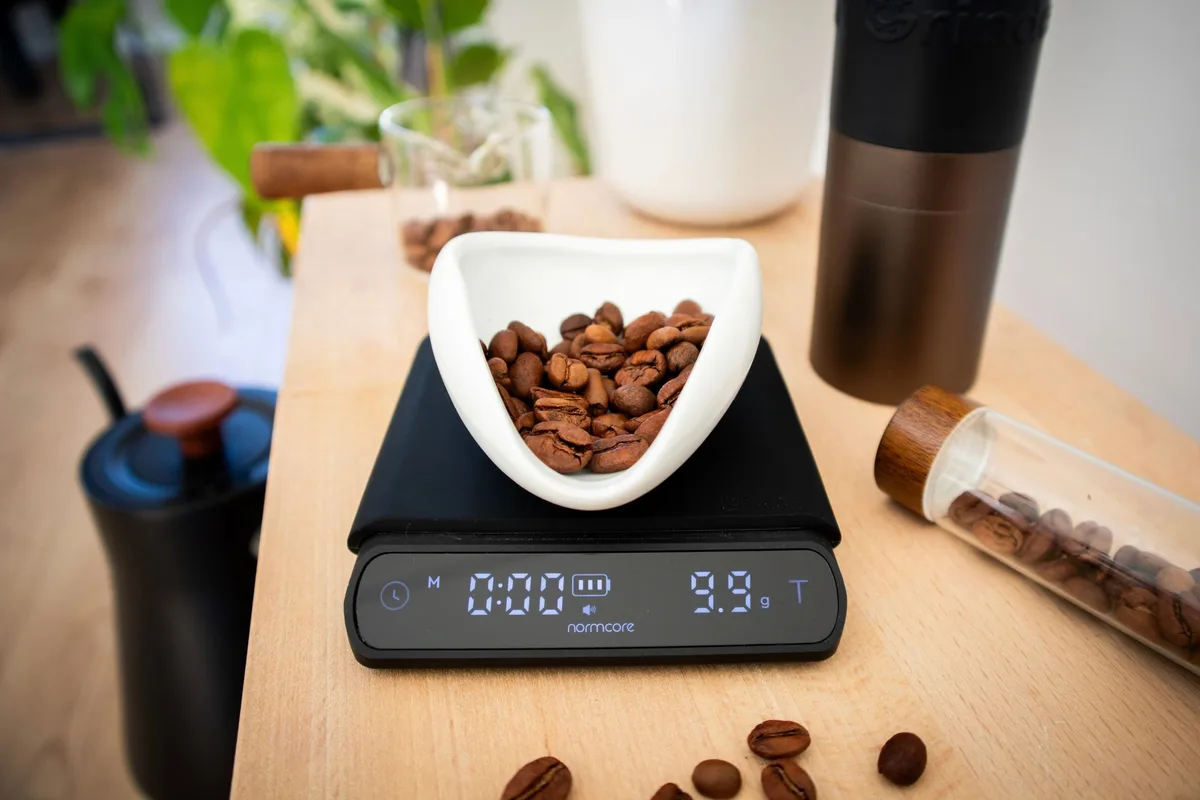
Image source: Bing (Web (fair-use with source credit))
Why Measuring Matters: The Problem with Guesswork
Coffee beans aren’t uniform. A light roast takes up more space than a dark roast for the same weight, sometimes 20 percent more. That means the same scoop can hold vastly different amounts depending on the bean inside.
Volume-based measuring is basically gambling with your morning cup. One day you get a bold, balanced brew. The next, it’s watery or bitter.
Per aggregate user feedback and barista testing, the number-one cause of inconsistent coffee at home is imprecise dosing.
A scoop looks fast and easy, but it’s the reason your pour-over tasted thin on Tuesday and harsh on Friday. The fix isn’t complicated, but it does require understanding the reliability of kitchen scales versus scoops.
Weighing: The Precision Way
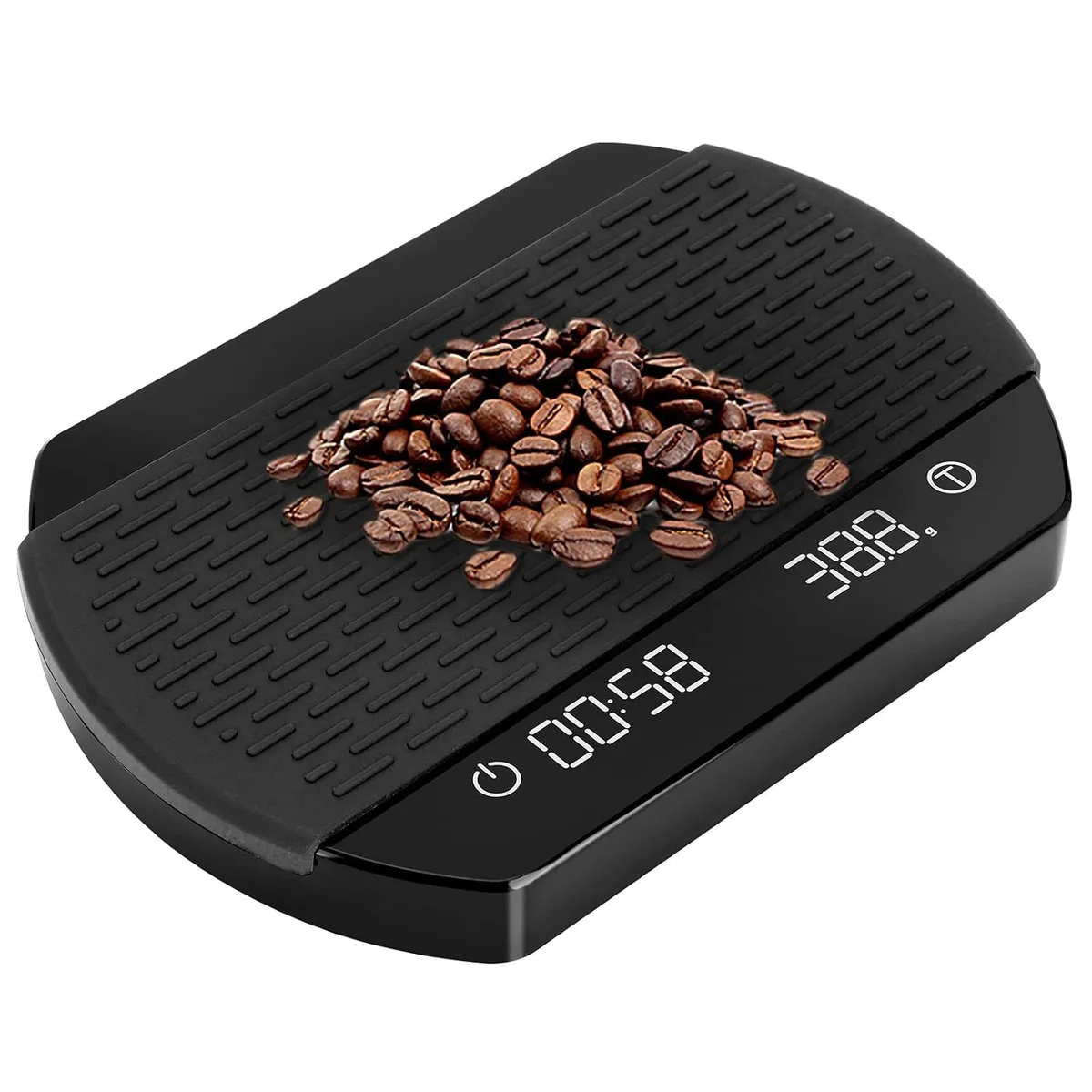
Image source: Web (Bing) / amazon.com
A digital kitchen scale that reads to 0.1 grams is the gold standard. It lets you dial in your exact dose, every single time. No guesswork, no “a little more” or “that looks about right.” You know your coffee-to-water ratio is spot-on.
Why a Scale Wins on Consistency
Bean density changes by roast level, origin, and even batch. Weight ignores all that. Fifteen grams of light roast Ethiopian is fifteen grams.
The same weight of dark roast Sumatran is, well, fifteen grams. Your brew stays predictable.
Manufacturer specs and how digital food scales operate confirm that modern scales with tare functions and 0.1g resolution make this trivially easy. You put your dosing cup on the scale, press tare, add beans until you hit your target, and grind.
Step-by-Step: How to Weigh Your Beans
- Turn on your scale and place your grinder’s dosing cup or basket on top.
- Press the tare button to zero out the weight of the cup.
- Slowly add whole beans until the display reads your target dose (e.g., 18g for espresso).
- Transfer the beans to your grinder and grind immediately.
- Clean any stray beans off the scale afterward.
That’s it. It takes about 15 seconds once you’re used to it. Aggregate reviews of popular scales (like the OXO Brew or Acaia Pearl) confirm that even budget models under $20 perform well for home use.
The Downsides of Weighing
Scales need batteries, and they can die at the worst moment. Some have auto-off timers that cut power mid-pour if you take too long. And if you’re brewing in a hurry, having to wait for the display to stabilize can feel like an eternity.
Also, not everyone wants another gadget cluttering the counter. If you already have a working scoop from your coffee can, buying a scale might feel like overkill.
Scooping: The Quick and Frugal Way
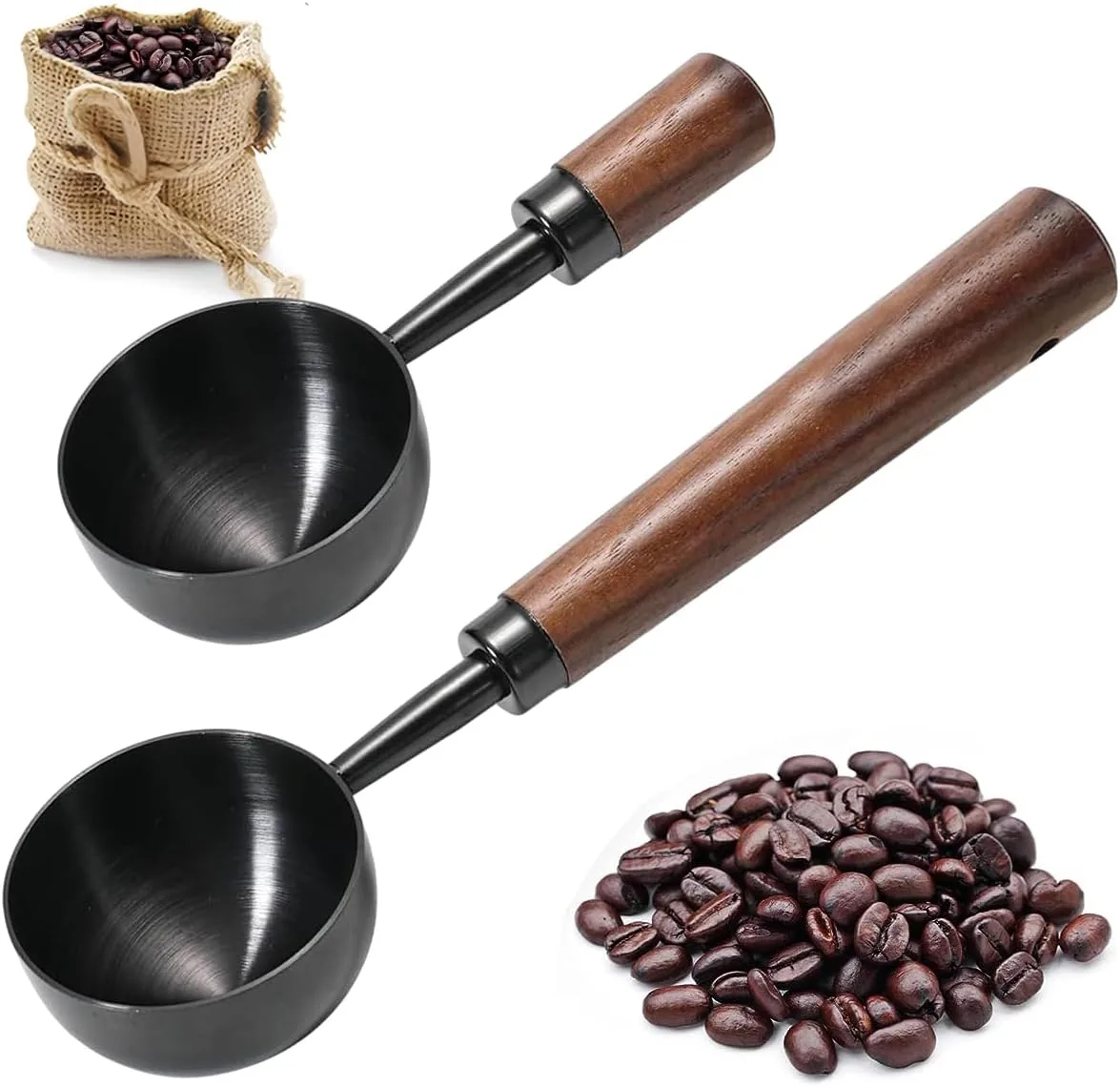
Image source: Web (Bing) / amazon.com
A scoop is the original coffee measure. It’s fast, zero-tech, and it lives right inside your bag of beans. For many people, it’s good enough, especially if you’re using a forgiving brewing method like a French press.
When a Scoop Is Good Enough
If you’re making a full pot of drip coffee or a French press that serves four people, small variations in dose don’t matter as much. The brew is already diluted enough that a gram or two won’t ruin it. Similarly, if you use the same brand and roast every time, your scoop stays reasonably consistent.
The key is to know your scoop. Standard coffee scoops that come with tins are usually about 10 grams for medium roast. A tablespoon (15ml) holds about 5 to 7 grams, depending on bean density.
If you use your grinder correctly with a consistent scoop, you can get acceptable results without any extra gear.
Step-by-Step: How to Scoop Correctly
- Use a dry scoop, wet scoops cause static and clumping.
- Level off the scoop with a straight edge (don’t heap it).
- For French press, start with one level scoop per 200ml of water.
- For pour-over, use two level tablespoons for a standard 300ml cup.
- Taste and adjust, if it’s weak, add another half scoop next time.
The Downsides of Scooping
The biggest problem is variability. Beans settle differently in the bag. Darker roasts are less dense, so a level scoop of dark roast holds less coffee by weight than the same scoop of a light roast.
You can easily under-dose or overdose without realizing it.
Another issue: if you switch beans, your scoop ratio changes. You have to re-learn it each time. For espresso, this is a dealbreaker, the precision needed means scooping virtually guarantees sour or bitter shots.
Head-to-Head: Weighing vs. Scooping
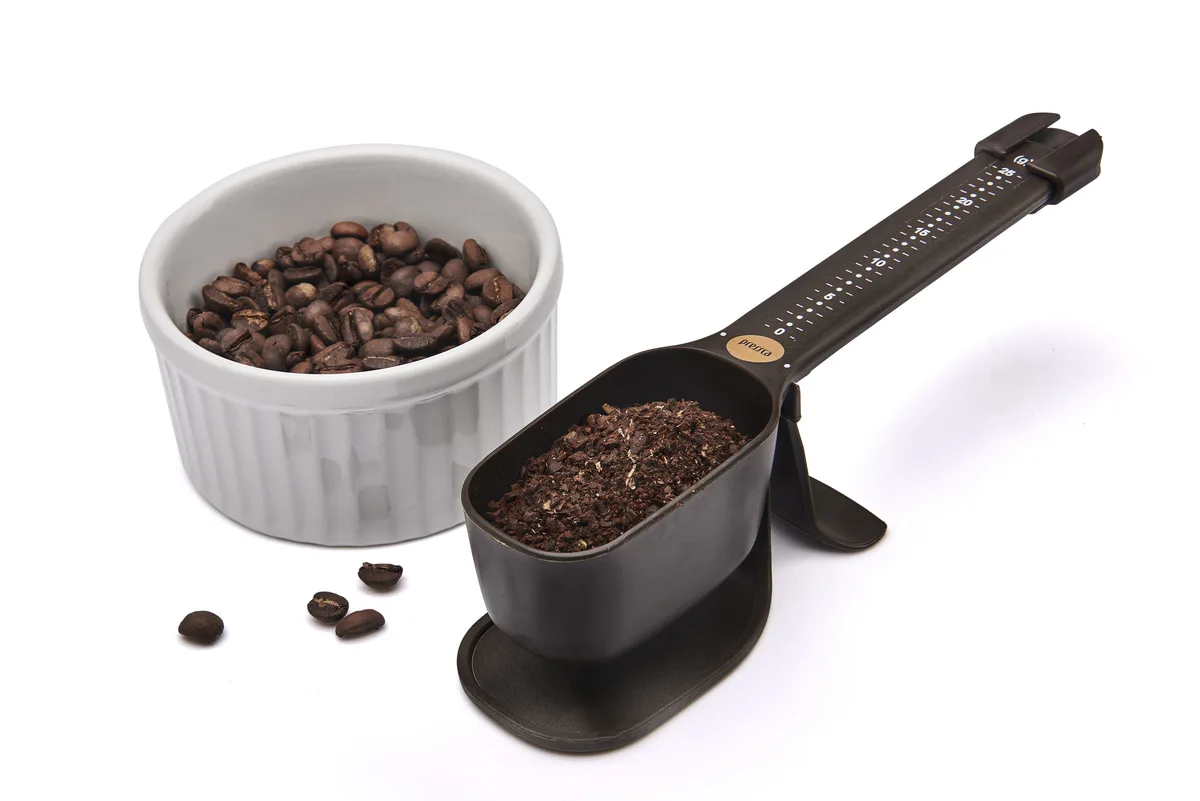
Image source: Web (Bing) / teacoffeesupplies.com
Here’s the straight comparison. The table below summarizes key differences.
| Factor | Weighing | Scooping |
|---|---|---|
| Accuracy | ±0.1g | ±2-3g (varies with bean) |
| Repeatability | Perfect, every time | Inconsistent across bean types |
| Speed | ~15 seconds once scale is on | ~5 seconds |
| Cost | $15–$200 for a scale | $0 (included with beans) |
| Best for | Espresso, pour-over, single servings | French press, drip, travel |
| Batteries needed | Yes | No |
Common Mistakes to Avoid
- Using a heaping scoop. Always level it. A heaping scoop can hold double the intended weight.
- Not taring the scale. If you put your cup on after adding beans, you’re measuring the cup’s weight, not the beans.
- Assuming all scoops are equal. A tablespoon from your kitchen drawer differs from the scoop that came with your coffee tin. Check volume.
- Storing beans in the scoop. Moisture and oils degrade the beans faster. Keep them in an airtight container, not the scoop.
- Grinding before measuring. You lose control over dose. Measure whole beans first, then grind.
- Ignoring grind size impact. Finer grinds extract faster. If you change grind size, you may need to adjust dose as well, another reason weighing helps.
- Over-relying on the scoop for espresso. It’s almost impossible to get consistent espresso shots with a scoop alone. For alternative grinding methods, a scale is worth the investment.
Frequently Asked Questions
Do I really need a scale for good coffee?
Yes, if you want consistent results. A scale removes all the guesswork from bean density and scoop size. For espresso, it’s non-negotiable.
For drip or French press, you can get by with a scoop, but you’ll sacrifice repeatability.
How much does one tablespoon of coffee beans weigh?
One level tablespoon of whole coffee beans weighs 5 to 7 grams. The exact weight depends on roast level and bean density. Light roasts are less dense, so they weigh slightly less per tablespoon than dark roasts.
Can I measure coffee beans after grinding?
You can, but it’s not recommended. Ground coffee compresses differently than whole beans, making volume even less reliable. Also, once ground, the coffee loses flavor fast.
Always measure whole beans before grinding for the freshest cup.
What is the golden ratio for coffee?
The Specialty Coffee Association recommends a 1:15 to 1:17 coffee-to-water ratio by weight. That means 15 to 17 grams of water for every gram of coffee. For a 300ml cup, use 18 to 20 grams of coffee beans.
How do I measure coffee without a scale?
Use a standard coffee scoop or a tablespoon. One scoop (the kind that comes with most coffee tins) holds roughly 10 grams of medium roast. One tablespoon holds about 5 to 7 grams.
Start there, then adjust by taste.
Why does my coffee taste different every day?
The most likely culprit is inconsistent dosing. If you’re scooping, the same scoop can hold different amounts depending on how the beans settled. A scale fixes that instantly.
Also check your brew temperature and grind size.
So Which One Should You Use?
Let’s make this simple. If you brew espresso, use a scale. Full stop.
The precision needed means scooping will almost always produce sour or bitter shots. If you make pour-over or single-serve coffee, a scale is a small investment for a huge upgrade in consistency.
For French press, drip, or travel brewing, a scoop works fine. The variation is small enough that most people won’t notice. Just be sure to level your scoop and use the same one every time.
If you’re somewhere in the middle, consider keeping both methods on hand. Use the scoop for mornings when you’re rushing. Use the scale when you want to dial in a new bean or impress a guest.
Over time, you’ll probably find yourself reaching for the scale more often.
The bottom line: accurate measurement is the single cheapest upgrade you can make to your morning coffee. A $15 scale pays for itself in wasted beans and disappointing cups, especially if you’re investing in quality coffee beans in the first place. If you’re already maintaining the correct fluid level or routine upkeep in other parts of your kitchen, this is the same kind of small habit that delivers big returns.
One last note: the Specialty Coffee Association publishes detailed brewing standards that cover everything from grind size to water temperature. Their guidelines are a reliable reference for anyone looking to improve their technique beyond just measuring. With a scale and a little practice, you’ll be pulling consistently great cups every morning.