Skip to content
Keeping your kitchen knives sharp is not just about making cooking easier—it’s about safety and precision. A dull knife can slip and cause accidents, while a sharp one gives you more control. Many home cooks struggle with dull knives and feel nervous about sharpening them.
The good news is, you don’t need to be a professional chef or own expensive equipment to restore a sharp edge quickly. By understanding the right tools and techniques, anyone can sharpen dull kitchen knives fast and keep them performing at their best.
Why Sharp Knives Matter In The Kitchen
A sharp knife is more than a luxury—it’s essential. When you use a dull knife, you need to press harder. This not only slows you down but increases the chance of the knife slipping and cutting your hand. Studies have shown that sharp knives are safer and help you work more efficiently. Chopping onions, slicing tomatoes, or dicing herbs all become faster and cleaner with a sharp blade. You also preserve the texture and look of your food because a sharp knife cuts rather than tears.
How To Tell If Your Knife Is Dull
Many people don’t realize their knife is dull until it becomes frustrating to use. Here are a few quick tests:
- Try slicing a sheet of paper. If the knife snags or can’t cut smoothly, it’s dull.
- Cut a ripe tomato. A dull knife will squash or tear the skin rather than slice cleanly.
- Run your thumb gently across the blade (not along the edge). A sharp knife feels slightly sticky, while a dull edge feels smooth.
If your knife fails any of these tests, it’s time to sharpen.
Fastest Ways To Sharpen Dull Kitchen Knives
Not all sharpening methods are equal when it comes to speed and results. Let’s look at some of the most effective ways to sharpen your knife in minutes.
1. Pull-through Knife Sharpeners
Pull-through sharpeners are popular for their speed and simplicity. These devices have slots with abrasive wheels inside. All you do is pull the knife through the slot a few times.
How to use:
- Place the sharpener on a stable surface.
- Hold the handle and insert the knife blade into the coarse slot.
- Pull the knife through 3–6 times, applying gentle pressure.
- Finish with 2–3 passes through the fine slot.
Pros:
- Very fast (1–2 minutes)
- No skill required
Cons:
- Removes more metal than necessary if overused
- May not be suitable for expensive knives
2. Electric Knife Sharpeners
Electric sharpeners automate the sharpening process. You insert the blade into a slot, and spinning wheels do the work. Some models even offer different settings for coarse and fine sharpening.
How to use:
- Plug in the sharpener.
- Insert the knife into the coarse slot.
- Slowly pull the knife through as the wheels spin.
- Repeat in the fine slot for a polished edge.
Pros:
- Fastest method (less than 1 minute)
- Consistent results
Cons:
- Can wear down blades quickly if used often
- Most models are pricey
3. Whetstones (sharpening Stones)
A whetstone might sound old-fashioned, but it gives excellent results and lets you control the sharpening angle. This method takes a bit more skill but works quickly once you get the hang of it.
How to use:
- Soak the stone in water for 5–10 minutes (for water stones).
- Place the stone on a damp towel to keep it from sliding.
- Hold the knife at a 15–20 degree angle.
- Slide the blade across the stone, edge first, 10–15 times per side.
- Use the coarse side first, then the fine side.
Pros:
- Precision edge
- Gentle on knives
Cons:
- Takes 5–10 minutes
- Requires practice
4. Honing Rods (sharpening Steels)
A honing rod does not sharpen a dull knife but straightens the edge. Use this tool for maintenance between sharpenings.
How to use:
- Hold the rod upright on a cutting board.
- Hold the knife at a 15–20 degree angle to the rod.
- Swipe the blade from heel to tip, alternating sides, about 8–10 times.
Pro tip: Many people think honing is sharpening. If your knife is very dull, you need a sharpener, not just a honing rod.
Comparing Knife Sharpening Tools
Choosing the right sharpener depends on your needs. Here’s a quick look at how the main options compare:
| Sharpening Tool | Speed | Skill Needed | Blade Wear | Cost |
|---|---|---|---|---|
| Pull-Through Sharpener | Very Fast | Low | High | Low |
| Electric Sharpener | Fastest | Very Low | High | High |
| Whetstone | Moderate | Medium | Low | Low-Medium |
| Honing Rod | Instant | Low | None | Low |
Step-by-step: Fast Sharpening With A Pull-through Sharpener
For most home cooks, a pull-through sharpener is the best mix of speed and simplicity. Here’s how to do it safely:
- Place the sharpener on a flat, non-slip surface near your work area.
- Grip the handle firmly with one hand to keep the sharpener steady.
- Position the knife blade in the coarse slot, starting at the heel.
- Pull the knife toward you, applying light, even pressure. Don’t push down hard.
- Repeat this motion 3–6 times, or until you feel the blade biting into the sharpener.
- Move to the fine slot and repeat 2–3 times for a smoother edge.
- Wipe the blade with a damp cloth to remove any metal dust.
Safety tip: Always pull the knife away from your body, and never rush the process.
When To Use Each Sharpening Method
Not every knife needs the same treatment. Here’s a quick guide:
- Use a pull-through or electric sharpener for very dull, inexpensive knives.
- Use a whetstone for premium or Japanese knives, or when you want a razor edge.
- Use a honing rod every few uses to maintain sharpness, not to sharpen.

Credit: www.oxo.com
Common Mistakes To Avoid
Sharpening knives seems simple, but many people make errors that damage their blades or give poor results:
- Using too much pressure: Pressing hard wears down the blade and can scratch it.
- Sharpening at the wrong angle: Each knife type has a best angle (usually 15–20 degrees). Too steep or too shallow reduces sharpness.
- Over-sharpening: Too many passes remove unnecessary metal and shorten the knife’s life.
- Forgetting to clean the knife: Metal dust can get into food. Always wipe blades after sharpening.
- Relying only on a honing rod: Honing rods can’t restore a blunt edge—they only align it.
How To Keep Knives Sharp Longer
After sharpening, you want your knives to stay sharp as long as possible. Here’s how:
- Cut on wood or plastic, not glass or stone, as hard surfaces dull blades quickly.
- Wash knives by hand—dishwashers can chip and dull edges.
- Store knives in a block or on a magnetic strip, not loose in a drawer.
- Hone regularly to keep the edge aligned between full sharpenings.
- Dry knives right away to prevent rust.
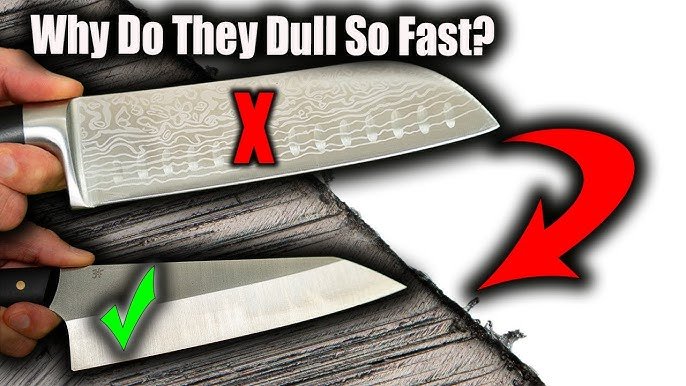
Most people overlook one key point: using the wrong cutting board. Even the best knife goes dull if you chop on granite counters or glass boards.
Credit: www.youtube.com
How Often Should You Sharpen Kitchen Knives?
The answer depends on how often you cook and what you cut. For most home cooks, sharpening every 2–3 months is enough. If you cook daily or slice a lot of hard foods, you may need to sharpen monthly. Honing, on the other hand, can be done every week or even before each use.
Knife Sharpening Angles Explained
The angle at which you sharpen your knife matters a lot. Most Western kitchen knives use a 20-degree angle. Japanese knives often use a 15-degree angle for a finer, sharper edge.
Here’s how sharpening angles affect your knife:
| Angle | Sharpness | Durability | Best For |
|---|---|---|---|
| 15° | Very Sharp | Lower | Japanese knives, soft foods |
| 20° | Sharp | Higher | Western knives, general use |
Pro tip: If you’re unsure, check your knife’s manual or manufacturer’s website for the recommended sharpening angle.
Understanding Knife Sharpening Grits
If you use a whetstone, you’ll see different grit numbers. Coarse grit (200–600) removes chips and shapes a dull edge. Medium grit (800–2000) refines the edge. Fine grit (3000–8000) polishes for razor-sharpness.
| Grit Number | Purpose |
|---|---|
| 200–600 | Repair and reshape very dull or chipped blades |
| 800–2000 | General sharpening |
| 3000–8000 | Finishing and polishing |
A common mistake is using only a fine stone on a very dull knife—it won’t restore the edge. Start with coarse, move to medium, and finish with fine for best results.
Quick Tips For Fast Sharpening
- Read the instructions for your sharpener—each tool is different.
- Don’t try to sharpen serrated knives with these methods; they need special sharpeners.
- Wear cut-resistant gloves if you’re worried about slipping.
- If your knife is expensive or has sentimental value, practice on a cheaper knife first.
When To Replace Your Knife Instead Of Sharpening
If your knife has deep chips, a bent tip, or is very thin from years of sharpening, it may be time for a new one. Even the best sharpening can’t fix a blade that’s lost its shape or strength.
Where To Learn More
If you want to go deeper, or learn about sharpening specific knife brands, check out this resource from the Wikipedia page on knife sharpening.

Credit: www.amazon.com
Frequently Asked Questions
How Often Should I Sharpen My Kitchen Knives?
For most home cooks, every 2–3 months is enough. If you cook daily or slice tough foods, sharpen monthly. Honing can be done weekly to keep the edge aligned.
Can I Sharpen Ceramic Knives With These Methods?
No, ceramic knives require special diamond sharpeners. Standard pull-through or whetstones won’t work and can damage the blade.
Is It Safe To Use Electric Sharpeners On Expensive Knives?
Electric sharpeners are fast but can remove a lot of metal. For expensive or Japanese knives, use a whetstone or have them professionally sharpened to extend their life.
Why Does My Knife Get Dull So Quickly?
Common reasons: cutting on hard surfaces like glass, running knives through the dishwasher, or using improper storage. Regular honing and correct cutting boards help your knives stay sharp longer.
What’s The Difference Between Sharpening And Honing?
Sharpening grinds away metal to create a new edge. Honing straightens the existing edge but doesn’t remove metal. Both are important for knife care, but honing alone won’t fix a dull blade.
A sharp knife transforms your cooking. With these fast methods and a little practice, you’ll keep your kitchen knives safe, effective, and ready for anything.