Skip to content
Every cook, from beginner to professional, knows the difference a sharp kitchen knife makes. It cuts through food easily, keeps fingers safer, and improves the whole cooking experience. But many people don’t sharpen their knives often enough or do it incorrectly.
A dull knife can slip and cause injury, crush delicate ingredients, and make prep work longer and harder. Sharpening kitchen knives is not only simple, but it can also save you money and frustration. In this guide, you’ll learn how to sharpen kitchen knives at home, what tools to use, and how to keep your blades in top condition.
You’ll also discover common mistakes, useful tips, and answers to questions beginners usually have.
Why Sharp Knives Matter
A sharp knife is more than just a tool—it’s a kitchen essential. Dull knives require more force, which increases the risk of accidents. According to the National Safety Council, most knife injuries happen with blunt blades. Sharp knives make clean, precise cuts that protect the texture of food, especially vegetables and meats. They also speed up cooking and make every task, from slicing bread to mincing herbs, easier.
Professional chefs sharpen their knives regularly, sometimes daily. Home cooks, however, often ignore sharpening until the knife struggles to cut. If you notice your knife crushing tomatoes or tearing onions, it’s time for a sharpening session.
Types Of Kitchen Knife Sharpeners
Choosing the right sharpener is the first step. There are three main types, each with its pros and cons. Here’s a comparison to help you decide:
| Sharpener Type | Ease of Use | Price Range | Skill Needed | Results |
|---|---|---|---|---|
| Manual (Whetstone) | Moderate | $15–$60 | Medium | Excellent |
| Pull-Through | Easy | $10–$40 | Low | Good |
| Electric | Very Easy | $40–$120 | Low | Good–Excellent |
Whetstones
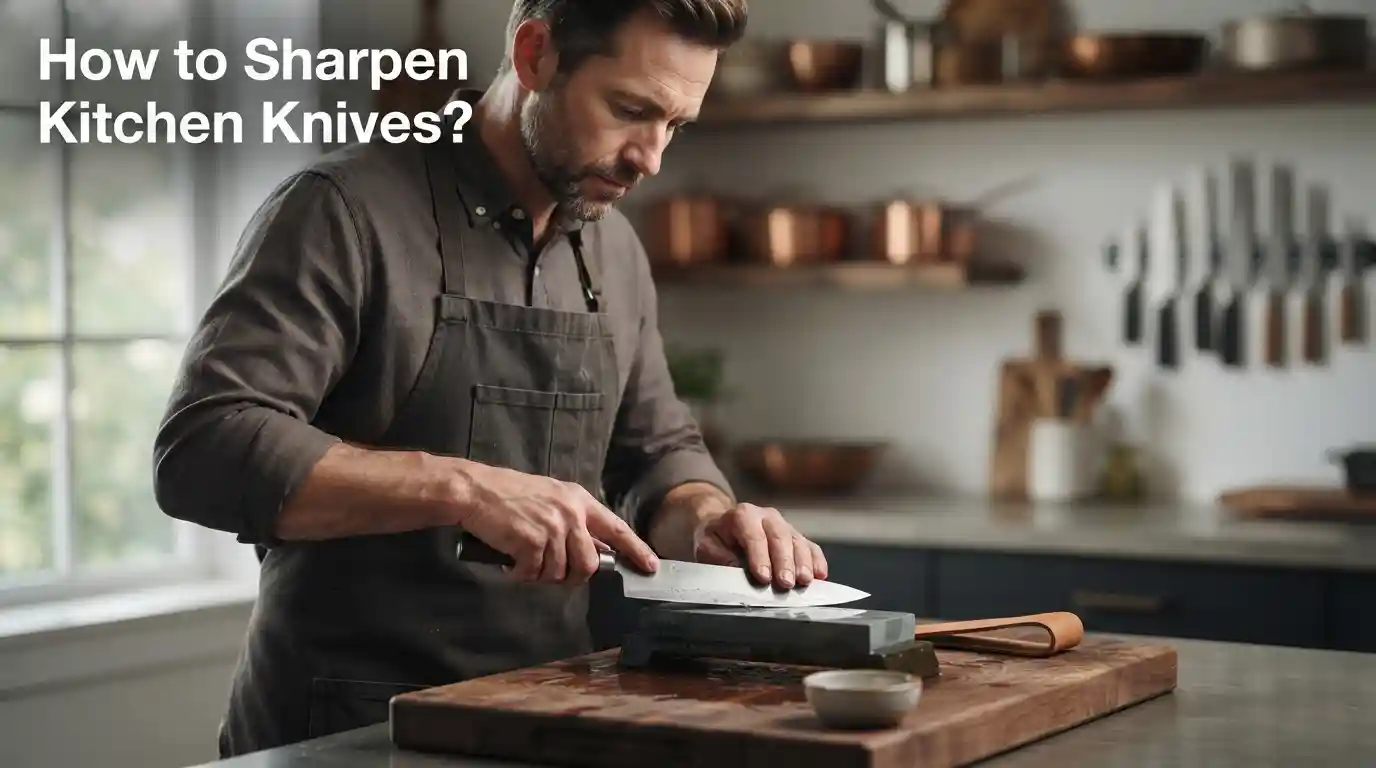
A whetstone is a traditional sharpening tool. It’s a flat stone, sometimes called a water stone or oil stone. You control the sharpening angle by hand. It gives the sharpest edge but requires some practice.
Pull-through Sharpeners
These are small, handheld devices with preset angles. You pull the knife through slots, which sharpen the blade. They’re easy to use but less precise.
Electric Sharpeners
Electric sharpeners have rotating wheels. You insert the knife and let the machine do the work. Results are fast and consistent, but some models can remove too much metal.

Credit: www.oxo.com
How To Sharpen Kitchen Knives With A Whetstone
Sharpening with a whetstone gives the best results. Here’s a step-by-step guide:
- Choose the right stone: Most whetstones have two sides—coarse (1000 grit) for dull blades and fine (3000–6000 grit) for finishing.
- Soak the stone: If it’s a water stone, soak in water for 10–15 minutes. Oil stones need a few drops of mineral oil.
- Place the stone: Set the stone on a towel or a special holder to prevent slipping.
- Find the angle: Hold the knife at a 15–20 degree angle. This is the sweet spot for most kitchen knives.
- Sharpen the first side: Glide the blade across the stone, starting at the heel and moving to the tip. Use gentle, even pressure.
- Repeat: Do 8–10 strokes, then switch sides.
- Finish with the fine grit: Flip the stone and repeat steps 5–6.
- Clean the blade: Wipe off any metal particles.
- Test sharpness: Try slicing a piece of paper or a tomato. The blade should cut smoothly.
| Step | Action | Tip |
|---|---|---|
| 1 | Choose stone | Start with coarse if knife is very dull |
| 2 | Soak stone | 10–15 minutes for water stones |
| 3 | Place stone | Use towel for stability |
| 4 | Set angle | 15–20 degrees |
| 5 | Sharpen | Use gentle pressure |
| 6 | Repeat other side | Keep strokes even |
| 7 | Finish with fine grit | Polishes the edge |
| 8 | Clean blade | Wipe metal dust |
| 9 | Test sharpness | Slice paper or tomato |
Non-obvious Insight
Beginners often forget to maintain a consistent angle throughout the process. Even small changes can affect sharpness. Some people use angle guides or a folded piece of paper as a visual aid. Another tip: don’t rush. It’s better to do fewer strokes with care than many sloppy ones.
Using Pull-through And Electric Sharpeners
If you prefer speed and simplicity, pull-through and electric sharpeners are good options.
Pull-through Sharpeners
- Place the device on a stable surface.
- Insert the knife into the slot.
- Pull the blade through 4–6 times, applying gentle pressure.
- Wipe the blade.
Pull-through sharpeners are ideal for quick touch-ups but may not fix deeply dull or damaged knives.
Electric Sharpeners
- Plug in the machine.
- Insert the knife into the slot.
- Let the device sharpen automatically.
- Remove and clean the blade.
Electric sharpeners are fast but can wear down knives if used too often. Always follow the manufacturer’s instructions.
Honing Vs. Sharpening
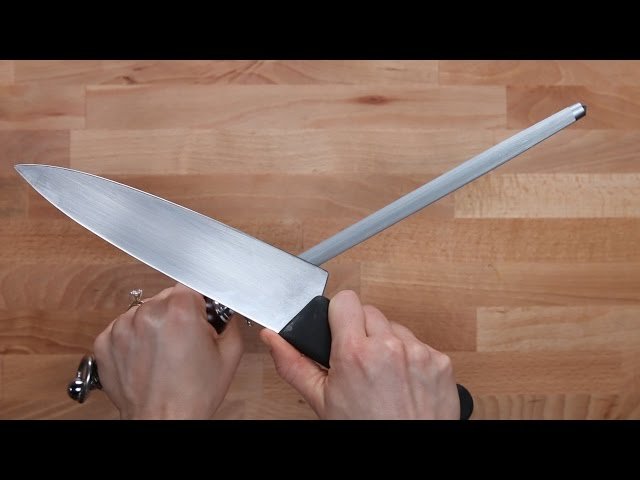
Many people confuse honing with sharpening. Honing does not sharpen the blade but aligns the edge, fixing small bends. It’s done with a honing steel, a long metal rod. Sharpening removes metal to create a new edge.
| Activity | Purpose | Frequency |
|---|---|---|
| Sharpening | Creates new edge | Every 2–6 months |
| Honing | Aligns blade edge | Every 1–2 weeks |
Honing should be done regularly, while sharpening is needed less often. Many home cooks skip honing, but it keeps knives sharper for longer.
You might find this helpful: Best Knife Sharpener for Home Use
How Often Should You Sharpen Kitchen Knives?
The frequency depends on the knife type, use, and care.
- Home cooks: Sharpen every 3–6 months.
- Professional chefs: Sharpen weekly or daily.
- Ceramic knives: Sharpen only when dull; use a diamond stone.
If you cook daily, check your knife’s sharpness monthly. You can test by slicing a sheet of paper or a ripe tomato. If the blade struggles, it’s time to sharpen.
Tips To Keep Knives Sharp Longer
Proper care extends the life of your knives:
- Use a cutting board: Wood or plastic is best. Avoid glass and stone, which dull blades quickly.
- Wash by hand: Dishwashers damage knives. Clean and dry immediately.
- Store safely: Use a knife block, magnetic strip, or blade guard.
- Avoid hard materials: Don’t cut bones, frozen food, or metal with kitchen knives.
- Hone regularly: Use a honing steel every few weeks.
Many people overlook the importance of storage. Loose knives in a drawer bump into each other, dulling the edges. Always use a dedicated storage solution.
Common Mistakes When Sharpening Knives
Sharpening seems easy, but beginners often make mistakes:
- Wrong angle: Too steep or too shallow angles can ruin the edge.
- Too much pressure: Heavy force damages the blade.
- Skipping fine grit: Coarse stones alone leave the edge rough.
- Over-sharpening: Removing too much metal shortens the knife’s life.
- Not cleaning the blade: Metal particles left on the knife can cause rust.
Avoid these errors for the best results. Practicing with a cheap knife can help build confidence before sharpening expensive blades.
Sharpening Specialty Knives
Not all knives are the same. Here are tips for special types:
- Serrated knives: Sharpen less often. Use a rod-shaped sharpener.
- Japanese knives: Often have a single bevel. Sharpen only one side.
- Ceramic knives: Require diamond stones.
Always check your knife’s manufacturer instructions. Some knives need unique care.
When To Replace Your Knife
Even the best sharpening won’t fix a badly damaged blade. Signs you need a new knife:
- Deep chips or cracks
- Blade is bent or warped
- Handle is broken
- Sharpening doesn’t improve performance
Quality knives can last 10–20 years with good care. If your knife shows severe damage, it’s safer to replace it.
Credit: www.youtube.com
Professional Sharpening Services
If you’re unsure about sharpening, professional services can help. Many kitchen stores offer sharpening for $5–$10 per knife. They use advanced tools and techniques. For expensive knives, or if the blade is badly damaged, this is a smart choice. Some mail-in services are available in the US and Europe.
For more on professional sharpening, see this guide from Serious Eats.
Frequently Asked Questions
How Do I Know If My Knife Needs Sharpening?
Try slicing a sheet of paper or a tomato. If the blade tears or crushes instead of slicing cleanly, it’s dull.
What Is The Best Angle For Sharpening Kitchen Knives?
Most kitchen knives are sharpened at a 15–20 degree angle. Japanese knives use 12–15 degrees. Consistency is more important than the exact number.
Can I Sharpen All Knives With The Same Tool?
Most knives can be sharpened with a whetstone or electric sharpener. Serrated knives and ceramic knives require special tools.
How Long Does Sharpening Take?
Using a whetstone, sharpening takes about 10–15 minutes per knife. Pull-through and electric sharpeners are faster, usually 2–3 minutes.
Is It Safe To Sharpen Knives At Home?
Yes, but follow instructions and keep fingers away from the blade. Use stable surfaces and never rush the process.
Keeping your kitchen knives sharp is a simple skill that pays off every time you cook. With the right tools, a bit of practice, and careful technique, you’ll enjoy safer, faster, and more enjoyable food preparation. Remember to check your blades regularly, use proper care, and avoid common mistakes.
Whether you’re sharpening with a whetstone, pull-through device, or electric machine, the process is easy to learn and rewarding. Sharpen your knives today and experience the difference.

Credit: www.americastestkitchen.com