Skip to content
A Nakiri knife is a special tool in the kitchen, designed for cutting vegetables with speed and precision. Unlike many other knives, a Nakiri has a flat blade edge and a rectangular shape. If you want to prepare vegetables quickly, safely, and neatly, learning how to use a Nakiri knife can make your cooking much easier. Whether you are a beginner or already cook often, understanding the right way to handle a Nakiri brings better results, reduces waste, and even makes chopping more enjoyable.
The Nakiri knife comes from Japan, where vegetable dishes are an important part of the cuisine. Chefs choose Nakiri knives for their fast chopping ability and clean, straight cuts. But many home cooks aren’t sure how to hold, move, or care for this unique blade.
Let’s explore how to use a Nakiri knife step by step, with clear tips, practical examples, and even a comparison to other common kitchen knives.
What Makes A Nakiri Knife Unique
A Nakiri knife stands out because of its flat edge and rectangular blade. Unlike chef’s knives or santoku knives, which have curved blades for rocking motions, Nakiri knives are made for straight, up-and-down chopping.
| Knife Type | Blade Shape | Best Use | Average Length |
|---|---|---|---|
| Nakiri | Rectangular, flat edge | Vegetable chopping | 5–7 inches |
| Chef’s Knife | Curved, pointed tip | All-purpose | 8–10 inches |
| Santoku | Curved, rounded tip | Slicing, dicing | 5–7 inches |
The Nakiri’s double bevel means it is sharpened on both sides, unlike some Japanese knives that are sharpened only on one side. This makes it easier for most people to use, especially left-handed cooks.
The blade is usually thin, which allows for precision cutting. With a Nakiri, you can slice vegetables paper-thin or chop them quickly without crushing or tearing. The flat edge also means you cut all the way through the vegetable, making for clean, even pieces.
How To Hold A Nakiri Knife
Correct grip is important for safety and control. Unlike a chef’s knife, the Nakiri is lighter and has a straight handle, which changes how you hold it.
- Pinch Grip: Hold the blade between your thumb and index finger near the handle, with the rest of your fingers wrapped around the handle. This gives you maximum control.
- Handle Grip: If you prefer, wrap all your fingers around the handle, but avoid gripping too tightly. The Nakiri’s balance means you don’t need force.
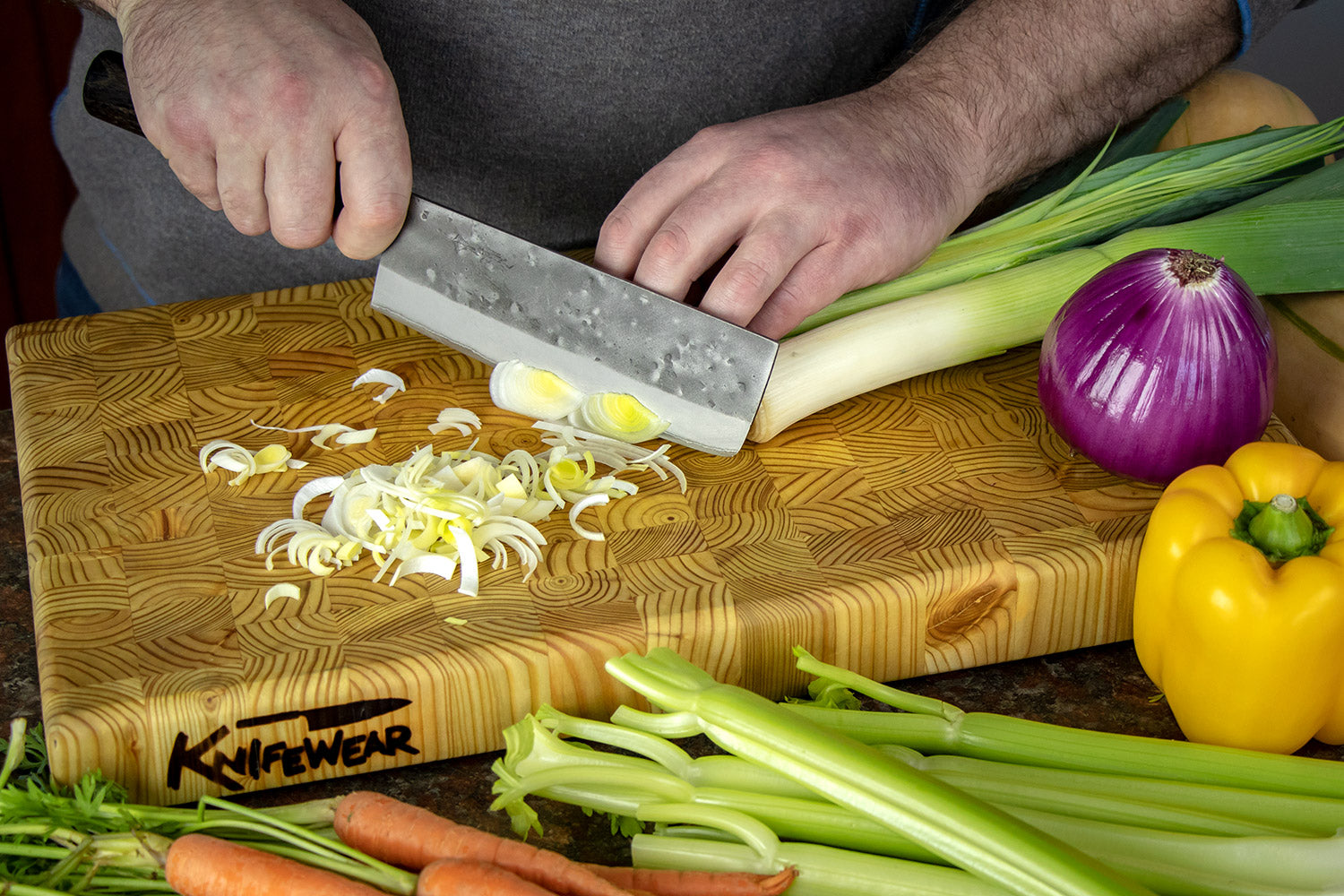
- Finger Placement: Keep your fingers away from the blade edge. Use your guiding hand to hold the vegetable, curling your fingers inward so your knuckles touch the blade. This protects your fingertips.
One insight many beginners miss is that the Nakiri’s flat blade can be used to scoop up chopped vegetables. After slicing, use the blade’s wide surface to move pieces from the cutting board to the pan or bowl.

Credit: knifewear.com
Proper Cutting Techniques
The Nakiri knife is made for push cutting and straight chopping. These methods differ from rocking, which is common with chef’s knives.
Push Cutting
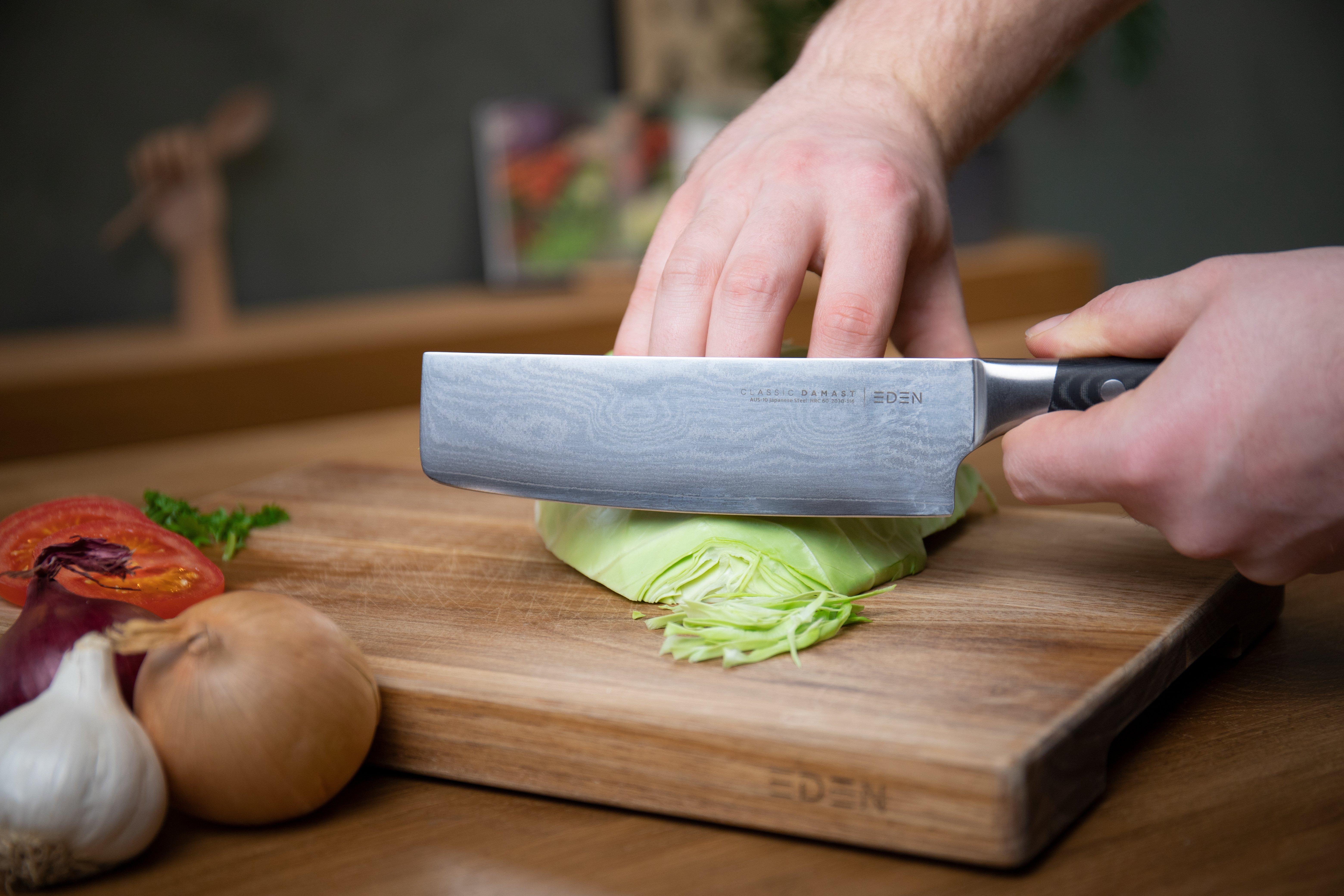
Push cutting means moving the knife forward and down, slicing through the vegetable in one motion. Place the Nakiri’s blade against the food, push forward, and let the sharp edge do the work.
- Best for: Cucumbers, carrots, potatoes, and cabbage.
- Avoid using force. Let the blade’s sharpness handle the cut.
Straight Chopping
Chop straight up and down, lifting the Nakiri and bringing it down onto the vegetable. This is especially good for making cubes or batons.
- Best for: Onion, celery, bell pepper, and leafy greens.
- Keep the blade perpendicular to the cutting board for even pieces.
Not For Hard Bones Or Frozen Foods
A Nakiri knife is not designed for cutting hard foods like bones or frozen meat. The thin blade can chip or bend. Always use a heavier knife for tough jobs.
Step-by-step Guide: Using A Nakiri Knife
Let’s walk through how to use a Nakiri knife with common vegetables.
- Prepare Your Cutting Board: Use a stable, wooden or plastic board. Avoid glass, which can dull the blade.
- Hold the Vegetable Properly: Place the vegetable flat, or cut it in half for stability.
- Grip the Knife: Use the pinch grip for control.
- Position Your Hand: Curl your guiding hand’s fingers inward, knuckles facing the blade.
- Cut with Push or Chop Motion: Start at the back of the blade, push forward or chop straight down.
- Scoop with the Blade: Use the flat surface to move chopped veggies.
- Repeat for Each Vegetable: Adjust your motion based on the size and type.
For example, to slice a carrot:
- Peel and cut the carrot in half lengthwise.
- Place the flat side down.
- Use the Nakiri to slice thin rounds, pushing forward with each cut.
For leafy greens:
- Stack leaves, roll them, and chop straight down for ribbons.
Credit: www.knivesandtools.com
Cleaning And Caring For A Nakiri Knife
Proper care keeps your Nakiri sharp and safe. Many people make mistakes that shorten the knife’s life.
- Hand Wash Only: Never use a dishwasher. Wash with mild soap and warm water, dry immediately.
- Avoid Soaking: Do not leave in water, as this can damage the blade and handle.
- Sharpen Regularly: Use a whetstone or fine ceramic rod. Most Nakiri knives have a 15-degree angle on each side.
- Store Safely: Use a knife block, magnetic strip, or blade guard. Avoid tossing in a drawer.
- Oil the Blade: For carbon steel Nakiris, apply a thin layer of oil to prevent rust.
One non-obvious tip is to wipe the blade clean between cutting different vegetables. Sticky juices can make the knife slip, reducing control.
Nakiri Knife Vs Other Vegetable Knives
Is a Nakiri knife really better for vegetables? Here’s how it compares to other common knives.
| Knife | Vegetable Cutting Ability | Ease of Use | Maintenance |
|---|---|---|---|
| Nakiri | Excellent for thin, even slices | Easy for beginners | Requires regular sharpening |
| Chef’s Knife | Good for all vegetables | Requires skill for even cuts | Easy to maintain |
| Paring Knife | Best for small vegetables | Easy for detail work | Low maintenance |
| Santoku | Good for slicing, less precise for thin cuts | Medium difficulty | Regular sharpening needed |
Data shows that a Nakiri knife can increase chopping speed by up to 30% compared to a chef’s knife, especially for large batches of vegetables. It also reduces waste, since the flat blade cuts close to the skin and stem.
Credit: knifewear.com
Choosing The Right Nakiri Knife
There are many Nakiri knives available, with prices ranging from $30 to $300. Here’s what to look for:
- Blade Material: High-carbon steel holds a sharper edge but needs more care. Stainless steel is easier to maintain.
- Handle Comfort: Try different shapes. Japanese handles (wa) are lighter, Western handles (yo) are heavier.
- Blade Thickness: Thinner blades slice better but are more fragile.
- Length: Most Nakiri knives are 5 to 7 inches. Choose a length that matches your hand size.
- Balance: A well-balanced knife feels comfortable and reduces fatigue.
Avoid buying purely for looks. Some Nakiris have decorative handles or blades, but performance and comfort matter more.
Common Mistakes When Using A Nakiri Knife
Even experienced cooks sometimes misuse their Nakiri knives. Here are mistakes to avoid:
- Using a rocking motion: The flat blade is not made for rocking. Push or chop instead.
- Cutting hard foods: Nakiri knives are for vegetables, not bones or frozen items.
- Ignoring sharpening: Dull blades crush rather than slice, making cutting harder and less safe.
- Wrong cutting board: Glass or stone boards dull blades quickly.
- Improper cleaning: Dishwashers and soaking can ruin the handle and blade.
A common beginner error is pressing too hard. The Nakiri’s sharpness means you need only gentle pressure.
Practical Tips For Getting The Most From Your Nakiri Knife
- Practice with soft vegetables: Start with tomatoes or zucchini to learn the push cut.
- Use the blade for scooping: The wide blade helps transfer chopped food.
- Cut in batches: Group similar vegetables to save time.
- Sharpen monthly: Even with careful use, regular sharpening keeps cuts smooth.
- Try different grip styles: Find what feels comfortable for your hand and wrist.
Another non-obvious insight: If you cook for a family or meal prep, the Nakiri’s speed and precision make it easier to prepare large amounts of vegetables quickly.
Frequently Asked Questions
What Is The Main Advantage Of A Nakiri Knife?
The main advantage is its flat blade edge, which allows for straight, clean cuts without rocking. This makes it easier to slice vegetables evenly and quickly.
Can I Use A Nakiri Knife For Meat?
Nakiri knives are designed for vegetables, not meat. The thin blade can chip if used on bones or tough meat. For meat, use a chef’s knife or cleaver.
How Often Should I Sharpen My Nakiri Knife?
For home cooks, sharpen your Nakiri knife every 1–2 months or whenever you feel it is not slicing smoothly. If you use it daily, sharpen more often.
Is A Nakiri Knife Good For Left-handed People?
Yes. Most Nakiri knives are double beveled, so they work equally well for left- and right-handed users. Just make sure the handle is comfortable for your grip.
Where Can I Learn More About Japanese Knives?
You can find detailed information about Japanese knives and their uses at Wikipedia.
Using a Nakiri knife brings a new level of speed and precision to vegetable prep. With the right grip, cutting motion, and care, you can enjoy cleaner cuts and less kitchen stress. Whether you cook daily or just on weekends, mastering the Nakiri helps you make better meals and saves time.
Try these steps, avoid common mistakes, and see for yourself how a Nakiri knife changes your cooking routine.