Skip to content
Vacuum sealing food in mason jars is a smart way to keep food fresh for longer. Many people use vacuum sealing to save money, reduce waste, and even make meal prep easier. While most people know about vacuum sealing bags, not everyone realizes that you can also use mason jars for this purpose. This method is perfect for dry goods, snacks, leftovers, and even some liquids. If you want to get more out of your pantry or make your food last, learning how to vacuum seal food in mason jars is a skill worth having.
Why Vacuum Seal Food In Mason Jars?
Vacuum sealing removes air from the jar, which stops or slows down the growth of bacteria, mold, and yeast. By keeping air out, your food stays fresh much longer than if it was stored in a regular jar or bag. Here are some clear benefits:
- Longer shelf life: Vacuum-sealed foods can last 3-5 times longer than non-sealed foods.
- Prevents freezer burn: For items stored in the freezer, sealing keeps moisture out.
- Protects flavor and texture: Foods stay crunchy, chewy, or soft as they should be.
- Organized storage: Glass jars are easy to stack and see inside.
For example, vacuum-sealed rice in a mason jar can last up to 2 years in your pantry. Even delicate foods like nuts or coffee beans keep their flavor for months.
What Foods Work Best For Mason Jar Vacuum Sealing?
Not every food is right for mason jar vacuum sealing. Here are the top choices:
- Dry goods: Grains, rice, pasta, beans, lentils, flour, powdered milk
- Snacks: Nuts, seeds, popcorn, dried fruit, crackers
- Baking items: Sugar, brown sugar, chocolate chips, coconut
- Coffee and tea: Beans, ground coffee, loose-leaf tea
- Dehydrated foods: Fruits, vegetables, herbs, spices
- Leftovers: Soups, sauces (must be cooled and not too hot)
Foods with high moisture, like fresh fruit or raw meat, should be frozen or refrigerated after sealing. Some foods, like garlic or mushrooms, can grow dangerous bacteria if vacuum-sealed and stored at room temperature. Always check food safety guidelines before sealing.
Credit: saladinajar.com
Mason Jar Vacuum Sealing: What You Need
Before starting, gather the right tools. Here’s a quick comparison of what you might use:
| Tool | Purpose | Notes |
|---|---|---|
| Mason jars | Storage container | Use regular or wide mouth |
| Lids & rings | Seal the jar | New lids seal best |
| Vacuum sealer | Remove air | Handheld or countertop |
| Jar sealer attachment | Connects sealer to jar | Fits regular or wide mouth |
| Oxygen absorbers (optional) | Extra air removal | For long-term storage |
Pro tip: Some people use a simple hand pump or even a straw and their own breath for a low-tech seal, but these methods are less reliable and don’t last as long.
Step-by-step Guide: How To Vacuum Seal Food In Mason Jars
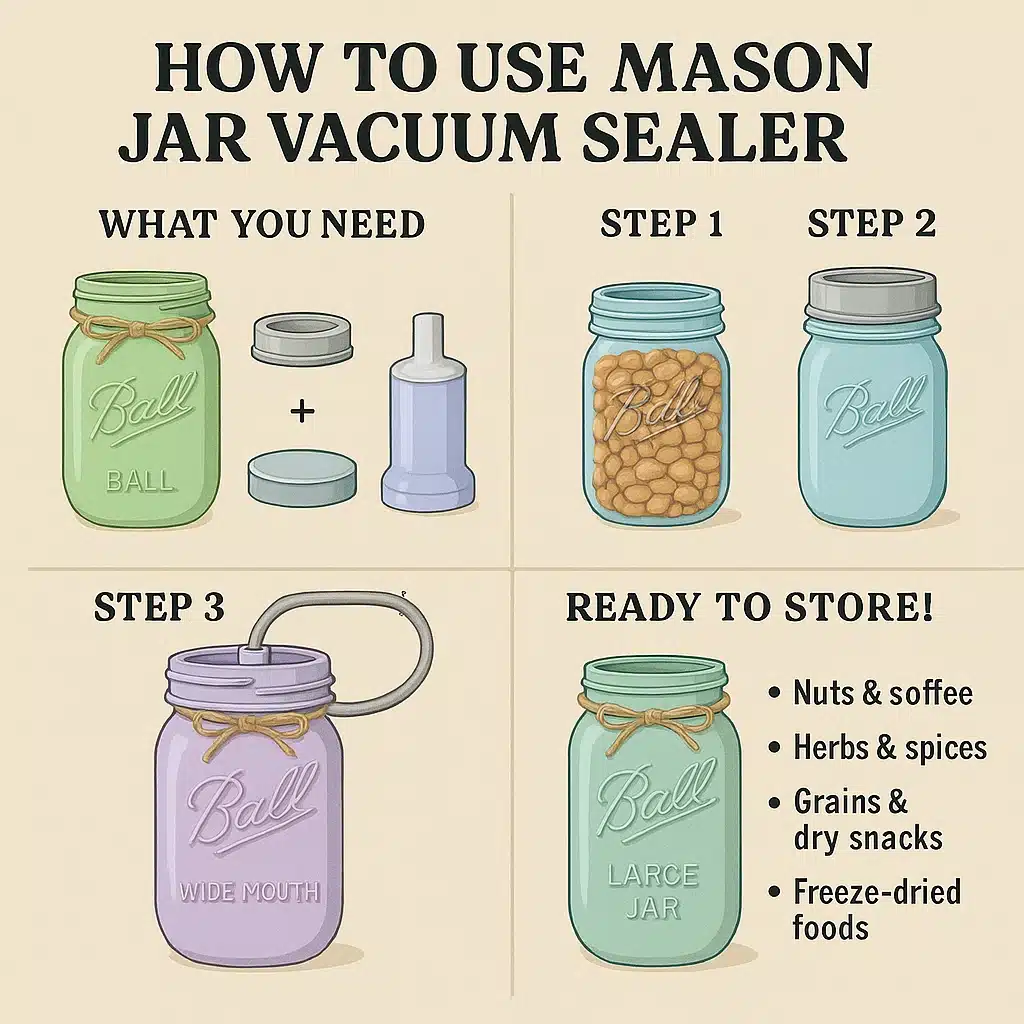
1. Clean And Prepare Your Jars
Always start with clean, dry jars. Wash them in warm, soapy water or run them through the dishwasher. Make sure jars are completely dry before use. Even a small amount of water can cause mold or spoilage.
2. Fill The Jar
Add your chosen food to the jar. Leave about half an inch of space at the top. This is called “headspace” and it’s important for a good seal. If you fill the jar too full, the lid won’t seal properly.
Examples of headspace:
- Dried beans: 0.5 inch
- Flour: 0.5 inch
- Nuts: 0.5 inch
3. Wipe The Rim
Use a clean, dry cloth to wipe the rim of the jar. Any crumbs, dust, or oil can prevent a tight seal. This is a step many beginners skip, but it makes a big difference.
4. Place The Lid And Ring
Set a new or clean lid on top of the jar. Screw the metal ring on just until it’s finger-tight, not too tight.
5. Attach The Jar Sealer
Fit the jar sealer attachment over the lid. Make sure it sits flat and even. Some attachments are made for regular mouth jars, others for wide mouth. Double-check before you start.
6. Vacuum Seal
Connect your vacuum sealer hose to the jar sealer. Turn on the vacuum sealer. You’ll hear a whirring sound as it removes air. This usually takes 5-20 seconds.
When the sound changes (often from loud to quiet), or the vacuum sealer stops, you know the process is finished.
If you’re using a handheld pump: Pump until you feel strong resistance, usually 10-20 pumps.
7. Remove The Sealer And Check The Seal
Take off the jar sealer attachment. The lid should be held tightly in place by the vacuum. To test, gently lift the jar by the lid. If it stays on, you have a good seal.
If the lid pops off, repeat the vacuum process. Sometimes a small crumb or bit of food on the rim can prevent sealing, so clean again if needed.
8. Label And Store
Write the date and contents on the jar with a marker or label. Store jars in a cool, dark, dry place. For best results, use sealed jars within one year, though many foods last much longer.
Credit: www.jarfulmemories.com
Comparing Mason Jar Vacuum Sealing Vs. Vacuum Bags
Both methods keep food fresh, but there are important differences. Here’s a quick side-by-side look:
| Feature | Mason Jars | Vacuum Bags |
|---|---|---|
| Reusable | Yes | No (usually single-use) |
| Best for | Dry goods, powders, liquids | Meat, bulk freezer items |
| Visibility | Clear glass | Opaque or clear plastic |
| Stackable | Yes | No |
| Cost per use | Low (jars last years) | Higher (bags are replaced often) |
| Protection | Prevents crushing | Can crush delicate foods |
Key insight: Mason jars are ideal for foods you open and reseal often, like snacks or baking supplies. Vacuum bags are better for long-term storage in the freezer.
You might find this helpful: Best Mason Jar Vacuum Sealers
Tips For Success And Common Mistakes
Vacuum sealing in mason jars seems easy, but a few extra tips help you avoid mistakes:
- Always use new lids for the tightest seal. Reused lids can leak air.
- Do not overfill. Too much food means air can’t be fully removed.
- Cool hot foods first. Warm jars can create steam, which ruins the seal.
- Double-check the rim. Even a grain of salt or drop of oil prevents sealing.
- Check seals after 24 hours. Sometimes a lid pops up later. If so, reseal or use the food soon.
- Store jars upright. Laying them on their side can break the seal.
- Avoid liquids unless you have practice. Sealing liquids can be tricky; freeze them first if needed.
Some beginners forget to leave headspace or use old lids. Others try to seal foods with high moisture at room temperature, which can cause spoilage. Take your time at first and you’ll get the hang of it quickly.
How Long Does Food Last In Vacuum Sealed Mason Jars?
Shelf life depends on the food type, storage conditions, and how well you sealed the jar. Here are some rough guidelines:
| Food Type | Room Temperature | Fridge | Freezer |
|---|---|---|---|
| Rice, pasta, flour | 1-2 years | Up to 3 years | 3-5 years |
| Nuts and seeds | 6-12 months | 1-2 years | 2-3 years |
| Coffee beans | 6-9 months | 1-2 years | 2-3 years |
| Dried fruit | 6-12 months | 1-2 years | 2-3 years |
These numbers are averages. If you open and close the jar often, food may not last as long. For sensitive items like whole wheat flour or brown rice, use them sooner because oils can go rancid even with no air.
Non-obvious tip: For foods you use every week, seal them in smaller jars. That way, you only open what you need, and the rest stays fresh.
Is Vacuum Sealing In Mason Jars Safe?
Vacuum sealing is safe for most foods, but it does not replace proper canning for long-term shelf storage. Vacuum sealing does not kill bacteria; it only slows growth by removing air. For foods like soups, sauces, or anything low-acid, always store in the fridge or freezer after sealing.
Never vacuum seal foods that can spoil quickly at room temperature (fresh meats, cooked vegetables, dairy) unless you plan to refrigerate or freeze them immediately. For official food safety rules, see the National Center for Home Food Preservation.
Advanced Tips And Tricks
Once you’re comfortable with the basics, try these ideas:
- Use oxygen absorbers for extra long-term storage. Place one in the jar before sealing, especially for flours, grains, or dehydrated foods.
- Vacuum seal spices in small jars to keep them fresh for years. This keeps flavors strong.
- Seal jars with metal objects (like chocolate chips) by shaking the jar first, so small pieces settle and air comes out easier.
- Make “meal jars” by layering ingredients for soups, cookies, or snacks. Just open, pour, and cook.
- Reseal as you use: If you open a jar and don’t finish it, you can re-vacuum seal it again with a new lid.
A common surprise for beginners: Mason jars can be reused hundreds of times if handled gently. Only the lid needs to be replaced for a strong vacuum seal.
Frequently Asked Questions
Can I Vacuum Seal Liquids In Mason Jars?
Yes, but it can be tricky. To seal liquids, chill or freeze them first, then vacuum seal. This prevents sucking liquid into the sealer. Always leave extra headspace. Store sealed liquids in the fridge or freezer.
Do I Need A Special Vacuum Sealer For Jars?
You need a jar sealer attachment that fits your vacuum sealer. Many countertop sealers offer this. Some handheld sealers work too, but check the product details first.
How Do I Know If The Jar Is Sealed Properly?
After sealing, the lid should not pop up or move. Try lifting the jar by the lid (gently). If it stays on, you have a good seal. If it pops off, repeat the process.
Can I Reuse Mason Jars And Lids?
Jars and metal rings can be reused many times. Lids can be reused for storage but not for vacuum sealing, as the seal weakens after the first use. For best results, use a new lid each time you vacuum seal.
What Foods Should Not Be Vacuum Sealed In Mason Jars?
Avoid vacuum sealing soft cheeses, raw garlic, mushrooms, fresh meats, and foods with a lot of moisture at room temperature. These can grow harmful bacteria even without air. Always follow food safety guidelines.
Vacuum sealing food in mason jars is practical, easy, and can save you money over time. With a few simple tools, a bit of practice, and the right foods, you’ll enjoy fresher meals and a better-organized pantry. Whether you’re prepping for emergencies or just want to keep snacks crunchy, mason jar vacuum sealing is a skill every home cook should know.

Credit: www.amazon.com