You’ve probably stood at the kitchen counter with a brand-new electric kettle, poured that first cup, and caught a whiff of something vaguely metallic or plasticky. And then the question hits: is water boiled in electric kettle safe to drink? It’s a fair worry, especially when you’re making tea for the family or mixing up baby formula.
The short answer is yes, boiling water in an electric kettle is overwhelmingly safe, provided you’re using a quality appliance and caring for it properly. Our research shows that the real risks aren’t the boiling itself, but the materials your kettle is made from and how you maintain it. As of 2026, modern kettles manufactured to FDA and LFGB food-contact standards are designed to handle the boiling process without releasing harmful chemicals.
Let’s break down exactly what happens inside that appliance so you can use it with total confidence.
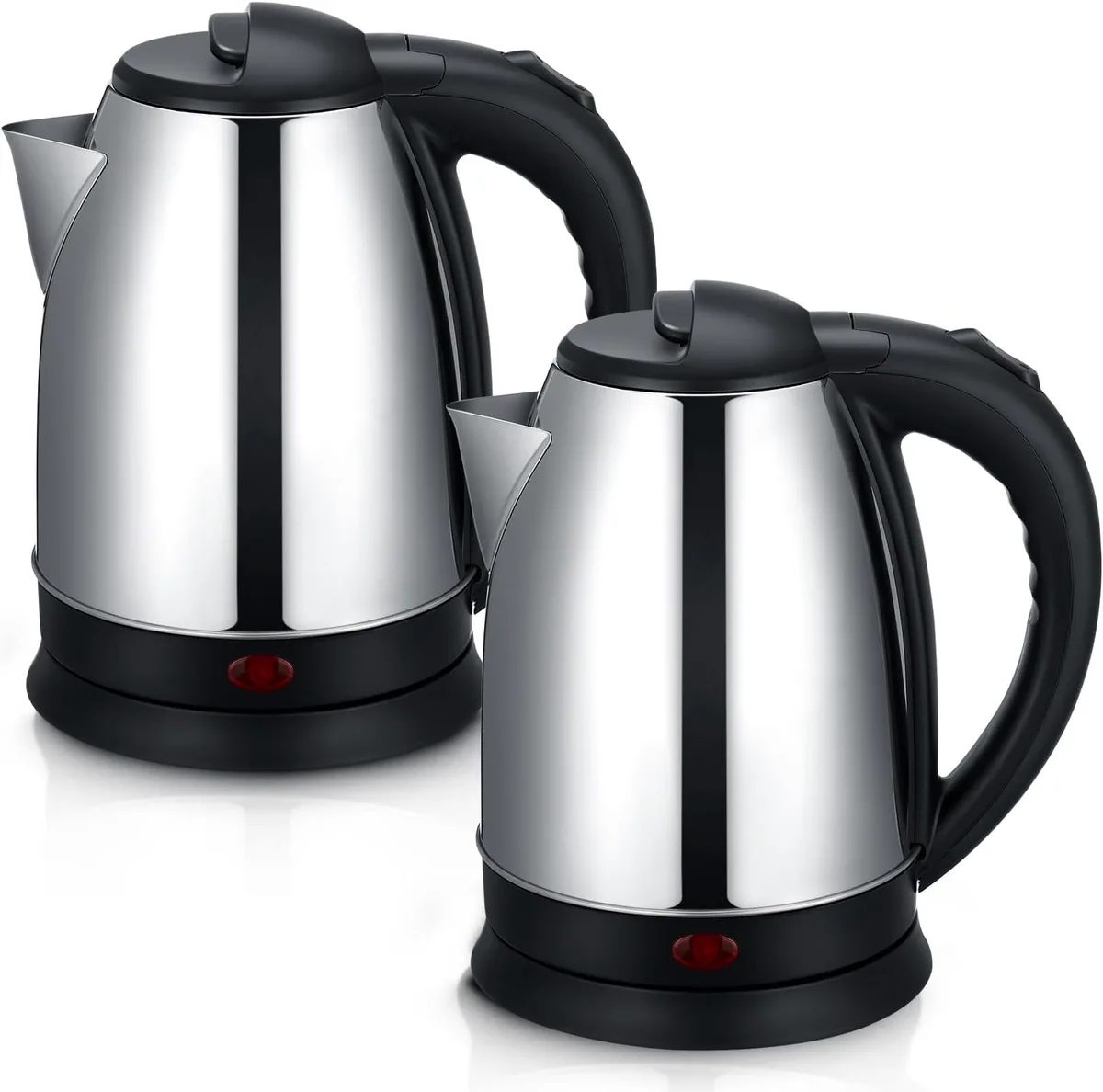
Image source: Web (Bing) / amazon.com (Web image (fair-use with source credit))
Quick Answer
Yes, boiling water in a modern electric kettle is safe when the kettle is made from food-grade materials. Stainless steel and borosilicate glass are the safest options. BPA-free plastic kettles are generally safe too, but avoid older or cheap plastic models.
The boiling process itself kills harmful pathogens. Regular descaling keeps your kettle clean and your water tasting fresh.
The Short Answer: Yes, But Read This First
Let’s get the headline out of the way: boiling water in an electric kettle is safe for the vast majority of people. The act of bringing water to 212°F (100°C) at sea level is one of the most reliable ways to kill bacteria, viruses, and parasites that might be lurking in your tap water. That’s basic water purification science that hasn’t changed in decades.
What actually matters is the kettle itself. The container that holds your water while it boils can introduce contaminants if it’s poorly made or damaged. That’s where the nuance comes in.
A cheap plastic kettle from an unknown brand might leach chemicals into your water, while a well-manufactured stainless steel kettle will not. So the real question isn’t “is boiling safe,” but “is my specific kettle safe to boil in.”
Here’s a quick breakdown of what you’re working with:
| Kettle Material | Safety Level | Key Concern |
|---|---|---|
| Type-304 (18/8) Stainless Steel | High | Nickel leaching in low-grade steel |
| Borosilicate Glass | High | Fragility, thermal shock risk |
| Food-Grade Plastic (BPA-Free) | Moderate | Microplastics, chemical off-taste |
| Ceramic | High | Heavy weight, chip risk |
| Cheap Unknown Plastic | Low | BPA, phthalates, chemical leaching |
What’s Actually Happening Inside Your Kettle?
The physics of boiling water is straightforward, but what happens to the kettle material during that process is worth understanding. When water heats to 212°F, the molecules move rapidly and create steam. That steam and heat put stress on the walls of your kettle, which is why material quality matters so much.
For stainless steel kettles, the heat causes the metal to expand slightly. Quality steel like Type-304 contains about 18% chromium and 8% nickel. This combination creates a passive layer of chromium oxide that prevents rust and stops metal ions from migrating into your water.
That’s why high-end kettles use this specific alloy.
Plastic kettles are a different story. Heat can cause cheaper plastics to break down at a microscopic level. This is where the term “food-grade” becomes critical.
Polypropylene (PP) and other food-safe plastics are engineered to withstand repeated boiling without degrading. They’re stable up to temperatures well beyond boiling, which means they don’t break down into your water.
But here’s what most people don’t realize. The boiling process itself does something else. It drives off dissolved gases like chlorine, which is why freshly boiled water tastes different from tap water.
It also concentrates any minerals already in the water, which is what leads to limescale buildup over time. That white chalky residue isn’t dangerous, but it affects taste and provides a rough surface where bacteria can potentially grow.
Does Boiling Remove Contaminants?
This is where people get confused. Boiling kills pathogens, but it does not remove heavy metals, pesticides, or chemical pollutants. If your tap water contains lead or industrial chemicals, boiling won’t help.
It might even concentrate them slightly as water evaporates. For most municipal water supplies, this isn’t a concern because treatment plants already filter these out. But if you’re on well water or suspect contamination, you need a proper filtration system, not just a kettle.
What About Reboiling?
You’ve probably heard the myth that reboiling water is dangerous. The claim goes that reboiling concentrates minerals and creates toxins. The truth is simpler.
Reboiling water that’s been sitting in your kettle for a day or two is perfectly safe. The only downside is that previously boiled water has less dissolved oxygen, giving it a flatter taste. That’s it.
There’s no chemical transformation happening that makes it hazardous.
The Real Risks: What You Need to Know About Plastic Kettles
Image source: Web (Bing) / pinterest.com (Web image (fair-use with source credit))
Plastic kettles are the biggest source of worry for most people, and for good reason. The concern centers on BPA (Bisphenol A) and its cousin BPS. These are endocrine-disrupting chemicals used in certain types of plastic manufacturing.
When exposed to heat, they can migrate from the plastic into whatever’s inside. That’s a legitimate scientific concern.
Here’s where the nuance matters. BPA is primarily found in polycarbonate plastics, which are hard and transparent. Most modern kettle manufacturers have moved away from polycarbonate and use polypropylene (PP) instead.
PP is a different polymer entirely, and it doesn’t contain BPA. That’s why you’ll see “BPA-free” labels on most kettles manufactured after roughly 2010.
The FDA regulates food-contact materials, and as of 2026, BPA is no longer approved for use in baby bottles and sippy cups in the US. The European Union has gone further with stricter migration limits under its Framework Regulation. So if you’re buying a kettle from a reputable brand, the plastic should be safe.
But here’s the practical problem. Not all plastic kettles are created equal. Budget kettles from unknown brands might use cheaper plastic blends or recycled materials that don’t meet the same standards.
The only way to know for sure is to look for kettles that explicitly state their compliance with FDA or LFGB (German Food and Commodities Act) standards. LFGB is considered the gold standard because it tests for a broader range of migrating substances.
Identifying Safe Plastic
Look for the recycling symbol on the bottom of your kettle. If it says “PP” or shows the number 5 inside the triangle, that’s polypropylene, which is heat-stable and safe. If it shows a 7 or PC, that’s polycarbonate, which you should avoid.
Also check for explicit “BPA-Free” labeling and third-party certification marks like NSF or UL.
Signs Your Plastic Kettle Needs Replacing
- Visible cloudiness or crazing (tiny cracks on the surface)
- A persistent plastic taste in your water
- Scratches or scuffs on the interior surface
- A warped or deformed base
- Any discoloration that doesn’t come off with cleaning
These signs indicate the plastic is degrading and may start releasing microplastics into your water. At that point, replacing the kettle is the safest move.
Stainless Steel, Glass, and Ceramic: Safer Alternatives?
If you’re worried about plastic, you’re not alone. That’s why stainless steel, glass, and ceramic kettles have surged in popularity. Each has its own strengths and drawbacks, and our research shows that stainless steel is generally the best all-around choice for most households.
Stainless Steel is the workhorse of the kettle world. When made with Type-304 (18/8) stainless steel, it’s stable, non-reactive, and won’t leach anything into your water. The main risk is nickel.
Some people have nickel allergies, and low-quality steel can release more nickel ions, especially when new or if the steel is scratched. If you have a known nickel sensitivity, look for kettles that specify “nickel-free” or choose glass instead.
Borosilicate Glass is chemically inert. It doesn’t react with water, doesn’t leach anything, and doesn’t hold onto flavors. The trade-off is fragility.
Glass kettles are more likely to crack if dropped or subjected to rapid temperature changes. They’re also heavier and can be harder to pour from when full.
Ceramic kettles are beautiful and safe but slow to heat. Ceramic is an excellent insulator, which means it takes longer to bring water to a boil. These kettles are best for people who value aesthetics and don’t mind the extra wait time.
They’re also prone to chipping if mishandled.
Who Each Option Is Best For
- Stainless Steel: Best for everyday use, families, and anyone who wants durability
- Glass: Best for those worried about any chemical exposure and who value seeing the water boil
- Ceramic: Best for countertop aesthetics and those who prioritize safety over speed
- BPA-Free Plastic: Best for budget-conscious buyers and frequent travelers who need something lightweight
What About the Metallic Taste?
Many people report a metallic taste from new stainless steel kettles. This is normal and typically fades after the first few uses. It’s caused by residual manufacturing oils and the initial passivation of the steel.
Boiling a couple of batches of water and discarding them will usually eliminate the taste completely.
Limescale: The Hidden Problem You Can’t Ignore
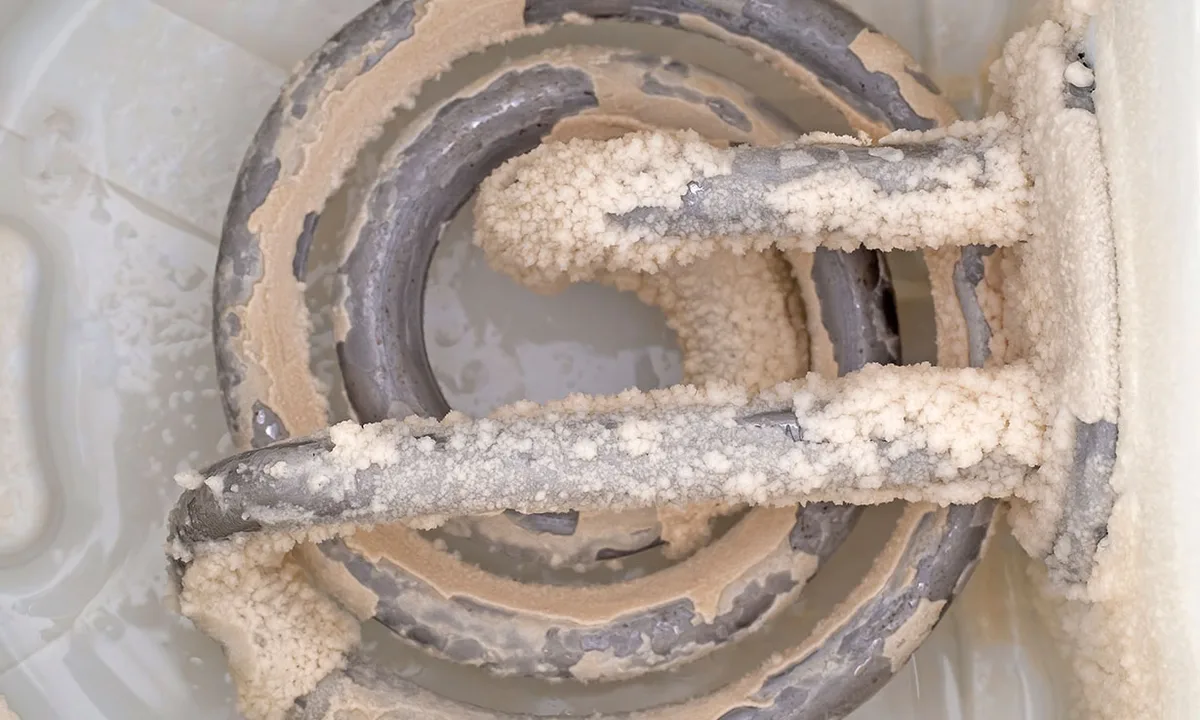
Image source: Web (Bing) / which.co.uk (Web image (fair-use with source credit))
Limescale is the white, chalky buildup that collects on the bottom and sides of your kettle. It’s made of calcium carbonate and magnesium, minerals that are naturally present in hard water. While it looks unappealing, limescale isn’t dangerous to your health.
Your body can easily process these minerals.
The real problems with limescale are practical. It insulates the heating element, making your kettle less efficient. That means longer boil times and higher electricity use.
It also provides a porous surface where bacteria can potentially colonize. And as bits of scale break off, you’ll notice white flakes floating in your cup.
The rate at which limescale builds up depends entirely on your local water supply. If you live in an area with hard water, which the US Geological Survey maps as prevalent across the Midwest and Southwest, you’ll need to descale more frequently. In soft water areas, you might barely see any buildup for months.
How Often Should You Descale?
- Soft Water Areas: Every 3 to 4 months
- Hard Water Areas: Every 4 to 6 weeks
- Very Hard Water Areas: Every 2 to 3 weeks
The easiest way to tell is to look inside your kettle. If you see visible white deposits on the bottom or floating in your water, it’s time to descale. Don’t wait until the buildup is thick and crusty.
The Descaling Process
The safest and most effective descaling solution is white vinegar or citric acid. Both are natural acids that dissolve calcium carbonate without damaging your kettle’s interior. For a standard 1.7 liter kettle, mix equal parts water and white vinegar, fill the kettle halfway, and boil it.
Let it sit for 30 minutes, then pour it out and rinse thoroughly.
Citric acid works similarly. A tablespoon of citric acid powder dissolved in a full kettle of water, boiled, and allowed to soak, will cut through even heavy scale. Some manufacturers recommend against vinegar because the smell lingers, so citric acid is often the better choice.
After descaling, always do at least one boil and discard cycle with plain water to remove any residual acid taste. This is non-negotiable. Skipping this step leaves a sour flavor in your next cup of tea.
If you live in a hard water area, setting a reminder on your phone every month can help you stay on top of it.