Skip to content
Many people love hot, crispy sandwiches. But when it comes to making them at home, choosing between a sandwich maker and a panini press can feel confusing. Both appliances look similar, but they work differently and produce different results. If you’re wondering which one fits your kitchen and lifestyle, this guide will help you understand the real differences.
You’ll learn how each device works, what kind of food you can make, and which suits different needs best. Whether you want a quick breakfast or a restaurant-style panini, knowing these details will save you time and money.
How Sandwich Makers Work
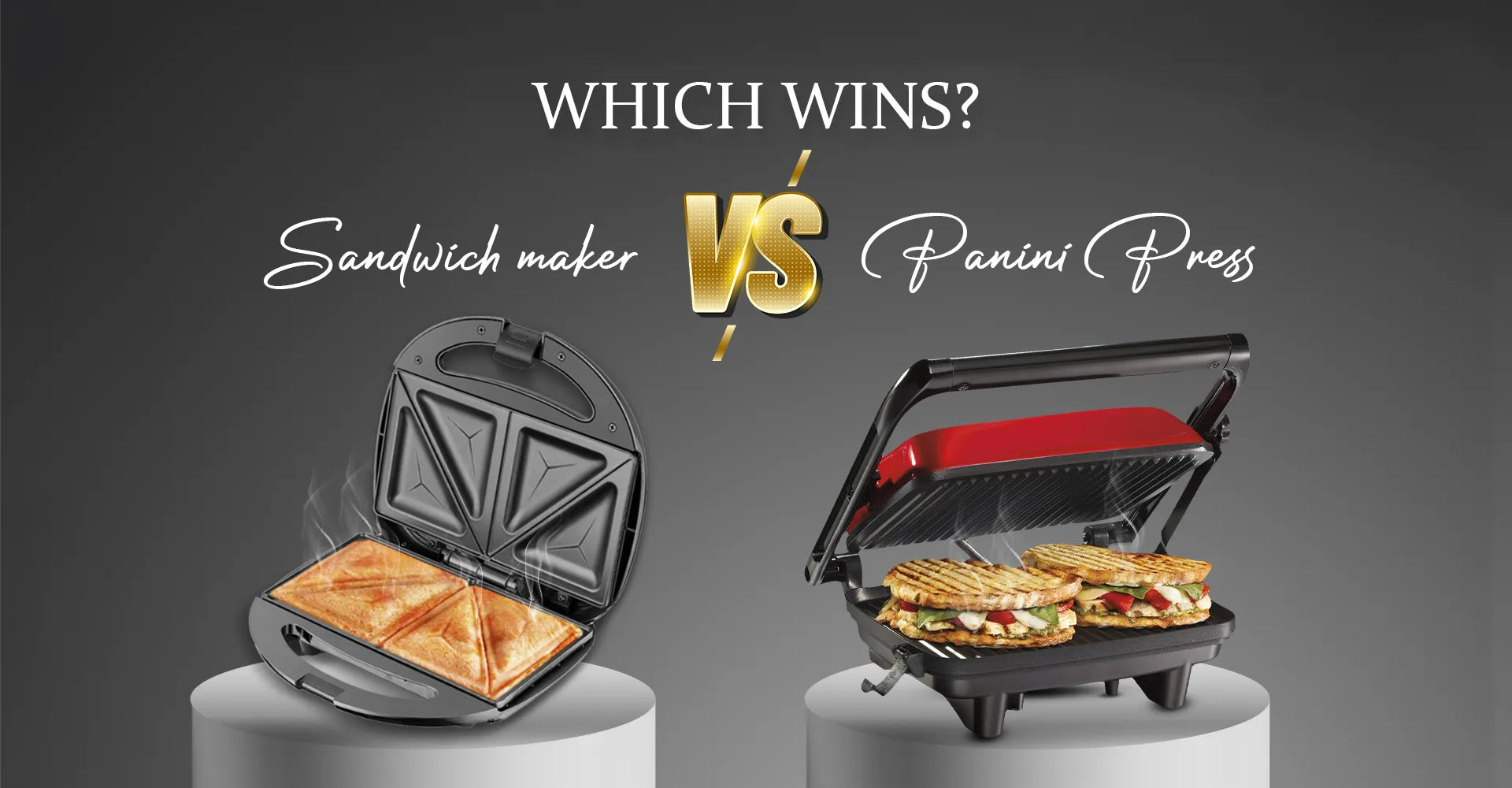
A sandwich maker is a small appliance with two heated plates. You place bread and fillings inside, close the lid, and the plates cook both sides at once. Most sandwich makers have a simple design—usually two or four slots for bread. They’re made for quick, easy sandwiches.
The plates are often shaped to seal the sandwich edges and cut them diagonally, giving you two neat triangles. This sealed edge keeps the fillings inside and makes the sandwich easier to eat. Most models heat up in just a few minutes and cook sandwiches in about 3–5 minutes.
Sandwich makers are very user-friendly. You don’t need special bread or ingredients. Standard sliced bread works best. Just butter the outside of the bread, add your favorite fillings, and close the lid. The machine does the rest.
Popular Features
- Non-stick plates for easy cleaning
- Indicator lights to show when the sandwich is ready
- Compact size for small kitchens
Common Uses
- Grilled cheese
- Ham and cheese
- Peanut butter and jelly
How Panini Presses Work
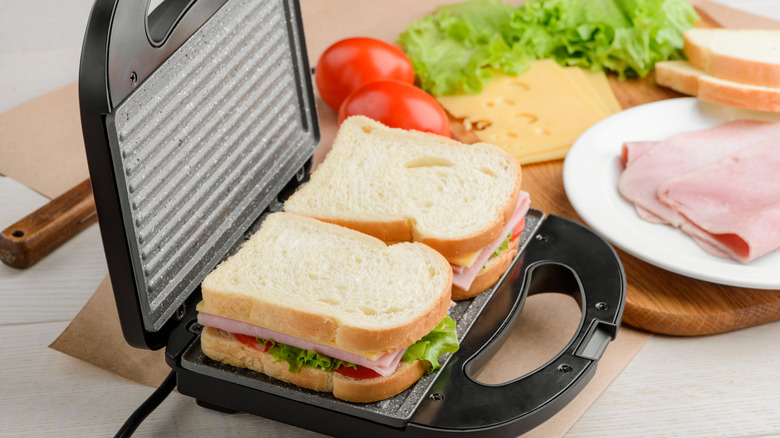
A panini press is a heavier, more versatile appliance. It has two flat or ridged plates that press together, applying heat and pressure. Unlike a sandwich maker, the plates don’t seal or cut the bread. Instead, they leave grill marks and cook the sandwich evenly.
Panini presses can handle thicker bread and more fillings. The floating hinge allows you to press sandwiches of different heights without squeezing too much. This means you can use baguettes, ciabatta, or focaccia—breads that are too thick for most sandwich makers.
Cooking time varies from 5–8 minutes, depending on the thickness and fillings. The press caramelizes the bread, making it crispy outside and warm inside.
Popular Features
- Adjustable temperature controls
- Removable plates for easier cleaning
- Larger cooking surface
Common Uses
- Classic Italian panini
- Turkey and pesto
- Veggie melt
Credit: trutrtl.com
Key Differences: Sandwich Maker Vs Panini Press
These two appliances may seem similar, but they have several important differences. Let’s break down their main distinctions:
| Feature | Sandwich Maker | Panini Press |
|---|---|---|
| Plate Design | Seals & cuts bread | Flat or ridged, presses but doesn’t seal |
| Bread Type | Thin, sliced bread | Thick, artisan bread |
| Sandwich Thickness | Thin to medium | Medium to thick |
| Versatility | Limited to sandwiches | Can grill veggies, meats, wraps |
| Cleaning | Usually fixed plates | Often removable plates |
Cooking Results
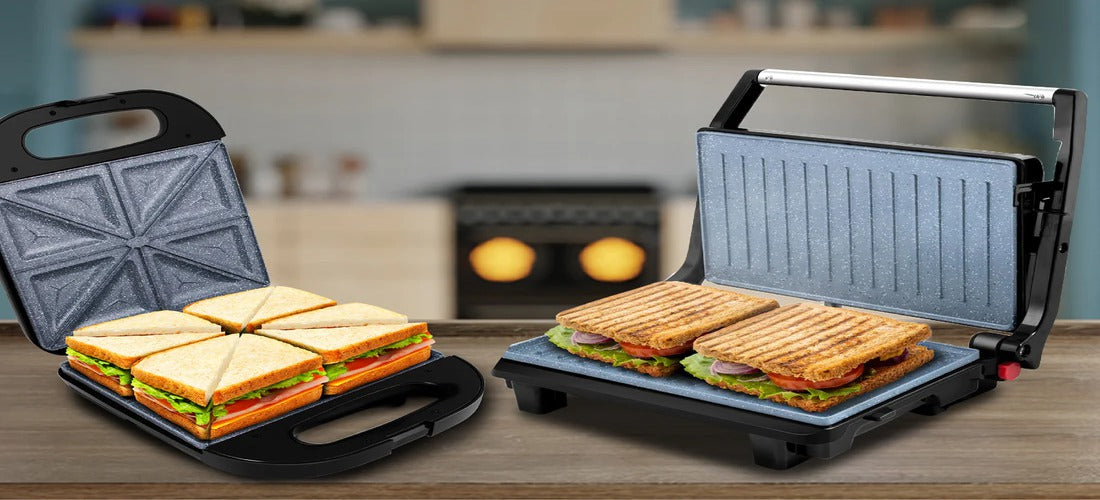
Sandwich makers produce compact, sealed sandwiches. The edges are crispy and the fillings stay inside. Panini presses make larger, open sandwiches with grill marks and a crunchier crust. You can taste the fillings more clearly because they aren’t sealed.
Appliance Size
Sandwich makers are usually smaller and lighter. They fit well in tight spaces. Panini presses are bulkier and need more countertop area. If you have limited space, this is a key factor to consider.
Power And Heating
Panini presses often have higher wattage—usually 1000–1500 watts. Sandwich makers range from 600–900 watts. Higher wattage means faster heating and more even cooking.
What Can You Cook Besides Sandwiches?
Both appliances can do more than just sandwiches, but panini presses are more flexible. Here’s a look at what each can handle:
| Food Item | Sandwich Maker | Panini Press |
|---|---|---|
| Quesadillas | Yes, thin versions | Yes, thick and thin |
| Grilled vegetables | No | Yes |
| Chicken breasts | No | Yes |
| Breakfast wraps | Sometimes | Yes |
| Waffles (with special plates) | Rarely | Sometimes |
Non-obvious Uses
Most beginners don’t realize that a panini press can cook salmon fillets or grill fruit slices. Sandwich makers can sometimes reheat pizza slices or make omelets if you use non-stick spray. Always check the manufacturer’s instructions for safety.
Which One Is Easier To Clean?
Cleaning is important, especially if you use your appliance often. Sandwich makers have fixed plates, so you must wipe them down. If fillings leak, cleaning can be tricky. Panini presses often have removable plates, making them easier to wash.
Some panini presses even have dishwasher-safe plates. If you care about easy cleanup, look for this feature. For sandwich makers, using parchment paper can help reduce mess.
Price Comparison
When shopping, price matters. Sandwich makers usually cost $20–$40. They’re affordable and good for basic needs. Panini presses range from $40–$100, depending on features and brand. High-end models with extra functions can go above $150.
Cost Vs Value
If you only need simple sandwiches, a sandwich maker saves money. If you want to grill, toast, and try new recipes, a panini press is worth the investment. Think about how often you’ll use it and what kinds of food you like.
Credit: www.foodrepublic.com
Choosing The Right Appliance For Your Needs
The best device depends on your habits and kitchen setup. Here are some points to help you decide:
- Space: If your kitchen is small, a sandwich maker fits better.
- Bread Preference: If you love thick, crusty bread, choose a panini press.
- Cooking Variety: Want to cook more than sandwiches? Go with a panini press.
- Budget: Sandwich makers are cheaper for basic meals.
- Cleaning: Removable plates make panini presses easier to clean.
Real-life Example
Maria, a college student, uses a sandwich maker to make fast breakfasts. She likes how it seals the edges and keeps her desk clean. John, a home chef, prefers a panini press. He makes grilled chicken, roasted veggies, and thick paninis for family dinners.
Common Mistakes When Buying
Many people buy based on looks or price alone, but this can lead to disappointment. Here are mistakes to avoid:
- Choosing a sandwich maker when you want thick sandwiches
- Ignoring cleaning features
- Buying a panini press without checking plate quality
- Forgetting to check appliance size
Always read reviews and check specs. Look for warranty information—some appliances break after a year of heavy use.
Credit: wiproappliances.com
Safety Tips
Both appliances get very hot. Always use oven mitts and keep children away. Don’t overfill sandwiches; fillings can leak and cause burns. For panini presses, don’t press down too hard—this can crush bread or spill ingredients.
Technical Specifications: A Closer Look
Let’s compare some technical specs from popular models:
| Model | Type | Wattage | Plate Type | Size (inches) |
|---|---|---|---|---|
| Hamilton Beach Sandwich Maker | Sandwich Maker | 700W | Fixed, non-stick | 9 x 6 x 5 |
| Cuisinart GR-4N | Panini Press | 1500W | Removable, ridged | 13 x 11 x 6 |
| Breville Panini Duo | Panini Press | 1500W | Fixed, flat/ridged | 13 x 12 x 5 |
| Proctor Silex Sandwich Maker | Sandwich Maker | 750W | Fixed, non-stick | 10 x 7 x 4 |
Notice the difference in wattage and size. Panini presses are larger and more powerful, which means they cook faster and can handle bigger sandwiches.
Energy Efficiency
If you use these appliances daily, energy use matters. Sandwich makers use less energy because they have lower wattage and shorter cooking times. Panini presses use more, but they offer more cooking options.
Tip: Always unplug after use to save energy and prevent accidents.
Longevity And Durability
Panini presses are generally built with stronger materials—stainless steel, heavy-duty hinges, and thicker plates. Sandwich makers often use lighter plastic and thinner metal. If you plan to use your appliance often, durability is important.
Look for reviews mentioning long-term reliability. Some brands offer replacement plates or extended warranties.
Health And Nutrition
Both appliances can help you make healthier meals. You control the ingredients and avoid fast food. Panini presses let you use whole-grain bread and lots of veggies. Sandwich makers are better for portion control; sealed sandwiches prevent overfilling.
One non-obvious tip: You can use olive oil instead of butter for a healthier crust. Also, panini presses allow you to drain excess fat when cooking meats.
Environmental Impact
Most sandwich makers and panini presses are electric. Using them instead of frying pans reduces oil use and smoke. Some models are made with recycled materials or energy-saving designs. If sustainability matters, check for eco-friendly certifications.
Getting The Most Out Of Your Appliance
To maximize your investment, learn a few tricks:
- Preheat the appliance before use for best results
- Don’t overfill sandwiches—too much cheese can leak
- Use parchment paper or a light oil spray for easy release
- Let sandwiches rest for 1–2 minutes before eating to avoid burns
You can even experiment with global flavors. Try Indian chutney, Mexican beans, or Italian pesto for variety.
Expert Insight
Many chefs prefer panini presses for their flexibility. But in busy kitchens, sandwich makers help save time. If you’re buying for a family, panini presses can make multiple sandwiches at once. Sandwich makers are better for single servings.
A surprising fact: According to a report by Statista, over 40% of US households own some kind of sandwich-making appliance, and panini presses are becoming more popular for their versatility.
For more in-depth data on appliance trends, you can visit Statista.
Frequently Asked Questions
What Is The Main Difference Between A Sandwich Maker And A Panini Press?
The main difference is in the plate design. A sandwich maker seals and cuts the sandwich, making neat triangles. A panini press uses flat or ridged plates to grill and toast the bread, leaving it open-faced with grill marks.
Can I Use Thick Bread In A Sandwich Maker?
No, sandwich makers work best with thin, sliced bread. Thick bread may not fit or cook evenly. For thick bread, a panini press is a better choice.
Are Panini Presses More Versatile Than Sandwich Makers?
Yes, panini presses can cook sandwiches, meats, vegetables, and wraps. Sandwich makers are limited to thin sandwiches. If you want more cooking options, choose a panini press.
How Do I Clean A Sandwich Maker Or Panini Press?
Most sandwich makers have fixed plates; wipe them with a damp cloth after cooling. Panini presses often have removable plates, which can be washed separately. Check if the plates are dishwasher-safe for easier cleaning.
Which Appliance Is Safer For Children To Use?
Sandwich makers are simpler and usually safer for older children, but both appliances get hot. Always supervise children and teach them basic safety, like using oven mitts and not overfilling sandwiches.
Choosing the right appliance can make your kitchen routine faster and tastier. Consider your space, budget, and cooking style before deciding. With the right tool, you can enjoy delicious sandwiches any time and try new recipes without hassle.