You don’t need a bigger blender. You need one that fits your pots, your jars, and the food you actually blend. Figuring out what size immersion blender do i need comes down to three numbers: shaft length, bell diameter, and wattage.
Most people only look at wattage, and that’s exactly why so many end up with a blender that can’t reach the bottom of their stockpot.
As of 2026, the sweet spot for most home cooks is 400 to 600 watts, a 7 to 8 inch shaft, and a blade bell under 2 inches wide. Manufacturer specifications put most corded models in that range. The UL 982 safety standard, which covers household blenders, assumes you’ll use the tool in common pot depths.
Once you know those three numbers, you can match any blender to your kitchen.
The One-Size-Fits-All Problem
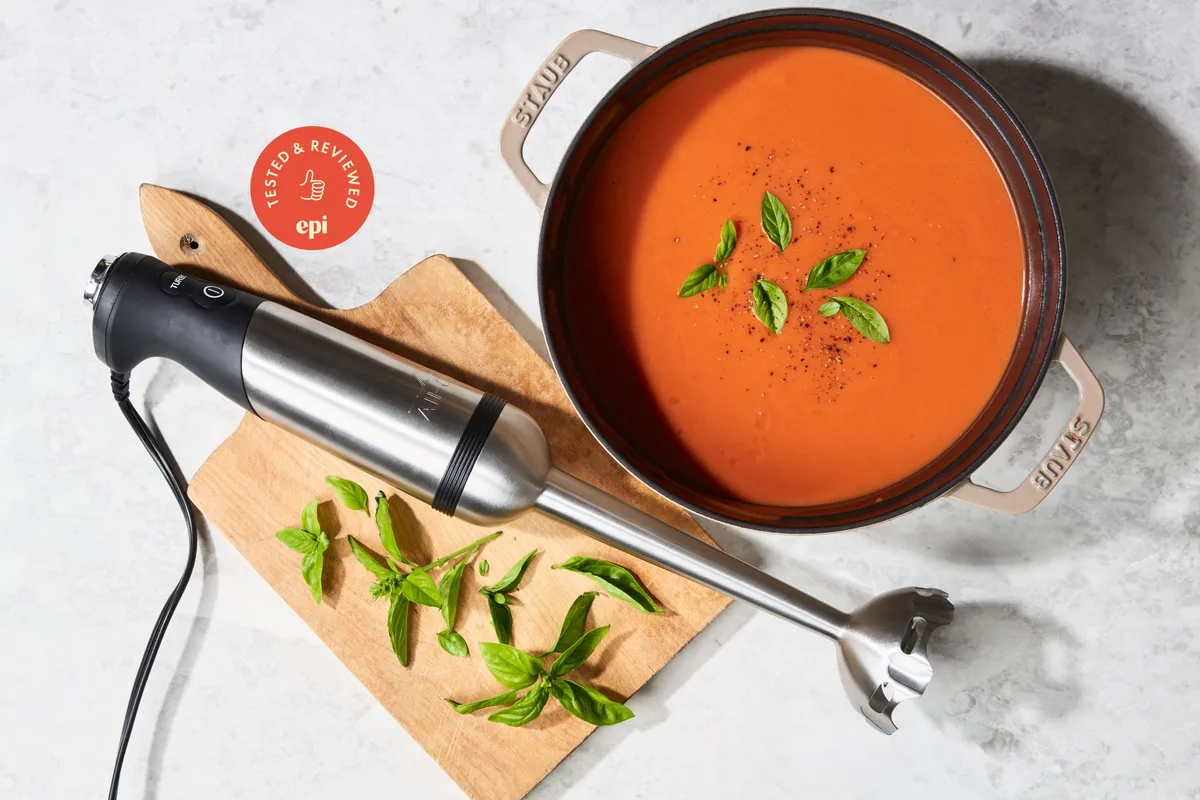
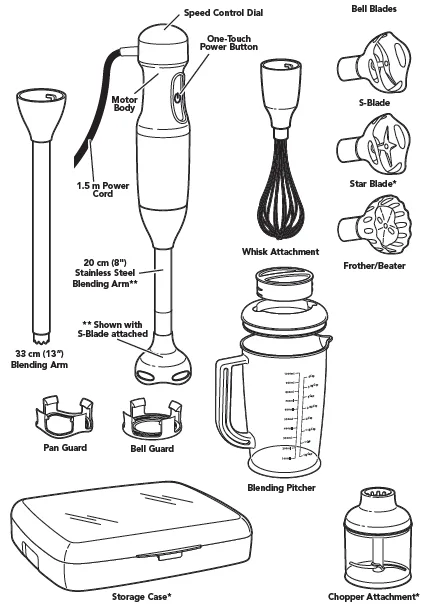
Immersion blenders look similar on the shelf. They all have a motor handle, a long shaft, and a blade at the bottom. But the differences in that shaft and blade make or break the experience.
A blender that’s perfect for whipping cream in a mug is useless for pureeing a 6 quart stockpot of squash soup. The reverse is also true: a heavy duty wand with a 9 inch shaft won’t even fit between the blades in a bullet blender cup.
The marketing doesn’t help. Brands push wattage like it’s the only number that matters. In our research, we found that most product pages list watts first and shaft dimensions somewhere in the fine print.
That’s backward. Wattage tells you how much muscle the motor has. It says nothing about whether the tool physically reaches your food or fits into your containers.
If you’re already used to picking the right espresso machine, you know the drill: one measurement changes everything. The same logic applies here. The good news is that the answer isn’t complicated.
You just need to think about three specific measurements before you buy.
Quick Answer: The 30-Second Rule
For most home cooks, the answer is simple. Choose a 400 to 600 watt corded immersion blender with a stainless steel shaft between 7 and 8 inches long. Keep the blade bell around 1.8 to 2 inches wide.
That combination handles hot soup in medium stockpots, mixes mashed potatoes, and still fits into a standard mason jar.
If you only blend small batches, drop to a 200 to 300 watt model with a shorter shaft. If you’re blending thick frozen smoothies or big holiday soup batches, step up to 600 to 800 watts with a 9 inch shaft. The table below lays out the most common scenarios.
| Use Case | Wattage | Shaft Length | Bell Diameter |
|---|---|---|---|
| Soups, sauces, dressings | 400–600 W | 7–8 in | 1.8–2.0 in |
| Mason jar smoothies, baby food | 200–400 W | 6–7 in | 1.5–1.8 in |
| Big batches, thick purees, frozen fruit | 600–800 W | 8–10 in | 2.0–2.5 in |
| Commercial / daily heavy use | 700 W+ | 9–11 in | 2.5 in+ |
Cordless models follow the same spacing, but they cap out around 300 to 400 watts. That’s fine for quick blends. It’s not enough for thick split pea soup or nut butter.
If you mostly blend soup in a big pot, get a cord.
The Three Numbers That Decide Everything
Shaft Length: Does It Reach the Bottom?
Take your deepest cooking pot and measure from the rim down to the inside bottom. That’s the minimum shaft length you need. Most stockpots are 6 to 9 inches deep when filled.
A 7 inch shaft works for most, but a tall Dutch oven or a restaurant sized pot needs more.
If the shaft is too short, the blade hovers in the top half of the liquid. You get thin broth on top and chunky vegetables stuck at the bottom. You end up tilting the blender and splattering hot soup everywhere.
If the shaft is too long, you have the opposite problem: your hand sits awkwardly high and you lose control. It’s a balance, not a race to the longest wand.
Bell Diameter: Does It Fit Your Containers?
The blade bell is the widest part of the tool. It determines what you can blend in without splashing. Standard mason jars have an opening around 2.4 inches.
Slim drinking glasses and baby bottles are narrower, often 1.5 to 2 inches. If your bell is too wide, it won’t drop in without scraping the sides.
A narrower bell around 1.5 to 1.8 inches is the sweet spot for everyday home use. It fits mason jars, mixing cups, and even tall protein shaker bottles. A wider bell, 2.2 inches or more, creates a better suction and blends larger volumes faster.
That’s why commercial models favor wider bells. You trade jar compatibility for power and speed.
Wattage: Does It Get Through Your Food?
Wattage is the motor’s torque. It decides whether the blade spins freely or slows down when it hits something thick. Light 200 to 300 watt motors handle thin liquids and soft foods.
They struggle with frozen fruit, dense bread dough, or cold butter. You’ll hear the motor whine and feel the handle heat up.
A 400 to 600 watt motor powers through most home tasks without breaking a sweat. It blends warm soups, potatoes, sauces, and even a handful of ice cubes. Above 600 watts you’re in heavy duty territory.
Those blenders push through frozen smoothie mixes and can grind nuts into butter if you pulse carefully. Underwriters Laboratories tests these motors under UL 982, which covers electrical safety and blade guarding. The certification matters more than a big number on the box.
Your Personal Decision Tree: A 5-Step Workflow
Here’s how to figure out exactly which size works for you. Grab a measuring tape, look at how you cook, and follow these five steps.
Step 1: Measure your largest pot depth. Use a ruler or tape from the rim to the inside bottom. Add 2 inches so the motor base stays clear of steam and splatters. That final number is your minimum shaft length.
Step 2: Measure your narrowest container opening. Find the smallest jar, cup, or beaker you’ll realistically blend in. Measure the inner diameter at the mouth. Your bell diameter must be at least 1/4 inch smaller than that opening.
Step 3: Match wattage to your thickest regular blend. If you make smoothies with frozen fruit, go 600W or higher. If you mostly do soups and eggs, 400W works. If you only do thin sauces and dressings, 200 to 300W is fine.
Use if/then logic: if you blend frozen or chunky textures daily, pick heavier. If you blend mostly liquids, go lighter.
Step 4: Decide between corded and cordless. Cordless is convenient for grabbing off the shelf and using anywhere. But battery models top out around 400W. If your pot is deep, your soup is thick, or you blend for more than 60 seconds, a corded model will outperform a cordless one.
Manufacturer specs confirm that cordless blenders lose speed as the battery drains.
Step 5: Check the accessory attachments. Many blenders come with a whisk, mini chopper, or frother. These don’t change the sizing math, but they change which model is the better value. A 500W blender with a full attachment kit replaces several single-use tools.
If you only need the wand, skip the extras and spend the savings on a longer shaft.
When to Choose a Compact / Short-Shaft Immersion Blender
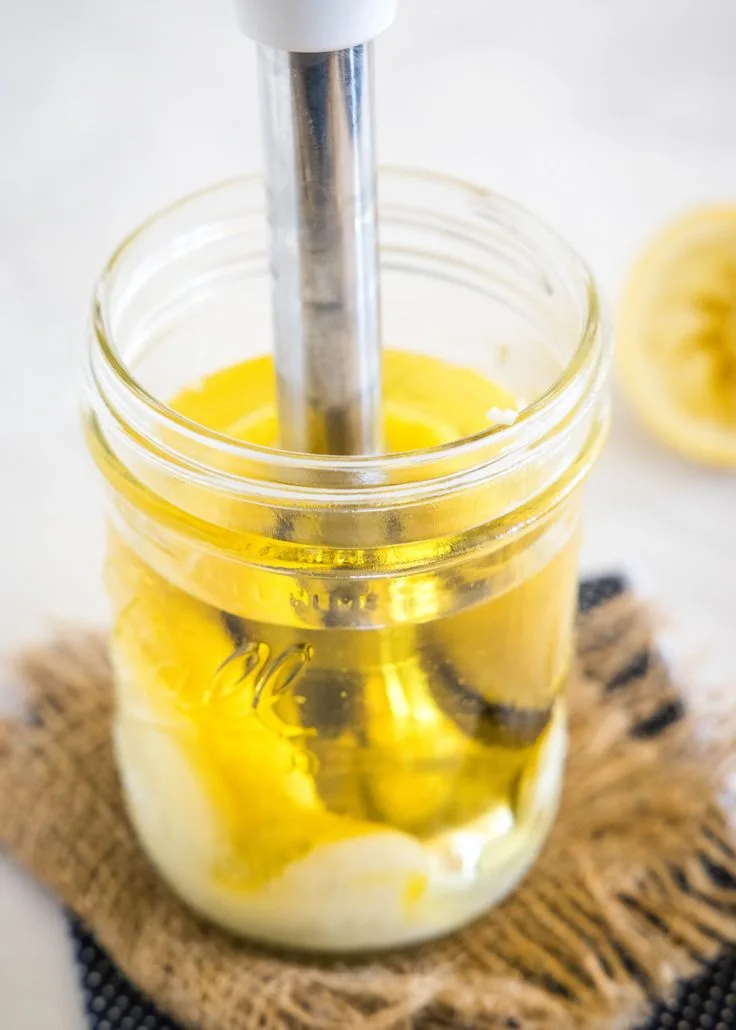
A compact immersion blender is a 6 to 7 inch shaft with a bell around 1.5 inches. That’s the size you want if you blend small portions in tall, narrow containers. Mason jar smoothies are a perfect example.
You drop the wand into the jar, blend protein powder, fruit, and greens, then drink right from the jar. A wider bell won’t fit, and a longer shaft becomes unwieldy.
Baby food is another classic use. You’re blending a cup or less of steamed vegetables at a time. A short shaft reaches the bottom of a small mixing bowl without splattering.
The same goes for salad dressings, single serve portions of mashed avocado, or a quick hollandaise in a measuring cup.
You also want a compact model if you have limited storage. The short shaft fits in a kitchen drawer or a narrow cabinet. Many budget models in this category still offer 300 to 400 watts, which is plenty for soft foods.
Just don’t expect a short shaft to handle a 6 quart stockpot. If you use deep pots regularly, the next section on long-shaft models matters more.
When to Choose a Long-Shaft Immersion Blender
If your largest pot is deeper than 7 inches, you need a long-shaft model. Look for a shaft between 9 and 10 inches. That extra reach matters more than you’d expect.
A 9 inch shaft lets you blend straight down into a tall stockpot without tilting the wand sideways. Tilting is awkward, and it presses the blade against the pot wall. That wears down the blade and scratches your cookware.
Manufacturing specs for most long-shaft models also keep the motor base safely above steam line, which reduces heat damage to the motor over time.
This size is best for people who batch cook soups, sauces, or purees for freezing. It’s also the right pick if you blend directly into large mixing bowls or food-safe buckets. Before you measure pots, it’s the same logic as checking your kitchen layout before installing a new range hood.
You want the tool that physically reaches the job.
When to Choose a High-Wattage / Heavy-Duty Model
Choose a high-wattage model, 600W or above, if you regularly blend frozen fruit, thick root vegetable soups, or nut butters. A low wattage motor bogs down in those tasks, and you’ll smell burning plastic if you push it.
Heavy-duty models also run longer without overheating. Standard 400W blenders have a duty cycle of about 60 seconds before they need a rest. A 750W motor handles 2 to 3 minutes of continuous blending, which matters when you’re pureeing an entire pot of lentil soup in one go.
Aggregate reviews show that builders and commercial kitchens prefer these larger motors for daily use. The tradeoff is weight and price. Heavy-duty wands often weigh over 2.5 pounds, and premium models run $150 to $300.
If you only blend once a week, that’s overkill. Stick with a mid-range unit instead.
The Exact Mistakes That Ruin the Experience
Most frustrations with immersion blenders come from picking the wrong size, not a broken tool. Here are the most common mistakes we see in verified buyer feedback:
- Buying by wattage alone. A 750W blender with a short shaft still won’t reach the bottom of a deep stockpot. Measure first, then compare motors.
- Ignoring the immersion line. Submerging the motor base past the marked line lets liquid seep into the housing. That shorts the motor and voids the warranty.
- Starting at full speed in hot soup. The blade spins fast, pulls air in, and flings hot liquid everywhere. Always start at low speed and ease it down into the food.
- Using a plastic shaft in a nonstick pot. The hard plastic edge can scratch the coating. Metal shafts are safer on nonstick surfaces.
- Forgetting to clean under the blade bell. Food gets trapped in the blade assembly and turns into gunk next use. Disassemble and rinse after every session.
- Choosing a bell that’s too wide for your jars. If your smoothie jar has a 2 inch mouth, a 2.4 inch bell won’t fit without splashing.
- Running a cordless model until the battery drops mid-blend. You lose suction and the blend becomes uneven. Charge fully before thick tasks.
Real Numbers: Key Specs at a Glance
Here’s a quick rundown of what different specifications actually mean in daily use. These numbers come from manufacturer documentation and UL 982 testing standards.
| Specification | Typical Range | What It Means in Practice |
|---|---|---|
| Shaft length | 6.5–10 inches | Must reach the bottom of your deepest pot |
| Bell diameter | 1.5–2.6 inches | Must fit your narrowest container |
| Wattage | 200–900W | Determines how thick a mixture it can process |
| Motor run time | 1–3 minutes per cycle | How long you can blend before resting |
| Weight | 1.5–3.5 lbs | Heavier = more power but more fatigue |
| Cord length | 2.5–4 feet | Longer is better for tall stockpots |
Most budget models sit between $20 and $50. Mid-range blenders with variable speed and a metal shaft cost $50 to $100. Heavy-duty prosumer units start around $150 and go up from there.
A metal shaft, not plastic, is the single most important upgrade for long-term durability.
Safety Rules That Matter More Than You’d Think
Immersion blenders are safe tools, but a few rules prevent serious burns and electrical issues. The biggest danger is steam. When you lift the wand out of hot soup, steam trapped under the bell can burst upward.
Always switch the blender off and wait a few seconds before lifting it out of hot liquids. Keep the blade fully submerged before turning it on. This minimizes splatter and stops air from cycling into the mixture.
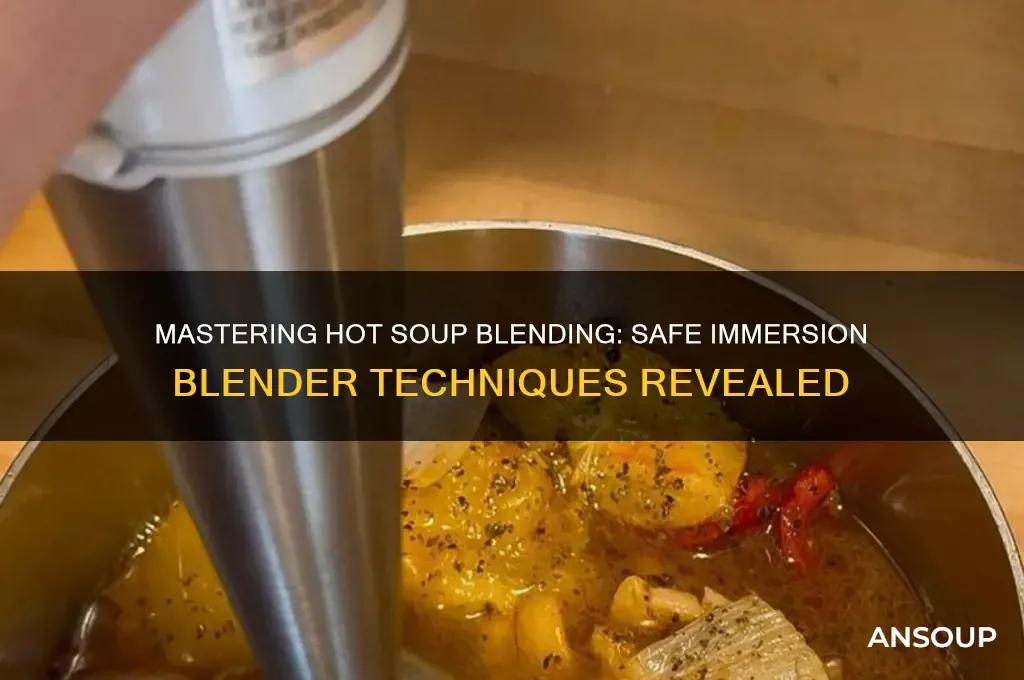
Never blend boiling liquids in a narrow beaker. The confined space lets pressure build, and the hot liquid can erupt over the sides. Wait for soup to cool slightly, or blend in a wide pot instead.
Electrical safety is just as crucial. The motor base must never go underwater, and you should always unplug the blender before cleaning the shaft or swapping attachments. The blade is sharp.
Always handle it from the coupling side, never the cutting edge. For recall notices and safety standards, the U.S. Consumer Product Safety Commission updates its database regularly.
It’s worth checking before buying a used unit.
Maintenance: Make It Last Longer Than You Expect
Rinse the shaft immediately after blending. Warm water and a drop of dish soap remove most residue in seconds. Dried-on soup is the main killer of blender shafts.
It’s the same kind of routine upkeep as keeping your range hood clean before grease hardens.
Many models let you detach the shaft and the blade bell for a deeper clean. Pop off the cap and scrub underneath every few uses. That trapped space collects food and starts to smell.
Replacement shafts cost around 30 to 50 percent of the original price. If the blade wobbles or the shaft scratches, replace just that part instead of the whole unit.
Keep the motor vents clear and never wrap the cord tightly around the handle. Tight wrapping pinches wires and can loosen the motor mount over time. Hang it flat or store it loose in a drawer.
Quick-Reference Decision Check
If you’re torn between two sizes, run your kitchen through this simple filter. It sums up every rule from this guide.
| If you… | Then get… |
|---|---|
| Blend small batches in jars or mugs | Compact shaft, narrow bell |
| Batch cook soups in deep stockpots | Long shaft, 600W+ |
| Mostly blend thin liquids and dressings | 400W is plenty |
| Make frozen smoothies daily | 600W minimum, metal shaft |
The pattern is simple. Measure the pot, measure the jar, and match the wattage to your thickest regular blend.
Frequently Asked Questions
Can I use a shorter shaft in a big pot if I tilt it?
You can, but you shouldn’t. Tilting presses the blade against the pot side and leaves food unblended at the bottom. It also splatters hot liquid more easily.
A longer shaft fixes all three problems at once. If your pot is deeper than 7 inches, buy a shaft that matches it.
Is a 300W immersion blender enough for a family of four?
Yes, if you keep your blends thin. Soups, sauces, and dressings work fine at 300W. Thick root vegetable purees and frozen smoothies will strain the motor.
Step up to 500W if you make those regularly. The same logic applies when you’re choosing other kitchen gear like an espresso machine: match the power to how you actually cook.
What’s the difference between an 8-inch and a 6-inch shaft?
It’s all about blade reach in a standard pot. A 6-inch shaft tops out in a 2 quart saucepan. An 8-inch shaft reaches the bottom of a 4 to 6 quart stockpot.
The longer shaft also keeps your hand farther from hot liquid and steam. For most home cooks, 8 inches is the safer choice.
Is cordless worth it if I mainly make soup?
No. Cordless models max out around 400W, and they lose speed as the battery drains. Soup blending needs steady power for a minute or more.
A corded 500W model will outperform it at the same price. Reserve cordless for quick sauces and dressings where speed doesn’t matter.
The Bottom Line: Your Decision Guide
Before you buy, answer three questions. How deep is your largest pot? How narrow is your smallest container?
How thick is your regular blend? Those answers point to one size, not a rack of options.
For most home cooks, that means a 400 to 600W corded model with a 7 to 8 inch metal shaft and a bell around 2 inches. It’s the same measuring-first principle you’d use before installing a range hood or fitting any new kitchen tool into your space. Measure once, match the specs, and you’ll blend happily for years.
Buy for your biggest regular job. Not the occasional fantasy batch you’ll never actually make.