Skip to content
If your vacuum cleaner is not picking up dirt like it used to, you are not alone. Many people find their once-powerful vacuum slowly loses suction, leaving dust and crumbs behind. This can be frustrating, especially if you rely on your vacuum to keep your home clean. But before you think about buying a new machine, it is important to understand why this happens and how you can fix it. Most suction problems have simple causes. With a little guidance, you can often restore your vacuum’s power and extend its life.
Let’s explore the common reasons vacuums lose suction, how to diagnose the problem, and what you can do to get your cleaner working like new.
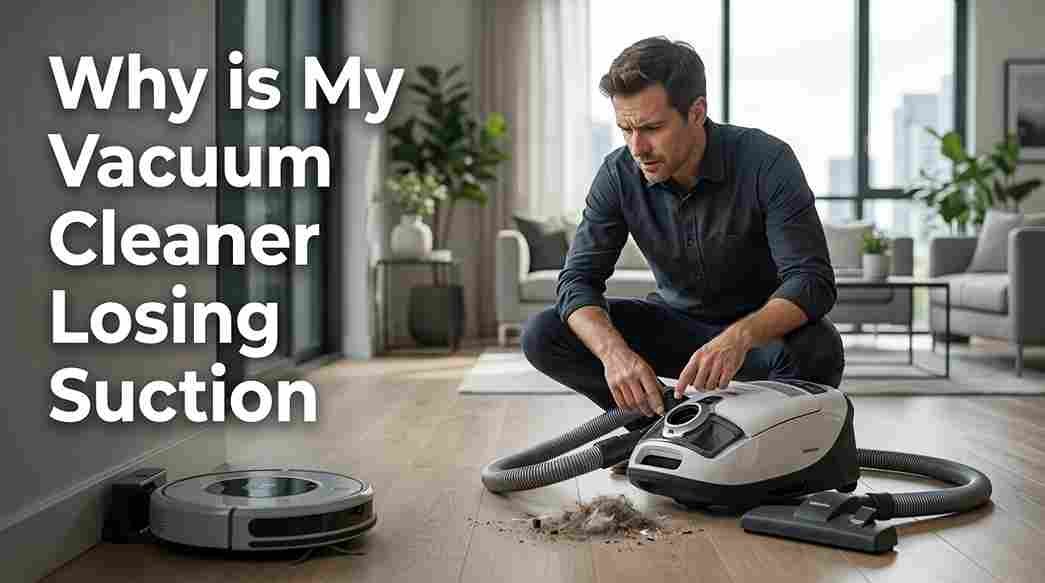
How Suction Works In A Vacuum Cleaner
Understanding how your vacuum creates suction makes it easier to solve problems. Inside every vacuum, a motor spins a fan, creating a drop in air pressure. When you turn on the machine, the higher air pressure outside pushes dirt and air into the vacuum, through the hose, and into a bag or bin. If anything blocks this airflow, the suction drops.
Key parts involved in suction:
- Motor and fan: Create airflow
- Filters: Trap dust, but can clog
- Hose and tubes: Carry air and debris
- Bag or bin: Collects dirt
If any of these parts are blocked, dirty, or damaged, the airflow weakens, and your vacuum cannot pick up as much.
Main Reasons Your Vacuum Cleaner Loses Suction
Let’s break down the most common causes, from simple to advanced.
1. Full Dust Bag Or Bin
The most frequent reason is a full dust bag or bin. As it fills up, air cannot move freely, reducing suction.
How to check: Open the dust compartment. If dirt is above the “max” line or the bag feels heavy, it is time to empty or replace it.
Tip: Even if the bin is not completely full, some vacuums lose power if the filter inside the bin is clogged with fine dust.
2. Clogged Or Dirty Filters
Vacuums have one or more filters to trap dust and protect the motor. Over time, these filters fill with dirt and block airflow.
Types of filters:
- HEPA filters: High-Efficiency Particulate Air, very fine
- Foam or felt filters: Trap larger particles
- Exhaust filters: Clean air before releasing it
How to check: Find your filter (check your manual if unsure). If it looks gray, dusty, or smells bad, it is probably clogged.
Solution: Wash or replace filters as the maker suggests. Some need to dry for 24 hours before use.
3. Blocked Hose Or Wand
A blocked hose is a classic cause of low suction. Socks, hair, and even small toys can get stuck.
How to check: Detach the hose and look through it. Try pushing a broom handle inside. If it doesn’t go through smoothly, there’s a blockage.
Tip: Sometimes debris gets stuck where the hose meets the body or cleaning head. Check both ends.
4. Air Leaks
If there is a crack or hole in the hose, air gets in and reduces suction. Even small leaks make a big difference.
How to check: Run your hand along the hose while the vacuum is on. If you feel air escaping, you have a leak.
Solution: Replace damaged hoses. Temporary tape fixes will not last.
5. Brush Roll Problems
The brush roll (the spinning brush under the vacuum) helps lift dirt. If it is tangled with hair or not spinning, cleaning suffers.
Signs of trouble:
- Brush doesn’t spin
- Hair or string wrapped around it
- Strange noises
Fix: Turn off the vacuum, remove the brush, and cut away hair or debris. Some brushes need regular oiling or belt checks.
6. Worn Or Broken Belts
A belt connects the motor to the brush roll. If it slips, stretches, or breaks, the brush won’t spin, and suction feels weak.
How to check: If the brush roll doesn’t move but the motor runs, the belt is likely the problem.
Solution: Replace the belt with the correct size for your model.
7. Incorrect Height Setting
Many vacuums let you adjust the floor height for carpet or hard floors. If it’s set too high, the vacuum won’t seal with the floor, so suction drops.
Check: Look for a dial or lever marked with carpet types (low, medium, high, hard floor).
Fix: Adjust to match your floor type.
8. Overheated Motor Or Safety Shut-off
If the vacuum gets too hot, many models shut off or reduce power to protect the motor.
Cause: Usually blocked airflow or overuse.
Solution: Let the vacuum cool, clear blockages, and clean filters before restarting.
9. Poor Maintenance Or Old Age
Even with good care, parts wear out over time. Seals harden, motors lose power, and old vacuums may never match their original suction.
Sign: You have checked all other causes and still have low suction.
Solution: Consider professional repair or replacement.
How To Diagnose Suction Loss Step By Step
If your vacuum is weak, follow these steps to find the cause:
- Empty the bin or replace the bag.
- Check and clean all filters.
- Inspect the hose, wand, and attachments for blockages.
- Examine the brush roll and belt.
- Look for cracks or holes in the hose.
- Adjust the height setting for your floor.
- Test the vacuum. If the problem is not fixed, repeat the steps or consult a technician.
Comparison: Suction Loss Causes By Vacuum Type
Different vacuum types have their own common problems. Here’s a quick comparison.
| Vacuum Type | Common Suction Problems | Special Tips |
|---|---|---|
| Upright | Full bag, clogged filters, blocked brush roll | Check belt and height setting |
| Canister | Blocked hose, air leaks | Inspect hose ends carefully |
| Stick/Handheld | Small dust bins, filter clogs | Empty and clean after every use |
| Robot | Hair in brush, dust sensor block | Clean sensors and wheels often |
Common Mistakes That Reduce Suction
Many people hurt their vacuum’s performance without realizing it. Here are a few errors to avoid:
- Waiting too long to empty the bag or bin
- Forgetting to clean or replace filters
- Vacuuming wet items or large debris (can clog or damage parts)
- Using the wrong attachments for the surface
- Not checking for blockages after vacuuming up a large object
Non-obvious tip: Even small bits of tissue or cotton swab sticks can cause a major blockage. Always check for small, flexible items in hoses and wands.
Signs That Suction Loss Is Not Fixable
Sometimes, loss of suction means the vacuum is reaching the end of its life. Warning signs:
- Burning smell or strange noises from the motor
- Cracked or warped body parts
- Suction is weak even with all new parts
If repairs cost more than half the price of a new vacuum, replacement is usually smarter.
How Often To Service Your Vacuum
Regular care keeps your vacuum strong. Here’s a general schedule:
| Maintenance Task | How Often |
|---|---|
| Empty dust bin/replace bag | Every use or when full |
| Clean filters | Every 1-3 months |
| Check for hose blockages | Monthly |
| Inspect brush roll and belt | Monthly |
| Replace filters (if non-washable) | Every 6-12 months |
How To Prevent Loss Of Suction
A few simple habits can keep your vacuum at full power:
- Empty the bin or bag before it gets too full.
- Wash or replace filters often.
- Avoid vacuuming liquids or very large objects.
- Clean the brush roll and remove hair regularly.
- Store the vacuum in a dry place to prevent hose cracks.
Non-obvious insight: Store your vacuum with the hose and cord untangled. Kinks in hoses can lead to permanent cracks and weak suction later.
Quick Troubleshooting Guide
When you notice weak suction, try this fast checklist:
- Is the bag or bin full?
- Are the filters clean?
- Is the hose or wand blocked?
- Is the brush roll spinning freely?
- Any air leaks in the hose?
- Is the height setting correct?
Fixing these basics solves most problems.
When To Call A Professional
If you have tried all the steps above and still have poor suction, it may be time to call a technician. Some problems—like motor failure, electrical issues, or complicated internal blockages—need expert tools and skills.
Most modern vacuums are designed for easy owner maintenance. If yours is very old or a high-end model, check your warranty before opening the motor or electronics.

Credit: edisonvacuums.com
Real-world Examples
- Case 1: A family noticed their vacuum was barely picking up dog hair. The filter looked clean, but the hose was clogged with a sock. After removing it, suction was back to normal.
- Case 2: An office cleaner’s vacuum smelled hot and stopped running after ten minutes. The exhaust filter was packed with fine dust. A new filter fixed both the smell and power.
- Case 3: A student’s stick vacuum lost suction after a year. The flexible hose was split near the base. Replacing the hose restored performance.
Frequently Asked Questions
Why Does My Vacuum Cleaner Lose Suction Suddenly?
Sudden loss of suction is usually caused by a blockage. Check the hose, brush roll, and attachments for clogs. Also, see if the bag or bin is full. Less often, a belt may have broken or the motor may have overheated.
How Do I Know If My Vacuum Filter Needs Changing?
If the filter looks gray, dusty, or damaged, it is time to clean or replace it. Some vacuums have indicator lights. If you notice a bad smell or less airflow even after emptying the bin, the filter is likely clogged.
Can Using The Wrong Attachment Reduce Suction?
Yes. Using a carpet attachment on hard floors, or vice versa, can leave gaps and reduce suction. Attachments are designed to match the surface and create the best seal.
Is It Safe To Use My Vacuum With A Torn Hose?
No. A torn hose lets air escape, making the motor work harder and reducing suction. Long-term use can damage the motor. Replace the hose for best results.
Where Can I Find More Information On Vacuum Maintenance?
For detailed advice and diagrams, the Wikipedia page on vacuum cleaners offers a solid overview.
A vacuum that loses suction is annoying but often easy to fix. With a few checks and regular cleaning, you can keep your machine powerful and your home clean. Don’t forget—simple maintenance is the best way to avoid weak suction and costly repairs.

Credit: www.statewideapp.com.au