You’re standing in the kitchen, dinner is ready, and the only thing between you and zero dishes is a paper plate. The question feels reasonable: Can you put a paper plate in an air fryer? The honest, slightly annoying answer is no. Paper plates are not built for the intense, circulating dry heat inside an air fryer, and treating the appliance like a microwave can end in scorched food, melted coatings, or a kitchen fire.
This guide explains exactly what happens to paper at air fryer temperatures, why the “just this once” gamble is never worth it, and the eight mistakes that trip up otherwise careful home cooks. We’ll also cover what you can use instead — because the right liner makes cleanup just as easy. You can also read our guide on why does my air fryer smoke.
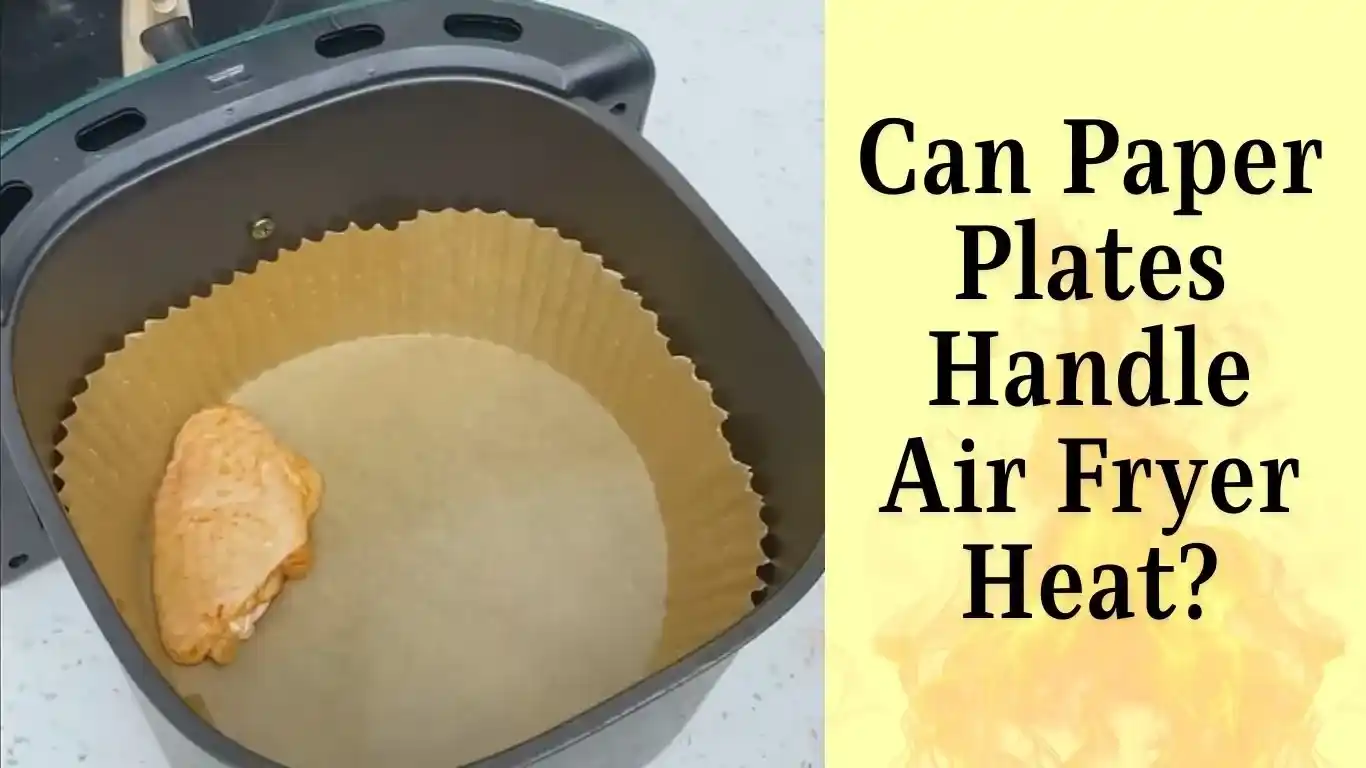
A paper plate in an air fryer basket is never safe — it can scorch, smoke, and ignite.
What Actually Happens to a Paper Plate in an Air Fryer
An air fryer is not a microwave. It is a compact convection oven with a powerful fan that blasts hot air around the food at high speed. Most models run between 175°C and 200°C (350°F–400°F), and the heating element gets far hotter than the air temperature you set.
Paper is not designed for that environment. While a paper plate can sit under a heat lamp or go through a microwave cycle, an air fryer exposes it to:
- Direct radiant heat from the heating coil
- Forceful airflow that can lift, curl, or shift the plate
- Sustained temperatures that dry out and brown paper quickly
- Hot grease that can soak through and ignite
Paper ignites at roughly 232°C (450°F), but the trouble starts long before that. At normal air fryer temperatures, the plate will dry out, turn brittle, and begin scorching wherever it touches the hot basket. If it drifts toward the heating element, it can catch fire within seconds. You can also read our guide on how to preheat an air fryer.
Why “Microwave-Safe” Means Nothing to an Air Fryer
The biggest source of confusion is that most paper plates say “microwave-safe.” People assume that makes them heat-safe in general. It doesn’t.
Microwaves heat the water molecules inside food, and paper stays relatively cool because it contains very little water. Air fryers do the opposite. They heat the air, the metal basket, and every surface in contact with that air. The plastic or wax coating on a paper plate — the layer that keeps moisture from soaking through — softens and melts in an air fryer. That coating can stick to the heating element, release fumes, and contaminate your food. You can also read our guide on how to clean grease from air fryer.
The safest mindset is simple: treat your air fryer like a small, fast oven. If you wouldn’t put a paper plate in a conventional oven at 200°C, don’t put one in an air fryer.
The 8 Risky Mistakes to Avoid
Most air fryer accidents are not caused by one dramatic error. They build from small assumptions that seem logical in the moment. These are the eight most common mistakes. You can also read our guide on can you put wax paper in air fryer.
Mistake #1: Using a Paper Plate as a Cooking Surface
The most obvious mistake is also the most common: placing food directly on a paper plate inside the basket. It catches crumbs, it keeps the basket clean, and it seems harmless — until the heat gets to it.
The plate dries out quickly, browns around the edges, and can shed fibers into your food. If you’re cooking anything greasy, the oil soaks into the paper and accelerates burning. The result is a ruined meal, a stuck-on mess, and smoke that lingers long after cooking. You can also read our guide on common mistakes to avoid when using an air fryer.
Mistake #2: Using Decorative or Recycled Paper Plates
Fancy printed plates are even more dangerous than plain white ones. The inks, dyes, and binding agents used in decorative paper are not formulated for high heat. When they get hot, they can:
- Smoke and release an acrid smell
- Transfer colored ink or residue onto food
- Break down into compounds you don’t want to inhale
Recycled paper adds another layer of risk because the fiber composition is inconsistent and may contain adhesives or residues from the recycling process. If the package doesn’t explicitly say “oven-safe” or “heat-resistant up to 220°C,” it does not belong in an air fryer.
Mistake #3: Letting Paper Come Near the Heating Element
Air fryers are compact appliances. Depending on the model, the gap between the basket and the heating coil can be surprisingly small. A paper plate that overhangs the basket edge, or a paper towel that curls up under the fan, can make direct contact with the coil. That is where fires actually start.
The fan makes it worse. Instead of letting a small scorch mark stay contained, the airflow spreads the flames and smoke across the entire basket. If you absolutely must use a paper product, it would need to sit completely flat with at least two inches of clearance from the coil — but in practice, it’s simply not worth the risk. Skip the paper entirely.
Mistake #4: Using Paper to Catch Grease and Drippings
Some cooks try lining the bottom of the basket with a paper plate or paper towel to catch drips from bacon, sausages, or chicken thighs. This is one of the most hazardous uses of paper in an air fryer.
Hot grease is not like water. It stays hot enough to ignite paper easily, and grease fires can spread quickly inside a confined basket. The combination of rendered fat and a flammable liner is a textbook recipe for a kitchen flare-up. Remember that the National Fire Protection Association’s kitchen fire safety guidance consistently points to unattended grease and flammable materials as leading causes of cooking fires.
Instead of paper, use a small metal tray or a weighted sheet of aluminum foil to catch drips. Better yet, let a silicone liner handle the mess.
Mistake #5: Confusing Parchment Paper with Paper Plates
Parchment paper is not the same as a paper plate, and it can be used safely in an air fryer — but only under the right conditions. Parchment is coated with silicone on both sides, which gives it a higher heat tolerance than regular paper. That doesn’t make it foolproof.
The danger comes from unweighted parchment. The fan can suck a loose sheet up toward the heating element, where it scorches and ignites. Even “safe” parchment paper can burn if it lifts.
If you want to use parchment, choose pre-cut, perforated sheets designed for your air fryer model. The perforations let air pass through, which keeps the paper pinned down and prevents it from ballooning into the heating coil. A large sheet of food should always sit on top to weigh it down.
Mistake #6: Overcrowding the Basket with Paper Liners
Another common failure is stacking multiple layers of paper products — a paper plate on the bottom, a paper towel on top, more food on top of that. This kills the very thing that makes an air fryer work: airflow.
Air fryers crisp food by moving hot air around every surface. When paper blocks the airflow, the food steams instead of crisping. The results are soggy fries, unevenly cooked chicken, and a paper layer soaked in grease that has become a smelly, flammable mess.
A good rule of thumb is to give food room to breathe. If you can’t see gaps between pieces, there isn’t enough airflow.
Mistake #7: Not Reading the Air Fryer Manual
Every air fryer has a manual, and most manuals have a section about safe cookware. Very few people actually read it.
Different air fryer models place their heating elements in different positions. Some have coils above the basket, some wrap around the sides, and some use a visible heating tube at the bottom. A material that might be borderline safe in one model can be dangerous in another.
Before trying any new liner, tray, or container, check the manual’s “Accessories” or “Cookware” section. If you’ve lost the paper manual, most manufacturers host a digital copy on their website. This step takes two minutes and prevents the majority of avoidable problems.
Mistake #8: Thinking of the Air Fryer as a Microwave
Underneath every paper-plate mistake is one core misunderstanding: treating the air fryer like a microwave that simply heats food faster. That mental model is wrong.
Microwaves heat water molecules from the inside out, and they rarely push paper anywhere near its danger threshold. An air fryer is a high-temperature convection oven. It uses a glowing heating element, a powerful fan, and dry air that actively removes moisture from everything inside. The thermal environment is closer to a deep fryer than a microwave.
Before you put anything in an air fryer, ask yourself one question: “Would I put this in a regular oven at 200°C?” If the answer is no, keep it out of the air fryer too.
Safe Alternatives to Paper Plates in an Air Fryer
The good news is that safe replacements are affordable, reusable, and often easier to clean up. The table below breaks down the most dependable options.
| Material | Safe Temperature | Best For | Notes |
|---|---|---|---|
| Silicone liners | Up to 230°C | Fries, vegetables, chicken | Flexible, non-stick, dishwasher-safe |
| Aluminum foil | Up to 260°C | Wrapping proteins, catching drips | Never cover the entire basket bottom |
| Metal baking pans | Varies by coating | Casseroles, reheating, large batches | Some non-stick coatings degrade over time |
| Oven-safe borosilicate glass | Up to 260°C | Small bakes, egg dishes | Avoid sudden temperature changes |
| Ceramic ramekins | Up to 260°C | Eggs, individual portions | Excellent for single servings |
Silicone liners have become the most popular paper replacement because they sit flat, let air circulate, and pop out easily for cleaning. One good liner replaces hundreds of paper plates. If you’re wondering how to keep them working well, check our guide on caring for silicone bakeware.
For bigger messes, the air fryer basket itself is the simplest tool — and for full-size ovens, reusable oven guards are a worthwhile upgrade if you hate scrubbing baked-on spills.
How to Use an Air Fryer Without Paper
Switching to reusable materials is easy once you build a simple routine.
1. Choose the Right Container
Match the container to the food:
- Frozen snacks or fries: nothing needed, use the basket directly
- Chicken, fish, or breaded items: lightly oil the basket or use a silicone liner
- Eggs or small bakes: use an oven-safe ramekin or a small metal pan
- Greasy meats: use a small metal tray lined with foil to catch drips
2. Leave Room for Airflow
Arrange food in a single layer with small gaps between pieces. Hot air needs to reach every surface, or you end up with steamed food instead of crispy food.
3. Watch the First Batch
Whenever you try a new liner or pan, open the basket after the first few minutes and make sure nothing has shifted, lifted, or melted. A quick check prevents a full-batch disaster.
4. Clean the Grease Right Away
Oil residue hardens over time and gets much harder to remove later. A quick wash after each use keeps the air fryer performing well and stops old grease from smoking the next time you cook. If you’re also dealing with greasy buildup on your kitchen vent, the same habit applies — regular vent hood upkeep prevents smoke and odors from lingering.
What About Parchment Paper and Paper Towels in an Air Fryer?
People often ask whether any paper is safe in an air fryer. The answer is: very little, and only with care.
- Perforated parchment sheets that are specifically pre-cut for air fryers are generally safe when weighed down by food.
- Plain parchment paper works only if it stays flat and clear of the heating element.
- Paper towels are risky because their loose edges easily catch the fan and drift upward.
- Wax paper, butcher paper, and paper plates should never go in an air fryer.
If something has even a small chance of curling into the heating coil, it’s not worth the smoke alarm.
How to Tell If a Container Is Air Fryer Safe
When in doubt, look for these signs:
- An explicit “oven-safe” label
- A temperature rating of at least 220°C (425°F)
- A clear statement that it’s safe for convection ovens
- Material: silicone, metal, ceramic, or borosilicate glass
Avoid anything labeled only “microwave-safe,” anything made of plastic, and any cookware with a non-stick coating that isn’t rated for high heat. If you’re picking new bakeware, choosing non-toxic options from the start is the easiest way to avoid problems later.
FAQs
What kinds of plates can you put in an air fryer?
Oven-safe plates made of ceramic, borosilicate glass, or plain metal are fine. Avoid melamine, plastic, and any plate with a non-stick coating that isn’t rated for high temperatures. Make sure the plate fits with at least an inch of clearance on all sides for airflow.
What can you not put in an air fryer?
Avoid wet batters, loose cheese, leafy greens, and large cuts of meat that cook unevenly. Also keep out anything made of paper, cardboard, or plastic. If you’re baking, you can often skip traditional metal tins entirely — there are practical ways to make muffins without a tin using safe ramekins or silicone cups.
What kind of paper can you put in an air fryer?
Only perforated parchment paper designed for air fryers is considered reasonably safe, and even then it must be weighed down by food and kept away from the heating element. Wax paper, butcher paper, paper towels, and paper plates should never go in.
What containers cannot be used in an air fryer?
Anything made of plastic, paper, or cardboard should never go inside an air fryer. These materials can melt, ignite, or release harmful fumes. Thin glass that isn’t labeled oven-safe is also dangerous because it can shatter under thermal stress.
Is it safe to use paper plates in air fryers?
No. The combination of sustained high heat, direct radiant heat, and powerful airflow means paper plates are a fire risk. Even if they don’t catch fire, the coatings on standard paper plates can degrade and contaminate food.
What happens if you use a paper plate in an air fryer?
At best, the plate shrivels, browns, and curls. At worst, it ignites and can spread flames through the basket. In between, the coating melts onto the heating element, the plate starts smoking, and the food absorbs degraded chemicals from the print and coating.
Final Verdict: Keep Paper Plates Out of the Air Fryer
The convenience of a paper plate is real, but so is the risk. Air fryers are powerful convection ovens that expose everything inside to intense, moving heat. Paper plates, paper towels, and wax paper simply cannot handle that environment.
Reusable options — silicone liners, metal trays, ceramic ramekins, and oven-safe glass — are safer and more cost-effective in the long run. They give you the same easy cleanup without turning dinner into a fire hazard.
Bottom line: let paper plates stay on the serving table. When it’s time to cook, use the same standards you would for a regular oven. If you’re ever unsure whether something is safe, read the manual first, run a short test batch, and check the basket after a few minutes. That habit alone will protect your food, your appliance, and your kitchen. For more practical cooking guidance, browse the rest of our kitchen guides.