If you have ever stood in front of your air fryer with a can of Pam, wondering whether it is safe, you are not alone. The short answer is yes, but success depends on how you spray. Too much, in the wrong place, or on a dirty basket can cause smoking and damage. Here are nine surprising facts I found after digging into the details.
The Short Answer: Yes, But Spray Smart
Pam is safe to use in an air fryer. A one-second spray on the cold basket or directly on the food is enough to stop sticking and help food brown. The problems start when you spray too much, aim toward the heating element, or skip cleanup. You can also read our guide on why does my air fryer smoke.
The same principle applies to other non-stick bakeware. Many people over-grease muffin pans and end up with a gummy film; greasing silicone bakeware should always be minimal. Once you learn to spray light, you can use Pam without worry.
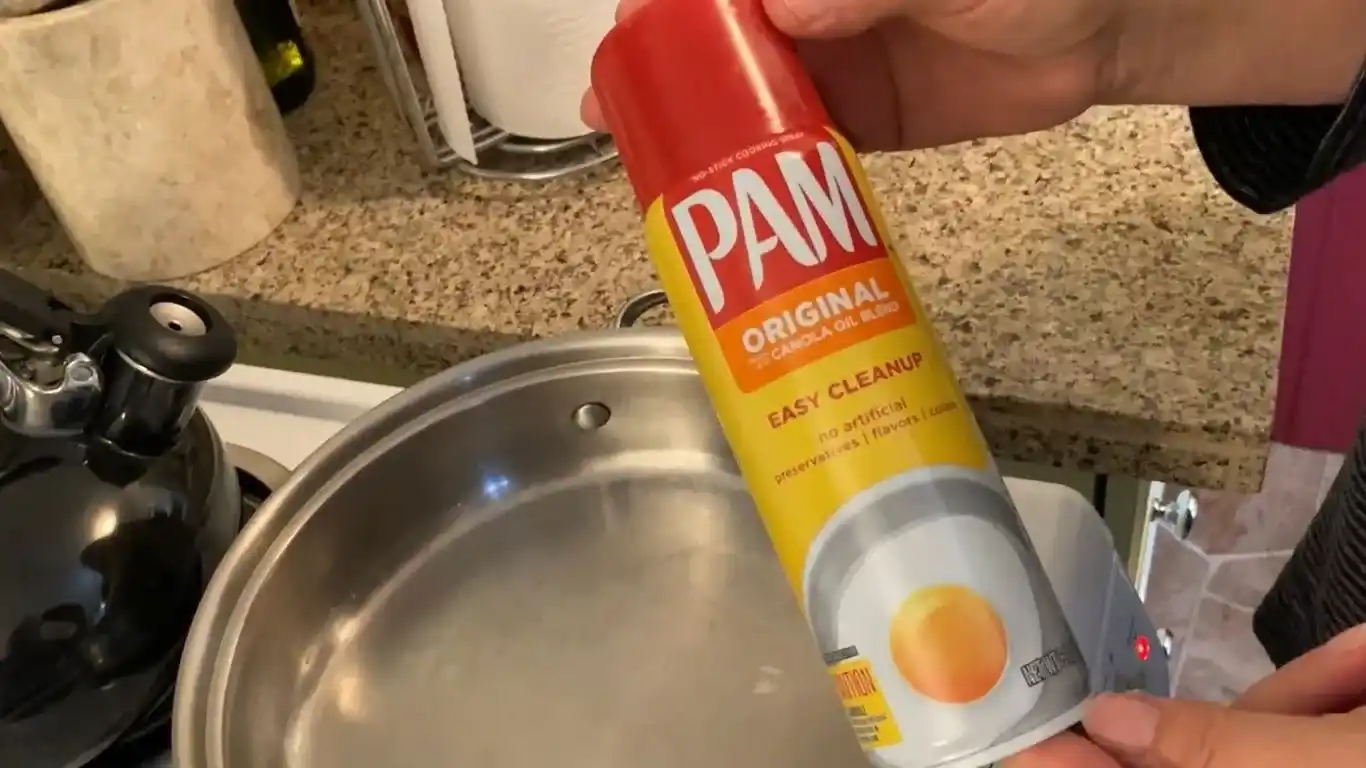
An aerosol spray delivers a fine mist, but it still leaves residue behind.
Why Aerosol Spray Acts Differently from Bottled Oil
An air fryer is essentially a small, high-speed convection oven. Hot air moves over food and dries the surface, creating crispness. A light layer of oil helps food brown faster because it conducts heat and triggers browning reactions. Aerosol sprays are useful here because the nozzle breaks oil into a fine mist, covering a large area with a tiny amount of oil. You can also read our guide on best oil spray for air fryer.
That convenience comes with a trade-off. Most aerosol sprays contain lecithin and a propellant. When the oil burns off, lecithin can remain and bake into a sticky film. It is the same greasy film on kitchen surfaces that builds up on vents and hoods, and cleaning it off a range hood is not easy. With an air fryer, the solution is a light hand and regular washing.
9 Surprising Facts I Found About Pam and Air Fryers
1. The Additives, Not the Oil, Cause the Most Problems
Pam contains oil, lecithin, and propellant. Lecithin helps the spray coat food evenly, but it can polymerize under heat and leave a varnish-like layer on your basket. If you have noticed a sticky film on non-stick pans, this is why. You can also read our guide on how to clean grease from air fryer.
2. Your Basket’s Non-Stick Coating Can Wear Out Faster
Some air fryer manuals explicitly warn against aerosol sprays. The solvents and emulsifiers can weaken the non-stick surface over time. If you want to extend the basket's life, wipe it with a paper towel dipped in oil instead of spraying directly. The same concern leads many cooks to choose safer bakeware materials for their other pans.
3. A Little Spray Makes Food Crispier
Oil helps food reach a higher surface temperature and brown evenly. A short, fine spray is all you need. Too much oil makes the exterior soggy and heavy rather than crispy. Aim for a sheen, not a puddle.
A very light coating is enough to help food crisp.
4. Most Smoke Comes from Old Grease, Not the Spray
When an air fryer smokes, the blame usually lands on the oil. In practice, it is more often leftover residue from earlier batches. Excess oil drips to the bottom and burns during the next cook. If you clean the basket every time, smoke becomes rare. If your model has a removable drip tray, clean it separately — the idea is the same as protecting the oven bottom with a liner: stop grease before it bakes on.
5. Spraying the Heating Element Is a Fire Hazard
The heating coil gets hot enough to vaporize oil. If spray hits the element, it can flare up. Always spray the cold, empty basket before adding food, or spray the food itself.
6. Smoke Point Matters Less Than Most Guides Claim
Air fryers rarely need to go above 400°F, so most cooking oils are fine. Problems occur when oil pools or when an oil with a lower smoke point sits in a small space. The olive oil industry guidance shows that smoke points are not a single fixed number; they change with freshness and cooking conditions. For high-heat cooking, choose avocado or grapeseed oil.
7. A Refillable Oil Mister Is the Easiest Fix
A pump-style oil sprayer costs little and removes the additives entirely. You control the oil, there are no propellants, and you avoid the lecithin that causes sticky buildup. It is the same spray motion, but the only ingredient is oil.
8. Frozen Foods Usually Do Not Need Extra Spray
Frozen fries, nuggets, and breaded fish are often coated with oil and seasoning. Adding Pam gives them an extra greasy layer without improving crispness. Keep the spray for fresh, dry foods such as potato slices, zucchini, and tofu.
9. Two Minutes of Cleaning Prevents Most Problems
Cooking spray residue can build up faster than regular oil. Clean the basket with warm, soapy water and a soft sponge after each use. Avoid metal scrubbers on the non-stick surface. Dry the basket completely before storing, and your air fryer will stay dependable. If you also use silicone bakeware, the same rule applies — good silicone pan care starts with a gentle wash and minimal oil.
How to Use Pam in an Air Fryer Without Damaging It
Follow this routine for clean results:
- Start with a cool, clean basket.
- Hold the can 6–8 inches away and spray for one second.
- Spread the oil with a paper towel if you want even coverage.
- Add the food.
- Cook at your normal temperature.
- Let the fryer cool, then wash the basket.
If you prefer, spray the food instead of the basket. Toss sliced vegetables or tofu in a teaspoon of oil, and the basket stays cleaner.
Oil Options at a Glance
| Oil or spray | Smoke point | Best use |
|---|---|---|
| Avocado oil | 520°F / 271°C | High heat, neutral flavor |
| Grapeseed oil | 420°F / 216°C | High heat, light texture |
| Olive oil | 375–408°F / 190–204°C | Medium heat roasting |
| Coconut oil | 350°F / 177°C | Low to medium heat, sweet taste |
| Pam original (canola) | ~400°F / 204°C | Everyday use, light spray |
Frequently Asked Questions
Can you spray Pam directly into an air fryer basket?
Yes, but keep it light. One short spray on a cold basket is enough. Spraying from 6–8 inches away prevents pooling.
Is Pam safe for non-stick surfaces?
It is safe in moderation. Heavy, regular use of aerosol sprays can leave residue that shortens the life of non-stick coatings. A pump mister avoids this entirely.
Will Pam make my air fryer smoke?
Only if you spray too much or if old grease is already in the basket. Regular cleaning and a light spray prevent most smoke issues.
Should I spray frozen fries before air frying?
Generally no. Frozen foods are usually coated in oil already. Reserve the spray for fresh, dry foods.
What should I do if my air fryer basket is sticky?
Wash it with warm, soapy water and a soft sponge. For stubborn film, use a paste of baking soda and water, then rinse and dry thoroughly.
Conclusion: Can You Use Pam in an Air Fryer?
Yes, you can use Pam in an air fryer safely. Spray lightly, spray a cold basket, and clean up afterward. The nine surprising facts above make one thing clear: the biggest risks come from over-spraying and neglected residue, not from the Pam itself.
A one-second spritz gives you crispy food, easy release, and less cleaning time. If you want to take it further, switch to a refillable oil mister and choose an oil that handles heat well. For more practical kitchen tips, browse our kitchen guides.